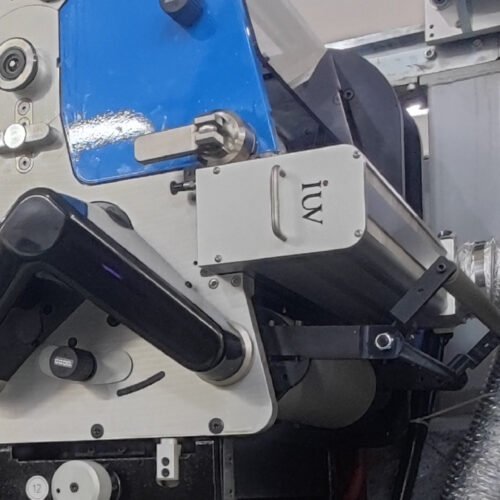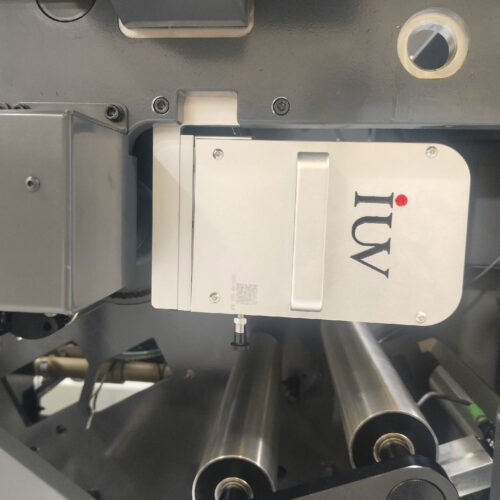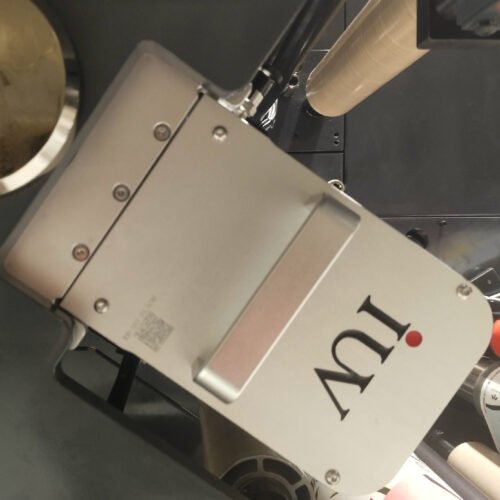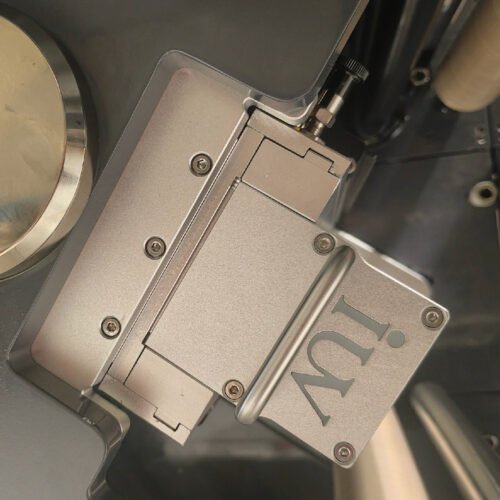
In high-speed narrow web printing environments, especially in modern flexographic label production lines, curing is no longer a standalone station—it is a synchronized process tightly coupled with press speed, ink reactivity, substrate behavior, and thermal stability. When production speed increases beyond conventional operating windows, traditional UV systems begin to show limitations in energy efficiency and process control. This is where Upgrade to LED Curing Technology for High-Speed Narrow Web Printing Speed Matching Optimization becomes an engineering problem rather than a simple equipment substitution.
In real production conditions, narrow web presses often run between 100–200 m/min, and in some advanced packaging lines even higher. At these speeds, UV dose consistency becomes extremely sensitive to timing, irradiance distribution, and web tension stability. Any mismatch between curing response and line speed immediately affects ink adhesion, surface cure, and downstream converting processes such as die cutting and lamination. The transition described in Upgrade to LED Curing Technology for High-Speed Narrow Web Printing Speed Matching Optimization is fundamentally about aligning UV energy delivery with dynamic production speed rather than static curing intensity.
Speed–dose relationship in UV curing systems
In UV curing technology, the actual curing result is determined by UV dose, which is a function of irradiance and exposure time. In high-speed narrow web printing, exposure time decreases as line speed increases, which means the system must compensate either by increasing irradiance or improving spectral efficiency.
Traditional mercury UV systems attempt to solve this by increasing lamp power. However, this introduces significant infrared heat, which increases substrate temperature and can destabilize thin film materials such as BOPP and PET. In flexographic printing environments, this thermal load often becomes a limiting factor before curing intensity becomes sufficient.
In contrast, Upgrade to LED Curing Technology for High-Speed Narrow Web Printing Speed Matching Optimization relies on maintaining high photon efficiency within a narrow wavelength band, typically 385–405 nm. This allows more efficient activation of photoinitiators without excessive heat generation. The key engineering advantage is not simply higher intensity, but more predictable dose delivery under varying speeds.
However, this relationship is not linear. At extremely high press speeds, even LED systems must be carefully matched to ink reactivity and exposure geometry. If UV dose is insufficient, partial polymerization occurs, leading to weak ink adhesion or surface tackiness.
Ink chemistry behavior under high-speed curing conditions
In high-speed narrow web printing, UV ink chemistry becomes a critical constraint. Photoinitiator systems must react within milliseconds under LED exposure conditions. If the formulation is not optimized for LED wavelength absorption, curing efficiency drops significantly at higher speeds.
In practical production troubleshooting, incomplete curing is often misdiagnosed as insufficient UV power. In reality, it is frequently caused by mismatch between photoinitiator absorption peak and LED emission wavelength. This is particularly visible in white inks and high-pigment coatings, where light scattering reduces effective penetration depth.
Oxygen inhibition further complicates the process. At high speeds, ink surface exposure time to ambient oxygen is extremely short, but still sufficient to affect radical polymerization in low-viscosity coatings. This leads to surface under-cure even when bulk curing appears acceptable. Operators often increase power output, which increases energy consumption without addressing the root chemical limitation.
In Upgrade to LED Curing Technology for High-Speed Narrow Web Printing Speed Matching Optimization, the correct engineering approach is to balance ink reactivity, photoinitiator selection, and LED wavelength stability rather than relying on excess UV dose.
Thermal stability and speed matching limitations
Thermal behavior plays a decisive role in high-speed printing stability. Mercury UV systems introduce continuous infrared radiation that increases substrate temperature proportionally with speed. At higher line speeds, heat accumulation becomes uneven, especially in narrow web systems where multiple curing stations may be installed in sequence.
This thermal load affects not only the substrate but also the entire press structure, including rollers, tension systems, and adhesive layers in label stock. Dimensional instability caused by heat expansion directly impacts registration accuracy, especially in multi-color flexographic printing.
LED UV systems fundamentally change this behavior by reducing infrared emission. In Upgrade to LED Curing Technology for High-Speed Narrow Web Printing Speed Matching Optimization, this reduction in thermal load allows presses to run at higher speeds without exceeding material temperature limits.
However, LED systems introduce a different engineering constraint: junction temperature management. If LED modules overheat, wavelength drift occurs, shifting emission away from optimal photoinitiator absorption. This reduces curing efficiency and forces operators to compensate by increasing power output, which negates energy savings.
Therefore, thermal control is not eliminated in LED systems—it is shifted from substrate cooling to LED chip thermal management.
Speed matching optimization in real production lines
In industrial flexographic and label printing lines, speed matching is not only about curing power but also about synchronization between ink transfer, web tension, and UV exposure geometry. At high speeds, even small variations in web stability can create inconsistent UV dose distribution across the substrate.
Traditional UV systems compensate for this instability by over-curing, essentially using excess energy as a buffer. This approach is energy-intensive and inefficient but historically necessary due to broader system variability.
LED curing enables tighter control of energy delivery. In Upgrade to LED Curing Technology for High-Speed Narrow Web Printing Speed Matching Optimization, speed matching optimization is achieved by adjusting irradiance dynamically according to line speed and ink coverage rather than maintaining constant maximum output.
In practice, the most efficient systems operate with real-time synchronization between press encoder signals and LED driver output. This allows UV dose to remain stable even during acceleration, deceleration, or job change transitions.
Without this synchronization, even LED systems can underperform at high speeds, leading to partial curing or adhesion failure.
Material compatibility and adhesion behavior
At high-speed operation, UV ink adhesion becomes highly sensitive to curing kinetics. If polymerization occurs too quickly at the surface while remaining incomplete in the bulk layer, internal stress develops, which can lead to cracking or delamination during post-processing.
Substrate compatibility also becomes more critical as speed increases. Thin films respond more strongly to thermal and mechanical stress. In packaging printing applications, this can affect laminating performance and long-term durability.
One advantage observed in Upgrade to LED Curing Technology for High-Speed Narrow Web Printing Speed Matching Optimization is improved adhesion stability at controlled temperatures. Because LED systems reduce substrate heating, adhesive layers remain within optimal activation windows, improving bonding performance in pressure-sensitive label structures.
However, if curing is not properly matched to speed, adhesion failure still occurs even with LED systems. This confirms that energy delivery, not just technology type, determines final print quality.
Engineering limitations and troubleshooting in high-speed LED curing
In real production environments, engineers often encounter curing inconsistencies after upgrading to LED systems for high-speed lines. The root causes are rarely hardware failures. More commonly, they involve misalignment between speed, UV dose, and ink formulation.
A frequent issue is insufficient curing at peak speed despite adequate irradiance settings. This typically indicates that UV dose per unit area is too low due to exposure time reduction, not insufficient lamp power. Another common issue is wavelength mismatch caused by thermal drift in LED modules, which reduces photoinitiator efficiency without visible changes in intensity.
Oxygen inhibition effects also become more noticeable in ultra-fast printing lines using low-viscosity coatings. These effects cannot be resolved by increasing UV intensity alone and require formulation or process adjustments.
Therefore, successful implementation of Upgrade to LED Curing Technology for High-Speed Narrow Web Printing Speed Matching Optimization depends on a system-level approach combining press mechanics, ink chemistry, and UV control logic.