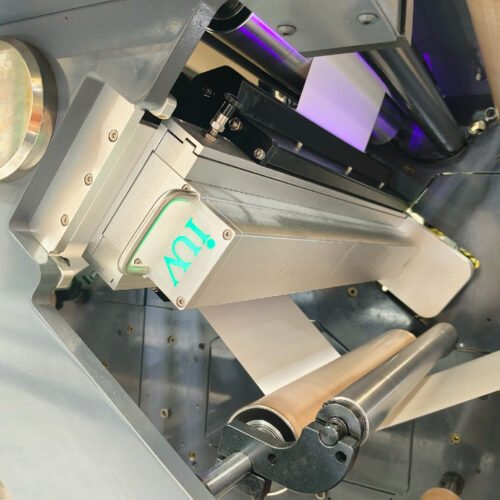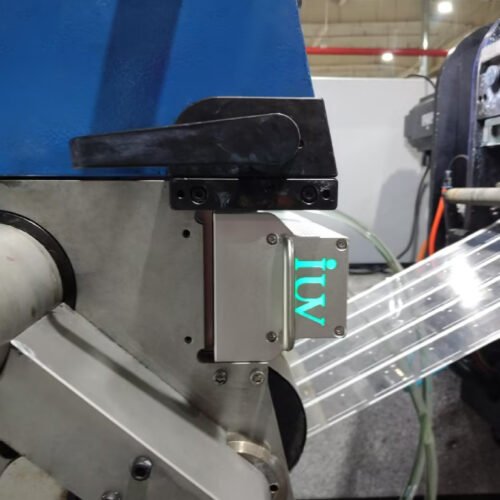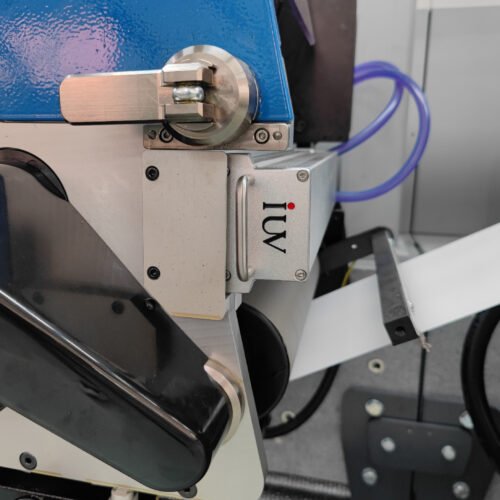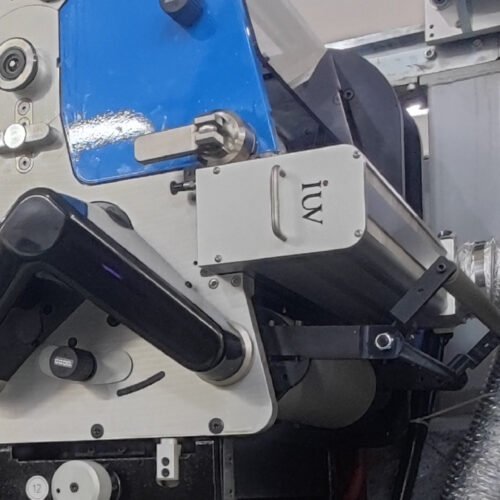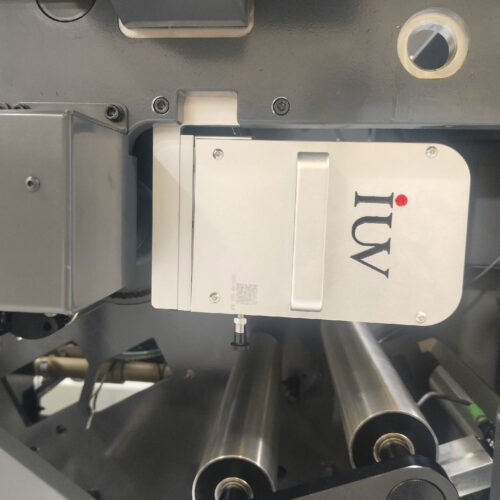
In modern industrial printing environments, the thermal management performance of a UV LED curing system has become a core engineering factor rather than a secondary support function. As flexographic printing, label printing, narrow web printing, and packaging production move toward higher speeds and thinner substrates, cooling efficiency directly affects curing stability, UV ink adhesion, and long-term equipment reliability. While operators often focus on UV intensity and curing speed, the real limiting factor in high-power LED UV curing equipment is frequently temperature control inside the LED module rather than optical output itself.
Unlike traditional mercury lamps, LED UV systems emit very little infrared radiation toward the substrate, which significantly reduces direct heating of materials such as PET, BOPP, and shrink sleeve films. This is one of the key reasons LED UV curing technology is widely adopted in modern label printing and flexible packaging applications. However, the LED chips themselves still generate substantial internal heat during operation. In high-power UV curing systems, a large portion of electrical energy is converted into thermal energy, and if this heat is not efficiently removed, LED junction temperature rises quickly, leading to unstable UV output and reduced curing consistency across the web.
The UV spectrum of light cooling requirements in high-power LED UV curing equipment are closely linked to wavelength selection and system design. In industrial UV curing applications, 395nm systems are commonly used because they provide a stable balance between curing efficiency and thermal control. They are widely applied in flexographic printing, label printing, and packaging printing due to their relatively controlled heat generation and good compatibility with common UV ink chemistries. In comparison, 385nm systems often deliver stronger surface curing performance and faster photoinitiator activation, but under high power density conditions they may introduce higher localized thermal stress inside the LED array depending on ink formulation and operating speed.
In real production environments, wavelength selection cannot be separated from cooling system capability. High-speed narrow web printing and rotary press applications require stable UV output across long production cycles. If cooling capacity is insufficient, temperature drift inside the LED module will gradually reduce UV intensity stability. This leads to inconsistent curing results such as uneven gloss, variable UV ink adhesion, and reduced scratch resistance across different sections of the printed web. These issues often become more visible during continuous production runs when heat accumulation reaches a critical threshold.
One of the most common misconceptions in industrial UV curing is the assumption that increasing UV power automatically improves curing quality. In reality, excessive UV dose combined with insufficient cooling often produces the opposite effect. As LED temperature rises, UV output efficiency decreases, which forces operators to further increase power settings. This creates a feedback loop of rising thermal load and declining curing stability. In flexographic printing applications, this condition often results in surface tackiness, incomplete polymerization, and unstable lamination performance, especially in high-speed packaging production lines.
Cooling system design therefore plays a critical role in stabilizing industrial UV curing performance. Air-cooled LED UV systems are typically used in lower-power or intermittent production environments. They offer simpler structure and easier maintenance, making them suitable for certain label printing applications where thermal load is moderate. However, in high-power LED UV curing equipment operating continuously, air cooling often reaches its limit because airflow alone cannot remove heat fast enough under sustained high irradiance conditions.
Water-cooled systems are therefore widely used in high-speed flexographic printing and packaging printing environments. Compared with air cooling, water cooling provides significantly higher thermal transfer efficiency, allowing stable control of LED junction temperature even under continuous high-load operation. This improves UV output consistency and extends system lifespan. In industrial UV curing systems, stable cooling also ensures uniform energy distribution across the curing width, which is critical for maintaining consistent print quality in narrow web printing applications.
Thermal management becomes even more important when working with heat-sensitive substrates. Although LED UV systems reduce direct infrared exposure compared to mercury lamps, poor cooling design can still indirectly raise ambient temperature inside the press. In shrink sleeve printing, excessive heat may trigger premature shrink behavior, causing distortion before final application. In PET and BOPP label printing, uncontrolled thermal buildup can lead to dimensional instability, registration errors, and web deformation during high-speed operation.
UV ink chemistry further complicates the relationship between curing and cooling. Different ink systems respond differently to wavelength, energy density, and temperature conditions. If cooling is unstable, curing consistency fluctuates, which can lead to partial polymerization or uneven surface curing. In packaging applications requiring low migration performance, this becomes a serious quality risk because incomplete curing may affect chemical resistance and regulatory compliance.
Modern industrial UV curing technology is therefore moving toward integrated thermal control systems. Advanced LED UV curing systems increasingly include real-time temperature monitoring, intelligent power adjustment, and closed-loop cooling regulation. These technologies allow the system to automatically balance UV output and thermal load based on press speed and operating conditions, ensuring consistent curing performance even in demanding production environments.
As LED UV systems continue replacing mercury lamp technology in label printing, flexographic printing, and packaging production, cooling performance will remain one of the most critical engineering factors. Future UV curing systems will not only be evaluated by irradiance or curing speed, but also by thermal stability, energy efficiency, and long-term operational consistency. In high-power LED UV curing equipment, cooling is no longer an auxiliary function; it is a core determinant of industrial printing performance.