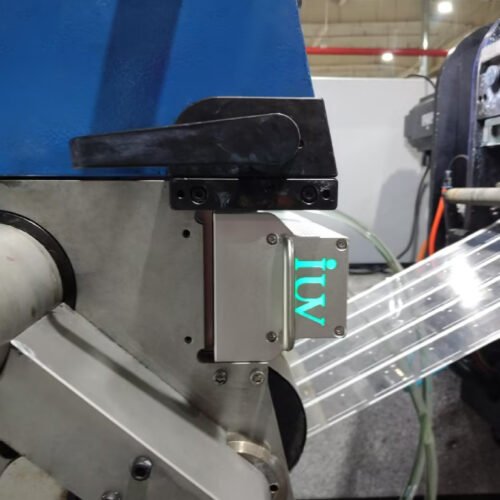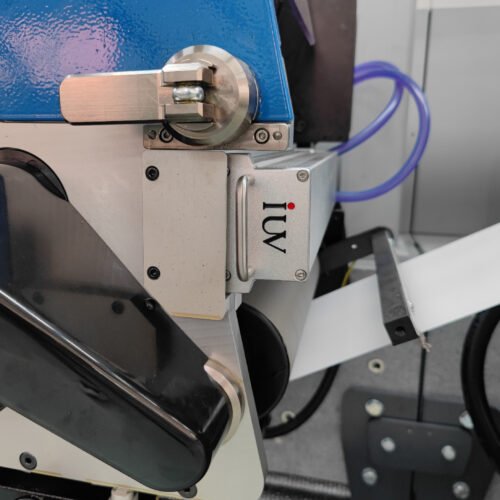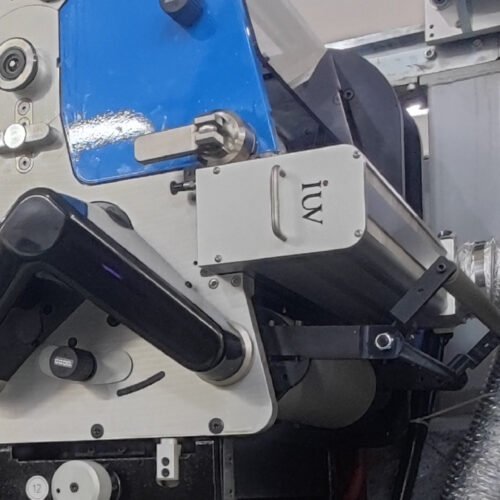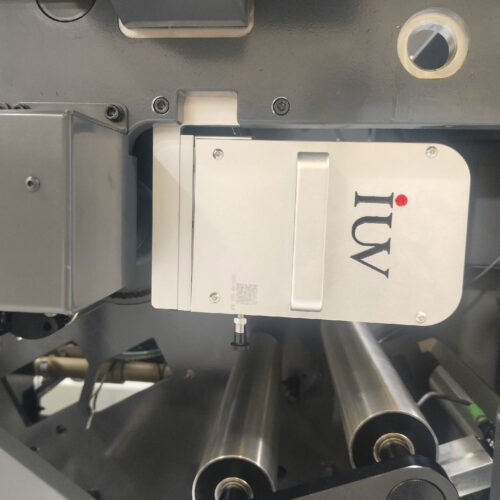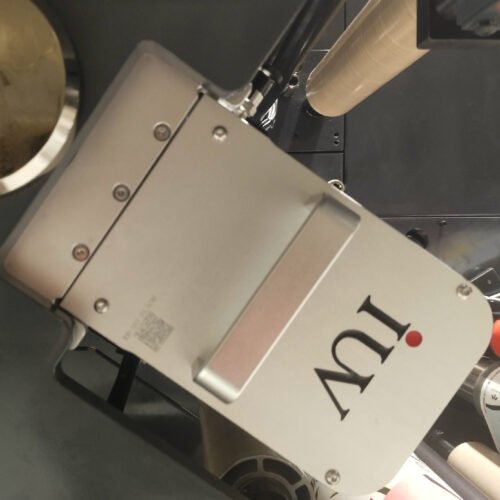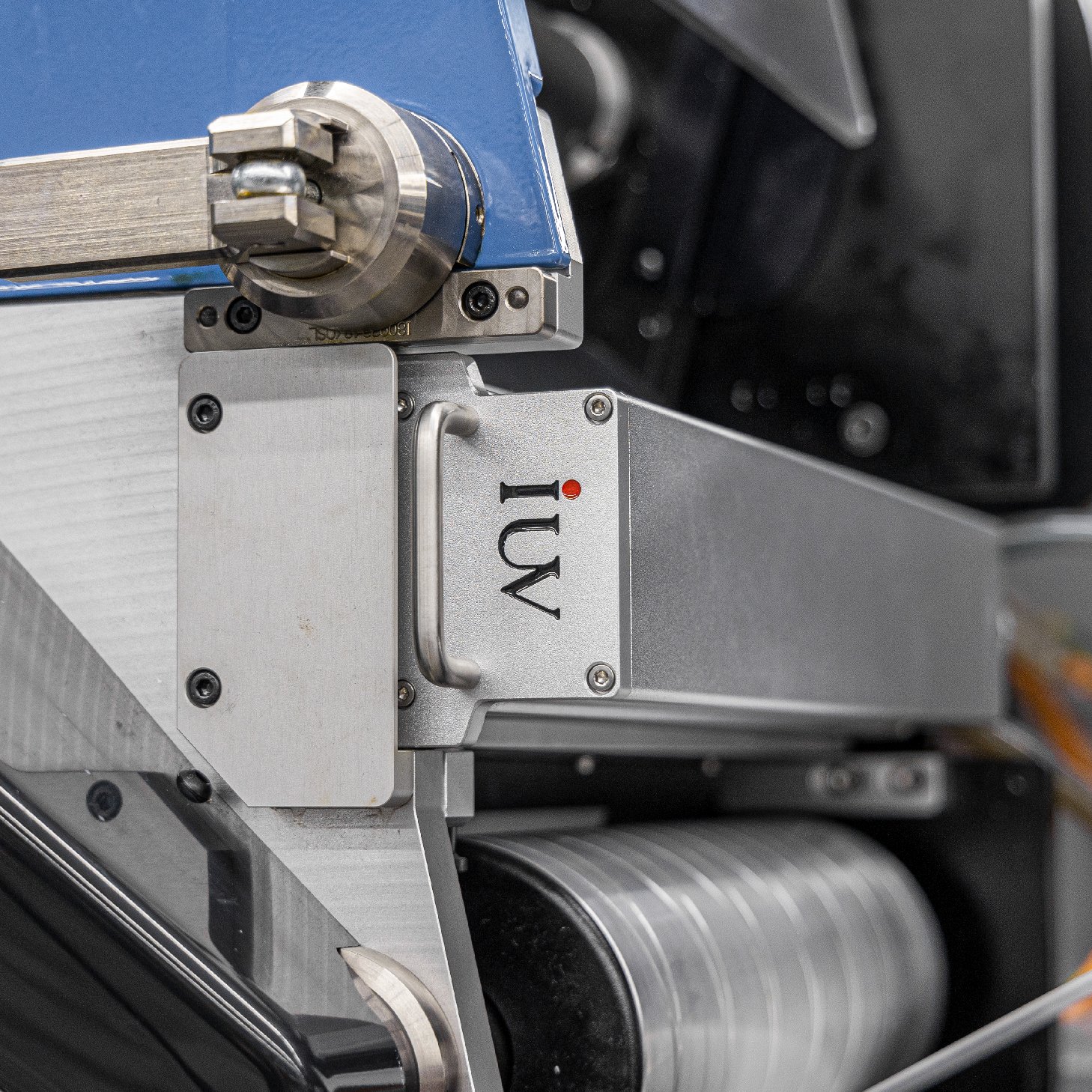
Incomplete UV curing in flexographic printing systems is not a localized defect but a system-level imbalance that appears when LED UV curing parameters, ink chemistry, substrate behavior, and press dynamics are not aligned under real production conditions. In label printing and narrow web packaging environments, this issue becomes more visible because line speed changes frequently and substrate types vary within the same production shift.
LED UV curing systems introduce a more controlled emission spectrum compared to mercury-based systems, but they also reduce process tolerance. When wavelength selection, irradiance distribution, and curing time are not properly synchronized with ink formulation and film thickness, incomplete curing appears as a combination of poor adhesion, surface tackiness, and unstable rub resistance. In practice, this is often misinterpreted as an ink problem, while the root cause is distributed across multiple process variables.
Wavelength-dependent curing behavior and photoinitiator activation imbalance
In LED UV curing systems, wavelength selection defines the fundamental interaction between UV energy and photoinitiators in the ink system. The industrially common ranges of 365 nm, 385 nm, and 395 nm each produce different curing dynamics, especially in flexographic printing where ink films are relatively variable.
In production environments, 395 nm systems are widely adopted due to lower energy consumption and longer LED lifetime. However, incomplete curing is typically observed when photoinitiators are not fully responsive to this wavelength range, especially in ink systems originally developed for broader-spectrum UV lamps. The curing reaction appears stable on the surface, but internal polymerization remains insufficient, which leads to adhesion failure during lamination or mechanical stress.
When moving between offset printing and flexographic printing workflows, this mismatch becomes more pronounced. Offset inks often rely on different photoinitiator packages that may not fully align with LED spectral peaks. In narrow web production, where job changes are frequent, even small variations in ink batches can shift curing performance significantly.
In practice, when wavelength mismatch is present, operators typically observe:
- Surface dry condition with internal softness
- Delayed adhesion failure after converting
- Inconsistent curing behavior between jobs
The correction is not limited to changing UV power. It requires alignment between spectral output and ink formulation chemistry. In many production lines, moving from single-band 395 nm systems to mixed or optimized 385/395 nm configurations reduces variability in curing response across different substrates.
Irradiance distribution, energy density limitations, and real exposure constraints
Once wavelength compatibility is established, curing stability becomes primarily governed by irradiance and energy density distribution across the substrate. LED UV systems generate high peak irradiance, but curing performance depends on how effectively that energy is delivered over time and across the web width.
In narrow web flexographic printing systems, mechanical stability directly influences irradiance consistency. Small variations in lamp height, substrate flutter, or reflector alignment can reduce effective energy reaching the ink surface. In production, this is often not immediately visible until high-speed operation exposes curing limitations.
Typically observed behavior includes edge-to-center curing variation and unstable performance at maximum press speed. In offset printing integration lines, where ink layers are thinner and more uniform, irradiance variation plays a more predictable role. However, in flexographic systems, uneven ink transfer amplifies the sensitivity to energy density fluctuations.
A key engineering limitation is that LED UV curing systems deliver directional energy. Without proper optical diffusion design, energy concentration can vary across the web, especially in wide-format narrow web configurations. This results in localized under-cured zones even when nominal irradiance values appear sufficient.
In production adjustments, engineers typically focus on:
- Stabilizing lamp-to-substrate distance during operation
- Balancing irradiance distribution across web width
- Synchronizing UV output with real line speed variations
In practice, incomplete curing is often resolved not by increasing total power but by correcting energy delivery uniformity under actual operating conditions.
Ink film thickness variability, substrate absorption, and curing penetration limitations
As irradiance stability improves, the limiting factor in curing shifts toward ink film thickness and substrate interaction behavior. Flexographic printing inherently produces variable ink film thickness due to anilox volume selection, plate deformation, and pressure variations across the print width.
This variability becomes critical when LED UV curing systems are used, because curing penetration is strongly dependent on how UV energy travels through the ink layer. High pigment loading or thick ink deposits reduce light transmission, limiting polymerization in deeper layers.
Substrate behavior further complicates the curing process. PET and BOPP films have low UV absorption, which forces most curing to occur at the surface interface. In these cases, adhesion failure is often linked to insufficient cross-linking at the interface layer rather than bulk curing failure. Paper substrates behave differently by absorbing part of the UV energy, which reduces penetration depth and creates inconsistent curing in high-coverage areas.
In production, this interaction is typically observed as:
- Partial curing in high-density ink zones
- Adhesion failure after lamination or abrasion
- Variability between film and paper-based jobs
Ink formulation also plays a significant role. White inks and metallic pigments increase scattering effects, reducing curing efficiency in lower layers. In such cases, even high irradiance LED systems may not fully compensate for energy loss through the ink matrix.
Engineering adjustments often involve reducing anilox volume, optimizing photoinitiator concentration, and adapting exposure strategies for thicker ink systems. In some narrow web setups, multi-pass exposure is applied to improve curing penetration consistency without increasing peak irradiance beyond substrate tolerance.
Line speed dynamics and synchronization between mechanical and photochemical processes
After addressing spectral and material factors, line speed becomes the dominant variable influencing curing stability. In flexographic printing systems, line speed is not constant and frequently changes during job transitions, startup cycles, and production optimization.
LED UV curing systems respond instantly to activation and deactivation, but curing chemistry does not adapt instantly to reduced exposure time. When press speed increases without corresponding adjustment in irradiance or exposure strategy, incomplete curing becomes more pronounced.
In production environments, this is typically observed during high-speed runs where curing performance deteriorates even though UV output remains constant. The mismatch is not in energy intensity but in reaction time availability for polymerization.
Offset printing systems generally operate under more stable speed conditions, which reduces curing variability. However, in hybrid production environments where offset and flexographic systems share UV configurations, synchronization issues become more visible.
Engineering solutions focus on aligning mechanical speed with photochemical response time. This includes dynamic UV power modulation based on real-time line speed, as well as predefined curing profiles for specific substrates and ink systems. In more advanced narrow web installations, feedback-controlled UV systems are used to maintain curing stability across fluctuating production speeds.
System-level integration failure and field troubleshooting methodology
Incomplete UV curing should ultimately be treated as a system integration issue rather than a single parameter defect. In real production environments, failures occur when multiple small deviations accumulate across wavelength, irradiance, ink formulation, substrate behavior, and line speed.
A structured troubleshooting approach begins with verifying spectral compatibility between LED UV system and ink chemistry. Once confirmed, actual irradiance at substrate level must be measured under operating conditions rather than relying on nominal equipment specifications. This step often reveals hidden losses caused by distance variation or optical inefficiency.
The next step is evaluating ink film thickness consistency across the web. Even minor variations in anilox wear or pressure distribution can create localized curing defects that appear inconsistent across runs. After that, line speed correlation must be analyzed to ensure exposure time remains sufficient across all operating conditions.
Finally, substrate surface energy and contamination must be considered, particularly for BOPP and PET films. Low surface energy conditions can mimic curing failure even when polymerization is technically complete, leading to misdiagnosis of the root cause.
In practice, incomplete curing is rarely caused by a single failure point. It emerges from the interaction of:
- UV wavelength and photoinitiator compatibility
- Irradiance distribution and energy density limits
- Ink film thickness and pigment optical behavior
- Line speed and exposure time mismatch
- Substrate surface energy and absorption characteristics
LED UV curing systems improve process precision but require tighter coordination between all parameters. Without system-level alignment, even correctly specified equipment can produce unstable curing behavior in flexographic printing, narrow web production, and hybrid offset printing environments.