Metallic substrates—glossy aluminum foils, holographic films, and metallized papers—represent the pinnacle of premium packaging and label printing. They promise eye-catching shelf appeal and a tangible sense of luxury. Yet, for printers, they present a formidable technical paradox: the very property that makes them desirable (high reflectivity) makes consistent UV curing exceptionally difficult. Traditional mercury arc lamps often struggle with uneven energy absorption, leading to variable gloss, poor ink adhesion, and color shift across the web. This case study examines how a leading European label converter overcame these challenges by implementing a tailored IUV LED-UV curing system, achieving unprecedented consistency in gloss and color on metallic stocks while boosting operational efficiency.
The Core Challenge: Why Metals Disrupt Conventional UV Curing
The printing house specialized in high-end cosmetic and spirits labels, with a significant portion of work on bright white and silver metallized films. Their existing mercury UV system caused persistent issues. The highly reflective surface acted like a mirror, scattering UV light and creating hotspots and shadows. This resulted in an inconsistent cure, manifesting as a mottled gloss finish and slight but unacceptable variations in color saturation, particularly in solid areas and brand-critical logos. Furthermore, the substantial infrared heat output from the mercury lamps posed a constant risk of distorting thin, heat-sensitive metallic films, adding another variable to an already unstable process.
The Engineered Solution: Precision Optics and Intelligent Control
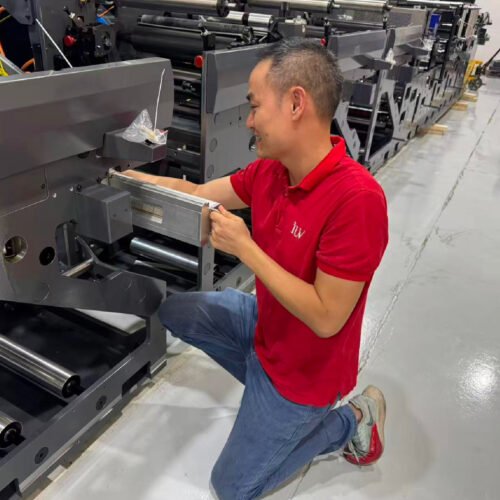
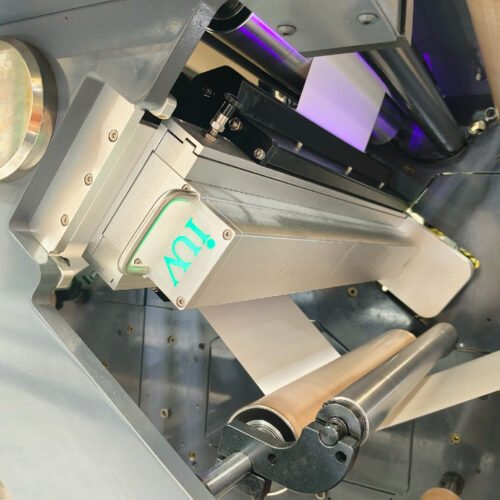
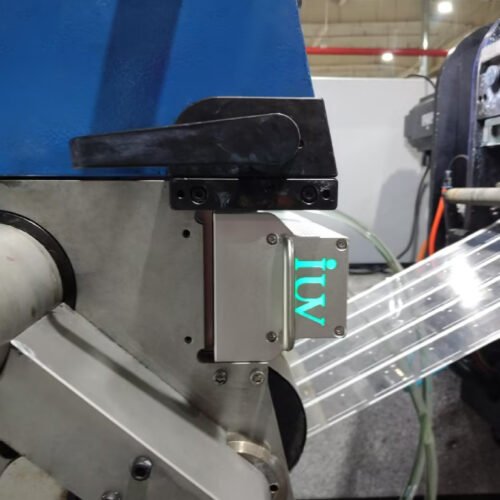
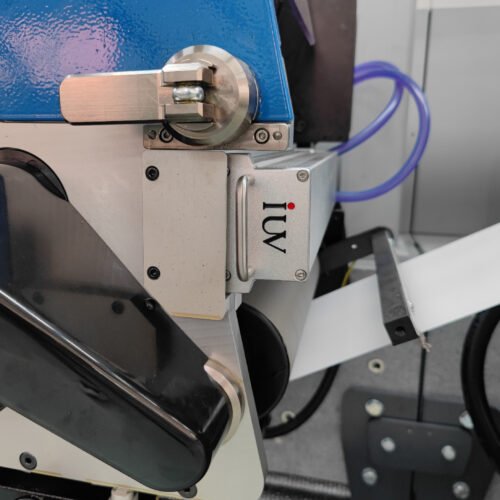
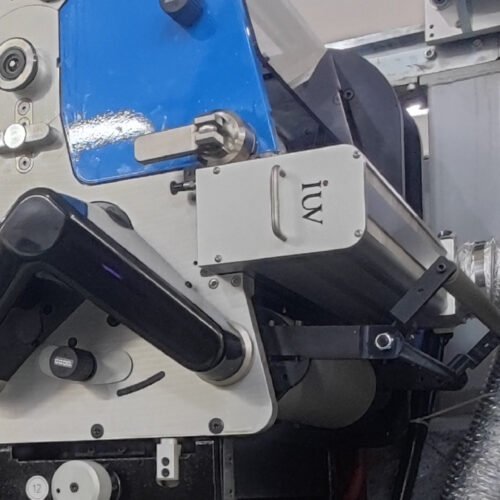
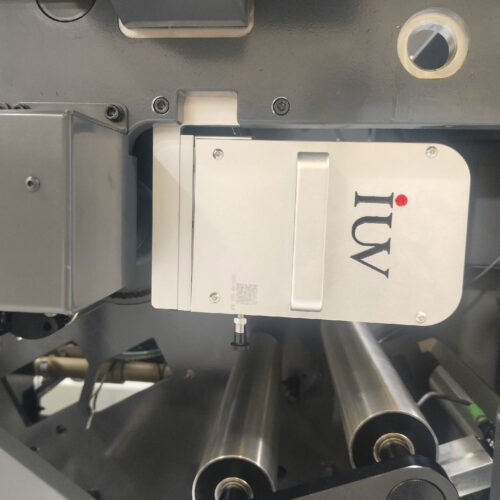
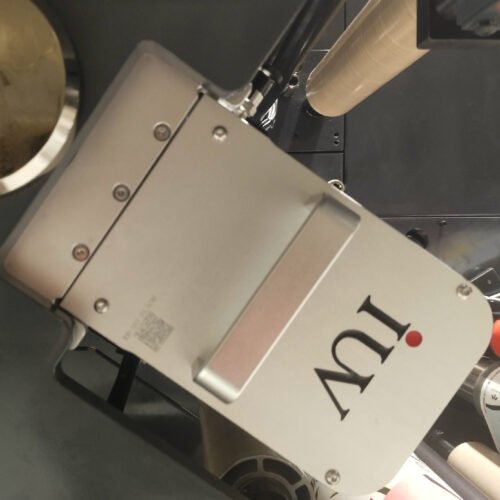
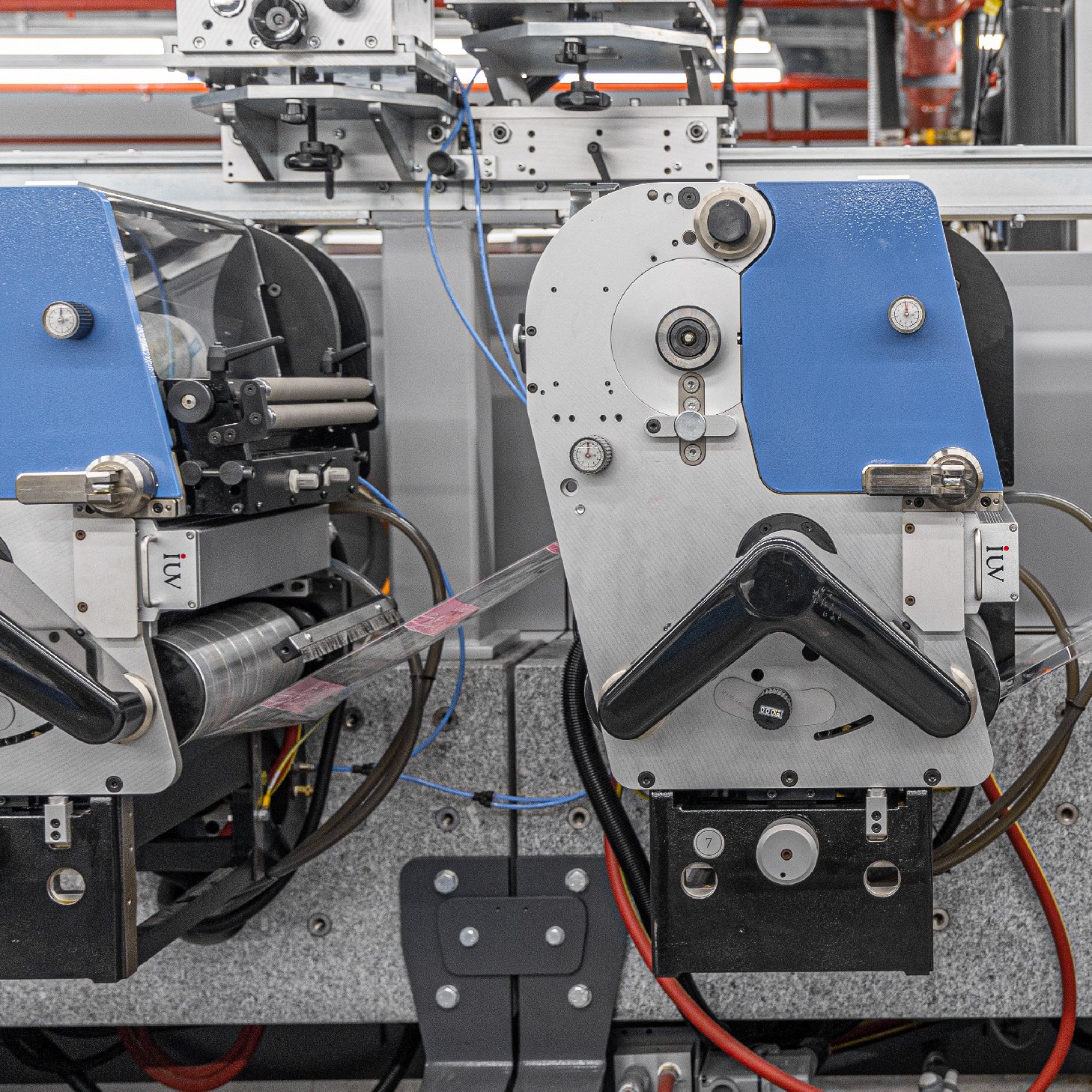
The converter partnered with IUV to deploy a modular LED-UV curing system specifically configured for their narrow-web flexo press. The solution was built on three pillars:
- Precision Secondary Optical Lens Design: Standard LED arrays emit a relatively diffuse light pattern. IUV’s system incorporates custom-engineered secondary optics that collimate and homogenize the UV output. This creates a perfectly uniform “curtain” of energy (±3% across the web width) that interacts consistently with the reflective substrate, eliminating the hot-spot effect that plagued the old system. This optical precision is credited with directly boosting effective curing performance by over 20%.
- Smart, Reflective-Surface-Optimized Power Control: The system’s intelligent controller goes beyond simple speed-power correlation. Its algorithm accounts for the substrate’s reflectivity. By delivering tightly controlled, consistent irradiance (W/cm²), it ensures each ink layer receives the exact same energy dose, regardless of its position under the lamp. This closed-loop control is the key to locking in consistent color and gloss.
- Water-Air Hybrid Cooling for Constrained Spaces: The compact press frame had limited space for cooling infrastructure. IUV’s integrated dual-mode cooling system efficiently dissipated heat from the high-power LED arrays without bulky external chillers. This maintained optimal LED junction temperature, ensuring stable UV output and, crucially, producing a “cold” cure that completely eliminated heat-related distortion of the delicate metallic films.
Implementation and Results: Quantifying the Transformation
The retrofit was executed during a scheduled maintenance weekend. The modular “plug-and-play” design of the IUV power and lamp-head architecture facilitated a smooth integration with minimal press modification. Post-installation, a rigorous validation protocol was followed:
- Gloss Consistency Measurement: Using a 60-degree glossmeter, measurements were taken at 10 points across the web on solid cyan and black inks printed on silver film. The standard deviation of gloss units reduced from over 5.0 (with mercury) to below 1.2, achieving a visually perfect, uniform shine.
- Color Density & Adhesion Testing: Spectrophotometer readings confirmed color density variation (∆E) fell well within the tight tolerance of less than 1.5. Cross-hatch tape tests (ASTM D3359) showed 100% adhesion on all metallic stocks, a critical requirement for label durability.
- Operational & Financial Metrics: The instant on/off capability of LED-UV slashed non-productive energy use. Combined with the inherent efficiency of LEDs, this led to a measured 70% reduction in energy consumption for the curing process alone. Maintenance costs associated with lamp changes and reflector cleaning plummeted by an estimated 80%. The elimination of ozone and mercury also simplified compliance and improved the shop-floor environment.
Broader Implications for the Printing Industry
This case study demonstrates that the challenge of printing on metallic substrates is not insurmountable. It shifts the paradigm from process compensation to process control. The success hinged on moving beyond viewing UV curing as a mere utility and treating it as a precision photochemical tool. The IUV system’s ability to deliver spatially and temporally consistent UV energy transformed a problematic substrate into a reliable, high-yield asset for the converter.
The implications extend beyond labels to flexible packaging, folding cartons, and specialty commercial prints where metallic effects are used. It proves that LED-UV technology, when engineered with a deep understanding of substrate interaction and optical physics, can solve the industry’s most stubborn quality control issues. It enables printers to confidently accept high-value metallic jobs, secure in the knowledge that they can deliver flawless, consistent results batch after batch.
Conclusion: Redefining Premium Print Standards
For converters targeting the luxury market, consistency is the true currency. This project validated that achieving perfect gloss and color on metallic substrates is a matter of precise engineering, not luck or endless press adjustments. By implementing an intelligent LED-UV curing system with advanced optics and control, the converter not only solved a critical quality problem but also future-proofed their operations with massive gains in sustainability and efficiency. The result is a powerful competitive advantage: the proven capability to produce metallic work of unmatched and reliable quality, turning a technical hurdle into a signature strength.