Abstract
Frequent job changes make LED-UV curing control more difficult on narrow-web label presses. Each new label may use a different substrate, ink set, anilox volume, varnish weight, print coverage, and production speed. A manual lamp setting can provide acceptable cure on one job and become marginal on the next. Closed-loop irradiance control helps maintain consistent optical output by combining lamp feedback, press-speed data, validated recipes, and regular at-web verification. This article explains how OEMs, converters, and engineers can use closed-loop control to improve cure consistency during short-run and high-mix label production.
Introduction
Narrow-web label presses often change jobs several times in one shift. A press may move from a paper label with light process coverage to a film label with opaque white, dense spot colours, and a UV overprint varnish. These jobs do not require the same curing conditions.
The risk is not limited to undercure. A lamp setting that is too high for the next job can increase web temperature, affect intercoat adhesion, create film distortion, or reduce the flexibility of a cured varnish. A setting that is too low can produce poor rub resistance, weak adhesion, blocking, or incomplete through-cure.
Closed-loop irradiance control provides a structured way to manage these changes. It does not remove the need for validated ink and substrate recipes. Instead, it helps the press deliver the intended optical output more consistently when conditions change.
Why Frequent Job Changes Expose Cure Variation
A narrow-web press does not print every job with the same ink-film thickness. Anilox volume, plate design, ink transfer, colour coverage, and coating weight can change the energy required for reliable cure. Opaque white and dense black often require more attention than standard process inks. A thick varnish film may need a different final-cure condition from a thin gloss coating.
Substrate construction also changes the process. Paper labels, BOPP, PE, PP, PET, shrinkable film, and laminated materials respond differently to heat and web tension. A high-output recipe that is appropriate for a heavily pigmented ink on paper may be unsuitable for a thin film facestock.
Manual settings can work when jobs are long and stable. They become less reliable when operators must change ink systems, materials, and production speeds repeatedly. Small output differences may not be visible during makeready, but they can appear later as blocking, scuffing, label curl, or weak conversion performance.
The process needs a way to connect each approved job recipe with the actual optical output delivered by the LED system. That connection is the practical role of closed-loop irradiance control.
Closed-Loop Irradiance Control for Narrow-Web LED UV Printing
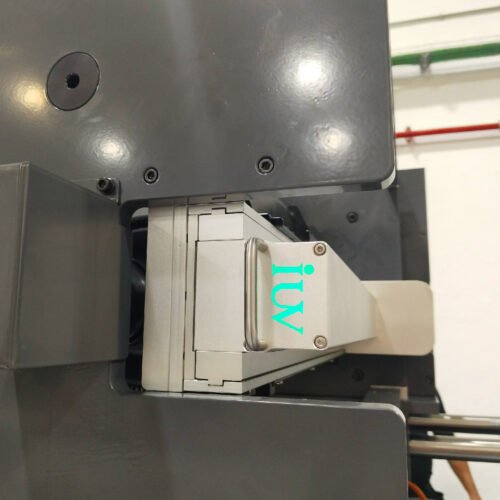
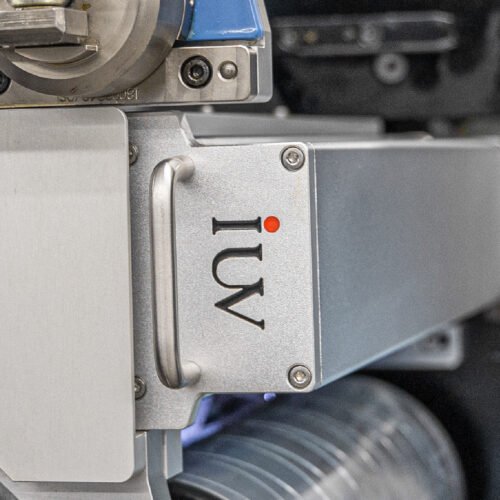
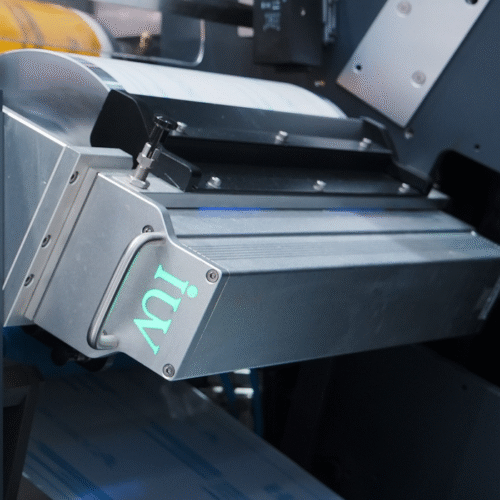
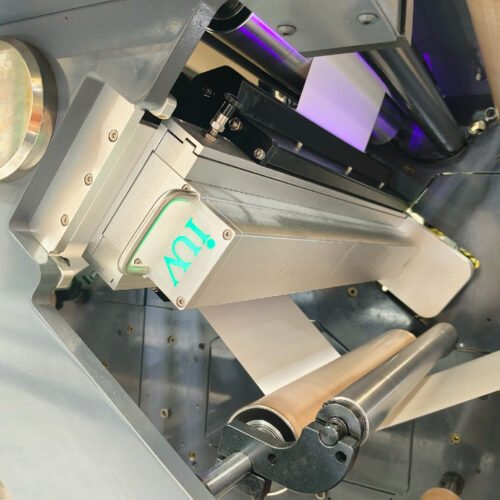
Closed-loop irradiance control uses measured feedback to maintain a defined output target. The feedback signal may come from optical sensors within the LED head, sensors near the curing position, or a supervisory system that compares measured output with a validated reference.
The controller adjusts lamp drive conditions when the measured value moves outside the permitted range. This can compensate for normal changes in module temperature, electrical behaviour, and component ageing. The purpose is to keep the lamp output close to the approved setpoint.
A closed loop must be understood correctly. An internal sensor can monitor source output from the LED head, but it may not directly measure energy at the substrate surface. Lamp-window contamination, a changed working distance, web flutter, and misalignment can still reduce delivered energy at the web.
For this reason, closed-loop control should be combined with periodic verification at the substrate plane. The internal feedback loop maintains repeatability. The at-web measurement confirms that the controlled output still produces the required exposure in the real press configuration.
Separate Source Control From Process Control
A practical LED-UV control system has more than one level of control. The first level is source control. It keeps the LED head near its programmed irradiance target by using feedback from the lamp system. This helps reduce output drift during a production run.
The second level is process control. It links the lamp setting to the specific job. The job recipe should identify the approved wavelength, lamp position, output target, working distance, press speed range, ink set, substrate, anilox specification, and coating conditions.
The third level is quality verification. It confirms that the printed result meets the required cure performance. This may include rub resistance, scratch resistance, adhesion, blocking resistance, barcode readability, and application-specific tests. No optical sensor alone can confirm every aspect of final cure.
This layered approach prevents a common mistake. A lamp can be operating correctly at its internal setpoint while the job still fails because the wrong recipe was selected, the ink film is too heavy, or the lamp window is contaminated. Closed-loop control supports the process, but it does not replace process discipline.
Build Job Recipes Around Material and Ink Variables
A cure recipe should identify the material combination, not only the label name. The same artwork may require different settings when it moves from paper to BOPP or from a standard gloss varnish to a high-build protective coating.
The recipe should include the ink manufacturer’s LED compatibility information and the intended wavelength. Common LED wavelengths include 365 nm, 385 nm, 395 nm, and 405 nm. The selected wavelength must match the photoinitiator package in each approved ink and coating.
Process colours, opaque white, metallic inks, dense spot colours, and overprint varnishes should not automatically share one recipe. Their pigment loading and film thickness can create different cure requirements. A separate final-cure condition may be required for the most demanding approved print stack.
Anilox specification should also be recorded. A higher-volume anilox can transfer a thicker ink or varnish film. That film may require a higher dose for complete cure. If an anilox is changed, worn, or improperly cleaned, the original recipe may no longer provide the same result.
Link Irradiance Control to Web Speed
Irradiance and energy dose are related but different. Irradiance is the instantaneous optical power at the web surface. Energy dose is the total energy received during exposure. As press speed increases, the web spends less time under the LED head.
A narrow-web press should link the curing system to the actual web-speed signal. The controller can then adjust output according to the validated speed-to-output relationship. This is important during acceleration, deceleration, splice handling, inspection, and restart events.
The speed signal should represent actual web motion at the curing position. A main-drive command may not reflect short changes caused by a dancer system, web tension, or slippage. The input should have suitable resolution and response time for the press speed range.
Control latency must be considered. There may be a delay between speed measurement, controller response, and changed LED output. There is also a physical distance between the speed-measurement point and the curing head. If the control logic ignores these delays, short bands of overcure or undercure can appear after every speed transition.
Use Stable Output Targets Rather Than Maximum Power
Closed-loop control should maintain the approved irradiance target, not automatically drive the lamp to its maximum capability. Maximum output may be unnecessary for many labels and can reduce process margin on heat-sensitive materials.
A stable target should be established through validation. The press team should identify the lowest practical exposure that meets the required cure properties for the approved job. This setting should include a margin for normal production variation, but it should remain below the level that creates substrate or adhesion problems.
The validated target should account for the entire cure sequence. Interstation pinning usually requires less energy than final cure. A high final-cure setting should not be copied to every printing station. Excess interstation exposure can add heat and reduce the ability of later inks or coatings to adhere.
The lamp controller should also define a safe response for low-speed running and press stops. Full production output on a stationary web can overheat film stock and cure ink on nearby press components. The standby mode must be matched to the press process and documented in the job recipe.
Account for Lamp Window Condition and Optical Path Changes
Lamp-window cleanliness affects delivered irradiance. Ink mist, dust, paper lint, coating splash, and adhesive debris can reduce optical transmission. The internal sensor may show stable source output while the web receives less usable energy through a contaminated window.
The optical path should therefore be inspected as part of every job-change routine. Operators should verify that lamp windows are clean and that the head remains at the approved working distance. Any adjustment to lamp mounting, shielding, or web path should trigger a new at-web output check.
Cross-web uniformity also matters. A narrow-web lamp may use multiple LED modules or optical segments. The output should be measured across the active print width, especially where opaque solids, critical barcodes, or dense spot colours run near the web edge.
A cleaned lamp window can change delivered output enough to affect a marginal recipe. The press should avoid compensating for dirty windows by raising the programmed output. Cleaning and verification should restore the intended optical condition before the recipe is adjusted.
Manage Thermal Behaviour During High-Mix Production
LED-UV systems direct less infrared energy toward the web than many conventional UV sources, but cured inks and coatings still absorb optical energy. Frequent job changes can expose the press to very different thermal loads.
Heavy coverage, opaque white, dark inks, and thick varnishes can raise the temperature of the label construction. Thin BOPP, PE, PP, PET, and shrinkable films can react through curl, registration movement, tension variation, or dimensional change. A recipe must therefore include substrate-specific limits.
The closed-loop system can help avoid accidental overexposure, but it should not be treated as a complete thermal-control system. Web temperature should be measured during validation for heat-sensitive substrates. The trial should include the full number of active LED heads, normal production speed, and the intended print coverage.
Cooling settings, chill-roll performance, and web tension should be recorded in the job recipe when they affect quality. A lamp output value alone does not define the thermal condition of the moving web.
Support Low-Migration and Sensitive Applications
Low-migration label production requires compatible inks, coatings, substrates, adhesives, wash-up materials, and controlled cure conditions. Closed-loop irradiance control can improve repeatability, but it does not establish low-migration performance by itself.
The approved recipe should be protected from unrecorded changes. Operators should not substitute a different ink, varnish, anilox, or substrate and assume that the existing lamp setting remains valid. Any material change can alter cure response and must be reviewed.
Production records should capture the selected job recipe, lamp-output status, speed range, alarms, and relevant quality checks. This information supports traceability if a quality issue is found after slitting, rewinding, or shipment.
The quality system should include direct tests of the finished label construction. Rub resistance, adhesion, blocking resistance, and application-specific requirements remain necessary even when closed-loop output data appears stable.
Calibrate Sensors and Verify the Reference Condition
Optical sensors require calibration. The calibration method should define the wavelength range, reference instrument, sensor position, tolerance, and interval. A sensor that drifts can maintain a false setpoint and create a misleading impression of control.
The reference instrument should be suitable for the LED wavelength. Measurements should be taken at the substrate plane and at the approved lamp-to-web distance. The same method should be used whenever output is compared over time.
Calibration should include both the LED head and the control system. The display value, internal sensor value, and at-web measurement should be compared. If they do not agree within the defined tolerance, the press should investigate the optical path, sensor condition, lamp-window cleanliness, and controller configuration.
Job changes provide a useful point for verification. A short output check before a demanding job can prevent a full roll from being produced under an incorrect condition. The frequency of these checks should reflect the risk level of the application and the stability of the equipment.
Troubleshoot Closed-Loop Control With Process Evidence
If a cured label shows poor rub resistance or blocking while the controller reports normal irradiance, inspect the ink-film thickness, wavelength compatibility, working distance, lamp-window condition, and press speed. The problem may be outside the internal feedback loop.
If the defect occurs only after a job change, compare the active recipe with the actual ink set, substrate, anilox, coating weight, and speed. A recipe-selection error can create a correct lamp output for the wrong material combination.
If a defect appears in one lane across the web, inspect cross-web output uniformity, optical-window contamination, lamp alignment, and web tracking. If it appears after a long run, investigate cooling performance, module temperature, and gradual contamination buildup.
If the controller repeatedly compensates for declining output, do not treat this as normal operation. The underlying cause should be identified before the system reaches its compensation limit or causes variation between lamp modules.
Conclusion
Closed-loop irradiance control helps narrow-web LED-UV presses maintain repeatable output during frequent job changes. It is most effective when it combines internal lamp feedback, accurate web-speed data, validated job recipes, clean optical paths, and regular at-web verification.
The control system should maintain the intended irradiance, but the full process must still manage ink chemistry, anilox-driven film thickness, substrate temperature, coating weight, and quality testing. When these elements are linked through documented recipes and calibration routines, short-run label production can achieve consistent cure without relying on manual lamp adjustments.