IUV Participated in Label Forum Japan 2026
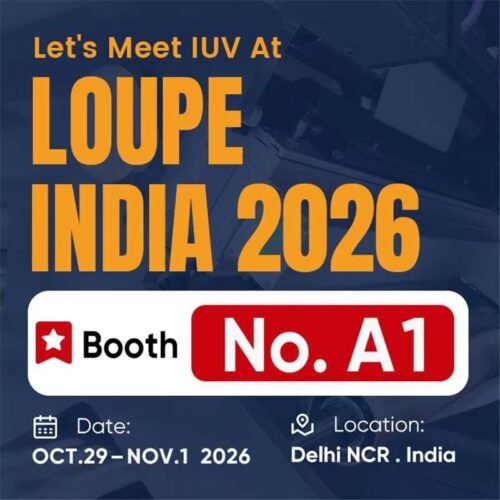
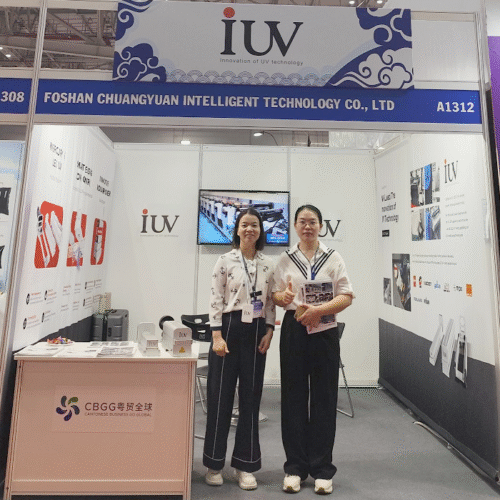
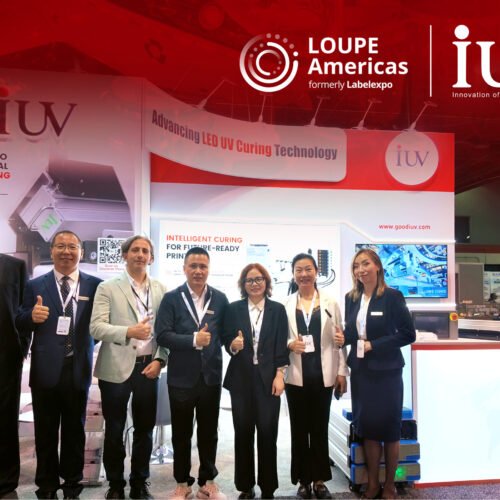
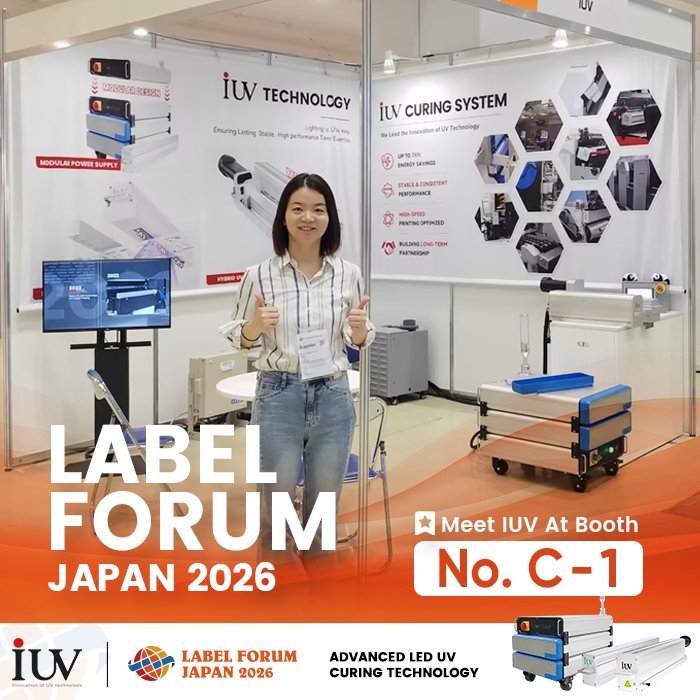
IUV participated in Label Forum Japan 2026, held from October 14 to 16 at Tokyo Big Sight in Tokyo, Japan. At Booth C-1, IUV presented its UV curing technology and solutions for label printing, flexographic printing, offset printing, and narrow web applications.
As a manufacturer of UV curing equipment, IUV focuses on LED UV curing systems, mercury UV curing systems, interchangeable curing solutions, and retrofit projects for printing equipment. These technologies support printers and press manufacturers seeking reliable curing performance, improved energy efficiency, and greater production flexibility.
Label Forum Japan 2026 provided an opportunity for IUV to strengthen its presence in the Japanese printing market and highlight the role of UV curing technology in modern label production.
For label converters, the choice of UV curing equipment affects ink performance, production speed, substrate compatibility, and maintenance requirements. IUV continues to develop curing solutions that address these practical needs across different printing processes.
LED UV Curing Technology for Label Printing
Label production often involves several printing and finishing stages within a single production line. Each stage must work in coordination to maintain print quality, registration, and production efficiency.
UV curing helps compatible inks, coatings, and varnishes cure rapidly under ultraviolet exposure. Proper curing supports ink adhesion, surface performance, and downstream processes such as rewinding, die-cutting, and finishing.
IUV LED UV curing equipment offers instant on/off operation and adjustable output. These features help reduce unnecessary energy consumption during press stops and job changes.
LED UV curing also transfers less unwanted heat to the substrate than many conventional mercury UV arrangements. This can be beneficial when processing suitable thin films and other heat-sensitive materials.
However, curing performance depends on ink chemistry, wavelength compatibility, UV intensity, press speed, and substrate properties. Selecting the right UV curing system requires consideration of the complete printing process.
UV Curing Solutions for Flexographic and Narrow Web Printing
Flexographic printing is widely used for pressure-sensitive labels, shrink sleeves, and flexible packaging. In narrow web production, curing equipment must fit the available installation space while providing sufficient UV output at the required press speed.
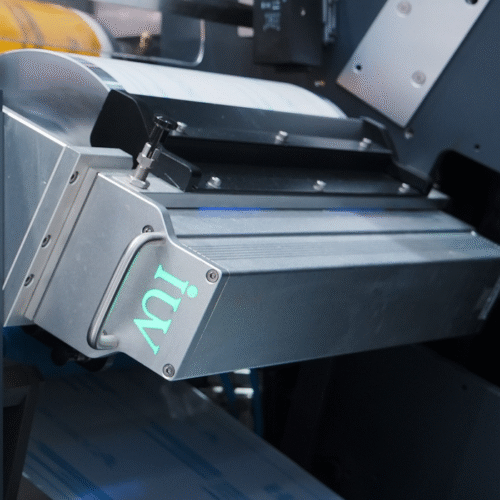
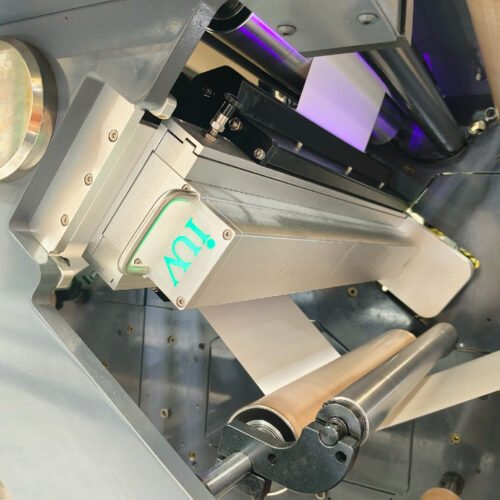
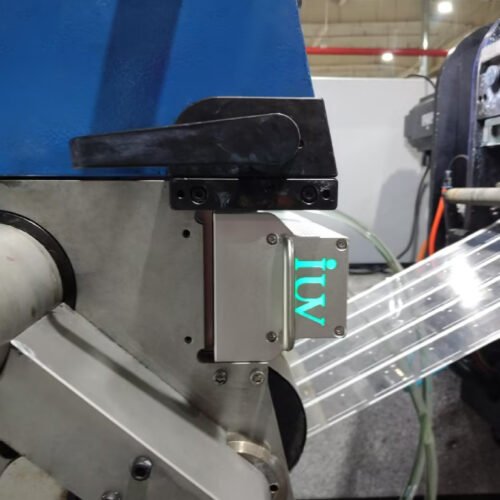
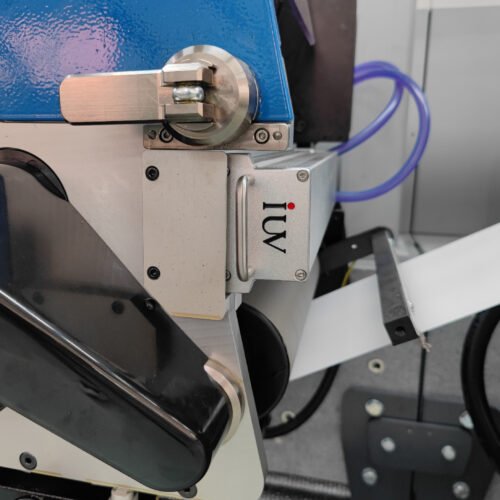
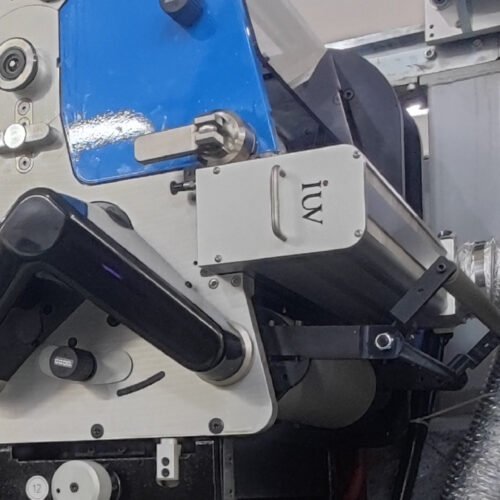
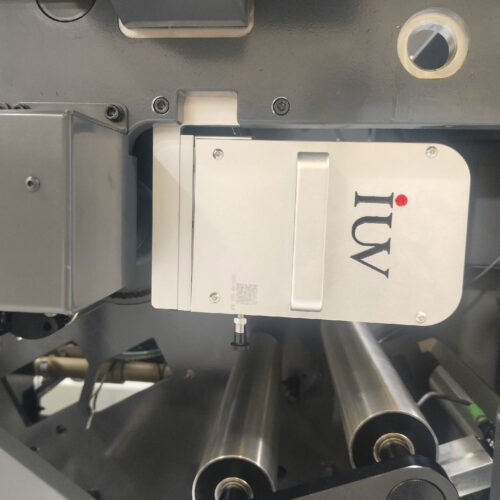
IUV LED UV curing systems are designed for integration into suitable narrow web printing presses. Their compact structure supports installation between printing units, where space and thermal management can be important considerations.
Automatic web-width adjustment can help match the active curing area to the running material width. This reduces unnecessary output outside the required curing zone and supports more efficient operation across jobs with different web widths.
Water-cooled LED modules help manage operating temperatures during continuous production. Combined with suitable electrical control, cooling supports stable system performance.
For flexographic printers, the choice between LED UV and mercury UV depends on the ink system, coating requirements, substrate range, and production conditions. IUV offers both technologies to address different curing applications.
LED UV and Mercury UV for Different Printing Requirements
LED UV and mercury UV curing systems have different operating characteristics. Understanding these differences helps printers select equipment that matches their production needs.
LED UV curing offers instant switching, adjustable output, and a focused wavelength range. It is suitable for compatible UV inks and coatings and can help reduce unwanted substrate heating.
Mercury UV curing provides a broader emission spectrum and remains suitable for many conventional UV inks, coatings, and varnishes. It continues to serve established printing processes where existing formulations and machine configurations require this technology.
IUV provides LED UV, mercury UV, and interchangeable curing solutions for selected applications. These options allow printing companies and equipment manufacturers to evaluate different curing configurations according to their technical and commercial requirements.
Interchangeable systems can be particularly useful for operations that handle varied production jobs. The appropriate setup depends on press design, ink compatibility, cooling requirements, and expected production conditions.
UV Curing for Offset Printing Applications
Offset printing is used for applications requiring fine detail, consistent image reproduction, and high-quality graphics. In UV offset production, curing performance influences handling, coating performance, and the next stage of processing.
Ink coverage, film thickness, printing speed, and coating formulation all affect curing requirements. Each curing station must provide suitable UV exposure for the materials being processed.
LED UV curing can support offset applications when the inks and coatings are formulated for the selected LED wavelength. Mercury UV remains an option for many conventional UV offset systems.
IUV provides UV curing equipment for printing applications that require different lamp technologies. System selection considers installation space, press configuration, production speed, and compatibility with the existing printing process.
Energy Efficiency and Intelligent UV Control
Energy consumption and maintenance are important considerations for printing companies operating multiple shifts. UV curing equipment that remains at full output during press stops may consume energy without contributing to production.
IUV LED UV curing systems support instant switching and adjustable output, helping reduce unnecessary operation when full curing output is not required.
Automatic web-width adjustment can further improve efficiency by limiting the active curing area to the material width. Intelligent electrical control and water cooling support stable operation during production.
For conventional UV applications, IUV mercury UV systems incorporate design features intended to improve operating efficiency and reliability. These include optimized cooling, reflective aluminum optics, and electronic shutter control.
Actual energy savings depend on the press configuration, job width, production schedule, and operating conditions. Evaluating these factors is essential when comparing existing equipment with a potential UV curing upgrade.
UV Curing Retrofits for Existing Printing Presses
Many printing companies operate presses that remain suitable for production but use older curing equipment. A UV curing retrofit can provide an opportunity to review energy consumption, maintenance requirements, and production performance.
Before a retrofit, engineers should assess mounting dimensions, electrical capacity, cooling connections, web width, press speed, and control interfaces. Ink and coating compatibility must also be checked, particularly when changing from mercury UV to LED UV technology.
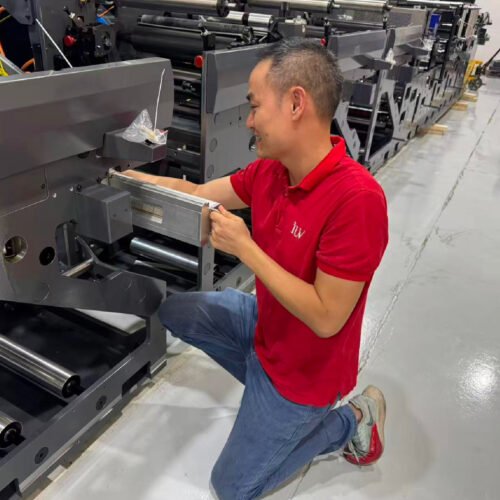
IUV provides UV curing retrofit solutions for suitable flexographic, offset, and narrow web presses. Depending on the project, a configuration may include LED UV modules, mercury UV lamps, power supplies, cooling equipment, and control components.
For printing press manufacturers, IUV also supports customized UV curing configurations for OEM integration. Modular power supplies and coordinated system components help accommodate different equipment layouts and technical requirements.
The goal is to match the UV curing system to the actual press and production process, rather than relying on lamp power alone.
IUV’s Continued Focus on the Label Printing Industry
Label Forum Japan 2026 formed part of IUV’s ongoing engagement with the international printing industry. The event highlighted the relevance of UV curing technology to label converters, flexographic printers, offset printing operations, and narrow web press manufacturers.
As printing requirements continue to evolve, curing systems must balance production speed, print quality, energy use, and compatibility with different materials. LED UV technology provides new options for suitable applications, while mercury UV remains important for established processes.
IUV continues to focus on practical UV curing equipment for new press integration and existing machine upgrades. Its product range includes LED UV curing systems, mercury UV curing systems, interchangeable solutions, and retrofit configurations.
By considering ink chemistry, substrate properties, cooling, press controls, and installation requirements, IUV works to help customers identify suitable curing solutions for their applications.
Learn More About IUV UV Curing Equipment
Following Label Forum Japan 2026, IUV welcomes enquiries from label converters, printing equipment manufacturers, and production teams evaluating UV curing technology for their operations.
Whether the project involves a new narrow web press, a flexographic printing line, an offset application, or an upgrade to an existing machine, the correct curing configuration begins with a clear understanding of production requirements.
For more information about IUV LED UV curing equipment, mercury UV systems, and customized UV curing solutions, visit goodiuv.com or contact the IUV team at info@goodiuv.com.
IUV remains committed to developing UV curing solutions that support reliable production, practical integration, and the changing needs of the global label printing industry.