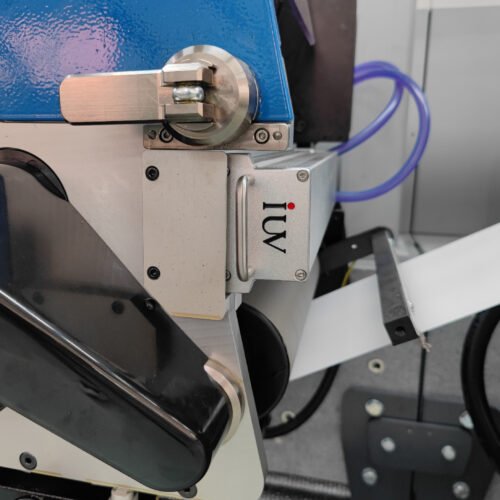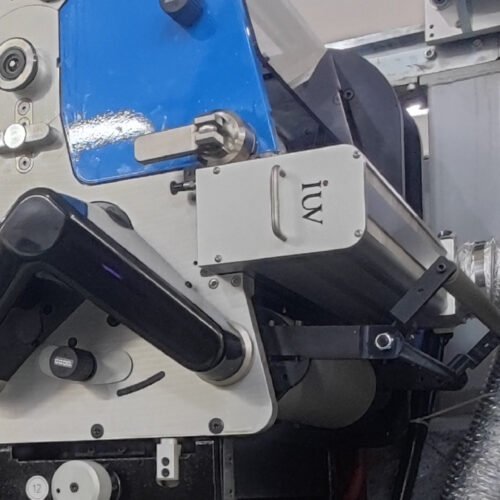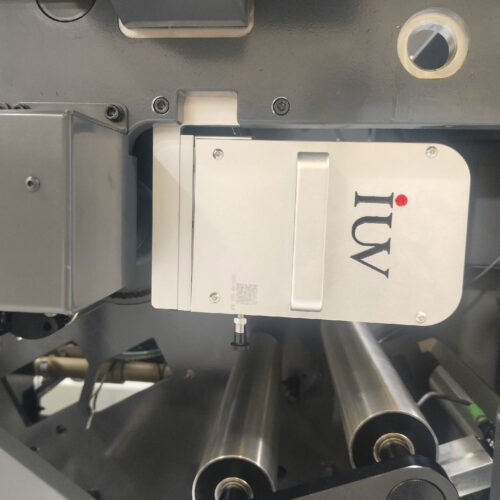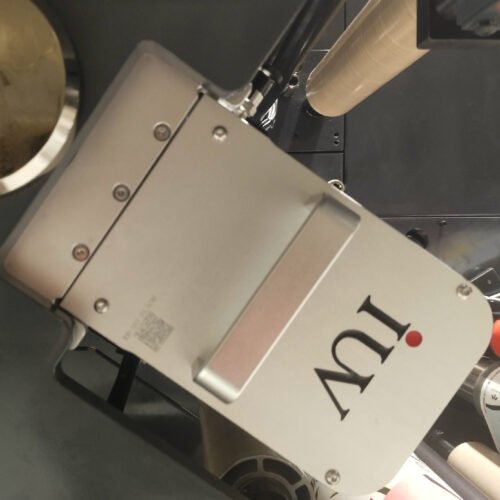
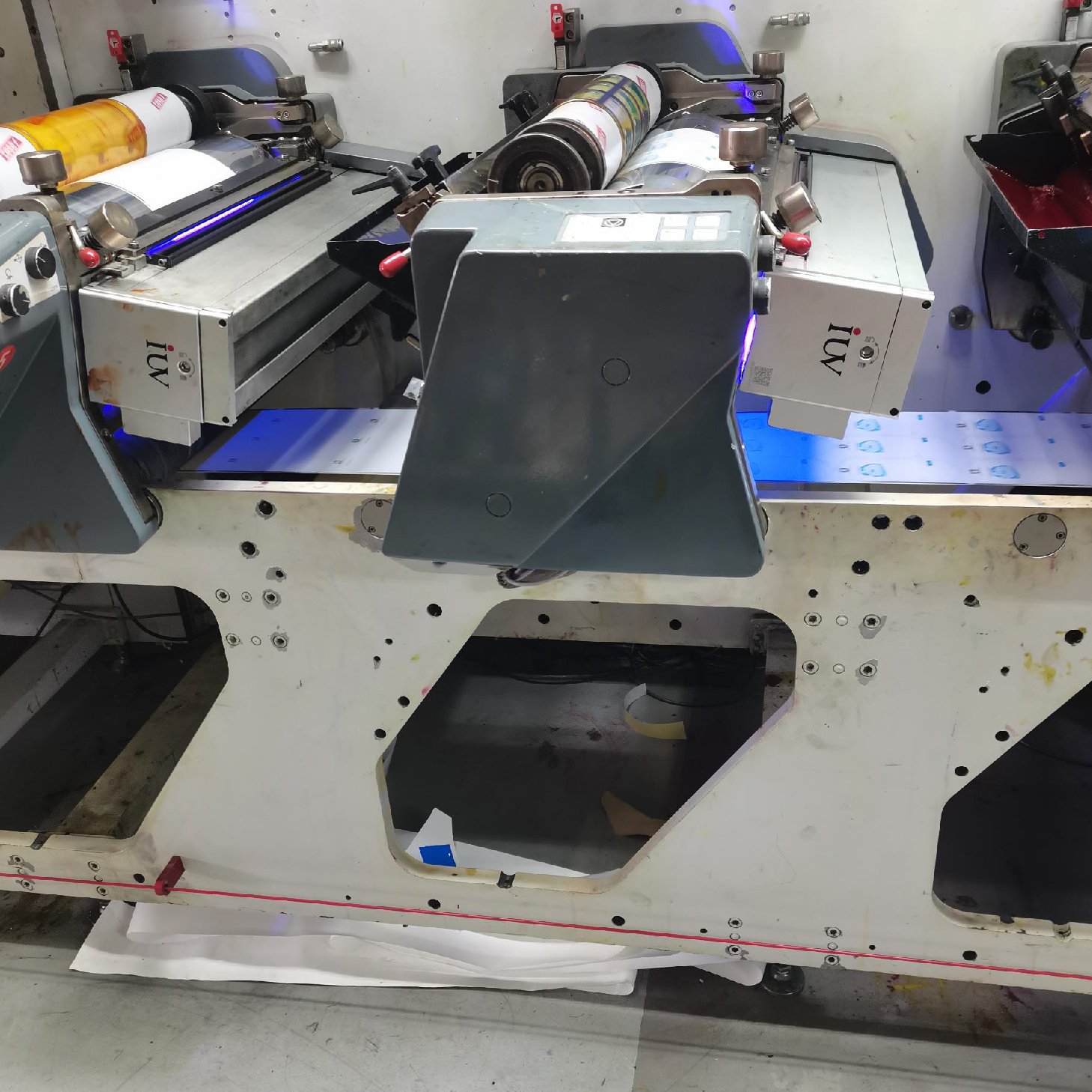
Industrial flexographic printing systems depend heavily on UV curing stability to maintain print adhesion, coating consistency, and high-speed production reliability. In narrow web label printing and hybrid offset printing environments, UV lamp electrical performance directly affects curing efficiency and production continuity. Electrical instability within UV curing equipment often produces symptoms that initially appear as ink or substrate problems, but in practice, the root cause is frequently linked to power delivery imbalance, irradiance fluctuation, or thermal control failure inside the curing system.
As LED UV curing systems become increasingly integrated into industrial printing lines, electrical diagnostics have evolved from simple lamp replacement procedures into system-level engineering analysis. Modern UV curing equipment operates with tightly controlled wavelength output, energy density regulation, and dynamic line speed synchronization. Small electrical abnormalities can therefore produce significant process instability during production.
In production environments, incomplete curing, poor adhesion, gloss inconsistency, and unstable curing penetration are commonly associated with electrical irregularities affecting UV irradiance output. These issues become more critical in high-speed flexographic printing where exposure time is limited and curing margins are narrow.
Electrical instability and irradiance fluctuation in LED UV curing systems
One of the most common electrical failure conditions in industrial UV curing equipment involves unstable irradiance output caused by power supply fluctuation or LED driver inconsistency. LED UV curing systems rely on highly regulated current control to maintain stable optical energy delivery across the substrate surface.
In narrow web printing environments, even minor variations in irradiance output can alter curing behavior significantly because exposure time decreases as line speed increases. In production, electrical instability is typically observed through inconsistent curing results between production runs despite identical mechanical press settings.
365 nm, 385 nm, and 395 nm LED systems each respond differently to electrical fluctuation due to variations in forward voltage behavior and thermal sensitivity. Higher-energy 365 nm systems often show more visible curing instability when power delivery becomes inconsistent because curing penetration depends heavily on photon density stability.
Typically observed production symptoms include:
- Localized incomplete curing across the web width
- Gloss inconsistency during long production runs
- Adhesion failure after converting or lamination
In practice, these conditions are frequently misdiagnosed as ink formulation problems while the actual issue originates from unstable electrical regulation inside the UV curing unit.
Electrical diagnostics therefore require simultaneous monitoring of:
- Driver current stability
- Voltage consistency under load
- Irradiance variation during speed transitions
- Cooling system electrical behavior
Without stable electrical control, curing uniformity cannot be maintained consistently in high-speed flexographic production.
Thermal management failure and wavelength drift under continuous operation
LED UV curing systems operate under tightly controlled thermal conditions because junction temperature directly affects wavelength stability and irradiance efficiency. Unlike traditional mercury UV lamps, LED systems generate low substrate heat but still produce concentrated internal thermal load within the diode array.
In production environments, cooling system electrical failure is one of the most common causes of curing instability. Fan motor degradation, pump failure, or unstable cooling controller operation can increase LED junction temperature, resulting in wavelength drift and reduced optical output.
In practice, this creates a progressive curing instability pattern where print quality deteriorates gradually during extended operation.
Typically observed symptoms include:
- Stable curing at startup followed by later adhesion failure
- Increasing surface tackiness during continuous production
- Reduced curing penetration at elevated press speed
385 nm and 395 nm systems are generally more thermally stable than 365 nm systems, but all LED UV configurations experience optical efficiency reduction when cooling performance becomes unstable.
In narrow web label printing, substrate sensitivity amplifies these effects. PET and BOPP films often reveal curing instability earlier because reduced polymerization immediately affects adhesion and scratch resistance.
Engineering diagnosis typically focuses on:
- Cooling fan electrical current monitoring
- Temperature sensor calibration verification
- Thermal controller response stability
- Heat sink airflow consistency
In production, wavelength drift caused by thermal instability often appears before total electrical failure occurs.
Power supply imbalance and curing inconsistency across printing stations
Industrial flexographic printing systems frequently use multiple UV curing stations within the same production line. Electrical imbalance between these stations creates curing inconsistency that is often mistaken for substrate variation or coating formulation instability.
In production, UV power supplies may experience:
- Voltage fluctuation under high-speed load conditions
- Capacitor degradation over long operational cycles
- Phase imbalance between multiple curing units
These conditions directly influence irradiance stability and energy density delivery.
Offset printing hybrid systems are particularly sensitive because coating layers require uniform polymerization behavior across multiple print stations. Flexographic printing systems show additional sensitivity due to variable ink film thickness generated by anilox transfer behavior.
Typically observed production problems include:
- One print station showing weaker curing than adjacent units
- Intermittent adhesion loss during acceleration phases
- Uneven gloss development between coating layers
In practice, electrical imbalance often becomes more visible as line speed increases because reduced exposure time leaves less tolerance for irradiance inconsistency.
Engineering correction usually requires coordinated analysis of:
- AC input stability
- Power supply output regulation
- Grounding consistency across UV stations
- Electrical noise interference from press motors
System-level electrical synchronization is therefore essential for stable curing performance in narrow web production.
Ink film thickness interaction with electrical curing instability
Electrical failure symptoms become increasingly visible when ink film thickness varies during flexographic printing. Thick coatings and high-opacity white inks require stable curing penetration because UV transmission through the ink layer is already limited.
LED UV systems emit concentrated spectral energy at wavelengths such as 365 nm, 385 nm, and 395 nm. If electrical instability reduces irradiance consistency, thicker ink layers are typically the first areas to show incomplete curing.
In production environments, these conditions are commonly observed in:
- Heavy solid color areas
- Dense white ink applications
- Multi-layer varnish structures
Paper substrates absorb part of the UV energy before it reaches deeper coating layers, while PET and BOPP films tend to reveal surface cure with insufficient internal polymerization.
Typically observed symptoms include:
- Surface hardness with weak internal bonding
- Delayed adhesion failure after rewinding
- Reduced abrasion resistance in thick ink regions
In practice, electrical instability amplifies the effect of ink layer variation because curing penetration margins become narrower under fluctuating irradiance conditions.
Engineering diagnosis therefore requires evaluating electrical performance together with:
- Ink thickness consistency
- Substrate reflectivity behavior
- Photoinitiator compatibility
- Exposure duration at actual line speed
Electrical diagnostics isolated from production conditions often fail to identify the true source of curing instability.
Line speed synchronization and electrical response behavior in narrow web production
High-speed narrow web printing systems require precise synchronization between UV output and mechanical transport speed. LED UV curing systems respond rapidly to electronic control signals, but electrical instability can interrupt this synchronization process.
In production, acceleration phases are often where electrical weaknesses first become visible. Rapid speed changes alter power demand inside the UV system, especially when multiple curing stations operate simultaneously.
Typically observed operational behavior includes:
- Stable curing at moderate speed but instability at maximum production speed
- Temporary under-curing during acceleration
- Intermittent irradiance drop during long production cycles
Traditional mercury UV systems generally show slower electrical response behavior but broader curing tolerance. LED UV systems provide higher precision but require more stable electrical regulation.
In narrow web label printing, the relationship between line speed and energy density becomes extremely sensitive because exposure windows are short. Any electrical fluctuation immediately affects curing completeness.
Engineering integration strategies increasingly include:
- Real-time irradiance feedback systems
- Dynamic power compensation during speed transitions
- Electrical load balancing between UV stations
- Integrated thermal and optical monitoring controls
In practice, stable curing performance is achieved when electrical regulation, irradiance stability, wavelength consistency, and mechanical transport speed remain synchronized throughout the entire production cycle.
Industrial UV lamp electrical failure diagnosis is therefore not limited to component replacement. It is a process-oriented engineering analysis involving optical behavior, thermal management, electrical regulation, substrate interaction, and production dynamics within the full flexographic printing environment.