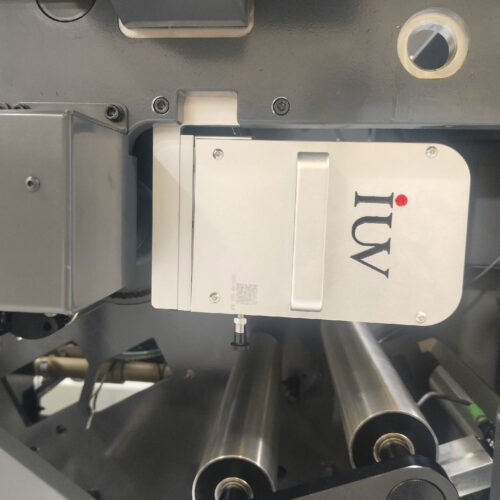
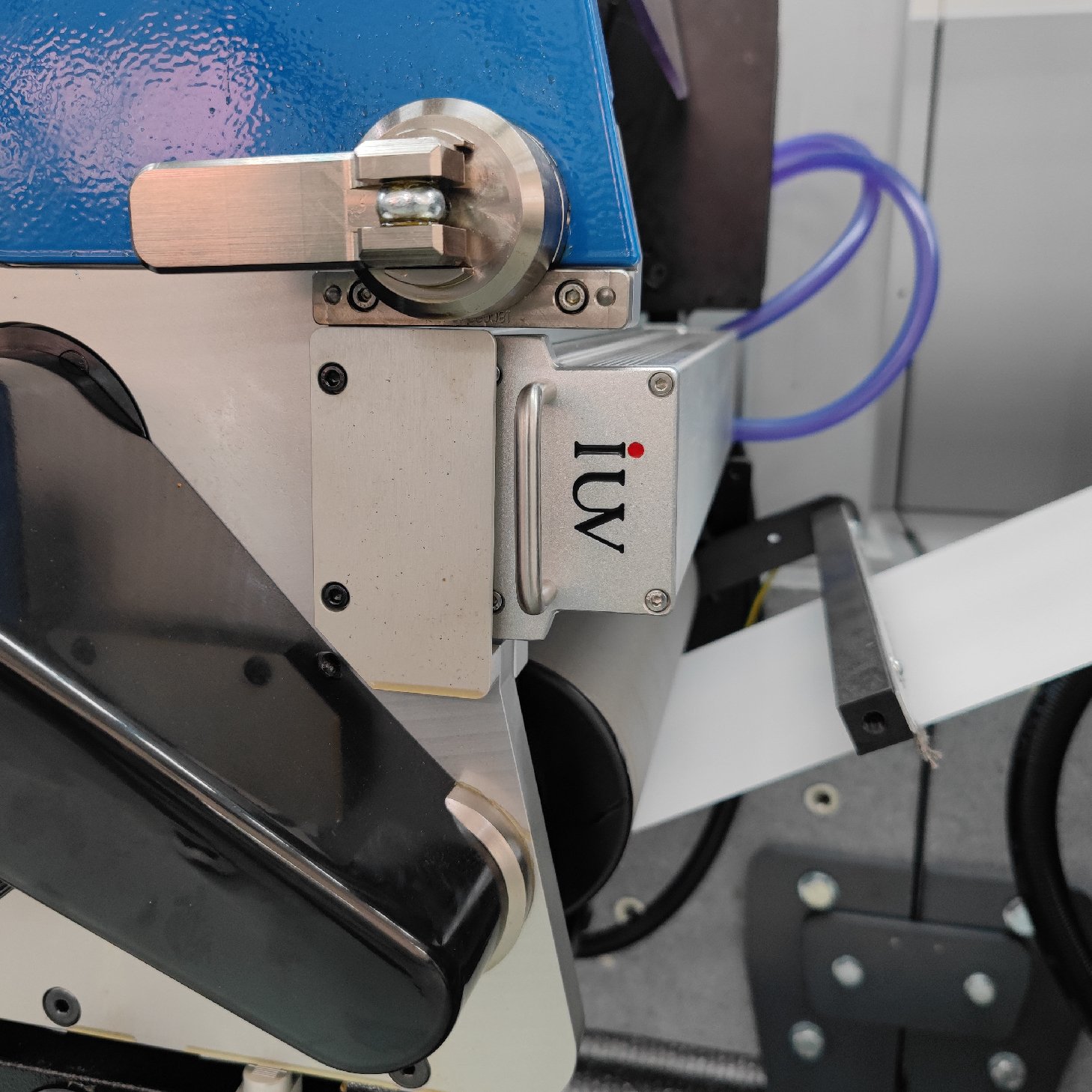
Flexographic printing systems, especially in narrow web label and packaging production, rely heavily on UV curing stability to maintain print quality, adhesion strength, and production speed consistency. As industrial demand shifts toward higher throughput and multi-substrate compatibility, the comparison between LED UV lamps and traditional UV lamps becomes a core engineering consideration rather than a simple equipment selection.
In production environments, curing performance directly influences ink polymerization behavior, coating uniformity, and downstream converting stability. While both LED UV and mercury-based UV systems serve the same fundamental purpose, their operational mechanisms differ significantly in wavelength control, energy consumption, thermal behavior, and curing penetration characteristics.
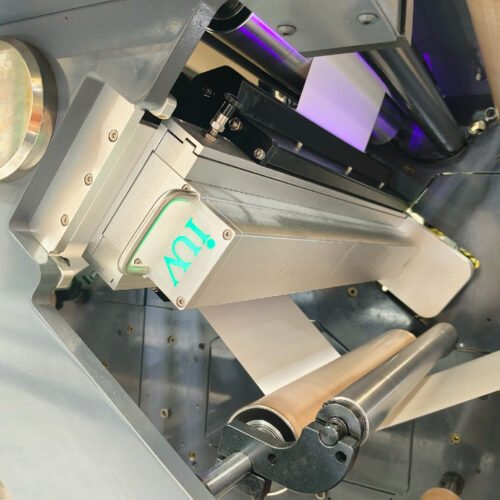
LED UV curing systems operate within narrow spectral ranges such as 365 nm, 385 nm, and 395 nm. This spectral precision enables better process control but also introduces tighter requirements for ink formulation compatibility. Traditional UV lamps provide broader spectral output, which increases tolerance but reduces energy efficiency and process repeatability.
In flexographic printing, offset printing integration, and narrow web label production, these differences directly affect curing stability under high-speed conditions.
Energy consumption behavior and thermal efficiency differences in production environments
Energy consumption is one of the most critical engineering differences between LED UV lamps and traditional UV lamps. In industrial flexographic printing systems, UV curing units often operate continuously under high production loads, making energy efficiency a direct operational cost factor.
LED UV systems consume significantly less electrical energy because they convert a higher percentage of input power into usable UV radiation. They also operate under a cold light source principle, which minimizes infrared emission and reduces unnecessary thermal load on substrates.
In production, this low heat impact is particularly important for PET and BOPP films used in narrow web label printing. Excess heat from traditional UV lamps can cause substrate shrinkage, tension instability, and registration drift.
Traditional mercury UV lamps, however, generate broader-spectrum radiation that includes significant infrared output. This increases energy consumption and introduces thermal stress into the printing process. In offset printing environments with coated paper substrates, this may assist drying in some cases, but it also increases variability in coating behavior.
Typically observed production differences include:
- LED UV systems maintain lower substrate temperature during continuous operation
- Mercury UV systems show higher thermal accumulation over long runs
- Narrow web systems benefit more from LED thermal stability
In practice, energy efficiency is not only a cost factor but also a process stability parameter that influences curing consistency and substrate deformation behavior.
Wavelength control and photochemical curing efficiency comparison
Curing efficiency is strongly determined by wavelength control and photoinitiator response behavior. LED UV lamps operate in defined spectral bands such as 365 nm, 385 nm, and 395 nm, while traditional UV lamps emit a broad spectrum covering multiple reactive wavelengths simultaneously.
In flexographic printing systems, this difference has a direct impact on curing consistency. LED UV systems require precise matching between ink photoinitiator chemistry and emitted wavelength. If mismatched, incomplete curing is commonly observed even at high irradiance levels.
Traditional UV lamps offer broader compatibility because their spectral output activates a wider range of photoinitiators. However, this also reduces process repeatability and increases variability between production batches.
In narrow web printing, LED systems provide more stable curing control for standardized ink systems. In offset printing environments, however, broad-spectrum UV lamps may still offer advantages when using mixed ink formulations.
In production, wavelength-related differences typically appear as:
- LED systems show sharper curing control but lower tolerance for ink variation
- Mercury lamps show higher compatibility but less precision in curing depth control
- Flexo systems require tighter photoinitiator matching under LED UV
Curing efficiency is therefore not only determined by power output but by spectral interaction with ink chemistry.
Irradiance distribution, curing penetration, and ink layer response behavior
UV irradiance defines the intensity of energy delivered to the ink surface, while curing penetration determines how deeply that energy can initiate polymerization within the ink layer. These two parameters behave differently between LED UV and traditional UV systems.
LED UV lamps generate high peak irradiance with directional emission. However, their penetration depth is influenced by spectral narrowness. In flexographic printing, where ink film thickness varies due to anilox transfer, this can result in surface curing with incomplete internal polymerization.
Traditional UV lamps provide lower peak irradiance but deeper spectral penetration due to broader wavelength distribution. This can improve curing in thicker ink layers but may also increase unwanted heat exposure.
In production environments, typical curing penetration behavior includes:
- LED UV systems show strong surface curing with controlled depth
- Mercury UV systems show deeper penetration but less precision
- Thick ink films in flexo printing amplify curing differences
Ink layer thickness plays a critical role. High-opacity white inks and metallic pigments reduce UV transmission, making LED systems more sensitive to formulation and exposure time alignment.
In narrow web production, uneven irradiance distribution across the web width can further amplify curing inconsistency, especially at high speed.
Line speed synchronization and high-speed production stability comparison
Line speed is a dominant variable in both LED UV and traditional UV curing systems. In flexographic printing and narrow web label production, increasing speed reduces exposure time, directly affecting curing completeness.
LED UV systems respond instantly to speed changes due to electronic switching capabilities. However, their curing chemistry does not automatically adapt to reduced exposure time. This can lead to incomplete curing if irradiance or ink formulation is not adjusted accordingly.
Traditional UV lamps require warm-up time and exhibit slower response to speed changes. While less dynamic, they provide more stable curing behavior under steady-state production conditions.
In production, typical stability differences include:
- LED UV systems offer fast response but require tighter process control
- Mercury UV systems offer slower response but more forgiving curing behavior
- High-speed flexo lines benefit from LED synchronization capability
In practice, curing instability often appears during acceleration phases or job transitions. Without proper synchronization between UV output and mechanical speed, both systems can produce adhesion variability and gloss inconsistency.
Substrate behavior, adhesion performance, and system-level curing limitations
Substrate interaction is a critical factor in comparing LED UV and traditional UV systems. PET, BOPP, and paper substrates respond differently under UV exposure due to their optical and thermal properties.
LED UV systems, with low heat impact, improve dimensional stability in film-based substrates. However, they rely entirely on photochemical curing, which increases sensitivity to ink formulation and exposure consistency.
Traditional UV lamps provide additional thermal energy that can assist coating flow and adhesion development. This can improve curing margin in some offset printing applications, but it may also introduce substrate deformation in thin films.
In production environments, typically observed adhesion behavior includes:
- LED UV systems show stable substrate handling but higher sensitivity to ink mismatch
- Mercury UV systems show better tolerance for variable ink chemistry
- PET and BOPP require tighter LED UV parameter control
Incomplete curing is commonly expressed as poor adhesion after lamination, reduced abrasion resistance, and inconsistent surface hardness.
System-level curing performance depends on the balance between wavelength selection, irradiance stability, ink film thickness, and substrate energy absorption characteristics.
Industrial integration perspective in flexo, offset, and narrow web systems
In modern industrial printing environments, UV curing systems are no longer isolated components. They are integrated into flexographic printing lines, offset printing units, and narrow web label production systems with shared process dependencies.
LED UV systems provide improved energy efficiency and precise wavelength control, making them suitable for high-speed narrow web production. However, they require tighter coordination between ink chemistry and process parameters.
Traditional UV systems remain relevant in applications requiring broader ink compatibility and deeper curing penetration tolerance.
In production, system-level differences are typically observed as:
- LED UV supports higher precision in narrow web label printing
- Mercury UV supports broader material compatibility in offset printing
- Flexographic printing requires balanced control between both systems
Industrial performance is therefore defined not by lamp type alone, but by how well curing parameters are synchronized with the full printing process chain.