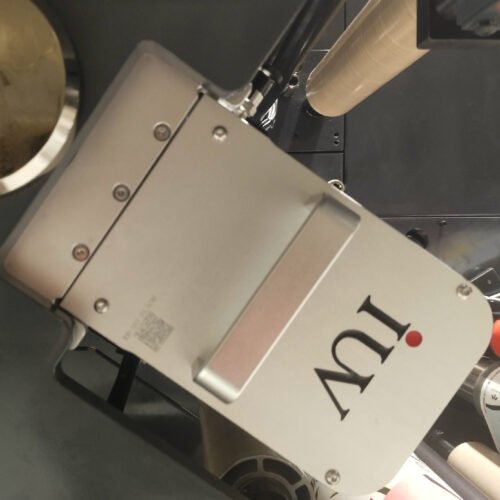
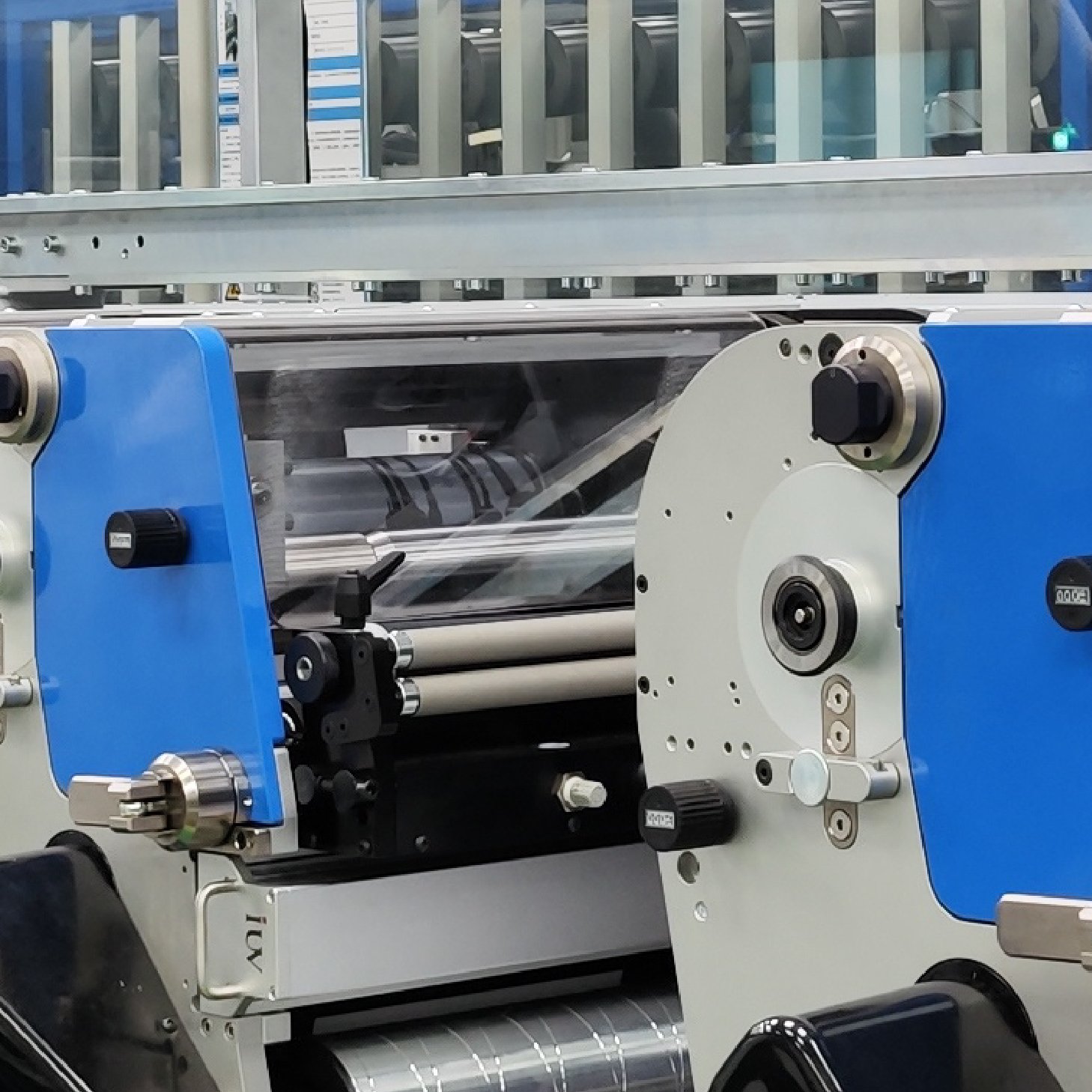
In modern label printing and packaging production, label shrinkage during UV curing has become a critical issue for converters using high-speed flexographic printing, narrow web presses, and industrial UV curing systems. As the industry shifts toward thinner films, sustainable packaging materials, and shrink-sensitive substrates, maintaining dimensional stability during curing is far more challenging than it was with traditional paper labels.
The problem is especially common in PET, BOPP, PVC, and shrink sleeve materials exposed to excessive curing energy or poor thermal management. In many industrial printing applications, operators initially assume that label shrinkage is purely caused by heat. In reality, the issue is closely related to UV wavelength selection, curing energy density, UV ink chemistry, web tension, oxygen inhibition, and cooling system efficiency.
Understanding how to prevent label shrinkage during UV curing in modern printing applications requires balancing complete UV ink adhesion with minimum substrate stress. This balance has become increasingly important in label printing environments where print quality, production speed, and material compatibility must all work together simultaneously.
Why Label Shrinkage Happens During UV Curing
During UV curing, ultraviolet energy activates photoinitiators inside the ink layer, triggering rapid polymerization. While this process allows instant curing in flexographic printing and offset printing, it also generates heat at the substrate surface. When curing temperatures exceed the material’s thermal stability limit, the label begins to deform, shrink, or warp.
Traditional mercury lamp systems are one of the main causes of excessive substrate heating because they emit substantial infrared radiation in addition to UV energy. This becomes problematic in narrow web printing applications running at high production speeds where the web passes through multiple curing stations continuously.
Shrink-sensitive materials such as BOPP and shrink sleeve films are particularly vulnerable because their molecular structure reacts quickly to temperature fluctuations. Once the film starts shrinking during curing, print registration, die-cutting accuracy, and final label appearance may all be compromised.
In many packaging printing environments, operators increase lamp intensity whenever they observe incomplete curing or poor adhesion. However, excessive UV dose often creates more thermal stress than necessary and can worsen shrinkage problems instead of solving them.
How LED UV Curing Systems Reduce Shrinkage Risk
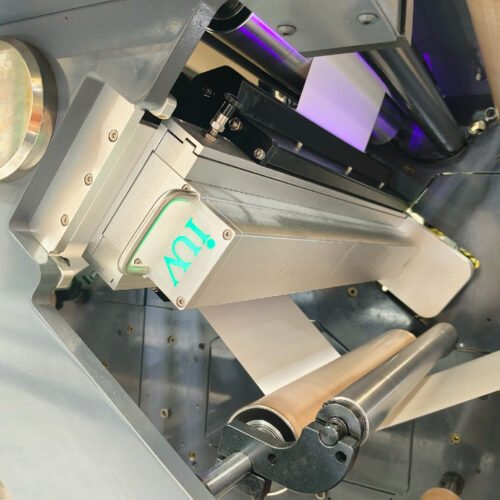
Modern UV LED curing systems have significantly improved thermal control in industrial UV curing applications. Unlike conventional mercury lamps, LED UV systems emit narrow-spectrum ultraviolet energy with dramatically reduced infrared heat. This allows converters to maintain stable curing performance while minimizing substrate deformation.
In high-speed label printing, LED UV systems help reduce temperature buildup across the web, especially during long production runs. This is one reason why LED UV curing technology has become increasingly popular in shrink sleeve printing and flexible packaging production.
Another advantage is instant ON/OFF capability. Traditional mercury lamps remain continuously active, generating unnecessary heat even during press idle periods. LED UV curing systems operate only when needed, improving energy efficient UV curing while reducing thermal accumulation inside the press.
However, switching to LED UV curing does not automatically eliminate shrinkage problems. UV wavelength compatibility between the ink and curing system remains extremely important.
395nm vs 385nm in Label Printing Applications
The comparison between 395nm and 385nm curing systems is one of the most discussed topics in modern industrial UV curing.
395nm LED UV systems are widely used in label printing because they typically generate lower substrate temperatures while maintaining stable curing performance for many modern UV ink formulations. In flexographic printing applications involving heat-sensitive materials, 395nm systems often provide better dimensional stability.
385nm systems may deliver stronger surface curing for certain UV ink chemistries, especially where aggressive photoinitiator activation is required. However, some materials experience higher thermal stress under 385nm exposure depending on ink absorption characteristics and production speed.
In practical printing applications, the best wavelength depends on several variables including substrate type, ink formulation, coating thickness, press speed, and cooling system efficiency. Successful converters usually validate wavelength selection through real production testing rather than relying only on theoretical curing specifications.
The Relationship Between UV Dose and Ink Adhesion
One of the most common troubleshooting mistakes in UV curing is assuming that more energy always improves curing quality. In reality, excessive UV dose frequently causes label shrinkage while delivering only marginal improvements in UV ink adhesion.
Modern UV curing technology focuses on achieving complete polymerization with controlled energy exposure. Overcuring can create brittle ink films, substrate distortion, edge curl, and dimensional instability.
Ink curing consistency depends on balancing irradiance, exposure time, ink film thickness, and press speed. In high-speed flexographic printing, excessively thick ink laydown often requires higher curing energy, increasing substrate heat accumulation.
This is especially critical in packaging printing applications where thin synthetic films pass repeatedly through multiple curing stations. Poor heat management gradually increases substrate temperature across the production line.
To optimize industrial UV curing performance, many converters reduce unnecessary energy load by improving anilox selection, adjusting ink density, optimizing curing distance, and upgrading cooling efficiency instead of simply increasing lamp power.
Material Compatibility in Modern Label Printing
Different label materials respond differently to UV curing conditions.
Coated paper labels generally tolerate higher curing temperatures compared to synthetic films. PET materials offer relatively stable dimensional performance but can still deform under excessive curing energy during long production runs.
BOPP films are highly sensitive to heat accumulation and web tension fluctuations. Improper curing conditions may cause stretching, wrinkling, or registration instability.
Shrink sleeve materials require the highest level of thermal control because their engineered shrink properties can activate prematurely during curing. In shrink sleeve printing, overheating during UV exposure may distort graphics before the product even reaches the steam tunnel process.
Low migration printing applications also require precise curing control because incomplete polymerization can affect packaging compliance and chemical resistance performance.
For this reason, LED UV curing systems are increasingly preferred in food packaging, pharmaceutical labels, and cosmetic packaging production where both substrate protection and curing reliability are essential.
Troubleshooting Common Shrinkage Problems
When troubleshooting label shrinkage during UV curing, operators should first determine whether the issue originates from excessive heat, curing imbalance, or mechanical tension instability.
If shrinkage appears immediately after curing stations, excessive UV dose or insufficient cooling is usually responsible. Reducing lamp intensity or improving chill roller efficiency often improves dimensional stability.
If the problem appears after rewinding, residual stress or incomplete curing may be contributing factors. In some cases, oxygen inhibition prevents full surface polymerization, leading operators to overcompensate with unnecessary curing energy.
Uneven shrinkage across the web width may indicate inconsistent UV intensity distribution or airflow imbalance inside the curing system.
Successful troubleshooting in industrial printing applications usually requires evaluating the entire production process rather than adjusting only lamp output.
Future Trends in Industrial UV Curing
The future of industrial UV curing is moving toward smarter thermal management and higher curing precision. Advanced LED UV systems increasingly integrate intelligent power control, real-time temperature monitoring, and automated curing optimization.
As sustainable packaging materials become thinner and more heat sensitive, thermal efficiency will become even more important in modern label printing.
Converters investing in next-generation LED UV curing systems are not only reducing energy consumption. They are also improving production consistency, reducing material waste, and achieving better compatibility with advanced packaging substrates.
In modern printing applications, preventing label shrinkage during UV curing is no longer just a maintenance concern. It has become a critical part of print quality control, production efficiency, and long-term operational reliability.