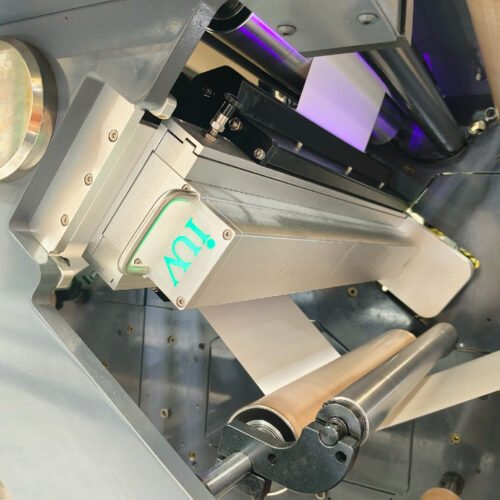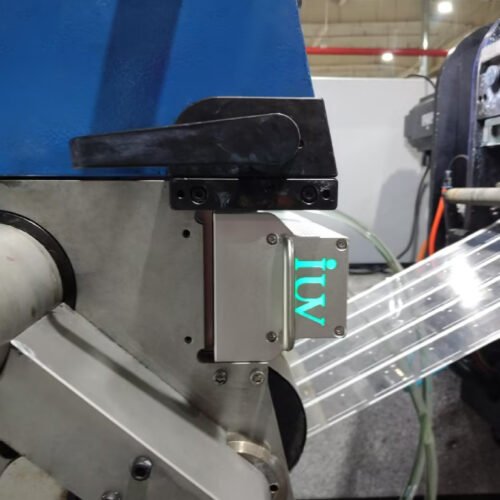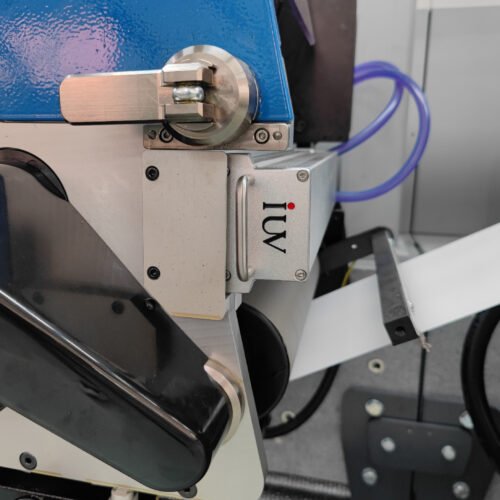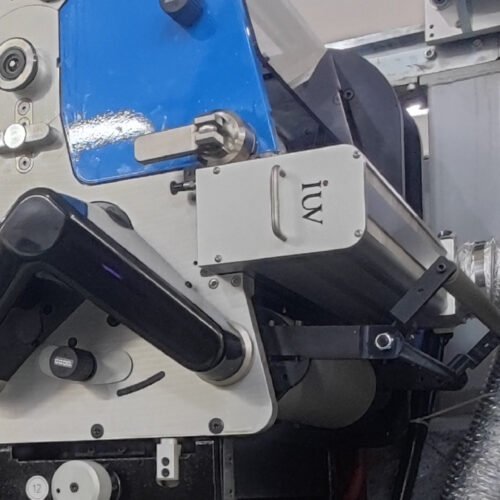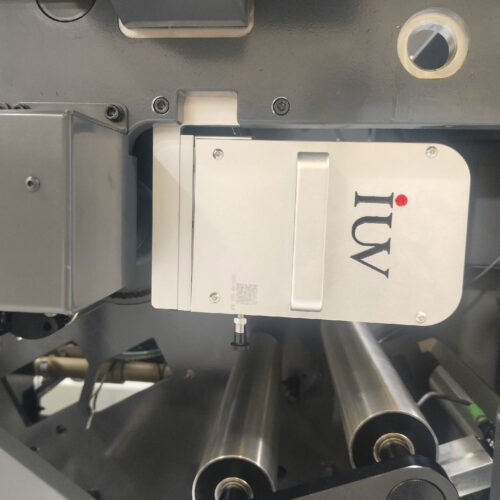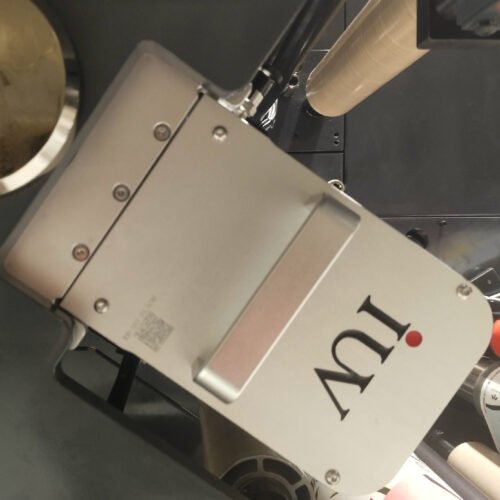
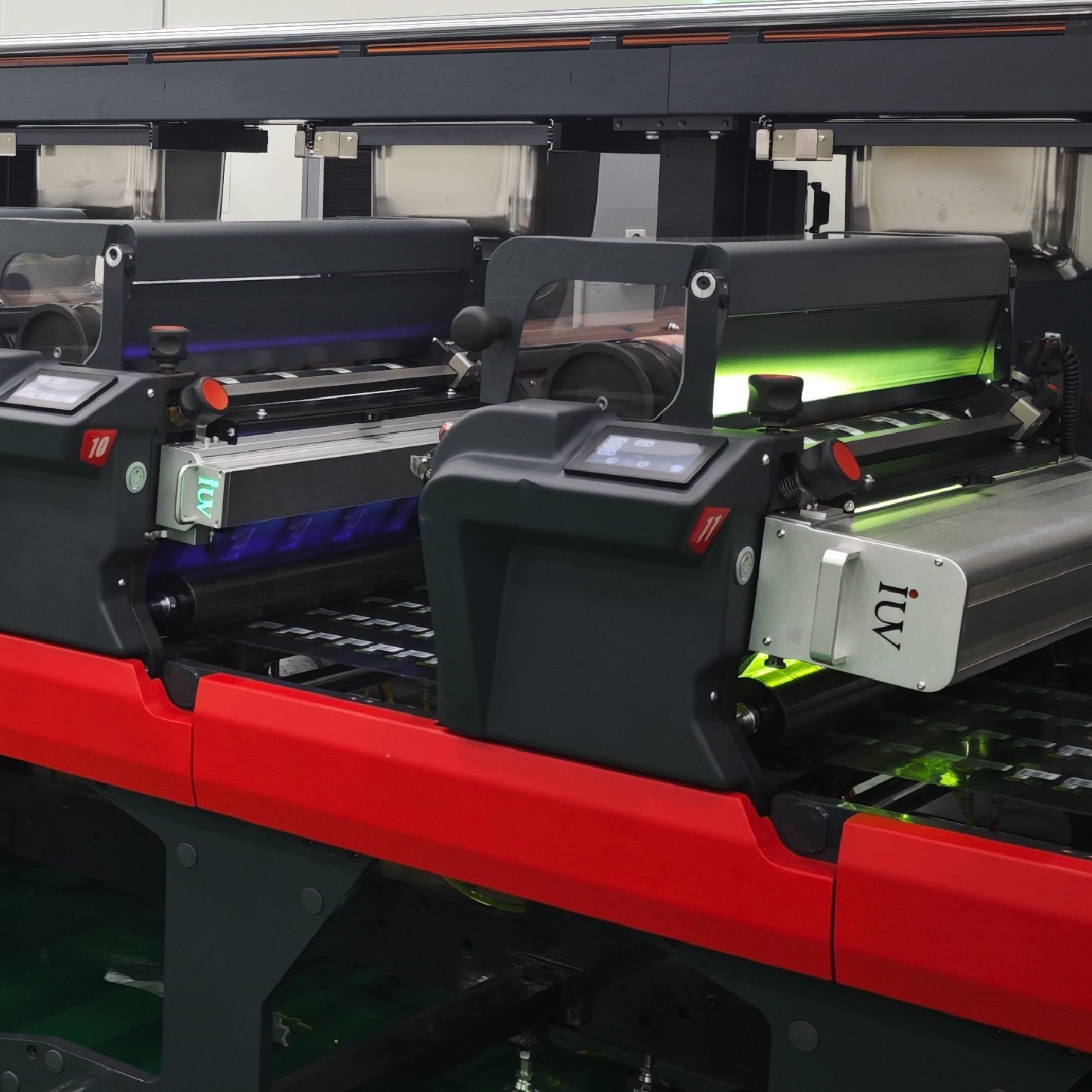
In narrow web label printing production lines, UV curing has become one of the most energy-sensitive stages of the entire process, especially when moving from traditional mercury UV lamps to LED-based systems. The shift is not only about replacing a light source but about rethinking how UV dose, wavelength control, ink chemistry, and thermal behavior interact under continuous flexographic printing conditions. In this context, IUV LED UV Curing System Energy Consumption Optimization in Narrow Web Label Printing Production Lines is not simply a design consideration but a direct factor affecting production cost per meter, press stability, and substrate compatibility.
UV curing behavior in narrow web flexographic production
In narrow web flexographic printing, substrates such as PE, BOPP, PET, and coated paper behave differently under UV exposure due to their surface energy and thermal sensitivity. UV ink systems rely on photoinitiators that react under specific wavelengths, typically around 365–405 nm for LED UV systems. The curing process is not only a surface reaction; it involves polymer crosslinking that depends on UV dose (mJ/cm²), irradiance (W/cm²), and exposure time.
When the IUV LED UV Curing System Energy Consumption Optimization in Narrow Web Label Printing Production Lines is properly engineered, the system ensures that the UV dose is matched precisely to ink formulation requirements rather than overexposing to compensate for instability. In traditional mercury systems, over-curing was often used as a safety margin, but this leads to unnecessary heat load and energy waste. LED systems allow tighter control, but only if the press parameters are correctly synchronized.
A key engineering observation in real production lines is that inconsistent web speed introduces a non-linear relationship between energy input and curing completeness. Even a 5–10% fluctuation in line speed can significantly change UV dose distribution, which directly impacts adhesion performance and surface hardness.
Energy consumption mechanisms in UV LED curing systems
The energy consumption of LED UV systems is often misunderstood as being linearly lower than mercury lamps. In practice, the IUV LED UV Curing System Energy Consumption Optimization in Narrow Web Label Printing Production Lines depends on multiple subsystems: LED chip efficiency, driver conversion losses, cooling system load, and optical efficiency of the reflector or lens system.
Unlike mercury lamps, LED systems convert electrical energy into narrow-band UV output, but they still generate substantial heat at the junction level. If thermal management is inefficient, junction temperature rises, causing wavelength drift and reduced irradiance stability. This leads to operators increasing power output to compensate, which negates energy savings.
From an engineering standpoint, UV LED systems operate most efficiently when maintained within a stable thermal window, typically controlled by water-cooled or high-efficiency air-cooled modules. If cooling is undersized, the system will consume more auxiliary energy while also reducing LED lifespan, increasing total cost of ownership.
Ink chemistry also plays a hidden role in energy consumption. High-reactivity photoinitiator systems can reduce required UV dose, allowing the IUV LED UV Curing System Energy Consumption Optimization in Narrow Web Label Printing Production Lines to operate at lower power settings. However, ink viscosity, pigment loading, and oxygen inhibition behavior must be balanced carefully. Oxygen inhibition is particularly critical in low-migration label applications, where surface curing speed must overcome ambient oxygen quenching at the interface.
Process optimization in real industrial conditions
In actual label printing production, optimization is rarely about maximizing UV power efficiency alone. It is about balancing curing depth, surface tack, adhesion strength, and production stability. The IUV LED UV Curing System Energy Consumption Optimization in Narrow Web Label Printing Production Lines is most effective when integrated into closed-loop process control rather than static parameter settings.
One of the most common inefficiencies observed in production environments is over-curing of white inks and high-opacity layers. These inks require significantly higher UV dose due to pigment scattering effects. Without proper spectral matching between LED wavelength and photoinitiator absorption peak, operators tend to increase intensity unnecessarily, increasing energy consumption without improving curing efficiency.
Another critical factor is substrate temperature buildup. Narrow web systems often run at high speeds, and multiple curing stations can accumulate thermal load. When substrate temperature rises above the glass transition threshold of films like BOPP, dimensional instability occurs, affecting registration accuracy. In such cases, energy reduction is not only a cost-saving measure but also a print quality requirement.
In well-optimized systems, the IUV LED UV Curing System Energy Consumption Optimization in Narrow Web Label Printing Production Lines relies on distributing curing load across multiple low-intensity LED modules instead of a single high-intensity exposure unit. This approach improves curing uniformity and reduces peak power demand.
Troubleshooting curing inefficiencies in production lines
In real-world troubleshooting scenarios, inconsistent curing is often misdiagnosed as insufficient UV power. However, engineering analysis typically reveals other root causes such as improper wavelength selection, contaminated optical windows, or mismatched ink formulation.
For example, a shift in LED peak wavelength of just 5–10 nm due to thermal drift can significantly reduce photoinitiator activation efficiency. Similarly, ink batches with different photoinitiator concentrations can alter curing response even under identical UV dose conditions.
When analyzing the IUV LED UV Curing System Energy Consumption Optimization in Narrow Web Label Printing Production Lines, engineers often find that energy waste is not caused by the LED system itself but by compensation behavior in press operation. Operators increase intensity to solve adhesion problems that are actually caused by substrate contamination or insufficient corona treatment.
Oxygen inhibition also plays a subtle but important role. In low-viscosity UV inks, surface curing can be inhibited by ambient oxygen, leading to a tacky surface even when bulk curing is complete. This often results in unnecessary increases in UV power, which raises energy consumption without addressing the real chemical limitation.
Best engineering practices for energy optimization
From a system-level engineering perspective, optimizing the IUV LED UV Curing System Energy Consumption Optimization in Narrow Web Label Printing Production Lines requires alignment between mechanical press stability, ink formulation, and optical system design.
Stable web tension control reduces distance variation between LED head and substrate, ensuring consistent irradiance. Proper spectral matching between LED emission and ink photoinitiator absorption curve minimizes required UV dose. Thermal management stability ensures wavelength consistency, which directly impacts curing efficiency.
Another important practice is maintaining optical cleanliness. Even thin contamination layers on quartz windows can reduce UV transmission efficiency, forcing operators to increase power output. In high-volume label printing environments, this is one of the most underestimated energy loss factors.
When these parameters are controlled correctly, energy reduction of 20–40% compared to non-optimized LED setups is commonly achievable in industrial narrow web applications.