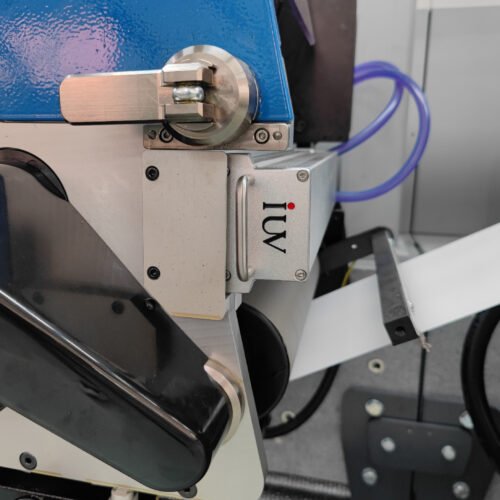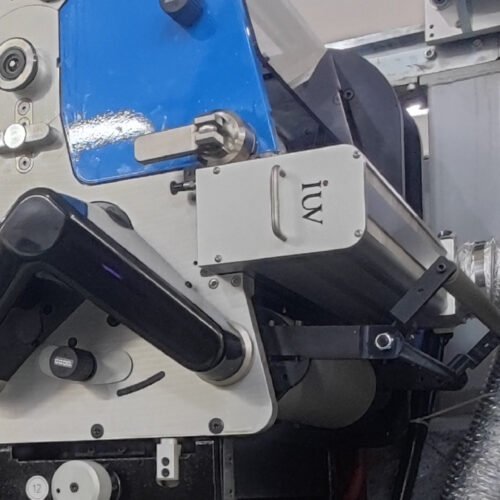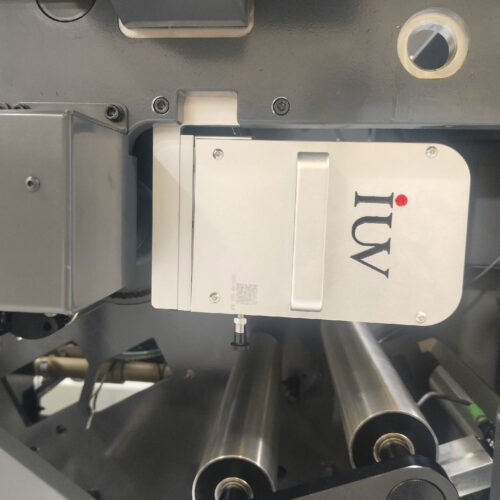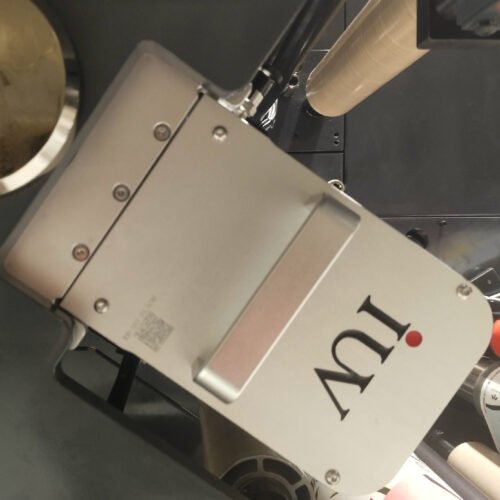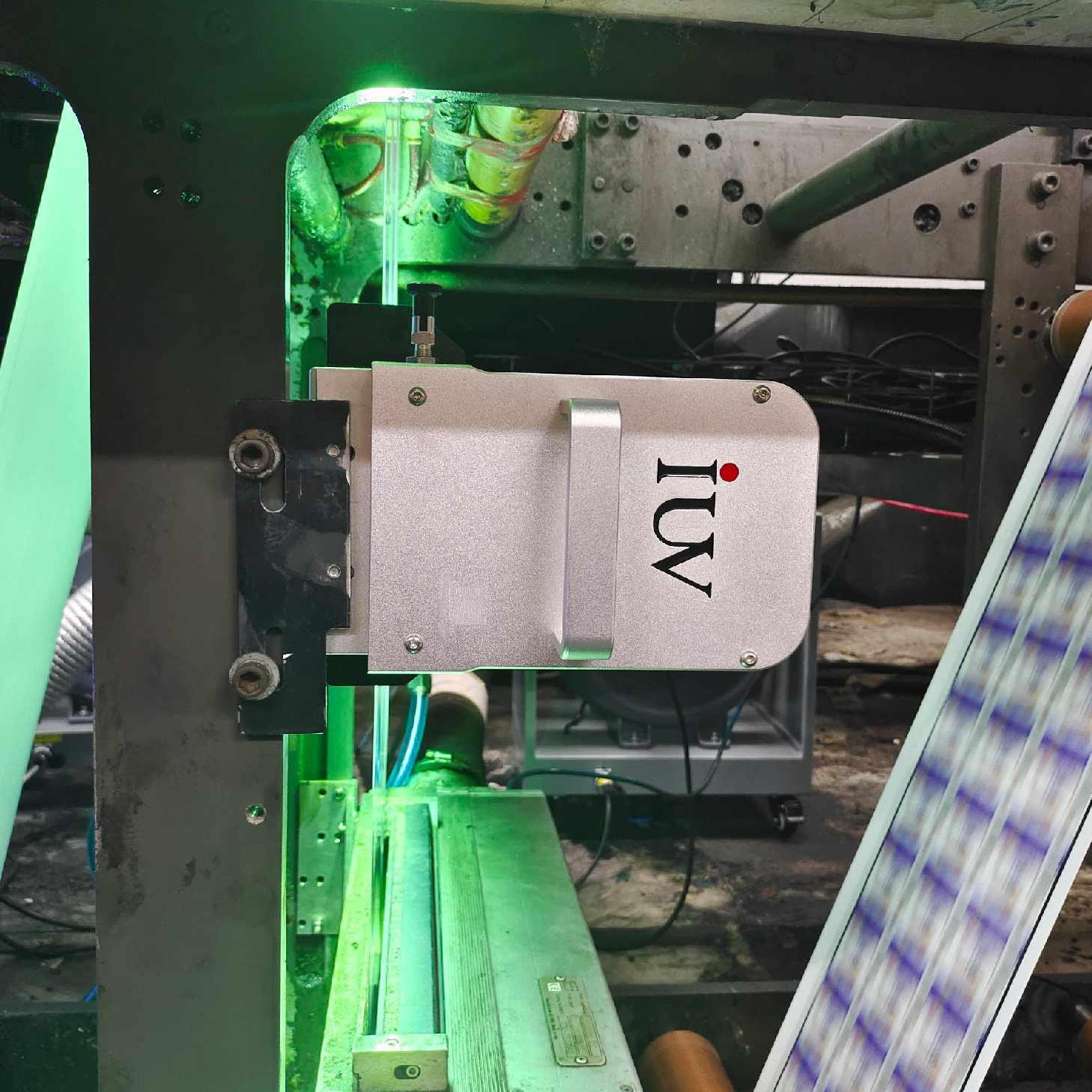
In modern narrow web label printing environments, energy consumption has become a process-level engineering concern rather than simply a utility cost issue. As production speeds increase and job turnover becomes more frequent, the efficiency of UV curing systems directly affects machine uptime, thermal stability, and operational consistency. Within this context, Energy Consumption Analysis with Mercury Free UV Curing in Narrow Web Label Printing Systems is increasingly evaluated not only from an environmental perspective, but also as a measurable factor in production efficiency and process reliability.
In practical flexographic printing operations, UV curing systems often account for one of the largest portions of total electrical consumption on the press. Traditional mercury UV systems continuously consume high electrical power even during idle states because lamp stability depends on maintaining thermal equilibrium. This operating model was historically accepted because broadband UV emission provided relatively forgiving curing conditions. However, in high-speed narrow web printing, where press stoppages, short runs, and rapid job changes are common, this constant energy demand creates substantial inefficiency.
The transition toward mercury free UV curing systems, primarily based on LED UV curing technology, changes the entire energy distribution profile of the printing line. In Energy Consumption Analysis with Mercury Free UV Curing in Narrow Web Label Printing Systems, the critical engineering question is not simply how much electricity is consumed, but how effectively electrical input is converted into usable polymerization energy.
UV curing efficiency and photon utilization
UV curing technology depends on the conversion of electrical energy into UV photons capable of activating photoinitiators within UV ink chemistry. In traditional mercury systems, a significant percentage of input power is converted into infrared radiation and visible light rather than chemically useful UV wavelengths.
This broad spectral output creates two simultaneous inefficiencies. First, only part of the emitted spectrum contributes directly to polymerization. Second, the excess infrared energy increases substrate temperature, requiring additional cooling systems and increasing total energy demand across the press.
In Energy Consumption Analysis with Mercury Free UV Curing in Narrow Web Label Printing Systems, LED UV curing systems demonstrate higher spectral efficiency because energy output is concentrated within a narrow wavelength range, typically around 385 nm or 395 nm. This allows a larger percentage of electrical input to contribute directly to photoinitiator activation.
However, the practical efficiency gain depends heavily on wavelength compatibility with UV ink chemistry. If photoinitiators are not optimized for the LED emission spectrum, polymerization efficiency decreases even if measured irradiance appears sufficient.
Thermal management and indirect energy consumption
One of the largest hidden contributors to energy consumption in narrow web printing is thermal management. Mercury UV lamps generate substantial infrared radiation, increasing substrate temperature and raising ambient heat levels around the press.
In film-based label printing using PET or BOPP substrates, excessive thermal load creates dimensional instability, web stretching, and tension fluctuations. As a result, additional cooling systems are often required to stabilize production conditions.
The engineering advantage in Energy Consumption Analysis with Mercury Free UV Curing in Narrow Web Label Printing Systems is that mercury free LED systems dramatically reduce infrared emission. This lowers the total thermal load on the press and reduces secondary energy consumption associated with chill rollers, exhaust systems, and environmental cooling.
In real production environments, this indirect energy reduction is often comparable to the direct electrical savings from the curing unit itself. The total system efficiency therefore depends on the interaction between curing energy, substrate behavior, and auxiliary equipment requirements.
UV dose stability and operational energy efficiency
In narrow web flexographic printing, UV dose consistency is more important than peak output power. UV dose is determined by irradiance and exposure time, but in industrial production it is also affected by line speed variability, substrate reflectivity, and ink coverage density.
Traditional mercury systems require continuous operation to maintain stable spectral output. Frequent start-stop cycles reduce efficiency because lamps consume energy during warm-up while producing unstable curing conditions.
In contrast, mercury free LED UV systems operate with instant-on capability. In Energy Consumption Analysis with Mercury Free UV Curing in Narrow Web Label Printing Systems, this operational characteristic significantly reduces standby energy waste during press interruptions and job changes.
This becomes particularly important in modern label printing where short production runs dominate. In many facilities, actual printing time represents only part of total machine operating hours. Idle and transitional states often consume disproportionately high energy when mercury systems are used.
Oxygen inhibition and curing efficiency limitations
Despite improved electrical efficiency, mercury free UV curing systems introduce different process sensitivities. Oxygen inhibition remains one of the most important challenges in UV curing technology, especially in thin ink layers typical of narrow web label printing.
Oxygen interferes with free radical polymerization at the ink surface, reducing curing efficiency and potentially requiring higher UV dose levels to achieve full polymerization. In mercury systems, excess heat and broadband energy sometimes partially compensate for these chemical limitations.
In Energy Consumption Analysis with Mercury Free UV Curing in Narrow Web Label Printing Systems, LED systems reveal the true efficiency of the photochemical process because less thermal masking occurs. This means overall energy savings depend not only on the curing hardware but also on optimized UV ink chemistry and photoinitiator design.
In practical troubleshooting, operators often attempt to increase LED output power to compensate for curing defects. However, this can reduce energy efficiency without solving the underlying oxygen inhibition or formulation mismatch issue.
Material compatibility and production stability
Synthetic substrates used in packaging printing and label printing react differently to UV exposure depending on surface energy and thermal sensitivity. Mercury systems may unintentionally improve apparent adhesion through thermal softening of the substrate surface, although this behavior is inconsistent and difficult to control.
Mercury free systems provide more stable thermal conditions, improving repeatability in UV ink adhesion. In Energy Consumption Analysis with Mercury Free UV Curing in Narrow Web Label Printing Systems, this stability contributes indirectly to energy efficiency by reducing startup waste, rejected material, and process instability.
Lower substrate heating also reduces mechanical deformation, improving register consistency and reducing tension correction requirements during high-speed production.
Long-term operational efficiency and maintenance impact
An often overlooked aspect of energy consumption analysis is long-term operational degradation. Mercury lamps gradually lose spectral efficiency as lamp age increases and reflector contamination develops. This causes operators to increase lamp power over time to maintain curing performance.
LED UV systems maintain more stable spectral output across a longer operational lifespan. In Energy Consumption Analysis with Mercury Free UV Curing in Narrow Web Label Printing Systems, this stability reduces the need for compensatory energy increases and improves long-term process predictability.
Maintenance intervals are also reduced because there are no mercury bulbs to replace and fewer reflector cleaning requirements. In continuous narrow web production environments, this contributes directly to lower overall energy usage per production cycle.