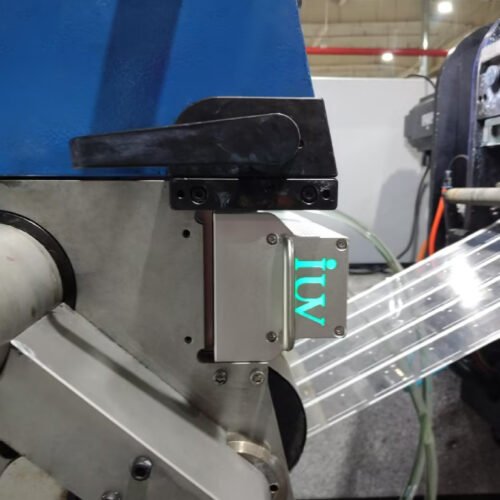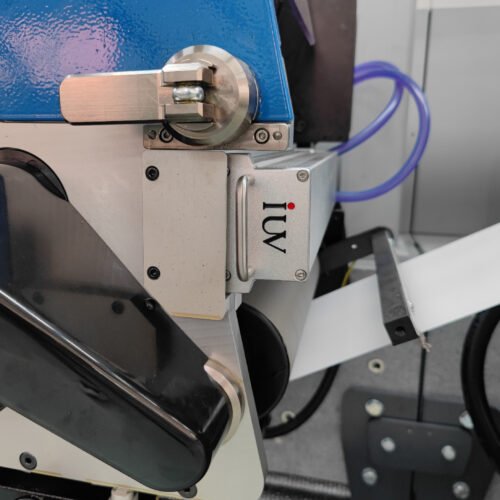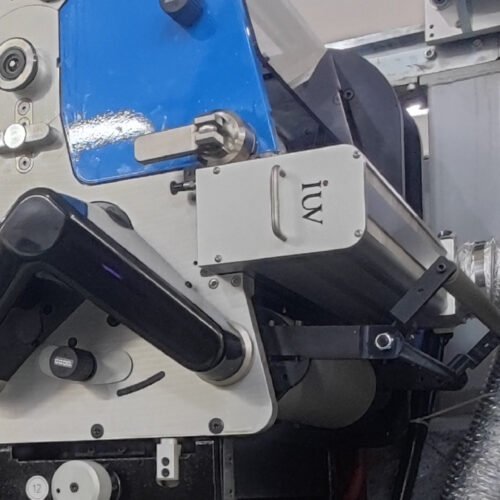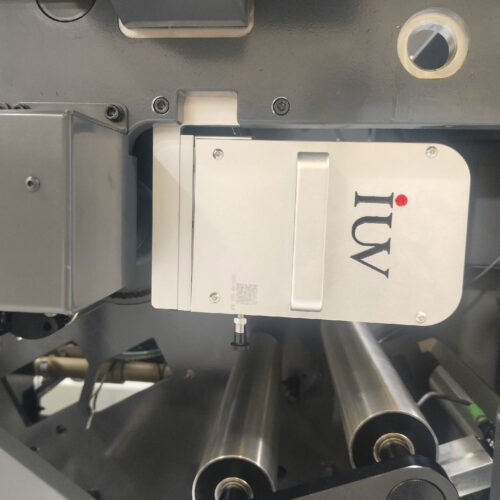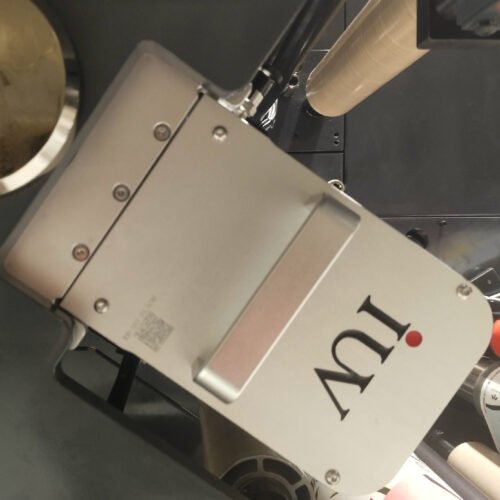
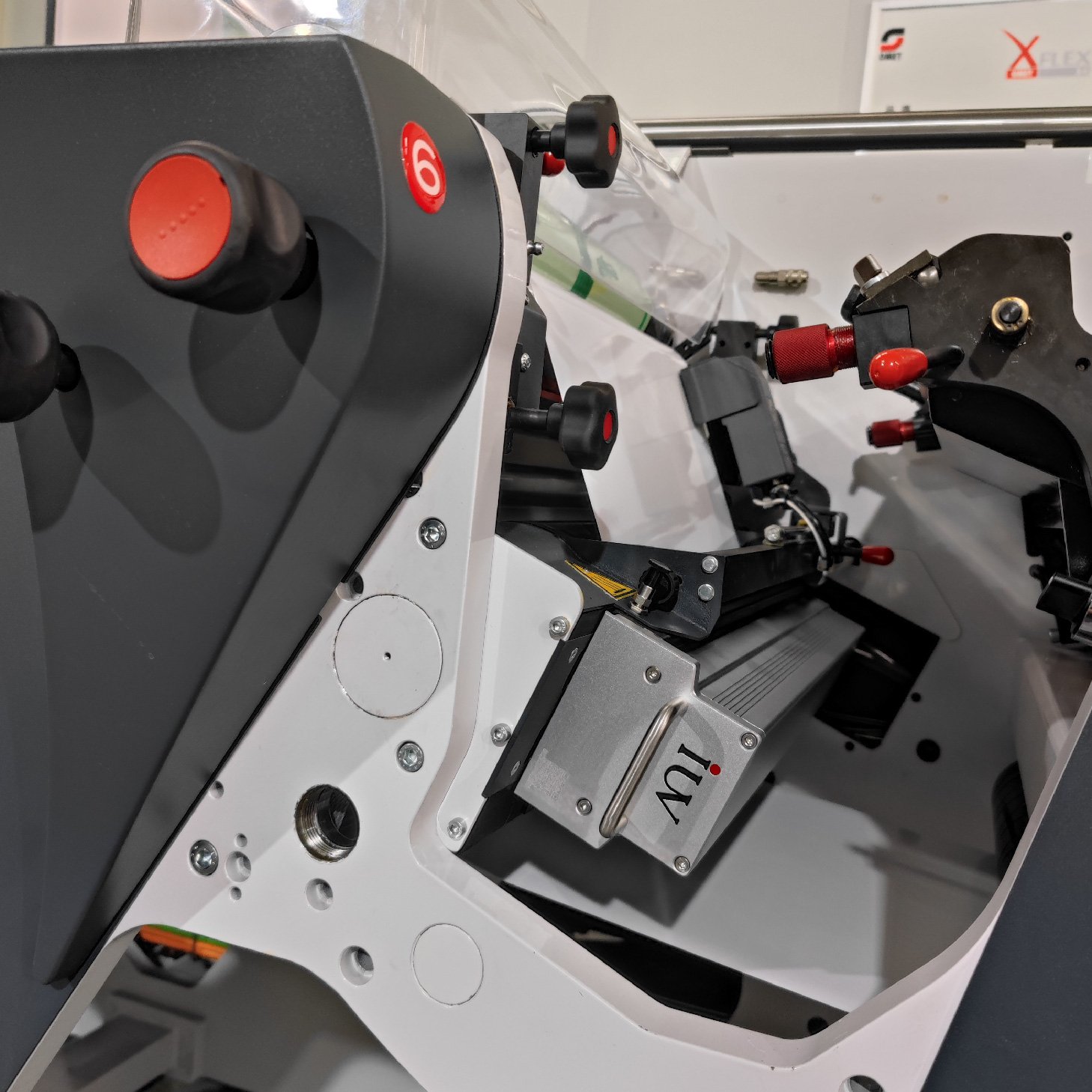
In modern flexographic printing lines, especially in narrow web label production and packaging film applications, UV curing has shifted from a simple drying step to a critical process control element that defines ink performance, substrate compatibility, and overall production stability. The transition toward Mercury Free UV Curing Systems for Flexographic Printing on Film and Synthetic Substrates is not only driven by environmental regulation, but also by the need for tighter process control in high-speed industrial environments.
In real production conditions, film substrates such as BOPP, PET, and PE behave very differently under UV exposure compared to paper. Their low surface energy, thermal sensitivity, and dimensional instability make UV curing performance highly sensitive to wavelength distribution, UV dose, and thermal load. Traditional mercury UV systems introduce variability due to broad-spectrum emission and significant infrared output, which complicates process repeatability. This is where Mercury Free UV Curing Systems for Flexographic Printing on Film and Synthetic Substrates becomes a process engineering solution rather than a simple equipment upgrade.
UV curing physics and interaction with synthetic films
UV curing technology relies on photoinitiated radical polymerization, where UV photons activate photoinitiators within the UV ink chemistry. In flexographic printing, ink layers are relatively thin, but they must achieve full crosslinking at very high line speeds.
Synthetic substrates introduce a specific challenge: they do not absorb UV energy, meaning nearly all curing efficiency depends on direct photonic interaction with the ink layer. Any inefficiency in wavelength matching or UV dose delivery immediately results in incomplete polymerization.
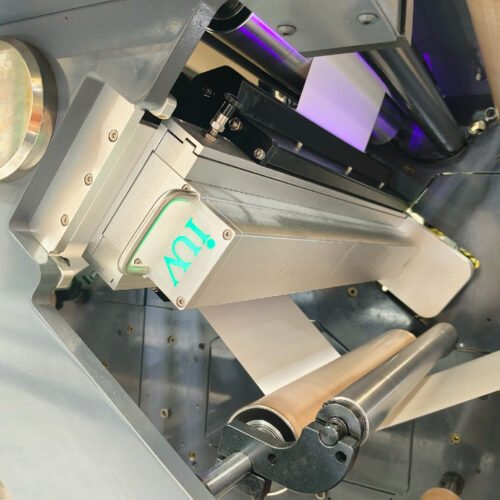
In mercury-based systems, the emitted spectrum is wide, covering multiple UV peaks as well as visible and infrared radiation. While this provides broad compatibility, it reduces energy efficiency and introduces unnecessary heat into the substrate. In contrast, Mercury Free UV Curing Systems for Flexographic Printing on Film and Synthetic Substrates—typically based on LED UV curing systems—operate within a narrow spectral band, usually 385 nm or 395 nm, allowing much more precise activation of photoinitiators.
However, this precision also exposes formulation weaknesses. If the UV ink chemistry is not optimized for LED wavelength, curing depth may be insufficient even when surface drying appears complete.
Thermal behavior and substrate stability in film printing
One of the most critical engineering advantages of Mercury Free UV Curing Systems for Flexographic Printing on Film and Synthetic Substrates is thermal reduction. Mercury lamps generate significant infrared radiation, which directly affects film substrates by increasing surface temperature.
In narrow web flexographic printing, this thermal load leads to several practical issues: web stretching, register instability, and in extreme cases, shrinkage of PET films. Since film substrates have low thermal tolerance, even small temperature fluctuations can alter mechanical tension and print registration accuracy.
LED UV systems eliminate most infrared emission, significantly improving thermal stability. This allows more consistent web handling and reduces mechanical compensation requirements in press control systems. However, LED modules still require internal thermal management; junction temperature instability can cause wavelength drift, which directly affects UV dose efficiency and curing consistency.
UV dose control and high-speed production constraints
In high-speed flexographic printing, line speeds often exceed 150 m/min, reducing exposure time to milliseconds. Under these conditions, UV dose becomes a limiting factor in polymerization efficiency.
Mercury systems typically compensate with higher total energy output, but much of this energy is lost as heat. In contrast, Mercury Free UV Curing Systems for Flexographic Printing on Film and Synthetic Substrates improve photon utilization efficiency by concentrating energy within the absorption range of photoinitiators.
The key engineering advantage is not simply higher efficiency, but more predictable UV dose delivery. LED systems respond instantly to control signals, allowing dynamic adjustment of UV output based on press speed, ink coverage, or substrate type. This is particularly important in label printing environments where job changes are frequent and production batches are short.
Oxygen inhibition and surface curing behavior
A recurring issue in flexographic UV printing on films is oxygen inhibition. Oxygen molecules interfere with radical polymerization, preventing full surface curing even when UV dose appears sufficient.
This effect becomes more visible in Mercury Free UV Curing Systems for Flexographic Printing on Film and Synthetic Substrates, because LED systems remove the thermal compensation effect that sometimes masks incomplete curing in mercury systems.
In production terms, oxygen inhibition manifests as tackiness, reduced scratch resistance, or poor lamination performance. The solution is not simply increasing UV power, but optimizing the balance between wavelength, photoinitiator reactivity, and ink formulation. In some cases, nitrogen inerting systems are used, but in most industrial flexographic lines, chemistry adjustment is more practical than process modification.
UV ink adhesion and material compatibility challenges
Film substrates such as BOPP and PET have inherently low surface energy, which directly affects UV ink adhesion. Successful adhesion depends on the formation of a sufficiently crosslinked polymer network that can mechanically anchor to the substrate surface.
In mercury systems, excessive heat sometimes improves apparent adhesion by softening the substrate surface slightly, but this is not a controlled or stable mechanism. In Mercury Free UV Curing Systems for Flexographic Printing on Film and Synthetic Substrates, adhesion performance becomes more chemically controlled rather than thermally influenced.
LED UV systems produce a more defined polymerization profile, which improves repeatability but requires more precise ink formulation. If the UV ink chemistry is not optimized for LED wavelength, adhesion failures can occur despite correct UV dose values.
Energy efficiency and production stability
From an operational perspective, one of the most measurable benefits of Mercury Free UV Curing Systems for Flexographic Printing on Film and Synthetic Substrates is energy efficiency. Mercury lamps consume high power continuously and require warm-up periods, during which energy is consumed without stable output.
LED systems eliminate warm-up time and reduce standby energy consumption significantly. More importantly, they provide stable output over long production cycles, reducing variability between the start and end of a print run.
In industrial narrow web environments, this stability translates into fewer adjustments, reduced waste during setup, and more consistent quality across multiple jobs. However, the total system efficiency depends on integration quality, including cooling systems, power modulation strategy, and ink compatibility.