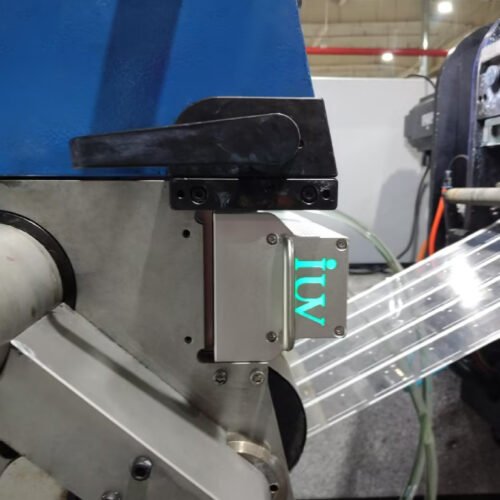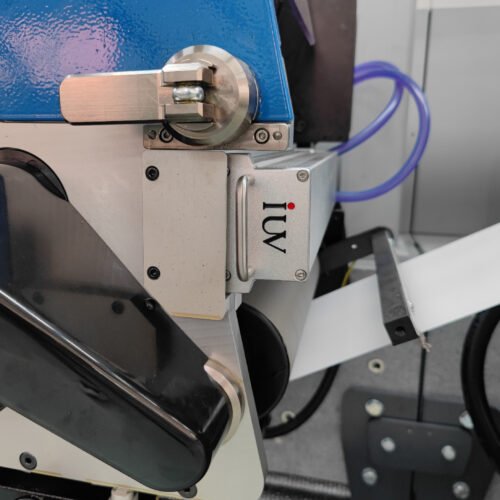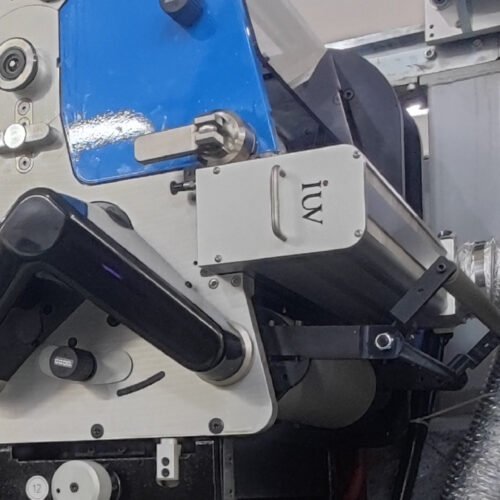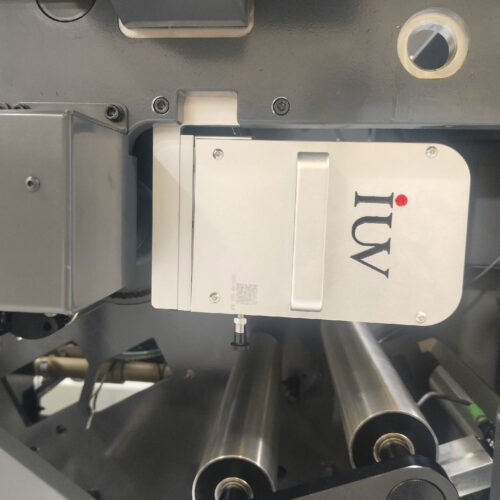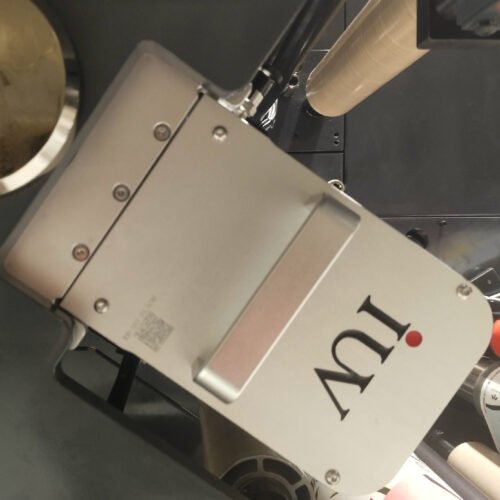
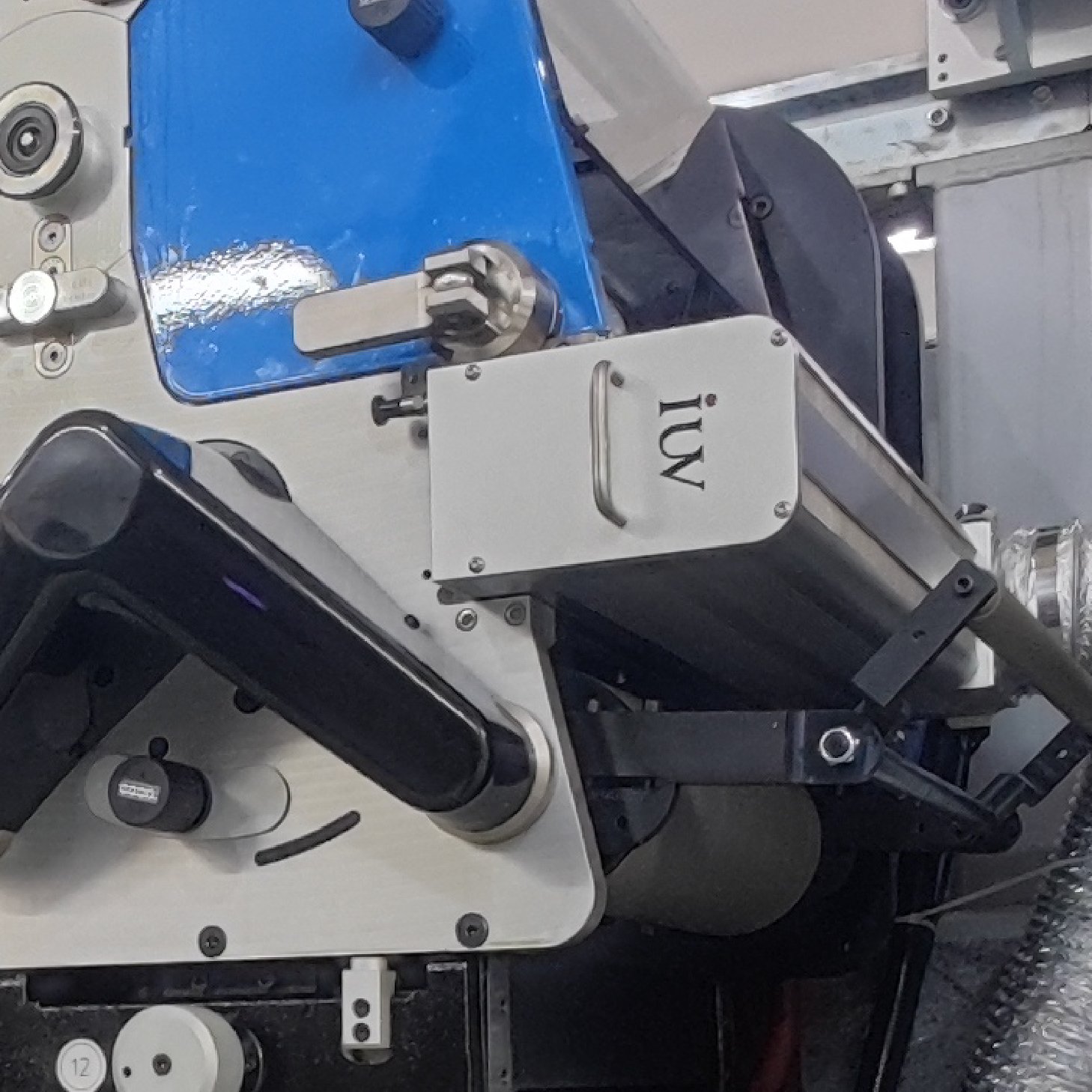
The rapid growth of flexible packaging, shrink sleeve labels, in-mold labels, and thin-film applications has increased the demand for curing technologies that can deliver high productivity without damaging temperature-sensitive substrates. As converters move away from conventional mercury UV systems, one question frequently arises in production environments: What Is UV LED Curing and How Does It Work with Heat-Sensitive Film and Flexible Packaging Materials?
The answer extends beyond simple energy savings. In flexographic printing, narrow web label printing, packaging printing, and hybrid offset applications, UV LED curing technology has become a critical process improvement because it addresses one of the most challenging issues in film printing: balancing curing performance with substrate temperature control.
Unlike paper-based materials, flexible packaging films often exhibit low thermal resistance and high dimensional sensitivity. Excessive heat can cause stretching, shrinkage, curl formation, registration instability, and surface distortion. Understanding What Is UV LED Curing and How Does It Work with Heat-Sensitive Film and Flexible Packaging Materials? requires examining the interaction between UV energy, ink chemistry, curing efficiency, and thermal management.
Understanding UV LED Curing Technology
At its core, UV LED curing is a photochemical process. UV-curable inks contain oligomers, monomers, pigments, additives, and photoinitiators. When exposed to ultraviolet energy, photoinitiators absorb photons and initiate a polymerization reaction that transforms liquid ink into a durable solid film within fractions of a second.
Traditional UV curing systems rely on mercury arc lamps that emit a broad ultraviolet spectrum together with visible light and infrared radiation. Although these systems can provide sufficient curing energy, they also generate significant heat. In many flexible packaging applications, this heat becomes a limiting factor.
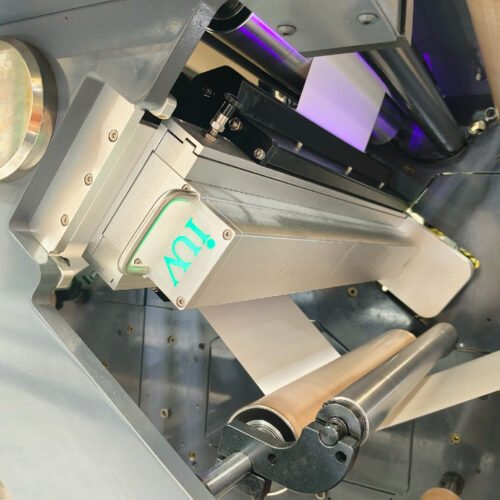
UV LED curing systems operate differently. Rather than producing a broad spectrum, LED emitters generate a narrow wavelength output, typically 365 nm, 385 nm, 395 nm, or 405 nm. Because the emitted energy is concentrated within a specific wavelength range, more electrical power is converted into useful curing energy and less energy is lost as heat.
This distinction is one of the primary reasons why UV LED curing technology is increasingly used with heat-sensitive film and flexible packaging materials.
Why Temperature Control Matters for Flexible Packaging
When discussing What Is UV LED Curing and How Does It Work with Heat-Sensitive Film and Flexible Packaging Materials?, temperature management is often the most important factor.
Flexible packaging substrates such as BOPP, PET, PE, CPP, PVC, and shrink sleeve films respond differently to heat compared with paper. Even moderate temperature increases can affect web tension stability and dimensional accuracy.
In conventional mercury UV systems, infrared radiation can significantly increase substrate temperature as the web passes beneath curing lamps. This often results in film distortion, shrinking, registration movement, and inconsistent print quality.
UV LED curing systems generate very little infrared radiation. As a result, web temperatures remain substantially lower throughout production. From an engineering perspective, this thermal advantage improves press stability, reduces waste, and enables reliable printing on materials that previously required careful thermal management.
For converters printing on ultra-thin films or shrink sleeve materials, UV LED curing often provides a practical solution to maintaining dimensional stability while achieving complete curing.
Wavelength Optimization and UV Ink Chemistry
Another important aspect of understanding What Is UV LED Curing and How Does It Work with Heat-Sensitive Film and Flexible Packaging Materials? is the relationship between wavelength and UV ink chemistry.
The effectiveness of a UV LED curing system depends on how efficiently photoinitiators absorb emitted wavelengths. Each photoinitiator has specific absorption characteristics. If the wavelength does not align with the ink formulation, curing performance decreases regardless of lamp power.
Most flexible packaging applications utilize 395 nm UV LED systems because they provide an effective balance between curing depth and energy efficiency. However, highly pigmented inks, white inks, and specialty coatings may require customized formulations to ensure complete polymerization.
Proper wavelength matching improves curing efficiency while minimizing the total energy required to achieve full cure. This directly benefits heat-sensitive substrates because less excess energy is introduced into the production process.
UV Dose and High-Speed Production Performance
UV dose plays a critical role in packaging printing applications. UV dose represents the total ultraviolet energy delivered to the ink surface and is determined by irradiance and exposure time.
In high-speed flexographic printing and narrow web label production, exposure time decreases as press speed increases. If UV dose becomes insufficient, the surface may appear cured while deeper layers remain under-polymerized.
This condition often leads to poor UV ink adhesion, blocking during rewinding, reduced scratch resistance, and lower chemical durability.
Modern UV LED curing systems maintain highly stable irradiance output throughout production. Unlike mercury lamps, which gradually degrade and require frequent monitoring, LED systems provide predictable energy delivery over extended operating periods.
This consistency is particularly important when printing flexible packaging structures that undergo lamination, pouch forming, sealing, or additional converting operations after printing.
Oxygen Inhibition and Surface Cure Quality
A common challenge in UV curing technology is oxygen inhibition. During polymerization, oxygen molecules can react with active free radicals, reducing curing efficiency at the ink surface.
This phenomenon is especially relevant when printing coatings, varnishes, and high-gloss packaging applications where surface performance is critical.
When evaluating What Is UV LED Curing and How Does It Work with Heat-Sensitive Film and Flexible Packaging Materials?, engineers must consider oxygen inhibition alongside wavelength selection and UV dose.
Modern LED-compatible inks are specifically formulated to minimize oxygen inhibition effects. Improved photoinitiator systems and optimized resin structures allow converters to achieve strong surface cure even at high production speeds.
If curing defects occur, troubleshooting typically involves verifying wavelength compatibility, UV dose levels, press speed, and ink formulation rather than simply increasing lamp intensity.
Material Compatibility and Ink Adhesion Performance
One of the most significant advantages of UV LED curing technology is improved compatibility with diverse packaging materials.
Flexible packaging production involves a wide range of substrates, including treated films, metallized materials, multilayer laminates, and synthetic structures. Each material presents unique surface energy characteristics that influence ink adhesion.
Proper polymerization is essential for creating a durable cross-linked ink film. When UV curing is incomplete, adhesion problems often appear during lamination, slitting, pouch conversion, or transportation.
A properly configured UV LED curing system provides consistent curing conditions that help maximize UV ink adhesion and long-term durability. This is particularly important in food packaging, pharmaceutical packaging, household chemical labels, and industrial packaging applications where printed graphics must withstand mechanical stress and environmental exposure.
Why UV LED Technology Is Becoming the Preferred Solution
The growing adoption of UV LED curing in flexible packaging is driven by its ability to combine curing efficiency with low-temperature operation. By delivering energy at precisely controlled wavelengths, UV LED curing systems reduce heat generation while maintaining reliable polymerization performance.
For converters seeking to understand What Is UV LED Curing and How Does It Work with Heat-Sensitive Film and Flexible Packaging Materials?, the answer lies in the technology’s ability to provide controlled ultraviolet energy, stable UV dose delivery, optimized wavelength utilization, improved material compatibility, and consistent print quality without exposing sensitive substrates to excessive thermal stress.
As flexible packaging continues to expand across food, beverage, pharmaceutical, and consumer product markets, UV LED curing technology is increasingly becoming the preferred curing method for modern high-performance printing operations.