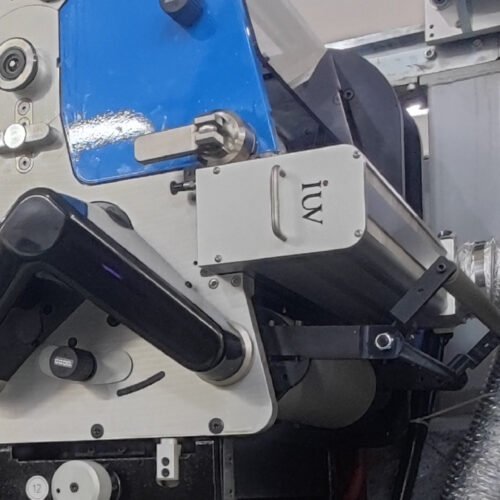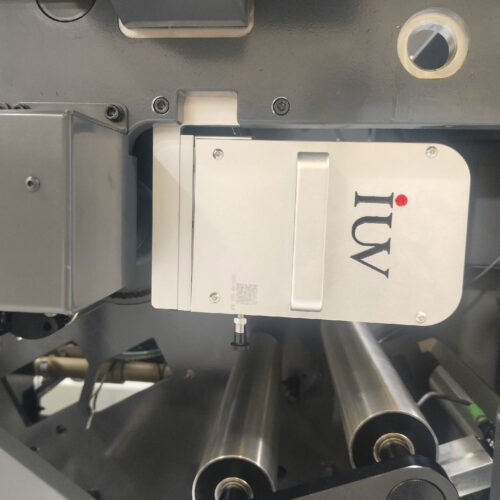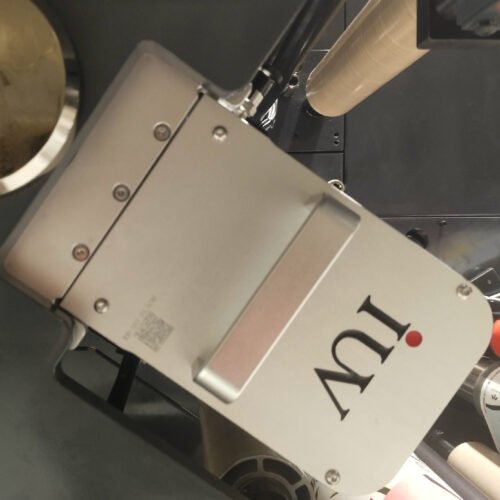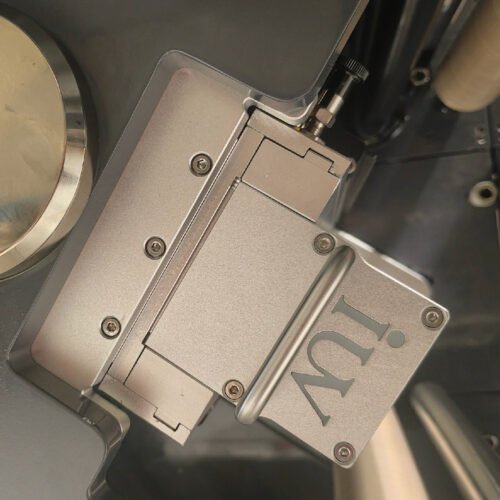
In industrial printing environments such as flexographic label printing, narrow web packaging, and offset coating lines, UV curing has always been a high-impact energy stage. When production engineers evaluate curing performance, the discussion is no longer only about drying speed or adhesion quality, but increasingly about energy efficiency, thermal stability, and total cost of operation. This is where IUV UV LED Curing Equipment Energy Saving Strategies Compared to Traditional UV Drying Systems becomes a practical engineering topic rather than a theoretical comparison.
Traditional UV drying systems based on mercury vapor lamps operate with broad-spectrum radiation. A significant portion of emitted energy is converted into infrared heat rather than usable UV wavelengths for photoinitiator activation. In contrast, UV LED curing systems operate in a narrow wavelength band, typically 365–405 nm, which aligns more precisely with modern UV ink chemistry. This fundamental difference defines why energy consumption behavior is structurally different between the two technologies, and why IUV UV LED Curing Equipment Energy Saving Strategies Compared to Traditional UV Drying Systems is often centered on optical efficiency rather than raw power output.
Optical efficiency and wavelength utilization in industrial curing
In real production lines, especially narrow web flexographic printing, UV dose control is not simply a matter of lamp intensity but a combination of irradiance (W/cm²), exposure time, and spectral matching. Traditional mercury lamps emit UV, visible light, and infrared radiation simultaneously. Only a fraction of this spectrum contributes to polymerization of UV inks. The rest becomes waste heat, which must be removed through ventilation or cooling systems, indirectly increasing total energy consumption.
LED UV systems eliminate most of this spectral waste. When analyzing IUV UV LED Curing Equipment Energy Saving Strategies Compared to Traditional UV Drying Systems, engineers often focus on how narrow-band emission reduces unnecessary energy dispersion. However, efficiency gains are only fully realized when photoinitiators in UV ink formulations are specifically tuned to LED wavelengths. If ink chemistry is not matched, operators tend to compensate by increasing UV intensity, which reduces the expected energy advantage.
A key industrial observation is that energy savings are not linear. A 30% reduction in electrical input does not always translate into 30% operational savings unless UV dose distribution across the web is stable. This is particularly critical in high-speed label printing, where even minor curing inconsistencies can lead to adhesion failures or surface tackiness.
Thermal load and substrate stability in production environments
One of the most overlooked differences in IUV UV LED Curing Equipment Energy Saving Strategies Compared to Traditional UV Drying Systems is thermal behavior. Mercury lamps generate significant infrared radiation, which directly heats substrates such as BOPP, PET, and PE films. In continuous production, this thermal load accumulates and causes dimensional instability, especially in narrow web systems where registration accuracy is critical.
UV LED curing systems operate at a much lower substrate temperature because infrared emission is minimal. This reduces cooling requirements and eliminates the need for high-capacity exhaust systems commonly used in traditional UV drying setups. However, thermal management does not disappear entirely. LED chips themselves generate concentrated heat at the junction level, requiring efficient heat dissipation through water-cooled or high-performance air-cooled systems.
In practice, when comparing IUV UV LED Curing Equipment Energy Saving Strategies Compared to Traditional UV Drying Systems, total system energy consumption must include both optical output and thermal management overhead. A poorly cooled LED system may lose its efficiency advantage due to increased driver power and thermal compensation mechanisms.
UV ink chemistry interaction with energy consumption
UV ink formulation plays a decisive role in determining whether energy savings can actually be achieved. Photoinitiators in traditional systems were designed for broad-spectrum mercury emission. These formulations often require higher UV doses to ensure full polymerization. LED systems, however, rely on specific absorption peaks, meaning modern ink chemistry can significantly reduce required energy input.
In real production troubleshooting scenarios, incomplete curing is often misinterpreted as insufficient UV power. In fact, it is frequently related to oxygen inhibition at the surface layer or mismatch between LED wavelength and photoinitiator absorption spectrum. Oxygen inhibition slows down surface polymerization, especially in low-viscosity inks used in label overprinting. Operators often respond by increasing lamp intensity, which contradicts the principles of IUV UV LED Curing Equipment Energy Saving Strategies Compared to Traditional UV Drying Systems.
A more effective engineering approach is to adjust ink reactivity rather than increasing energy input. High-reactivity photoinitiator systems can achieve full curing at lower UV dose levels, improving both adhesion and energy efficiency simultaneously.
Process stability and energy consumption behavior in real presses
In flexographic and narrow web printing lines, curing systems rarely operate under ideal laboratory conditions. Web speed fluctuations, substrate variability, and environmental temperature changes all influence curing performance. Traditional UV systems tend to mask these variations by over-irradiation, which results in energy waste but stable output quality.
LED UV systems behave differently. Because they are more energy-specific and thermally stable, they expose process inconsistencies more clearly. This is why IUV UV LED Curing Equipment Energy Saving Strategies Compared to Traditional UV Drying Systems is often misunderstood at the production level. Operators may perceive LED systems as less forgiving, when in fact they are simply more precise.
From an engineering standpoint, true energy savings are achieved when process stability is improved. Stable web tension, consistent ink viscosity, and controlled UV exposure distance all reduce the need for excessive safety margins in UV dose settings. In optimized systems, energy input can be reduced not by lowering performance requirements but by eliminating compensation losses.
Maintenance, degradation, and lifecycle energy considerations
Traditional UV lamps degrade gradually but unpredictably, requiring frequent replacement and recalibration. As mercury lamps age, their UV output decreases while heat output remains relatively constant. This leads to increased energy input to maintain curing consistency, further reducing system efficiency over time.
LED systems, in contrast, have a more predictable degradation curve. However, they are sensitive to thermal conditions. If heat dissipation is poor, wavelength drift occurs, shifting emission away from optimal photoinitiator absorption. This directly impacts curing efficiency and may increase energy consumption if operators compensate by increasing power levels.
When evaluating IUV UV LED Curing Equipment Energy Saving Strategies Compared to Traditional UV Drying Systems, lifecycle energy consumption becomes a critical metric. This includes not only operational energy but also maintenance cycles, replacement parts, and downtime-related energy losses.