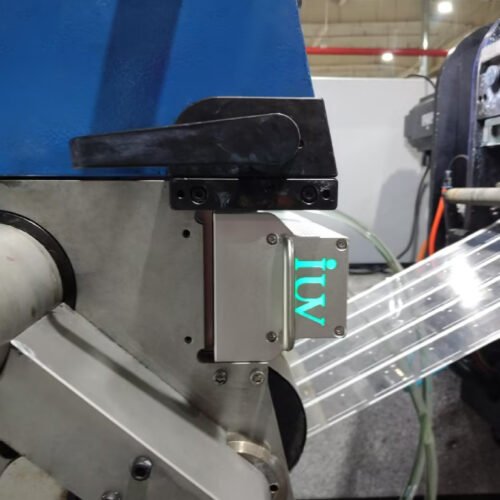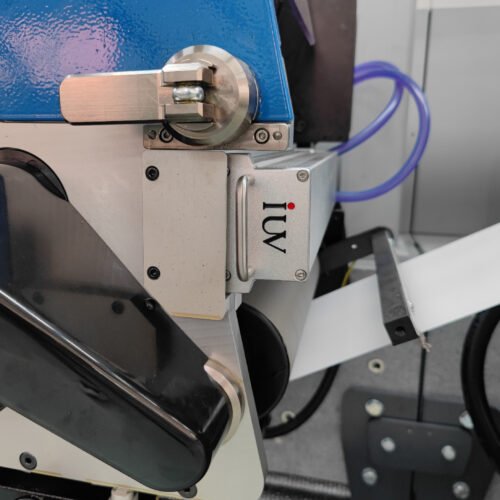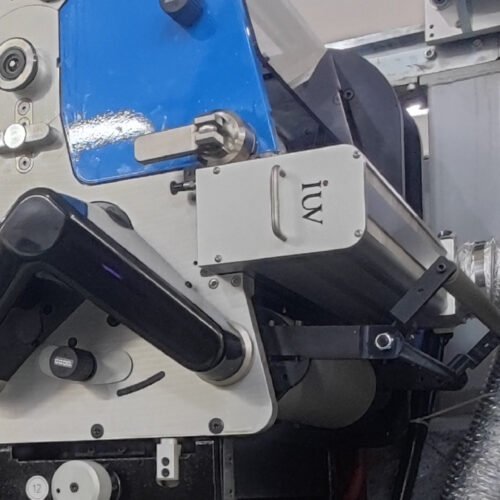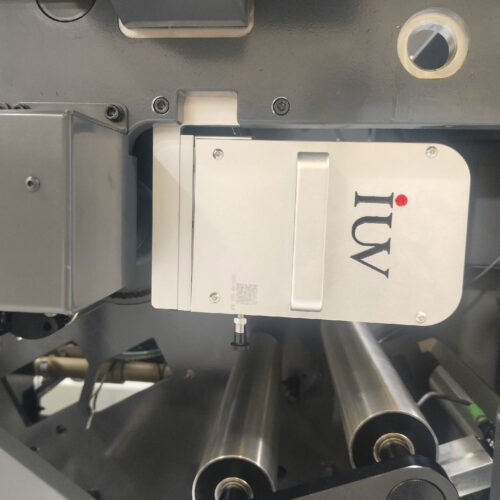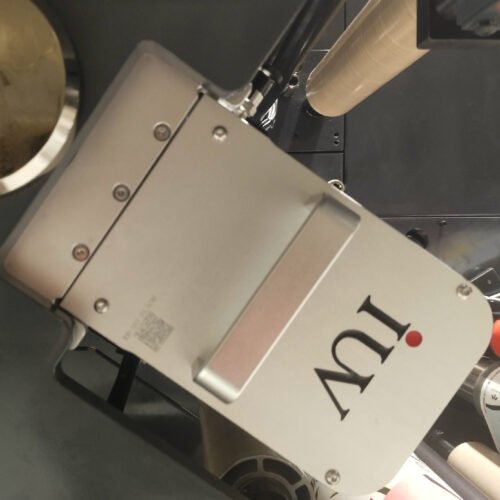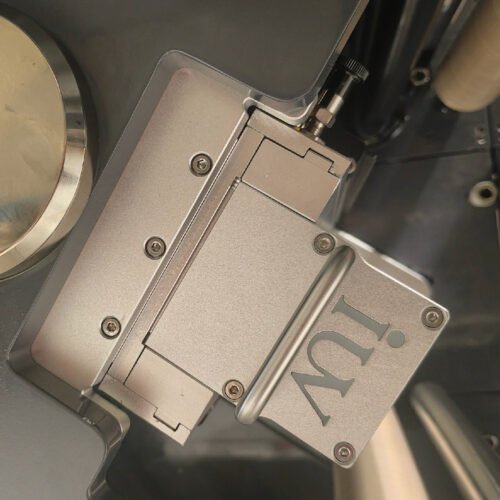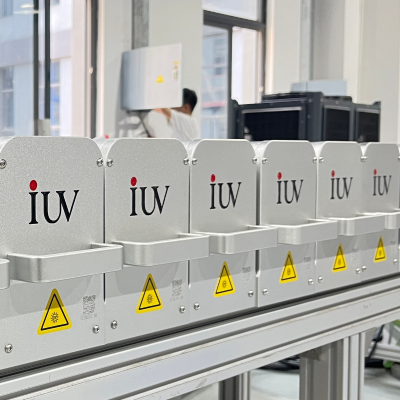
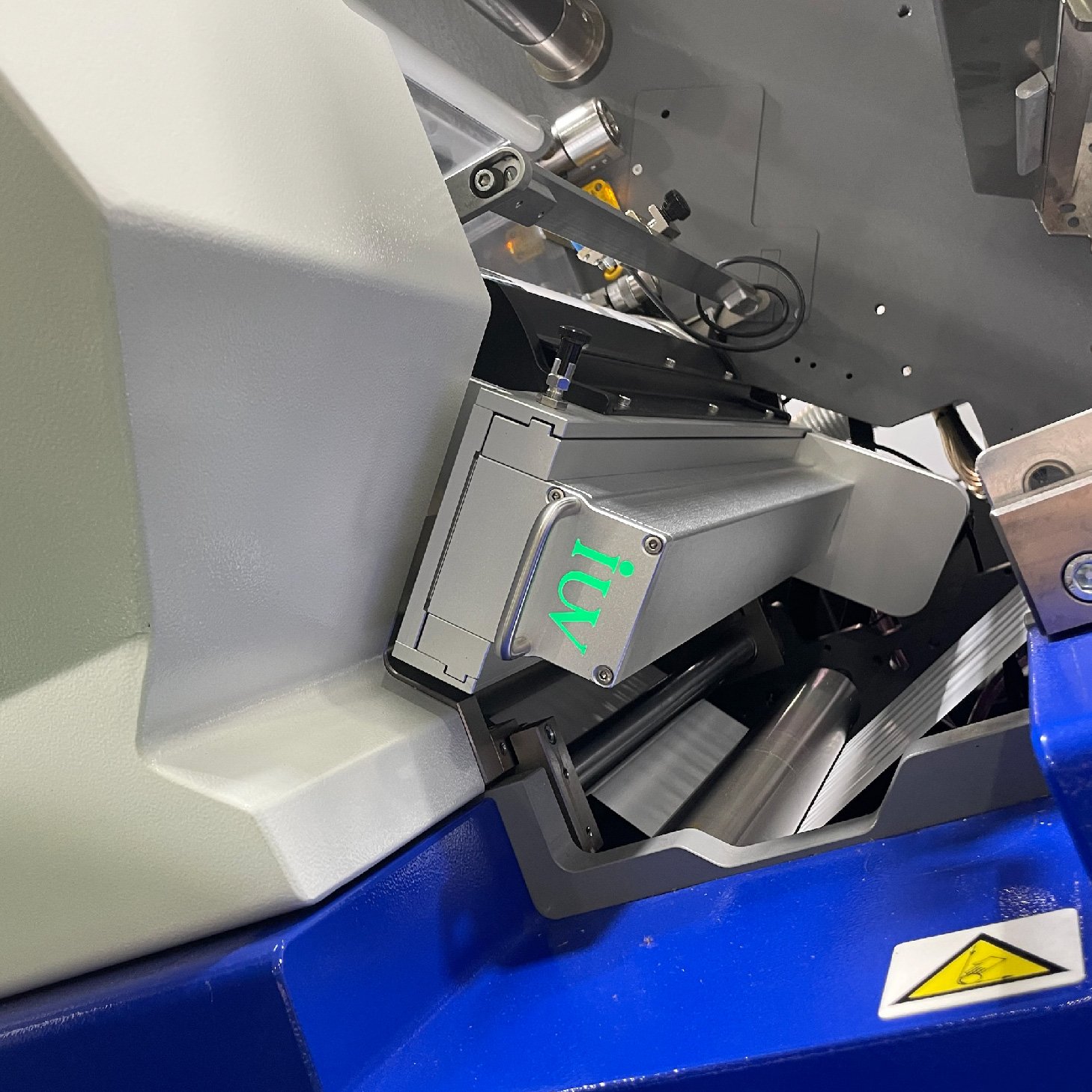
In modern label and narrow web production, multi-station LED UV print configurations have become increasingly common. Flexographic presses, hybrid offset systems, coating lines, and integrated converting platforms now rely on several curing positions within a single production path. This setup improves process flexibility, supports high-speed output, and allows converters to manage more demanding print structures. However, as the number of curing stations increases, so does the complexity of maintaining curing uniformity.
A single UV LED station may be relatively straightforward to stabilize. A multi-station press is not. Once several curing heads are installed across multiple print units, the challenge is no longer only whether each lamp performs correctly on its own. The real challenge is whether all curing stations operate in a balanced, repeatable, and process-matched way across the entire print sequence.
In label printing, flexographic printing, narrow web offset, and hybrid UV production, this issue has a direct effect on print quality, adhesion reliability, gloss consistency, interstation stability, and downstream converting performance. Many recurring press problems that appear to be linked to ink or substrate behavior are in fact caused by small operational imbalances between curing stations.
That is why curing uniformity in a multi-station environment must be understood as an operational discipline, not simply a lamp performance characteristic.
Why Multi-Station UV LED Systems Require a Different Evaluation Mindset
In a single-station curing setup, the objective is usually straightforward. The lamp must deliver enough energy to fully cure the printed or coated layer under the required speed and substrate conditions. In a multi-station system, the objective changes. Each curing position must not only deliver adequate energy, but must do so in a way that remains compatible with the rest of the print process.
This is especially important in label and narrow web applications where inks, varnishes, adhesives, and decorative layers are often built up progressively through several stations. One curing head may be stabilizing a process color, another may be pinning a white, another may be hard-curing a coating, and another may be supporting a later converting step. If these curing events are not properly balanced, the result can be instability within the full print architecture.
For this reason, operational control in multi-station LED UV production should focus on sequence behavior as much as station behavior. A curing station that looks acceptable in isolation may still create problems if its role in the overall process is not correctly aligned.
Why Station-to-Station Balance Is More Important Than Maximum Output
A common operational mistake in multi-station UV LED printing is setting each lamp according to maximum available power rather than according to process need. This often happens when operators assume that more output will always improve curing security. In reality, excessive imbalance between stations can create just as many problems as insufficient exposure.
In flexographic and label printing, early stations that are overdriven can alter ink surface behavior, interfere with intercolor laydown, affect trapping, or increase brittleness before later stations have completed their intended function. On the other hand, stations that are set too conservatively may leave the print structure chemically or mechanically unstable as it moves forward through the press.
The best multi-station setups are not necessarily the most powerful ones. They are the most balanced ones. Curing uniformity depends heavily on whether each station is delivering the right type and amount of energy for its specific position in the process.
Ink and Coating Layer Function Changes from Station to Station
Another important operational factor is that not every printed layer requires the same curing behavior. In multi-station press configurations, different units often serve very different technical purposes. A fine process color, a dense opaque white, a release varnish, a tactile coating, and a lamination primer all respond differently to UV LED exposure.
This means that a uniform lamp setting across all stations is rarely the best operational strategy. What matters is not whether every station is running at the same output, but whether every station is supporting the correct polymerization response for the layer it is curing.
In label printing, this becomes especially important when printing complex decorative work or technical multilayer constructions. If the curing profile is not matched to the function of each layer, the final print may show uneven gloss, poor bond strength, variable flexibility, or unstable converting behavior even when individual stations appear to be working normally.
Ink Film Thickness Variation Is a Major Operational Influence
In flexographic printing, the actual amount of ink being cured changes constantly from station to station depending on anilox volume, plate design, line screen, image coverage, and ink rheology. This means the curing demand is never uniform across the press.
A station printing a light process tint may require a very different exposure strategy from a station printing a dense white flood or a heavy coating. If operators attempt to manage these stations with generalized output settings rather than process-aware adjustments, curing imbalance is likely to develop.
This is one of the reasons why multi-station LED UV systems must be managed as print processes rather than as electrical devices. The energy field has to match the material reality of the printed layer. In label and narrow web production, that layer changes continuously from one unit to the next.
Web Path Stability Has a Cumulative Effect in Multi-Station Systems
In single-station curing, web movement issues can cause local inconsistencies. In multi-station curing, the same issue can become cumulative. If substrate position, tension, or flatness shifts as the web moves through the press, those changes affect the working distance and optical presentation at every curing position.
This becomes particularly important when running unsupported films, thin facestocks, shrink materials, or heat-sensitive constructions. A slight substrate movement that might be manageable at one curing point can become more significant when repeated through several stations. The cumulative result may be variable energy delivery, inconsistent cure depth, or lane-specific instability across the print width.
That is why web handling is one of the most important operational factors in multi-station UV LED printing. Stable curing requires stable geometry at every station, not just at the final lamp.
Thermal Accumulation Across the Press Changes Curing Behavior
Although LED UV systems are widely described as cool-curing technology, multi-station configurations can still create significant thermal influence over the length of a press run. Each individual station may contribute only moderate heat, but the combined effect of multiple curing heads, press friction, substrate dwell, and ambient enclosure conditions can gradually alter the thermal state of the web and the print structure.
This is especially relevant in narrow web label printing where materials may be thin, sensitive, or dimensionally unstable. As the substrate passes through multiple print and curing zones, even a relatively small heat buildup can influence ink flow, substrate tension, coating behavior, and final polymerization response.
Operationally, this means curing uniformity must be evaluated not only station by station, but also cumulatively along the press path. A station that performs well early in the sequence may behave differently when the web has already been exposed to several upstream process events.
Cooling Stability Influences Cross-Web and Station-to-Station Repeatability
Within each LED UV head, cooling performance plays a direct role in output stability. In multi-station systems, this becomes even more important because any variation in thermal control between heads can create station-to-station inconsistency even when the lamps are nominally identical.
If one curing head is operating at a different thermal equilibrium than another, the actual optical behavior may differ in subtle but important ways. Over time, this can create differences in cure depth, gloss response, adhesion behavior, or surface hardness between layers cured at different points in the press.
This issue often becomes more noticeable during long runs, high ambient load, or demanding production cycles. It is one of the reasons why a multi-station LED UV system should be treated as an integrated thermal network rather than as a collection of isolated lamp heads.
Optical Contamination Does Not Develop Uniformly Across All Stations
In a production press, not every curing station experiences the same contamination conditions. Stations near high-coverage print units, heavy coatings, adhesive applications, or dust-generating substrates may accumulate optical residue faster than others. This creates a common but often overlooked operational problem in multi-station LED UV systems.
If one lamp head experiences faster contamination buildup than another, its effective output profile may begin to drift even though its control settings remain unchanged. In practice, this can produce inconsistent curing behavior from one station to the next, making troubleshooting more difficult because the issue is gradual rather than abrupt.
For label converters, this is particularly important because contamination-related cure drift often appears as intermittent print or converting instability rather than obvious lamp failure. Operational discipline around cleanliness is therefore essential to maintaining long-term curing uniformity across the full station sequence.
Press Speed Changes Affect More Than Total Exposure
In multi-station printing, speed changes do more than reduce or increase exposure time. They can also shift how each curing station interacts with the layer sequence, ink rheology, and thermal buildup profile. A curing setup that is stable at one production speed may not behave identically at another, even if the control system adjusts output proportionally.
This matters in modern label production where converters frequently move between short runs, job changes, substrate types, and variable press conditions. The curing strategy must remain operationally stable across these transitions, not just under one idealized speed condition.
This is one reason why process evaluation should always include realistic speed behavior rather than relying only on nominal settings or theoretical lamp capability.
Why Interstation Function Must Be Considered in Hybrid and Narrow Web Workflows
In hybrid and advanced narrow web press configurations, curing stations often serve more than one purpose. A station may not be intended to fully cure the printed layer. Instead, it may be designed to pin, stabilize, partially polymerize, or prepare the layer for the next print event.
This is common in complex label structures where flexographic, offset, coating, and finishing functions are integrated in a single pass. In these environments, curing uniformity must be judged according to process intent. A station that overcures or underreacts relative to its intended role can disrupt everything downstream.
This is why the most successful multi-station UV LED configurations are not simply powerful. They are operationally synchronized. Every curing position must support the layer sequence rather than compete with it.
Why Long-Term Process Repeatability Is the Real Performance Standard
In commercial production, the value of curing uniformity is measured over time. A press may run well for a few jobs and still lack true operational stability if the curing response drifts across shifts, operators, substrates, or run lengths.
For converters working with high-specification label products, repeatability is often more important than absolute performance on a single setup. Brand work, regulated packaging, and technically demanding label constructions require the same cure behavior today, next week, and across repeat orders.
This is why operational evaluation should always include long-run consistency and repeat-job stability. The best LED UV print configuration is not simply the one that works once. It is the one that continues working predictably under production pressure.
Conclusion
Operational factors affecting curing uniformity in multi-station LED UV print configurations go far beyond lamp output alone. In label printing, flexographic printing, narrow web offset, and hybrid UV workflows, uniform curing depends on station balance, layer function, ink film architecture, web stability, thermal accumulation, cooling consistency, optical cleanliness, and realistic speed control.
As print structures become more complex and production expectations become tighter, curing must be managed as a synchronized process across the full press line. When multi-station LED UV systems are evaluated and controlled in this way, they support stronger print quality, better converting reliability, and more dependable long-term production performance.