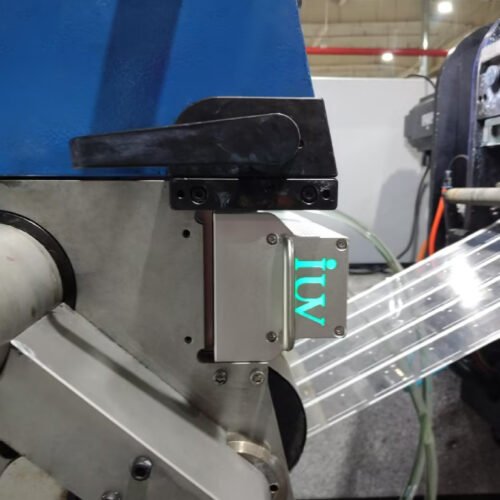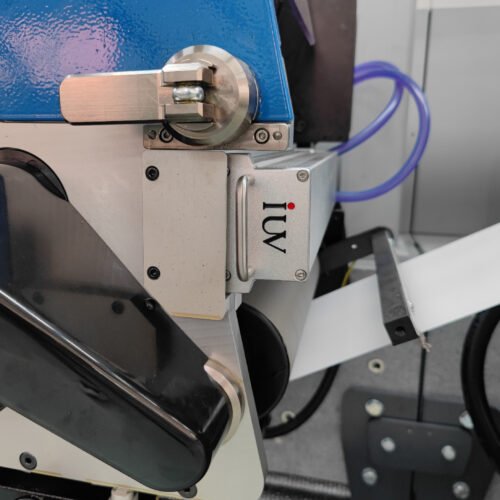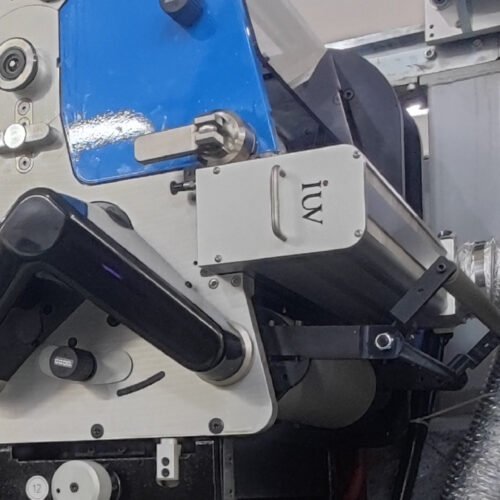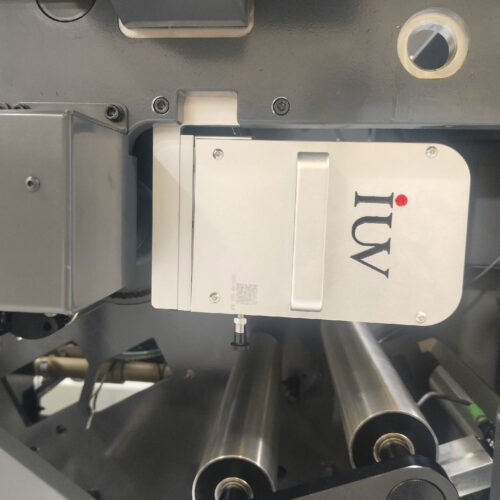
In modern packaging and label printing environments, hybrid offset and flexographic production lines are increasingly used to combine the image quality of offset printing with the substrate adaptability and coating flexibility of flexographic printing. As production speeds continue to increase and converters move toward thinner packaging materials, curing technology has become one of the most critical process limitations. Under these conditions, Upgrade to LED Curing Equipment for Hybrid Offset and Flexo Printing Production Line is no longer only an energy-saving upgrade but a process optimization strategy directly connected to print stability, ink adhesion, thermal management, and production efficiency.
Traditional mercury UV systems have historically been compatible with both offset UV inks and flexographic coatings because of their broad-spectrum UV output. However, hybrid printing lines create unique curing challenges. Offset units often require stable surface curing for high-resolution dot reproduction, while flexographic stations may apply thicker ink layers, varnishes, or opaque white coatings that demand deeper UV penetration. In practical production environments, balancing these curing requirements while maintaining high line speed is one of the primary engineering difficulties addressed by Upgrade to LED Curing Equipment for Hybrid Offset and Flexo Printing Production Line.
UV curing behavior in hybrid printing environments
In hybrid offset and flexo presses, curing conditions vary significantly between stations. Offset printing typically applies thinner ink films with precise dot structures, while flexographic units often deliver higher ink volume for coatings, adhesives, or specialty applications. Because of this difference, UV dose distribution must be controlled carefully across the entire production line.
Traditional UV systems compensate for curing inconsistency through high-energy broad-spectrum exposure. Although effective, this approach generates excessive infrared heat and unstable substrate temperatures, particularly in narrow web packaging production. Thin film materials such as PET, PE, and BOPP are highly sensitive to thermal expansion, and excessive heat accumulation can create registration drift between offset and flexographic stations.
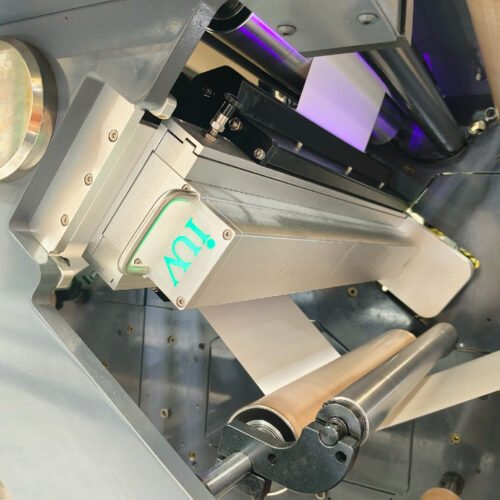
This is one of the key reasons why Upgrade to LED Curing Equipment for Hybrid Offset and Flexo Printing Production Line has become increasingly common in label printing and flexible packaging production. LED UV systems emit narrow-band wavelengths, typically 385 nm or 395 nm, which improve energy utilization while significantly reducing infrared radiation. Lower substrate heat improves dimensional stability during multi-process printing and reduces thermal stress on adhesive layers and laminating structures.
However, the engineering challenge is not only thermal reduction. In hybrid systems, curing must remain synchronized between different print technologies operating under different ink transfer conditions.
UV ink chemistry compatibility between offset and flexo processes
One of the most important technical considerations in Upgrade to LED Curing Equipment for Hybrid Offset and Flexo Printing Production Line is UV ink chemistry compatibility. Offset UV inks and flexographic UV inks do not always respond identically to LED wavelengths because of differences in viscosity, pigment concentration, and photoinitiator formulation.
Offset UV inks generally require fast surface polymerization to maintain dot sharpness and avoid set-off issues. Flexographic inks, especially high-opacity whites and coatings, require deeper penetration and stable bulk curing. In practical production, a curing system optimized only for surface reactivity may produce acceptable offset results while creating insufficient cure depth in flexographic layers.
This becomes particularly visible in packaging printing applications involving multilayer coatings or laminating adhesives. If UV dose distribution is not properly balanced, internal polymerization may remain incomplete even when the surface appears fully cured. Over time, this can affect adhesion performance, chemical resistance, and converting reliability.
In real industrial troubleshooting scenarios, operators often respond by increasing UV intensity across the entire press. While this may temporarily improve curing, it increases energy consumption and may introduce additional substrate heat. The more effective engineering solution is usually related to wavelength optimization, ink formulation adjustment, and controlled UV dose distribution.
Thermal management and production stability
Thermal behavior changes significantly after Upgrade to LED Curing Equipment for Hybrid Offset and Flexo Printing Production Line. Mercury UV systems generate continuous infrared radiation that raises substrate temperature throughout the press path. In hybrid printing environments, this thermal buildup affects web tension stability and creates differential expansion between materials.
LED systems reduce substrate heating substantially, which improves registration stability in multi-color printing and reduces deformation of heat-sensitive packaging films. In shrink sleeve production, this reduction in thermal load is especially important because premature material distortion can occur even before the final shrink process.
However, LED curing systems introduce a different thermal engineering requirement. While substrate heat decreases, thermal concentration at the LED junction level increases. If cooling systems are undersized or airflow becomes unstable, LED wavelength drift can occur. Even a small wavelength shift may reduce photoinitiator activation efficiency, particularly in hybrid printing lines using multiple ink chemistries simultaneously.
This explains why Upgrade to LED Curing Equipment for Hybrid Offset and Flexo Printing Production Line must be treated as a full process integration project rather than only a lamp replacement. Stable cooling, optical cleanliness, and driver synchronization become critical factors affecting curing consistency.
Speed synchronization and curing efficiency in hybrid presses
Hybrid offset and flexographic production lines often operate at high speed while performing multiple printing and coating functions within a single pass. Under these conditions, curing efficiency is closely related to synchronization between web speed, UV dose, and ink transfer thickness.
In traditional UV systems, over-curing has historically been used as a process safety margin. Operators compensate for speed variation and ink inconsistency by maintaining excessively high lamp output. Although effective, this results in unnecessary energy consumption and elevated thermal load.
One of the primary engineering advantages of Upgrade to LED Curing Equipment for Hybrid Offset and Flexo Printing Production Line is the ability to dynamically adjust UV output according to actual production conditions. LED systems respond instantly to speed changes and can stabilize UV dose more precisely during acceleration or deceleration.
This becomes particularly important during short-run packaging production and frequent job changes. Reduced warm-up time improves startup efficiency and lowers substrate waste during press setup. In practical label printing operations, this operational stability often provides greater long-term productivity gains than direct electrical energy reduction alone.
Oxygen inhibition and adhesion challenges
Oxygen inhibition remains one of the most common curing limitations in LED UV systems, particularly in flexographic coatings and low-viscosity varnishes. Because LED curing relies on narrower spectral energy distribution, surface polymerization can become more sensitive to ambient oxygen interference.
In hybrid printing lines, this issue is often more complex because offset and flexographic layers interact differently during curing. Surface under-cure may not appear immediately but can create downstream problems during laminating, slitting, or die cutting.
Operators frequently misinterpret these symptoms as insufficient UV power. In reality, the root cause may involve photoinitiator imbalance, oxygen exposure, or curing sequence mismatch between stations.
Therefore, successful implementation of Upgrade to LED Curing Equipment for Hybrid Offset and Flexo Printing Production Line depends on balancing UV wavelength, ink chemistry, web speed, and thermal conditions simultaneously.
Long-term operational impact of LED conversion
From a production engineering perspective, the long-term value of Upgrade to LED Curing Equipment for Hybrid Offset and Flexo Printing Production Line extends beyond electrical savings. Reduced maintenance frequency, stable irradiance output, lower substrate heat, and improved startup efficiency all contribute to higher overall equipment effectiveness.
At the same time, hybrid printing environments place higher demands on curing consistency because multiple printing technologies interact within the same process window. LED curing technology improves process stability when correctly integrated, but it also exposes inconsistencies in ink formulation, press mechanics, and thermal management that were previously masked by overpowered mercury UV systems.
In well-optimized production lines, LED curing provides more stable curing behavior, reduced thermal distortion, and improved production efficiency across both offset and flexographic processes while maintaining compatibility with modern packaging substrates and UV ink systems.