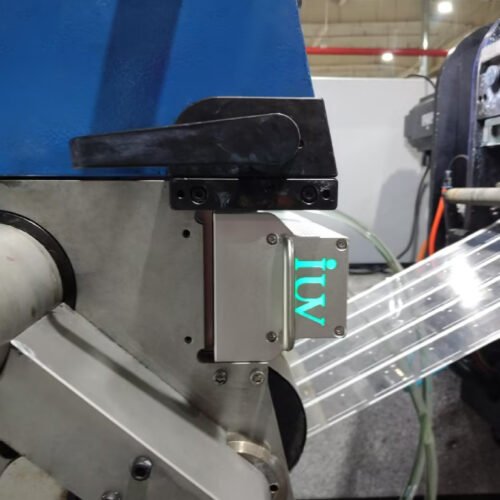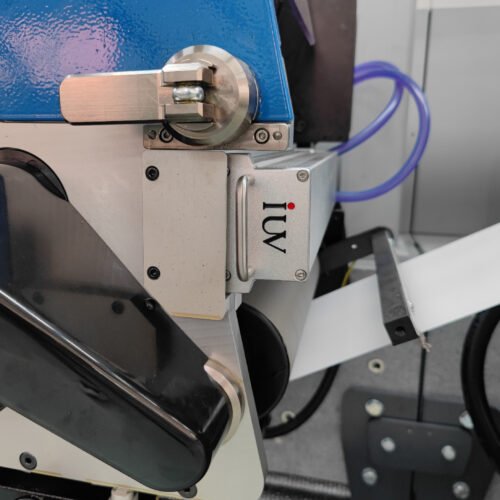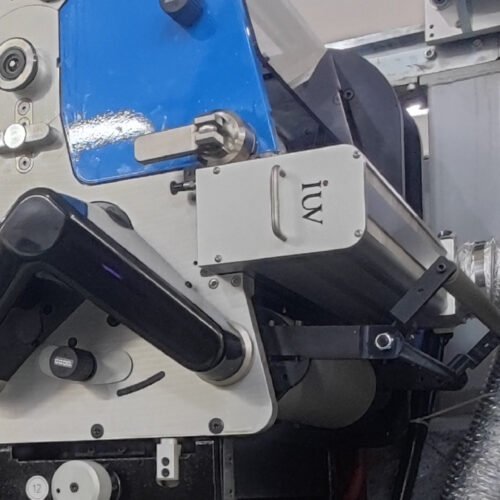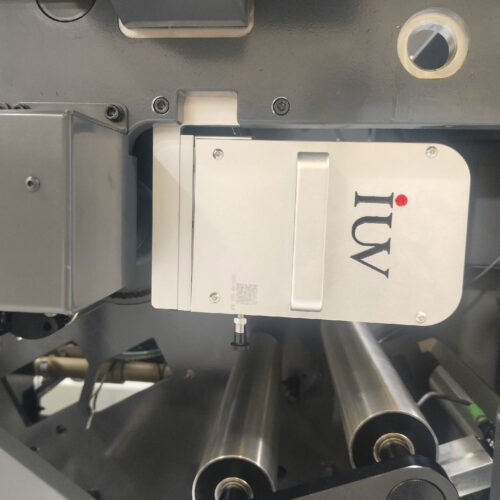
In modern offset printing environments, UV curing is no longer just a drying step at the end of the press. It directly defines ink rheology stability, dot gain behavior, substrate compatibility, and downstream converting performance. As production speeds increase in commercial and packaging printing, the comparison between traditional systems and modern LED-based solutions becomes an engineering decision rather than a technology preference. The discussion around UV Light Curing System vs LED UV Technology in Offset Printing: Efficiency and Performance Comparison is therefore rooted in process physics, not marketing narratives.
In real offset printing lines, especially sheetfed offset used for packaging and commercial graphics, UV curing must operate under variable ink loads, different coating structures, and fluctuating press speeds. These variations expose the fundamental differences between mercury-based UV systems and LED UV curing architecture in terms of spectral control, thermal behavior, and UV dose stability.
UV curing physics and energy utilization in offset environments
UV curing technology relies on photochemical polymerization, where photoinitiators absorb UV photons and generate free radicals that trigger crosslinking in the ink film. In offset printing, ink layers are thinner compared to flexographic printing, but the pigment density and coating complexity are significantly higher.
Traditional UV light curing systems based on mercury vapor lamps emit a broad spectrum that includes UV, visible light, and a substantial amount of infrared radiation. This wide emission profile creates high total energy consumption, but only a portion of that energy contributes to actual polymerization.
In contrast, LED UV curing systems operate within a narrow wavelength band, typically around 385 nm or 395 nm. This spectral selectivity improves photon-to-reaction efficiency, which is one of the key engineering differences in the UV Light Curing System vs LED UV Technology in Offset Printing: Efficiency and Performance Comparison.
However, this efficiency is not automatic. It depends on the alignment between UV ink chemistry and LED emission spectrum. If photoinitiators are not optimized for the wavelength, energy efficiency gains are lost at the chemical level.
Thermal load and substrate behavior in offset printing
One of the most critical differences in the UV Light Curing System vs LED UV Technology in Offset Printing: Efficiency and Performance Comparison is thermal output. Mercury UV systems generate significant infrared radiation, which directly increases substrate temperature during curing.
In sheetfed offset printing, this thermal load affects paper dimensional stability, coating behavior, and ink rheology. Excess heat can increase dot gain variability and cause slight expansion of paper fibers, leading to register drift in multi-color jobs.
LED UV systems drastically reduce infrared emission, which improves substrate stability and reduces mechanical stress in the printing unit. In packaging applications using coated board or synthetic substrates, this thermal stability directly improves folding performance and post-press behavior.
However, LED systems introduce a different engineering constraint: junction temperature control. If thermal management is not properly designed, wavelength shift occurs, which reduces UV dose efficiency and destabilizes curing consistency.
UV dose consistency and process stability
UV dose is defined as irradiance multiplied by exposure time, but in real offset printing environments, exposure time is influenced by press speed, ink coverage, and reflectivity of the substrate.
Mercury systems typically require warm-up time to reach stable output. During this phase, UV dose fluctuates, which is particularly problematic in short-run offset printing where jobs change frequently.
In the UV Light Curing System vs LED UV Technology in Offset Printing: Efficiency and Performance Comparison, LED systems demonstrate a key advantage: instant-on stability. UV output reaches operational levels immediately without spectral drift during warm-up. This improves first-sheet quality consistency, which is critical in commercial printing workflows with high job turnover.
However, LED systems deliver energy in a narrower spectral range, meaning process stability depends more heavily on correct UV ink chemistry formulation and precise matching of photoinitiators.
UV ink chemistry, oxygen inhibition, and adhesion behavior
In offset UV inks, polymerization is driven by free radical reactions that are sensitive to oxygen exposure. Oxygen inhibition reduces surface curing efficiency, often resulting in tackiness or reduced scratch resistance.
In mercury-based systems, higher infrared energy sometimes masks partial surface curing issues by accelerating thermal effects. LED systems remove this thermal compensation, making chemical limitations more visible.
This is an important factor in the UV Light Curing System vs LED UV Technology in Offset Printing: Efficiency and Performance Comparison. LED UV exposes the true behavior of ink chemistry, requiring better formulation control rather than relying on excess energy.
UV ink adhesion is strongly influenced by the balance between surface cure and bulk cure. If LED systems are not properly tuned in terms of UV dose and wavelength matching, surface curing may appear complete while internal polymerization remains incomplete, leading to delamination during folding or lamination.
Energy efficiency and operational cost behavior
From an energy perspective, mercury UV systems consume significantly more power due to broadband emission and high thermal losses. A large portion of input energy is converted into heat rather than usable UV radiation.
LED UV systems improve electrical-to-UV conversion efficiency, which reduces overall energy consumption per printed sheet. However, in industrial offset environments, the real efficiency gain is not only electrical. It also includes reduced cooling requirements, lower standby consumption, and reduced warm-up cycles.
In the UV Light Curing System vs LED UV Technology in Offset Printing: Efficiency and Performance Comparison, energy savings must be interpreted in the context of full system operation, including press downtime, job change frequency, and maintenance intervals.
Mercury lamps require periodic replacement and reflectivity degradation over time, while LED modules maintain more stable output over longer service life, reducing maintenance-related interruptions.
Material compatibility and production flexibility
Offset printing substrates vary widely, including coated paper, uncoated paper, folding cartons, and synthetic materials. Each substrate reacts differently to UV exposure and thermal load.
Mercury systems offer broader spectral tolerance, which historically made them more forgiving for mixed production environments. However, this comes at the cost of lower process precision.
LED UV systems provide higher process stability but require more controlled UV ink chemistry. This makes them more suitable for standardized production environments, especially in packaging offset printing where repeatability is critical.
In the UV Light Curing System vs LED UV Technology in Offset Printing: Efficiency and Performance Comparison, material compatibility is no longer a passive property but a controlled variable dependent on spectral engineering.