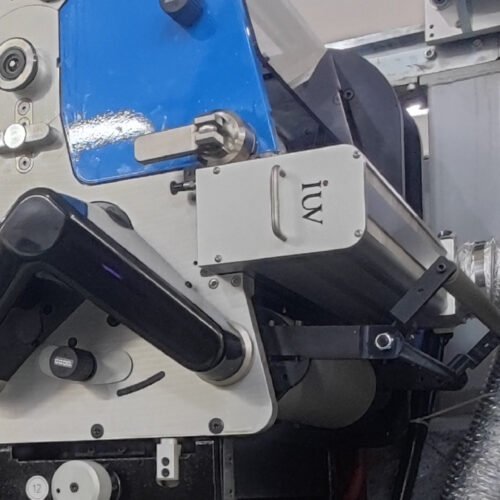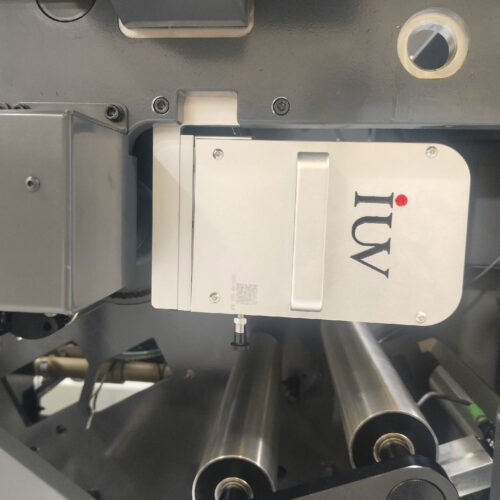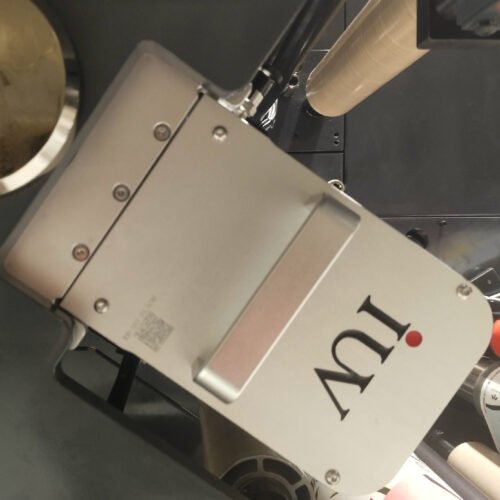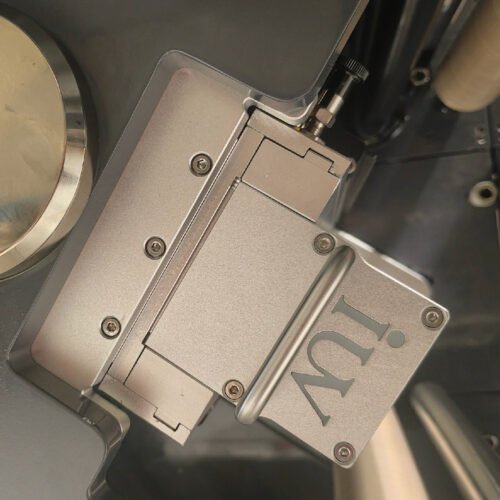
Unsupported PET films are widely used in premium label construction, wrap-around applications, flexible packaging structures, and thin decorative webs where dimensional stability matters as much as print appearance. These materials offer excellent clarity, strength, and chemical resistance, but they are also unforgiving when exposed to poor web handling or uncontrolled thermal load. In narrow web printing, one of the most persistent process issues on unsupported PET is shrinkage. Even small dimensional changes can create registration drift, curl, tension instability, die-cut mismatch, matrix stripping issues, and visible distortion in fine graphics.
Many converters assume that switching to cold UV LED curing automatically eliminates the risk of substrate shrinkage. In practice, that assumption is too simplistic. UV LED curing does reduce radiant heat compared with conventional mercury systems, but shrinkage on unsupported PET can still occur if the full press environment is not properly engineered. The real challenge is not only the curing source. It is the combined effect of web tension, nip pressure, chill control, ink film loading, line speed, exposure geometry, and cumulative heat history through the press path.
In label and flexographic production, successful PET handling depends on controlling both thermal stress and mechanical stress. Cold UV LED curing systems create a much better foundation for this work, but they still require disciplined setup if the goal is stable dimensions and repeatable print quality.
Why Unsupported PET Films Are More Sensitive in Narrow Web Printing
Unsupported PET behaves differently from laminated or paper-based constructions because it has very little structural buffering. It is thin, smooth, and dimensionally responsive to heat and tension. During press operation, the film is repeatedly accelerated, guided, printed, exposed, wrapped, and sometimes re-exposed through multiple stations. Every contact point adds a process load.
Unlike thicker or more forgiving substrates, unsupported PET does not hide poor process balance. If web tension is too high, the material can elongate. If temperature rises too much, it can shrink. If both happen in sequence, the film may stretch under tension and then contract unevenly after curing or rewinding. That is when converters begin to see image drift, edge movement, and registration instability that appears random but is actually process-driven.
This is why unsupported PET should never be treated like a standard paper label stock. It requires a different mindset, especially when running high-speed UV LED label production.
Why Shrinkage Still Happens Even with Cold UV LED Curing
Cold UV LED curing significantly lowers infrared heat compared with traditional arc lamp systems. That is one of its biggest advantages in label printing, especially on heat-sensitive films. However, lower heat does not mean zero heat. Unsupported PET can still shrink if the press introduces enough cumulative thermal stress from other sources.
A converter may install UV LED curing and still experience film distortion because the real thermal load is coming from a combination of hot impression zones, poor chill roll balance, web drag, high friction guide rollers, enclosed press heat buildup, dense ink coverage, or repeated exposure at slow speed. In some cases, the substrate temperature rise is modest at any single point, but harmful when accumulated across the whole web path.
This is why cold curing should be understood as a thermal management advantage, not a guarantee. It gives the press a larger process window, but that window must still be used correctly.
The First Step Is Measuring Actual Web Temperature, Not Guessing
One of the biggest mistakes in unsupported PET troubleshooting is relying on assumptions instead of measurement. Operators often judge substrate condition by touch or by visible print behavior. By the time visible distortion appears, the web has usually already exceeded a safe process threshold.
The more reliable approach is to monitor actual web temperature at multiple positions through the press. It is important to know not only the temperature after the UV LED station, but also before print, after print, after cure, and before rewind. Unsupported PET can absorb and retain enough heat to become dimensionally unstable even when the curing module itself is operating within normal limits.
What matters is the thermal history of the film, not only the lamp specification. Once that thermal history is understood, shrinkage problems become much easier to isolate and correct.
Tension Is Often the Hidden Driver Behind Dimensional Instability
Many shrinkage complaints on PET are not purely thermal. They are tension-related. Unsupported film is highly responsive to mechanical stress, and excessive or uneven web tension can distort the material before curing even begins.
When a film is stretched under high tension and then exposed to localized heat or energy, it may relax in a non-uniform way. That relaxation often appears later as shrinkage, edge pull, or registration shift. In narrow web production, this can happen gradually across several stations, especially when the unwind, print zone, cure zone, and rewind are not tension-balanced.
Cold UV LED systems reduce one major stress factor, but if the web is still being over-controlled mechanically, shrinkage risk remains. Stable PET handling requires the lowest effective tension for web control, not the highest tension for operator confidence.
Why Ink Film Build Can Increase Shrinkage Risk
Unsupported PET does not only respond to heat from lamps. It also responds to the thermal and mechanical effects of the ink layer itself. Heavy film builds, dense solids, opaque whites, and high-coverage varnishes can all influence substrate behavior during UV LED curing.
Thicker ink films require more curing energy and often retain more localized heat during polymerization. They also create stronger film contraction forces as the ink crosslinks. On thin PET, that contraction can influence web flatness and contribute to curl or dimensional pull, especially if one side of the substrate is loaded more heavily than the other.
In flexographic label printing, this means shrinkage control is partly a graphics engineering issue. Jobs with heavy solids or multi-layer builds require tighter control than light process work, even on the same substrate family.
Why Chill Roll Strategy Matters More Than Many Operators Realize
Chill systems are often treated as a secondary support function, but on unsupported PET they are central to web stability. A properly tuned chill roll does not simply cool the substrate. It helps interrupt heat accumulation and stabilize the web before dimensional distortion becomes permanent.
However, chill roll performance depends on several practical factors. Surface cleanliness, actual coolant temperature, wrap angle, contact consistency, line speed, and press sequencing all affect how much stabilization the roll really provides. If the chill roll is too warm, poorly loaded, or positioned too late in the process path, the film may already have absorbed enough stress to begin shrinking.
Cold UV LED curing works best on PET when cooling is integrated into the web path rather than treated as a backup correction. In high-speed narrow web production, the timing of stabilization is often as important as the curing energy itself.
Why Exposure Geometry and Cure Placement Influence Film Stability
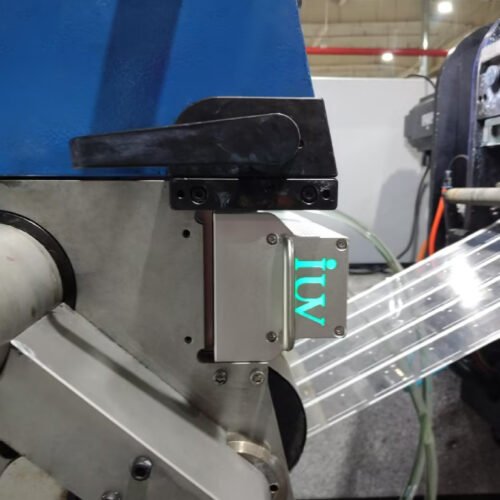
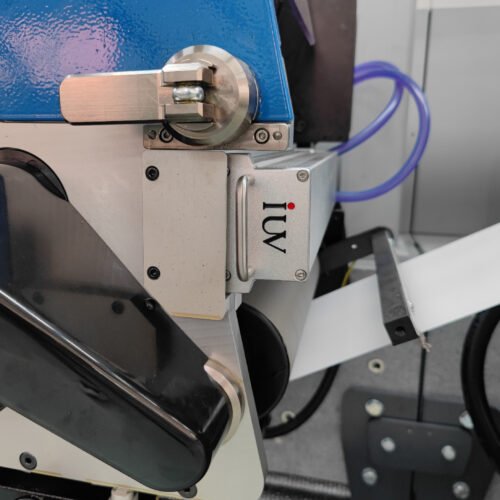
The position of the UV LED station in the press line has a direct effect on unsupported PET behavior. If the curing head is installed where the web has poor support, unstable tension, or limited cooling recovery, the substrate may distort even if the curing system is technically performing well.
Unsupported film benefits from a mechanically stable exposure zone. This means the web should enter cure with controlled tension, consistent path geometry, and minimal flutter. If the web is wandering, oscillating, or poorly supported during exposure, dimensional movement can become amplified.
In narrow web flexographic and hybrid label printing, the best results usually come when the cure station is treated as part of the web handling architecture rather than just a print accessory. Stable cure requires stable web mechanics.
Why Press Speed Changes Shrinkage Behavior
Unsupported PET often behaves differently at low speed than at production speed. Many converters test a new substrate slowly, see acceptable results, and assume the process is safe. Once speed increases, shrinkage appears unexpectedly.
This happens because web dynamics, exposure dwell, friction, and cumulative thermal loading all change with speed. At higher speed, the substrate may spend less time under each energy source but more total time under stress due to increased mechanical demand. At lower speed, the opposite can occur, with excessive local exposure and greater heat soak. Both scenarios can create shrinkage, but through different mechanisms.
That is why unsupported PET should always be qualified at realistic production speed. A setup that looks stable in a test run may not remain stable under commercial throughput.
Why Unsupported PET Requires Better Process Balance Than Paper Labels
Paper label stocks often absorb and distribute process variation in ways that film cannot. Unsupported PET does not offer that forgiveness. It reveals every imbalance in tension, heat, pressure, and cure more quickly and more visibly.
This is why converters moving from paper-dominant work into filmic label production often encounter a learning curve even after installing UV LED systems. The curing technology helps significantly, but the substrate still demands more disciplined control.
In practice, this means unsupported PET should be run with tighter attention to process sequencing, fewer unnecessary thermal inputs, cleaner mechanical support, and more controlled film builds. Once those elements are aligned, cold UV LED curing becomes a major competitive advantage.
Why Converting Performance Is the Real Proof of Success
A substrate can appear stable at print exit and still fail later in converting. That is common with unsupported PET. A job may look visually acceptable after printing, but later show die-cut registration shift, liner mismatch, tunnel distortion, or curl after rewinding and relaxation.
This is why shrinkage control should not be judged only at the print station. The true measure is whether the film remains dimensionally stable through finishing, slitting, rewinding, and end-use handling. In label printing, that downstream stability is what determines whether the web handling strategy was actually successful.
Cold UV LED curing is particularly valuable here because it reduces the thermal burden carried into finishing. But that benefit only appears consistently when the rest of the process supports dimensional control.
Why PET Shrinkage Prevention Is a System-Level Discipline
There is rarely a single root cause behind unsupported PET shrinkage. More often, it is the result of several moderate process imbalances acting together. A little too much tension, a little too much ink, a little too much retained heat, and a little too little cooling can combine into a serious production issue.
That is why the best converters do not troubleshoot shrinkage as a lamp problem alone. They evaluate the full web path, including unwind behavior, tension profile, print loading, cure sequence, support geometry, and cooling recovery. Once the process is treated as an integrated system, unsupported PET becomes much more manageable.
This systems-based approach is especially important in modern narrow web environments where high-speed label production, film versatility, and premium print quality must all coexist.
Cold UV LED Curing Creates a Better Window for PET, But Process Discipline Still Wins
The real advantage of cold UV LED curing on unsupported PET is not just lower heat. It is the ability to build a more stable and more forgiving process window for sensitive films. That window allows converters to reduce substrate stress, improve dimensional control, and run more demanding constructions with better consistency.
However, the curing system alone does not guarantee those outcomes. The press must still be configured to protect the film mechanically and thermally from unwind to rewind. When that happens, unsupported PET can run cleanly and predictably even in demanding narrow web applications.
For converters focused on high-value labels, flexible packaging structures, and precision film work, mastering this balance is one of the most important steps toward reliable UV LED production.
Conclusion
Mitigating substrate shrinkage on unsupported PET films requires more than choosing a cold UV LED curing system. It requires understanding how temperature, tension, ink film build, cooling, exposure geometry, and press speed interact across the full web path.
In narrow web flexographic, offset, and hybrid label printing, unsupported PET rewards process control and exposes process weakness. When web handling is properly engineered and UV LED curing is integrated with dimensional stability in mind, converters can achieve clean print quality, strong curing, stable registration, and dependable downstream converting performance.
For production teams working with sensitive film constructions, shrinkage control should be treated as a core web handling discipline, not just a substrate issue. That is where cold UV LED curing delivers its greatest value.