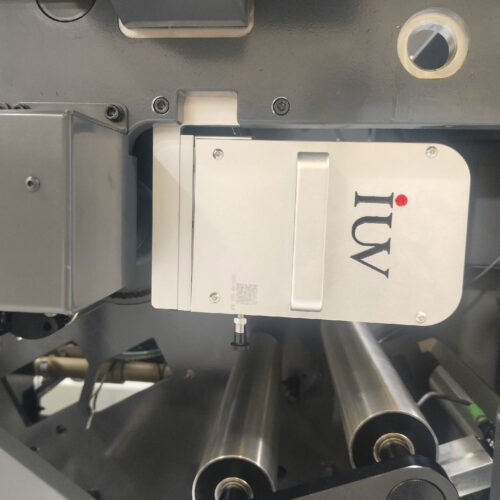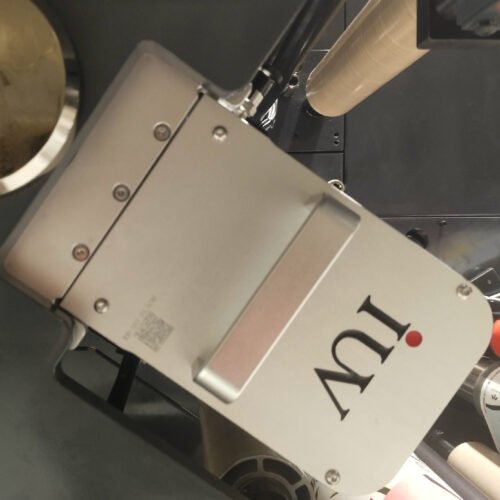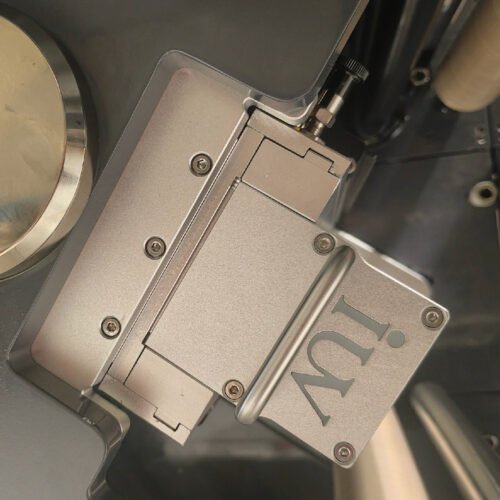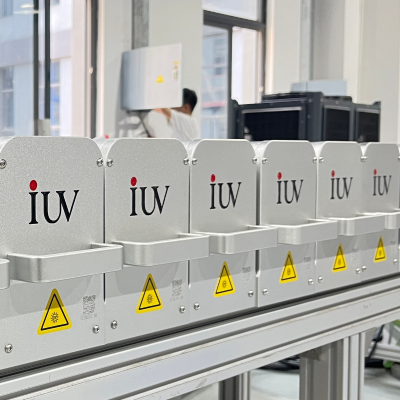
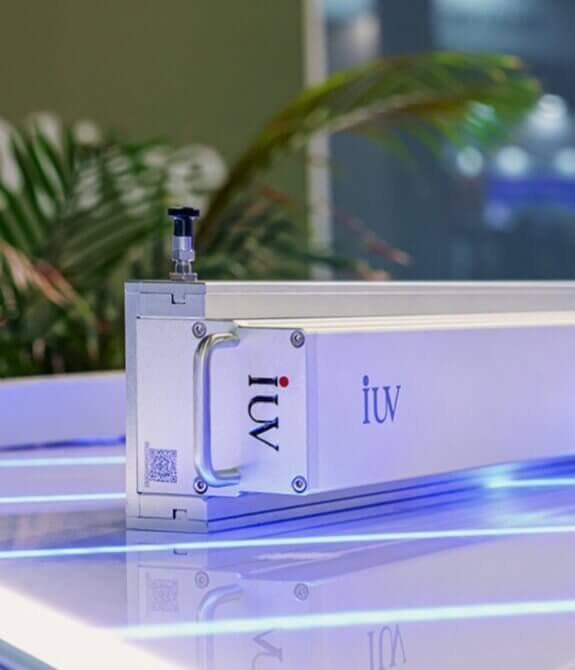
Curing stability is one of the most decisive factors in modern flexographic label production. In narrow web printing, a press can run at impressive speed, hold tight registration, and deliver sharp graphics, yet still fail commercially if UV curing remains unstable. When curing fluctuates, the result is rarely limited to one visible defect. It usually appears as a chain reaction that affects adhesion, gloss, rub resistance, color consistency, die-cutting behavior, lamination performance, and overall production efficiency.
In flexographic label printing, LED UV technology has become a preferred curing method because it offers controlled spectral output, lower heat load, reduced maintenance, and better energy efficiency than conventional mercury systems. However, stable curing is not created by the lamp alone. It depends on how the curing head, ink chemistry, substrate surface, press mechanics, thermal behavior, and process settings work together under real production conditions.
For converters running demanding label jobs on premium narrow web equipment, including production environments built around trusted partners such as Nilpeter, curing stability is not just a technical detail. It is a process control discipline. Understanding the engineering behind stable LED UV performance is essential for reducing waste and protecting print quality across long runs and short changeover cycles alike.
Why Curing Stability Matters More Than Peak UV Power
A common misconception in label printing is that higher irradiance automatically solves curing problems. In practice, peak power alone does not guarantee reliable polymerization. A system may produce strong measured output and still create unstable cure performance on press. This happens because curing is governed by both irradiance and dose, but also by spectral match, ink film geometry, oxygen exposure, web speed, thermal drift, and lamp-to-substrate consistency.
In label flexo production, curing stability means the ability to maintain repeatable polymerization results across time, width, speed, substrate changes, and job variation. A stable system should deliver the same cure response at the left edge and right edge of the web, at the start of a run and several hours later, and during acceleration, deceleration, and steady-state production.
When curing becomes unstable, operators often see inconsistent scuff resistance, random surface tack, difficult rewinding, dirty die stations, and variable ink laydown in overprint zones. These symptoms are often blamed on ink or substrate, but in many cases the root cause is an unstable curing environment rather than a simple consumables issue.
The Relationship Between LED UV Output and Polymerization Consistency
LED UV curing in flexographic label printing depends on a controlled photochemical reaction. The photoinitiators in the ink absorb energy from the LED source and begin crosslinking the oligomers and monomers that form the cured ink film. If this reaction receives the right energy profile, the cured layer becomes chemically and mechanically stable. If the energy delivery is inconsistent, the cure response becomes uneven.
This is especially important in narrow web flexo because many label jobs involve fine text, dense solids, reverse type, opaque whites, metallic effects, varnishes, and multi-layer structures. These print elements do not all cure in the same way. Thin process colors may appear cured at the surface, while dense white or black layers may remain undercured below the top skin. A system that looks acceptable visually can still create downstream converting failures if the cure profile is unstable through the depth of the ink film.
Stable curing therefore requires more than a lamp that turns on. It requires predictable energy transfer into the ink structure under the exact press conditions used in production.
Spectral Matching Between LED Wavelength and Ink Chemistry
One of the most important engineering variables in curing stability is spectral compatibility. Most LED UV systems in label printing operate at wavelengths such as 365 nm, 385 nm, 395 nm, or 405 nm. The ink system must be formulated to respond efficiently to the selected wavelength. If the photoinitiator package is not optimized for that spectral window, curing may become sensitive to speed variation, film thickness, and environmental changes.
This is one reason why a job can perform well on one press and poorly on another, even when both use LED UV technology. The issue is not always the press itself. It may be a mismatch between the ink chemistry and the energy profile being delivered.
In practical label production, stable curing is achieved when the lamp spectrum, ink photoinitiator response, and target ink density are aligned. This is especially important when printing difficult colors, high-opacity whites, tactile varnishes, and functional coatings used in premium packaging and durable labels.
Thermal Stability and Its Hidden Influence on UV Cure Performance
One of the advantages of LED UV curing is reduced heat compared with conventional mercury lamps. However, reduced heat does not mean zero thermal influence. In fact, thermal management is one of the most overlooked contributors to curing stability in flexographic printing.
As LED arrays operate, diode junction temperature affects optical output. If cooling flow is inconsistent or heat extraction is inadequate, output can drift during production. Even a modest thermal shift can influence energy delivery enough to create visible or functional variation in the printed result. Over a long label run, this may appear as gradual gloss change, reduced rub resistance, or inconsistent adhesion in later rolls.
Compact press configurations, enclosed curing areas, poor airflow, and contamination in cooling circuits can all increase thermal instability. This becomes even more important in narrow web label production where stations are closely spaced and curing heads operate continuously near inks, sleeves, and impression systems.
Engineering a stable LED UV process therefore requires attention to coolant temperature, coolant cleanliness, heat sink efficiency, fan or chiller performance, and the relationship between curing output and operating temperature over time.
Web Speed Fluctuation and Dose Stability in Narrow Web Production
In label converting, curing conditions are rarely static. Web speed changes during setup, splicing, acceleration, inspection, and final slowdown. If the LED UV system is not synchronized properly with the actual web speed, the delivered UV dose changes instantly. This creates unstable polymerization, especially in jobs with tight cure windows.
A press may cure well at one speed and fail at another, even when the lamp setting appears unchanged. That is because the energy per unit area depends on the time the substrate spends under the curing zone. If the press accelerates without corresponding output compensation, undercure becomes likely. If it decelerates without power scaling, excessive local heating or overexposure can occur.
This is why stable LED UV systems for flexographic label printing must be engineered as part of the press control strategy, not treated as isolated accessories. In high-performance production environments, LED output should track real web conditions with consistent logic and reliable trigger behavior.
Lamp-to-Substrate Distance and Mechanical Repeatability
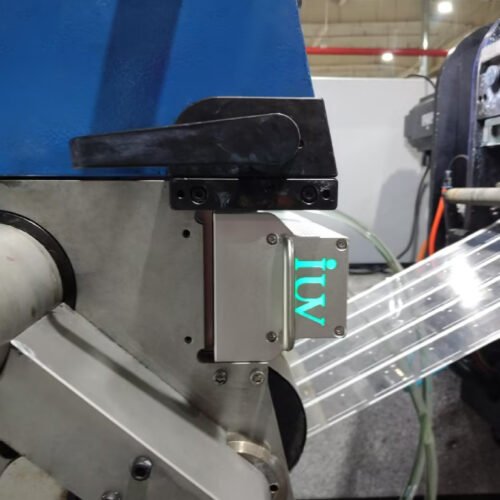
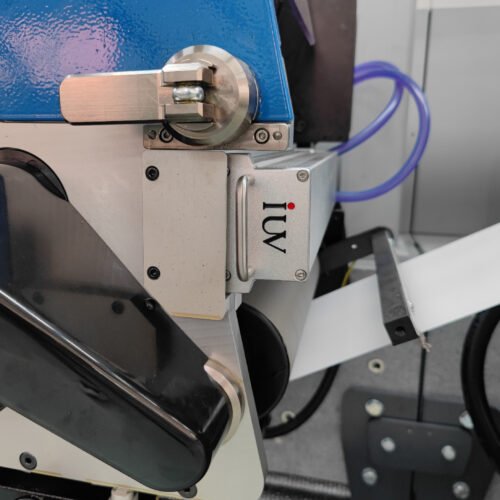
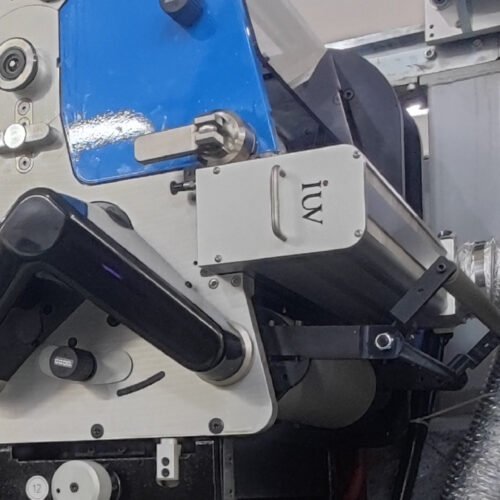
Mechanical geometry has a direct impact on curing stability. Even a high-quality LED UV head can perform poorly if the lamp-to-substrate distance changes across the web or shifts during production. In narrow web flexo, small geometric errors matter because the curing window is relatively concentrated and process speeds are high.
If the curing head sits too far from the substrate, effective irradiance drops. If the distance varies from one side to the other, cure uniformity across the web becomes unstable. If the mounting structure vibrates, flexes, or loses alignment during operation, the curing profile can fluctuate from repeat to repeat.
This is especially relevant when retrofitting older label presses or integrating LED curing into compact flexographic frames. Engineering stability requires rigid mounting, accurate alignment, controlled tolerances, and a curing head position that remains repeatable under real running conditions.
Converters working with established narrow web press ecosystems, including those built around Nilpeter production workflows, often recognize that curing stability depends not only on the UV hardware, but also on how well that hardware is integrated into the mechanical architecture of the press.
Ink Film Thickness, Anilox Selection, and Cure Penetration
Another critical factor in curing stability is ink film geometry. In flexographic printing, the anilox roll largely determines how much ink reaches the plate and substrate. If the film is too heavy for the available UV dose and spectral response, incomplete cure becomes likely. If the film is too light, the visual target may be missed even though cure appears acceptable.
Stable curing therefore requires coordination between anilox volume, plate release, ink rheology, press speed, and UV output. A system may perform perfectly with one screen ruling and fail with another simply because the ink film thickness changes enough to alter cure penetration.
This becomes especially challenging with opaque white, high-density black, and specialty varnishes. Surface cure may look strong while internal cure remains incomplete. In label printing, this can create later-stage issues during rewinding, slitting, laminating, or die-cutting. Engineering stability means evaluating not only whether the surface is dry, but whether the full ink structure has polymerized consistently enough for downstream conversion.
Oxygen Inhibition and Surface Cure Variability
Surface tack and poor rub resistance in LED UV flexo are often linked to oxygen inhibition. Oxygen interferes with free radical polymerization at the ink surface, particularly in low-energy cure situations or on difficult coatings and varnishes. While many modern LED UV formulations are designed to resist this effect, unstable curing can still appear if process conditions are marginal.
This issue becomes more visible in gloss coatings, dark solids, and jobs requiring a clean, hard surface for handling and converting. If the system operates close to the minimum cure threshold, even minor variation in lamp output, distance, or ink film can push the process into unstable territory.
For this reason, curing stability should always be evaluated under real press conditions rather than only through static lab assumptions. A system that passes a basic dry test may still fail under production stress if oxygen inhibition and marginal dose combine at high speed.
Cross-Web Uniformity and the Importance of Optical Consistency
Curing stability in label flexo is not only a time-based issue. It is also a width-based issue. Cross-web inconsistency can create one of the most frustrating types of production failure because operators may see acceptable cure in some lanes and poor cure in others.
This often happens when LED optical distribution is uneven, diode aging is non-uniform, contamination builds on protective windows, or mounting geometry changes across the width. In label printing, even small differences in cross-web cure can cause visible color variation, different gloss response, or lane-specific adhesion failures that only appear after finishing.
Engineering analysis of curing stability must therefore include width profiling. A curing system should not be judged only by centerline readings. It must be assessed for consistent energy delivery across the full printable width under actual running conditions.
Process Stability in Multi-Color Flexographic Label Printing
Flexographic label jobs rarely involve a single ink station. Most production runs rely on multiple colors, overprints, whites, varnishes, and occasionally hybrid process combinations. This means curing stability must be evaluated not only at one station, but across the whole print sequence.
A cure setting that works well after one color may not be sufficient after several stacked layers. Ink trapping behavior, interstation pinning, and final cure all interact. If the curing sequence is not stable, the press may produce trap loss, mottling, poor overprint cleanliness, or variable tactile response.
In narrow web label production, these effects become even more pronounced at high speed. Engineering a stable process means treating LED UV curing as part of the complete print architecture, not as a standalone endpoint. Stable results come from balancing each station’s function within the overall curing strategy.
Monitoring Curing Stability Through Measurable Process Indicators
The most reliable way to maintain curing stability is to monitor it through measurable indicators rather than waiting for visible defects. In production, stable curing can be tracked through irradiance readings, dose trends, coolant temperature consistency, adhesion results, rub performance, gloss repeatability, and downstream converting behavior.
A good engineering approach does not rely on assumptions such as “the lamp is on, so curing must be fine.” It builds a repeatable process window and watches for drift before defects reach finished rolls. This is especially valuable in label production where premium appearance and converting reliability directly affect customer acceptance.
Converters who invest in process discipline often find that stable curing reduces waste more effectively than simply increasing lamp power. Stable systems produce predictable results, and predictable results create profitable production.
Why Stable LED UV Curing Supports Better Productivity
In label printing, productivity is not only about maximum press speed. True productivity means maintaining saleable output with minimal stoppages, low waste, fast job changes, and dependable converting performance. A press that runs fast but creates inconsistent cure is not productive. It only moves problems downstream.
Stable LED UV curing supports better productivity because it reduces operator correction, minimizes reruns, protects substrate quality, and improves finishing reliability. It also makes color control more repeatable across jobs and helps converters standardize production settings across substrates and applications.
For operations serving demanding markets such as food labels, industrial labels, cosmetics, beverages, and premium consumer packaging, this stability becomes a competitive advantage. It supports both visual quality and process confidence.
Conclusion
Curing stability in LED UV systems for flexographic label printing is the result of engineering balance rather than raw lamp power. Stable performance depends on spectral compatibility, thermal control, web speed synchronization, mechanical repeatability, ink film management, oxygen resistance, and cross-web uniformity. When these variables are controlled together, LED UV curing becomes a highly reliable production tool for modern narrow web printing.
For converters running advanced flexographic workflows and collaborating across established industry ecosystems, including press environments associated with Nilpeter, curing stability should be treated as a core production parameter rather than a secondary technical check. It influences print quality, converting efficiency, and long-term operational consistency at every stage of the label manufacturing process.
When LED UV curing is engineered for stability, flexographic printing becomes more predictable, more efficient, and more commercially robust.