High-speed narrow web offset presses are widely used in label production where precision, consistency, and efficiency are essential. As production demands increase, traditional curing methods face limitations related to heat generation, energy consumption, and response time. UV LED curing systems offer a controlled and stable alternative, enabling efficient polymerization while maintaining substrate integrity and print quality.
Successful integration of UV LED curing systems into offset press configurations requires careful alignment between mechanical installation, electrical control, ink chemistry, and process parameters. When these elements are properly configured, LED curing supports consistent ink fixation, reduced waste, and stable high-speed operation.
Understanding Offset Ink Behavior Under LED UV Curing
Offset printing produces thin and uniform ink films, which respond differently to UV energy compared to flexographic layers. These thin films require precise irradiance control to ensure complete polymerization without overexposure. LED UV systems provide narrowband spectral output, allowing accurate matching with photoinitiators used in offset UV inks.
Because offset printing often involves multiple color units operating in sequence, curing must be carefully staged. Partial curing after each unit stabilizes the ink layer, preventing set-off and maintaining dot definition. Final curing completes the crosslinking process, ensuring mechanical strength and chemical resistance.
LED curing is particularly effective in maintaining dot sharpness. Controlled energy delivery prevents ink spreading and preserves fine details, which is critical for high-resolution label printing.
Mechanical Integration on Narrow Web Offset Presses
Installing LED UV curing modules on narrow web offset presses requires precise mechanical positioning. The distance between the curing lamp and the substrate directly affects irradiance levels. Maintaining consistent distance across the web width ensures uniform curing performance.
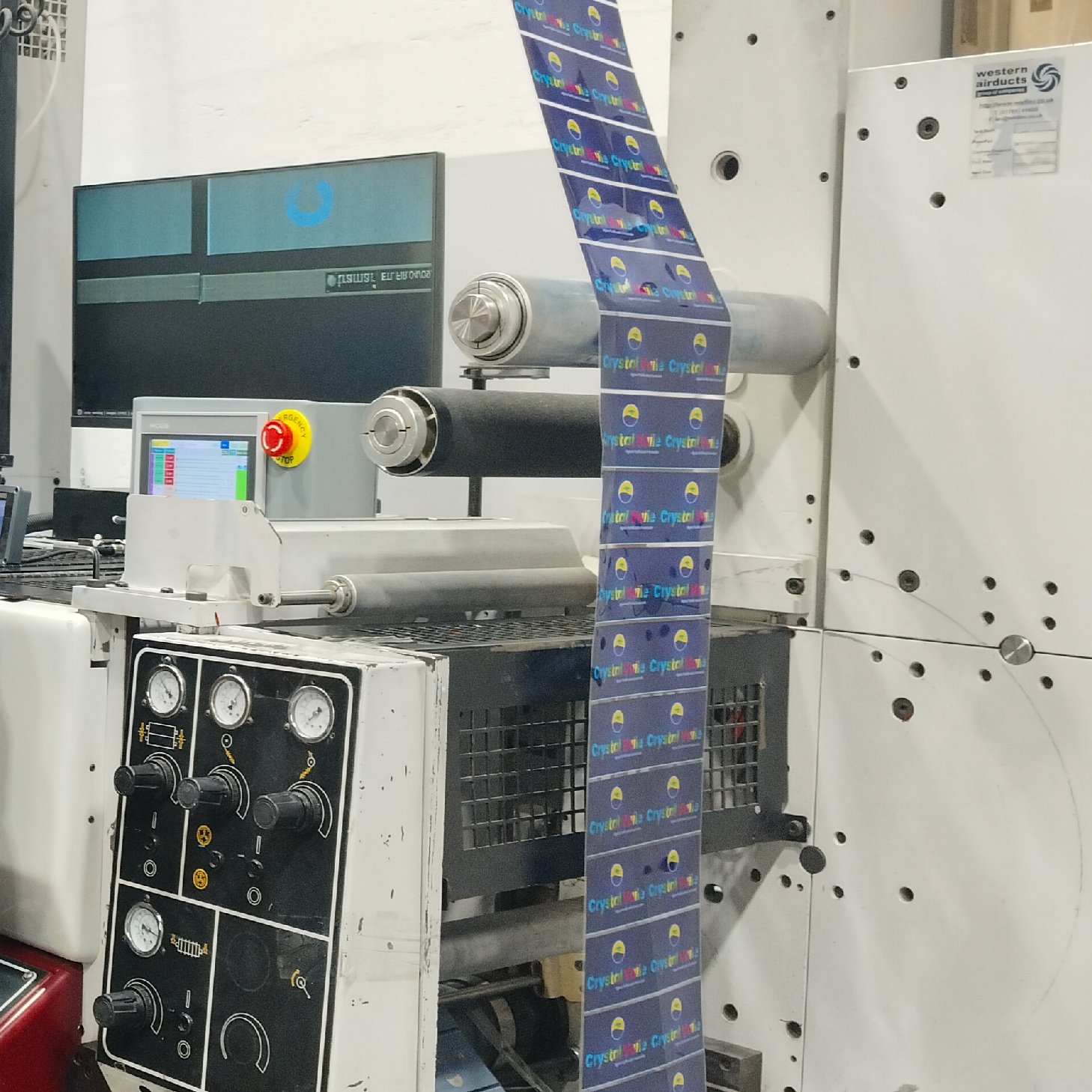
Press layouts typically include interstation curing units placed after each print deck. These units provide partial curing, stabilizing the ink before the next color is applied. End-of-line curing modules deliver the final energy dose required for full polymerization.
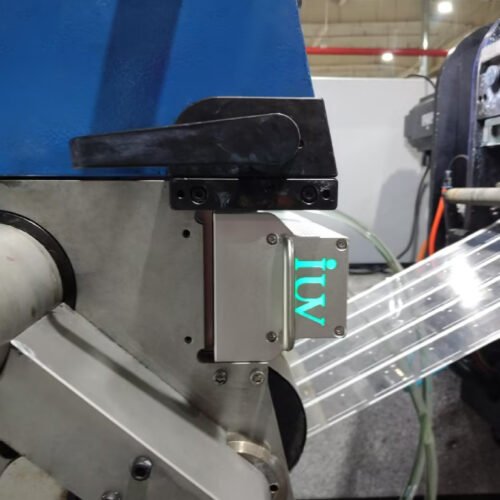
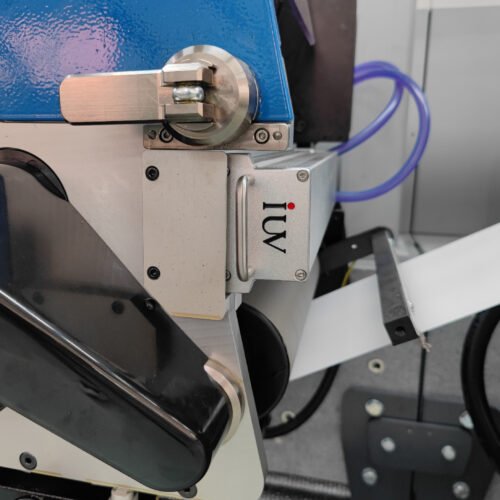
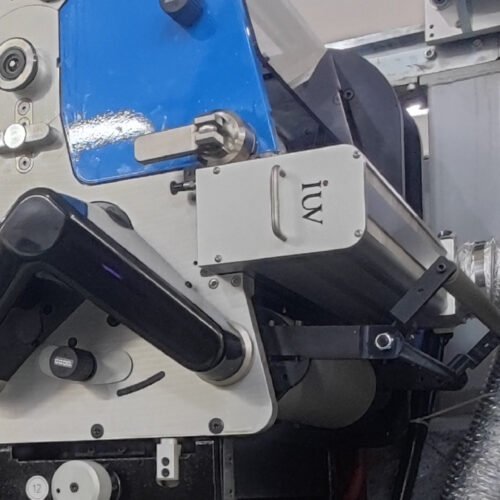
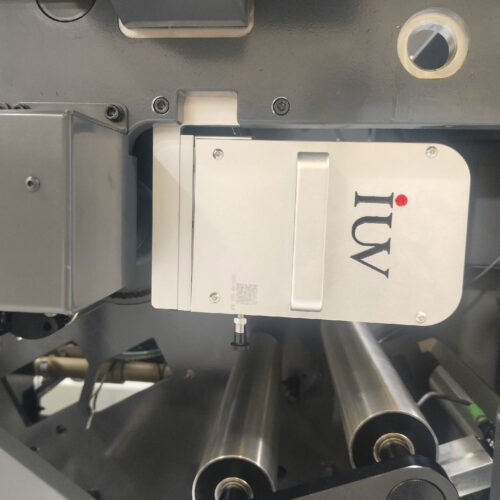
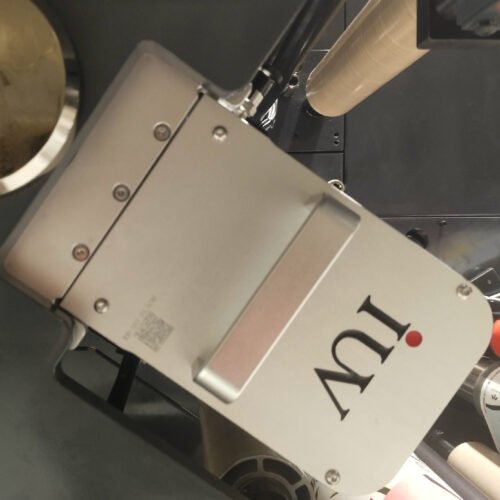
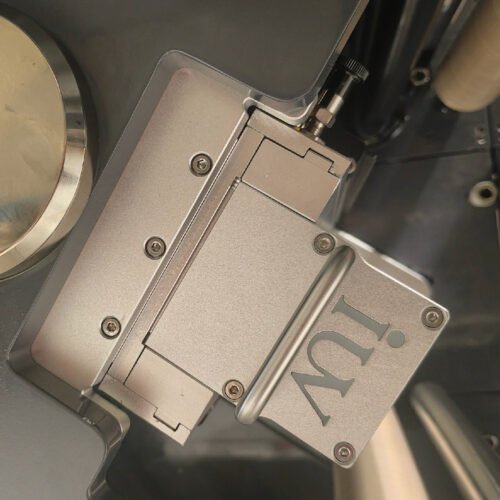
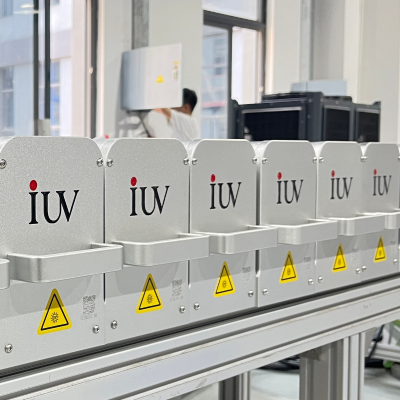
Compact LED modules simplify integration, especially when retrofitting existing presses. Their smaller footprint allows installation in confined spaces without major structural changes. Proper mounting ensures vibration stability and consistent alignment during high-speed operation.
Electrical Integration and Control Synchronization
UV LED curing systems require stable electrical integration to achieve consistent output. Power supplies must support rapid response to changes in press speed and production conditions. Synchronization between the LED system and the press drive is essential for maintaining consistent curing energy.
Modern control systems allow real-time adjustment of LED output based on encoder feedback. As web speed increases or decreases, the system automatically adjusts irradiance to maintain a constant energy dose. This ensures reliable curing across varying production speeds.
Signal integration also enables instant start and stop functionality. LED modules reach full output immediately, eliminating warm-up time and reducing material waste during press start-up.
Managing Irradiance and Energy Dose at High Speed
In high-speed offset printing, curing time is limited. The relationship between irradiance and exposure time becomes critical. LED UV systems must deliver sufficient peak intensity to initiate rapid surface curing while maintaining enough energy for full depth polymerization.
Balancing irradiance and dose prevents common defects such as incomplete curing or brittle ink films. Adjustments to lamp power, exposure distance, and press speed ensure consistent results. Uniform energy distribution across the web width is essential for avoiding gloss variation and color inconsistency.
Using radiometric measurement tools helps verify that energy levels remain within the required range. Regular calibration ensures that curing performance remains stable over time.
Ink and Photoinitiator Compatibility
UV LED curing relies on photoinitiators that absorb specific wavelengths. Offset inks must be formulated to match the emission spectrum of the LED system, typically around 385 nm or 395 nm. Proper matching ensures efficient energy absorption and rapid polymerization.
Incompatible ink systems may result in incomplete curing, leading to adhesion issues or reduced durability. Selecting LED-optimized inks is essential for achieving consistent performance in high-speed offset applications.
Ink formulation also influences curing depth and surface properties. Adjusting photoinitiator concentration and resin composition helps optimize curing behavior for different print conditions.
Substrate Considerations in Narrow Web Offset Printing
Label production involves a wide variety of substrates, including coated paper, synthetic films, and specialty materials. Each substrate interacts differently with UV energy and ink chemistry. LED UV curing offers advantages when working with heat-sensitive materials due to its low thermal output.
Film substrates require sufficient surface energy for proper ink adhesion. Surface treatment processes such as corona discharge improve wettability and bonding. LED curing then ensures that the ink forms a stable and durable film without causing distortion.
Paper substrates may absorb part of the ink, affecting curing dynamics. Adjusting LED output ensures that adequate energy reaches the remaining ink layer. This flexibility allows consistent performance across different substrate types.
Achieving Process Stability in Multi-Color Printing
Multi-color offset printing requires precise coordination between ink transfer and curing. Each color layer must be stabilized without fully isolating the surface, allowing proper adhesion of subsequent layers. LED interstation curing provides controlled partial polymerization, supporting clean ink trapping and accurate color reproduction.
Stable curing conditions prevent defects such as set-off, smearing, or misregistration. Maintaining consistent energy delivery across all print units ensures uniform print quality throughout the production run.
Process stability also depends on maintaining consistent press conditions. Factors such as web tension, temperature, and ink viscosity must be controlled to support reliable curing performance.
Maintenance and Long-Term System Performance
LED UV curing systems offer long service life and stable output. However, maintaining performance requires regular inspection of optical components and cooling systems. Contamination on protective windows can reduce energy transmission, affecting curing efficiency.
Cooling systems must operate effectively to maintain stable diode temperature. Excessive heat can reduce output intensity and shorten component lifespan. Monitoring system parameters ensures that curing performance remains consistent over time.
Routine measurement of irradiance helps detect gradual output changes. Adjusting system settings based on these measurements maintains consistent curing quality across extended production cycles.
Enhancing Production Efficiency with LED UV Technology
Integrating UV LED curing systems into high-speed narrow web offset presses improves production efficiency by reducing downtime and energy consumption. Instant start-up and precise control allow faster job changes and reduced waste.
Consistent curing performance supports high-quality output, minimizing rework and material loss. The ability to adapt to different substrates and ink systems increases production flexibility, enabling printers to handle diverse label applications efficiently.
LED UV technology also supports sustainable production by reducing energy usage and eliminating mercury-based lamps. This aligns with industry trends toward environmentally responsible manufacturing.