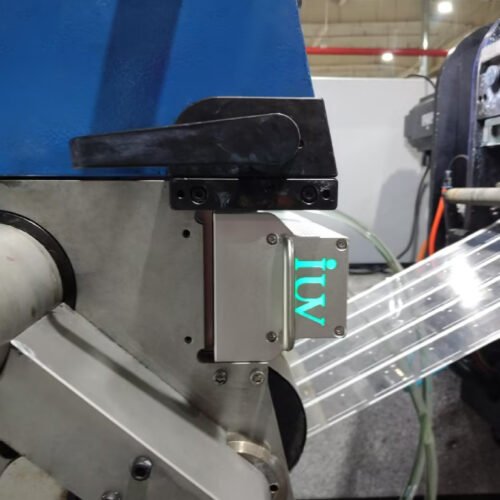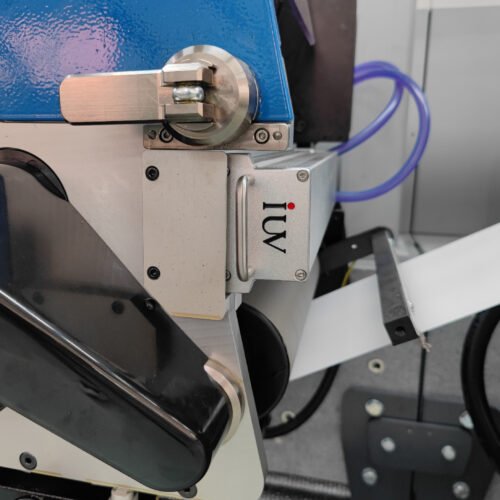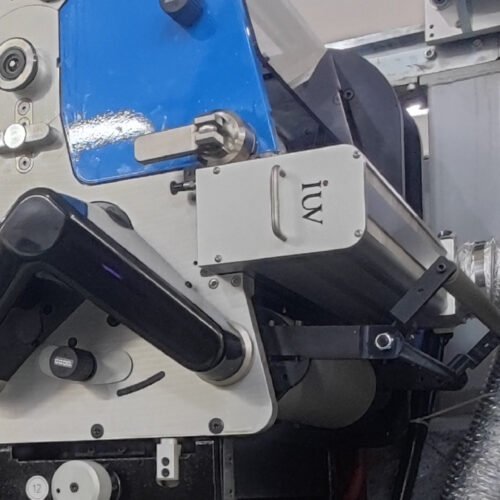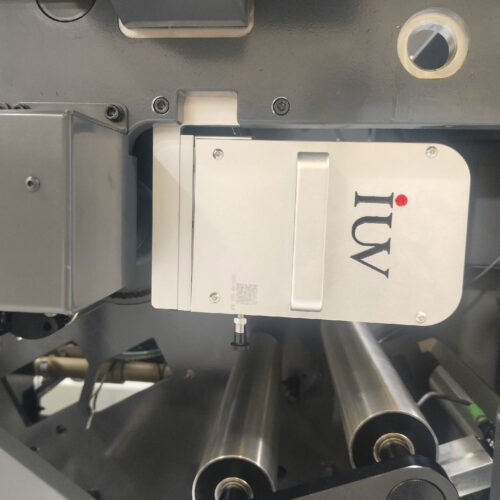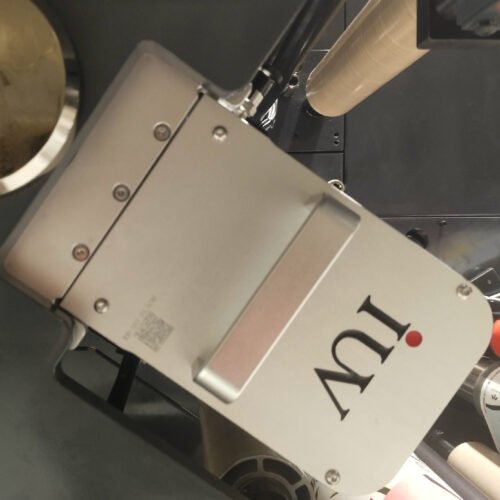
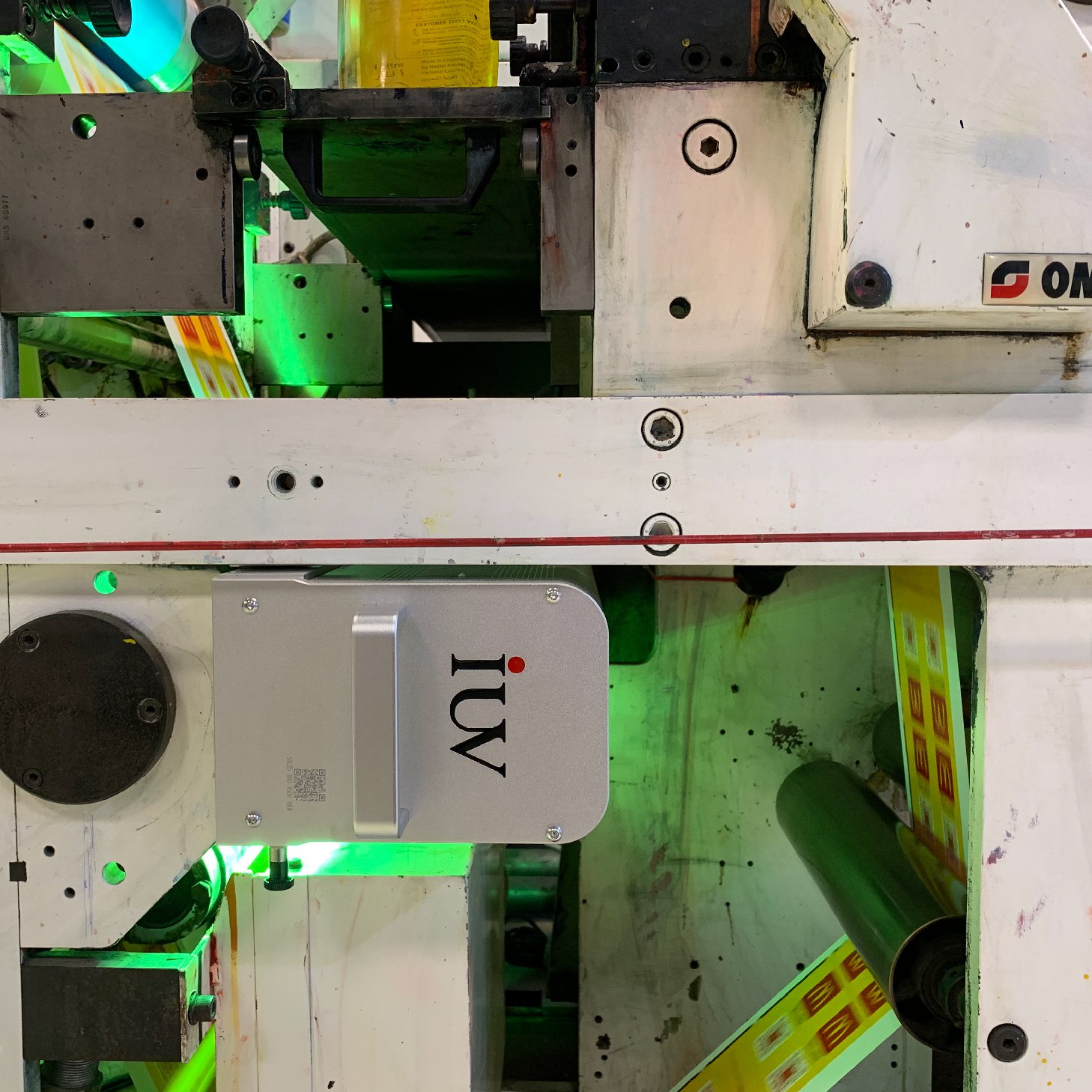
Flexographic printing has evolved into one of the most efficient technologies for producing pressure-sensitive labels, flexible packaging, shrink sleeves, pharmaceutical labels, and industrial graphics. Modern presses routinely operate at speeds exceeding 150 m/min, while premium production lines may run even faster depending on substrate and application. As press productivity continues to increase, UV curing becomes a critical factor that determines print quality, adhesion, production stability, and operating efficiency. Selecting an industrial UV curing system is no longer simply a matter of choosing the highest lamp power. The curing solution must match the press speed, ink chemistry, substrate characteristics, printing width, and required energy density to achieve complete polymerization without overheating the web.
For converters operating narrow web flexographic presses, understanding the relationship between irradiance, exposure time, and curing dose is essential. A properly engineered UV LED curing system delivers sufficient ultraviolet energy to cure the ink completely while maintaining consistent output throughout long production runs. When these parameters are balanced correctly, converters benefit from improved print quality, lower energy consumption, reduced maintenance, and greater process stability.
Understanding Irradiance, Energy Density, and Press Speed
Industrial UV curing performance depends primarily on two measurable parameters: irradiance and energy density. Although these values are closely related, they describe different aspects of the curing process.
Irradiance refers to the instantaneous ultraviolet intensity reaching the ink surface and is typically expressed in watts per square centimeter (W/cm²). Energy density, sometimes called UV dose, represents the total amount of ultraviolet energy delivered during exposure and is measured in joules per square centimeter (J/cm²). While irradiance determines how quickly polymerization begins, energy density determines whether the reaction continues to completion throughout the entire ink film.
Press speed directly affects exposure time. As web speed increases, the substrate remains beneath the curing source for a shorter period. Without increasing irradiance or extending the curing zone, the total energy reaching the ink decreases. This reduction often results in incomplete polymerization, lower adhesion, poor chemical resistance, and inconsistent gloss.
Selecting an industrial UV curing system therefore requires evaluating irradiance and energy density together rather than considering either parameter independently.
Why High Irradiance Alone Does Not Guarantee Complete Curing
Many buyers assume that selecting the highest available irradiance automatically produces the best curing performance. In practice, this approach often leads to unnecessary investment without solving production problems.
An extremely high irradiance may rapidly cure the ink surface while deeper layers remain partially polymerized. This phenomenon, commonly called surface skin curing, prevents ultraviolet energy from penetrating the entire ink thickness. The result may include reduced adhesion, poor scratch resistance, and weak interlayer bonding during multi-color printing.
Conversely, a system operating with moderate irradiance but sufficient exposure time may achieve much more complete crosslinking. The objective is not to maximize lamp output but to provide the correct curing profile for the specific ink formulation and production speed.
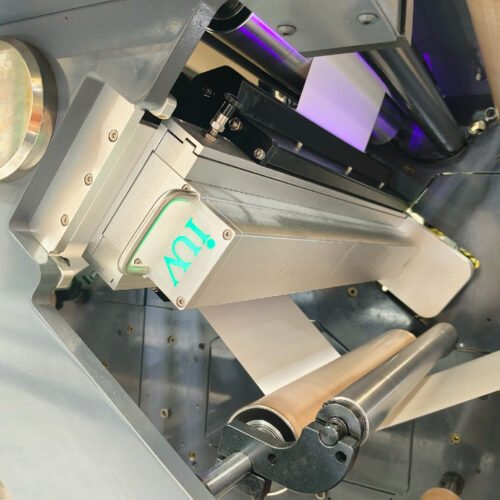
Modern UV LED curing systems allow converters to adjust output power according to individual production requirements. Variable power control helps maintain consistent curing across different substrates, image coverage, and press speeds while reducing unnecessary electrical consumption.
Matching UV Curing Systems to Flexographic Press Speed
Production speed should always be one of the first specifications considered during equipment selection. A curing system designed for a 60 m/min press will rarely perform efficiently on a production line operating at 180 m/min without significant adjustments.
At relatively low press speeds, exposure time is naturally longer, allowing moderate irradiance to deliver sufficient curing energy. As speed increases, exposure time decreases proportionally, requiring either greater irradiance, longer curing windows, or multiple curing stations.
Converters running high-speed label presses should evaluate several factors simultaneously:
- Maximum production speed
- Average production speed
- Ink film thickness
- Number of printing stations
- White ink coverage
- Varnish thickness
- Coating applications
- Printing width
- Required curing safety margin
Engineering calculations should always be based on actual production conditions instead of theoretical maximum press speed.
Selecting UV LED Wavelength for Flexographic Printing
The wavelength emitted by a UV LED curing system has a direct influence on curing efficiency because photoinitiators absorb ultraviolet energy only within specific spectral ranges.
Industrial UV LED systems commonly operate at 365 nm, 385 nm, 395 nm, or 405 nm.
A 365 nm wavelength offers relatively high photon energy and performs well for specialty coatings requiring deeper penetration. Systems operating at 385 nm provide a balance between penetration and electrical efficiency, making them suitable for many commercial flexographic applications.
Today, 395 nm has become the preferred wavelength for most label printing applications because numerous UV flexographic inks are formulated specifically for this spectrum. Many converters select this wavelength because it combines high curing efficiency with excellent electrical performance.
The correct wavelength should always be selected according to the ink manufacturer’s recommendations rather than equipment specifications alone.
Ink Characteristics Influence Equipment Selection
Ink formulation plays a significant role in determining curing requirements. High-opacity white inks require substantially greater curing energy than transparent process colors because titanium dioxide reflects and scatters ultraviolet radiation.
Similarly, dense black inks absorb considerable ultraviolet energy before it reaches the lower portion of the ink layer. Metallic inks, fluorescent pigments, tactile coatings, and high-build varnishes introduce additional curing challenges.
Industrial UV curing systems should therefore be selected according to the most demanding production conditions rather than average jobs. If a press frequently produces labels with heavy white ink, high-gloss coatings, or multiple varnish layers, sufficient curing capacity must be available under those operating conditions.
Selecting equipment based solely on standard CMYK production often leaves inadequate curing capacity for specialty applications.
Cooling Performance and Thermal Stability
Although UV LED technology generates considerably less heat than conventional mercury lamps, thermal management remains an important engineering consideration.
LED performance depends strongly on junction temperature. If cooling efficiency decreases, irradiance gradually falls even though electrical power remains unchanged. Stable cooling therefore maintains consistent ultraviolet output throughout extended production runs.
Industrial UV curing systems generally employ either water cooling or high-efficiency air cooling depending on power density and installation requirements.
For narrow web label printing, maintaining low substrate temperature offers several production advantages:
- Reduced film shrinkage
- Better register stability
- Lower web distortion
- Improved dimensional accuracy
- Reduced tension variation
- More stable converting performance
These advantages become particularly important when printing unsupported PET, BOPP, PE, and shrink sleeve materials.
Integration with Modern Flexographic Presses
Successful installation requires more than mechanical mounting. The UV curing system should integrate seamlessly with existing press controls, production monitoring, and maintenance procedures.
Modern industrial curing systems typically support:
- Automatic power adjustment
- Standby operating modes
- Production recipe storage
- Remote diagnostics
- Lamp status monitoring
- Cooling system supervision
- Energy consumption monitoring
These functions improve production consistency while reducing operator workload.
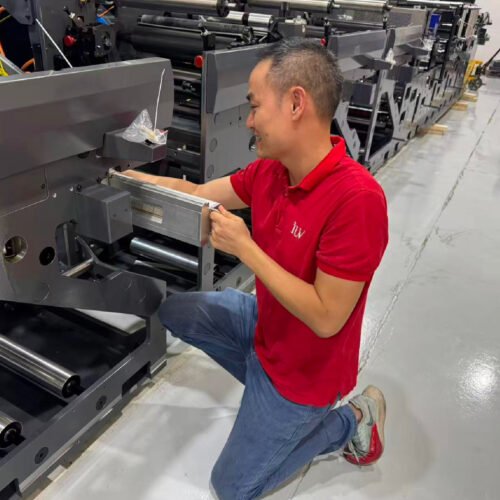
Many leading flexographic press manufacturers and converting facilities have adopted LED UV technology because stable curing improves print repeatability, reduces downtime, and simplifies daily operation across demanding production environments.
Maintenance Considerations
Maintenance requirements directly influence total operating cost over the lifetime of the curing system.
Unlike conventional mercury lamps that require periodic bulb replacement, reflector cleaning, shutter maintenance, and ozone management, UV LED curing systems contain fewer wear components.
Routine preventive maintenance generally includes:
- Cleaning optical windows
- Inspecting cooling circuits
- Checking filters
- Measuring irradiance periodically
- Verifying electrical connections
- Monitoring cooling temperature
Regular irradiance measurement using a calibrated radiometer ensures that curing performance remains within production specifications throughout the equipment’s operating life.
Economic Benefits Beyond Energy Savings
Energy efficiency is often the most visible advantage of LED UV technology, but it is only one component of overall operating cost.
Well-designed industrial UV curing systems can also reduce:
- Lamp replacement expenses
- Spare parts inventory
- Machine downtime
- Cooling requirements
- Startup waiting time
- Maintenance labor
- Production waste
Instant on/off capability eliminates warm-up periods, allowing production to begin immediately after startup and reducing unnecessary power consumption during press stoppages.
For converters processing multiple short production runs each day, these operational improvements frequently produce greater financial benefits than electricity savings alone.
Conclusion
Selecting an industrial UV curing system for flexographic printing requires balancing irradiance, energy density, press speed, substrate characteristics, ink formulation, and cooling performance. Peak irradiance alone does not determine curing quality. The most reliable production results are achieved when ultraviolet output is matched to actual operating conditions and the curing system delivers consistent energy throughout the entire production cycle.
For label printing, narrow web flexographic printing, offset printing, and hybrid converting applications, modern UV LED curing systems provide excellent curing stability, lower maintenance requirements, reduced thermal impact, and improved production efficiency. By evaluating irradiance together with press speed and total curing dose, converters can select equipment that delivers consistent print quality, reliable adhesion, and long-term operating performance while supporting higher productivity and lower production costs.