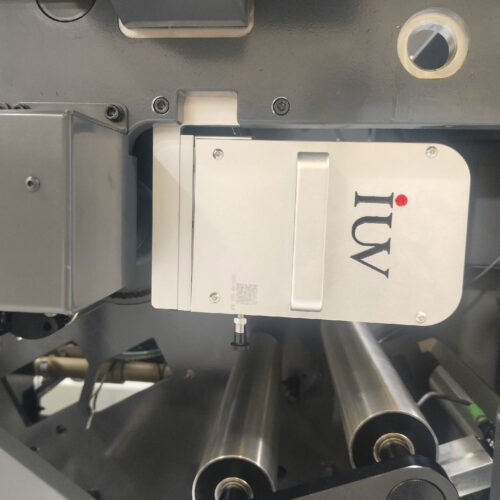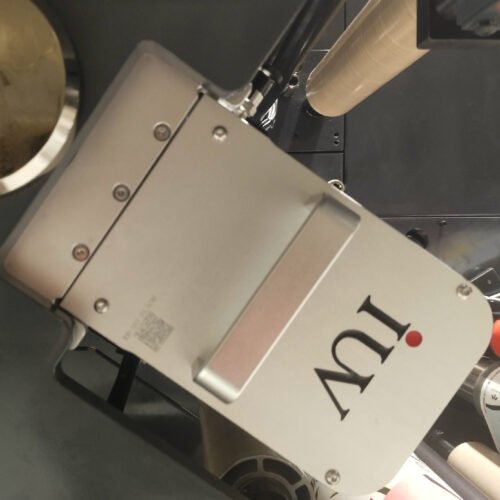
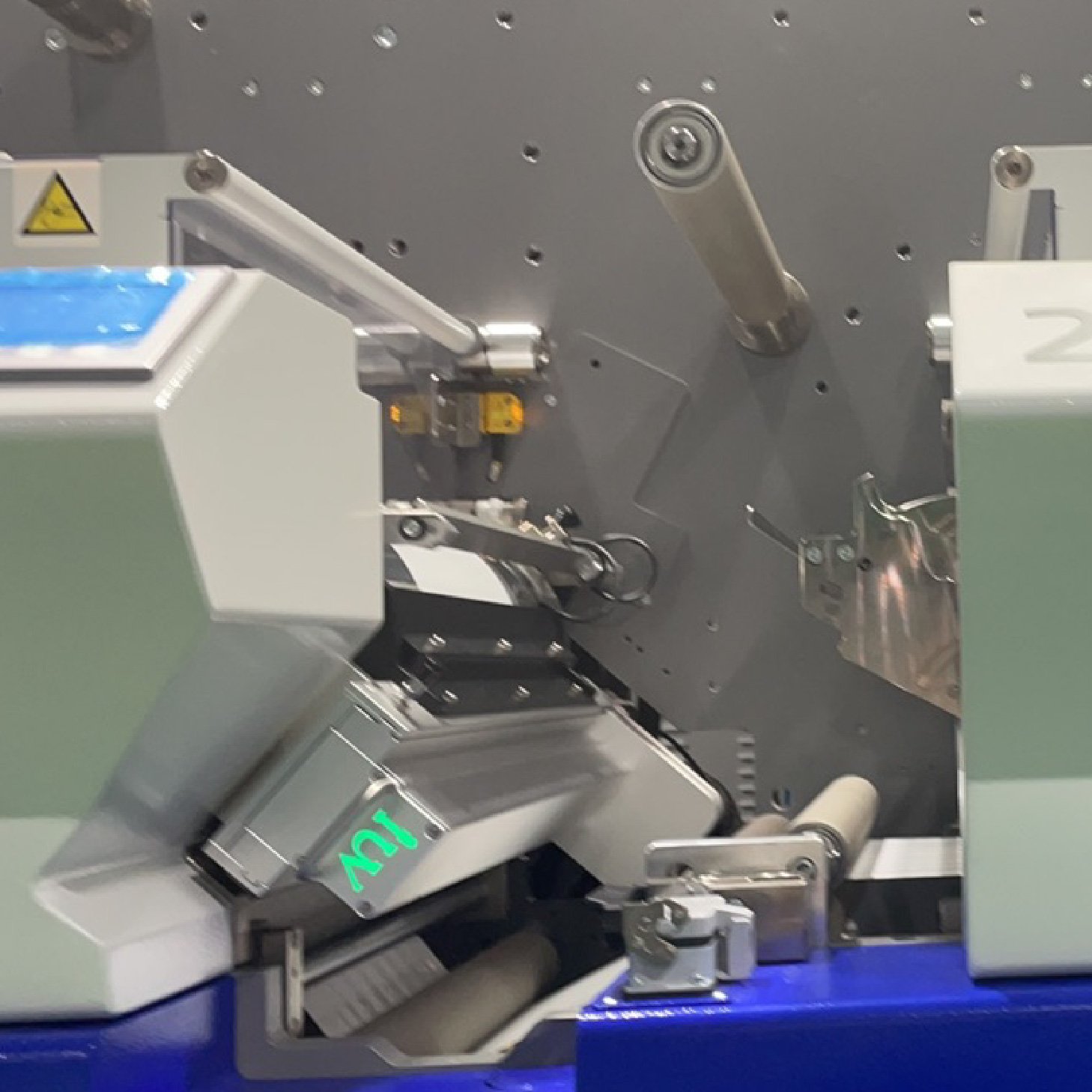
In modern packaging printing environments, especially in flexographic printing and offset-based packaging lines, the adoption of a 385nm UV LED curing system has become increasingly common due to its balance between penetration depth and surface reactivity. However, from an engineering standpoint, the introduction of this wavelength does not automatically guarantee stable curing performance. The real technical challenge lies in material compatibility, where substrate chemistry, UV ink formulation, and energy transfer efficiency must align precisely with the spectral characteristics of the system.
A 385nm UV LED curing system in packaging printing is typically selected because it sits in a transitional spectral band: shorter wavelengths like 365nm offer higher surface energy but limited penetration, while longer wavelengths like 395nm improve depth cure but may reduce surface hardness in certain formulations. The 385nm range attempts to balance both, making it suitable for multilayer packaging structures such as PET/PE laminates, coated paperboard, and shrink films. However, this balance is highly sensitive to UV ink chemistry and substrate optical behavior.
In real production environments, material compatibility issues often appear first as inconsistent UV ink adhesion. The ink may appear fully cured on the surface, yet exhibit delamination under mechanical stress or poor rub resistance. This is a classic sign of insufficient energy transfer into the lower ink layers. In UV LED curing systems, energy is not just about irradiance value; it is defined by UV dose distribution across the substrate surface and through the ink film thickness. If the substrate absorbs or reflects too much of the 385nm spectrum, curing efficiency drops significantly.
Packaging substrates such as metallized films introduce additional complexity. Metallic layers reflect a portion of UV energy, altering the effective UV dose reaching the ink interface. In these cases, the 385nm UV LED curing system in packaging printing must be carefully optimized with respect to irradiance angle, reflector geometry, and exposure time. Without these adjustments, oxygen inhibition effects at the ink surface become more pronounced, resulting in a tacky finish even when system power appears sufficient.
UV ink chemistry also plays a central role in compatibility. Modern UV inks are formulated with photoinitiators specifically tuned to absorb energy within narrow wavelength windows. If the absorption peak does not align closely with 385nm output, polymerization efficiency decreases. This mismatch is often misinterpreted as a curing system failure, when in reality it is a spectral incompatibility issue between ink and LED emission profile. In packaging printing, where ink layers may vary significantly in thickness depending on design coverage, this mismatch becomes even more critical.
Thermal behavior is another factor frequently underestimated in UV LED systems. Although a 385nm UV LED curing system is considered a low-heat technology compared to traditional mercury lamps, localized heating still occurs at the ink-substrate interface. Heat-sensitive packaging films, particularly polyethylene and polypropylene-based materials, can deform or shrink if temperature control is not properly managed. This introduces secondary defects such as registration drift or barrier layer distortion, which are often incorrectly attributed to mechanical press issues.
From a process optimization perspective, UV dose calibration is the most important engineering parameter. UV dose is a function of irradiance and exposure time, both of which are directly influenced by press speed in packaging printing operations. In high-speed flexographic printing lines, exposure time is extremely limited, meaning that even small variations in line speed can significantly affect curing completeness. A properly optimized 385nm UV LED curing system in packaging printing must therefore integrate real-time power modulation to maintain consistent UV dose delivery across speed fluctuations.
Another recurring challenge is oxygen inhibition, particularly in thin ink layers used for high-resolution packaging graphics. Oxygen molecules interfere with free radical polymerization, preventing full surface curing even when bulk polymerization is complete. At 385nm, this effect can be partially mitigated due to improved photoinitiator activation, but it cannot be eliminated without considering environmental conditions such as airflow and curing chamber design. In advanced systems, controlled airflow or inerting zones are used to stabilize surface curing behavior.
In terms of engineering optimization, system geometry plays a critical role. The distance between LED head and substrate affects irradiance distribution, while reflector design determines uniformity across the web width. Non-uniform UV exposure leads to curing gradients, which become visible as gloss variation or uneven adhesion in finished packaging materials. Engineers often observe that improving uniformity has a greater impact on production quality than simply increasing peak power output.
Industrial experience also shows that material compatibility issues often emerge during substrate changeovers. A 385nm UV LED curing system in packaging printing may perform well on coated paper but fail on low-energy polyethylene films due to surface tension differences and ink wetting behavior. These issues are not purely UV-related but arise from the interaction between ink rheology, substrate surface energy, and curing kinetics.
From a troubleshooting perspective, diagnosing curing instability requires separating three variables: spectral mismatch, UV dose deficiency, and thermal imbalance. Spectral mismatch typically manifests as slow curing regardless of power level. UV dose deficiency appears as speed-dependent curing failure. Thermal imbalance leads to substrate deformation or adhesion variability. Only by isolating these variables can engineers accurately optimize system performance.
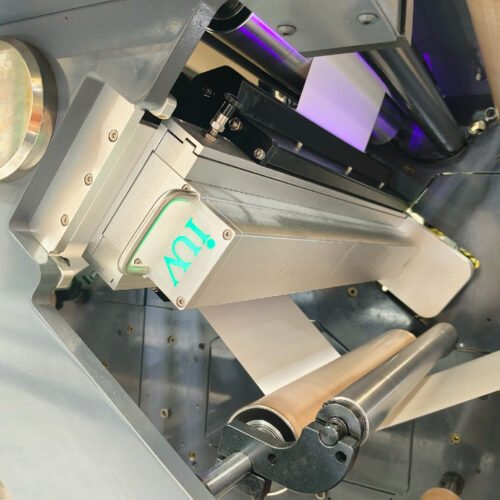
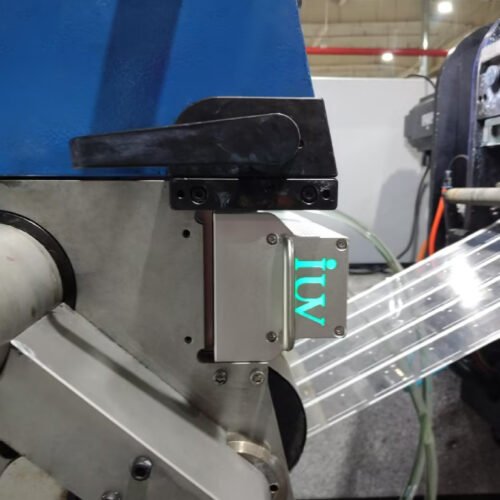
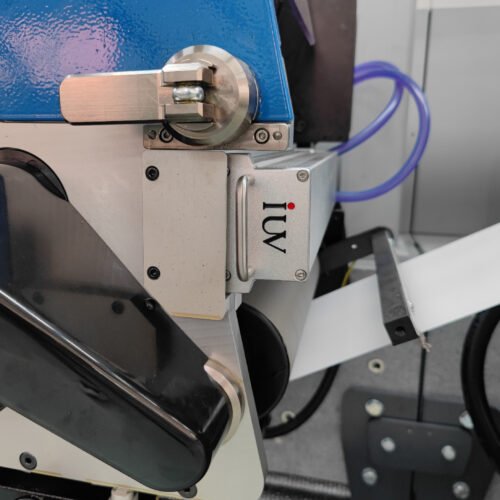
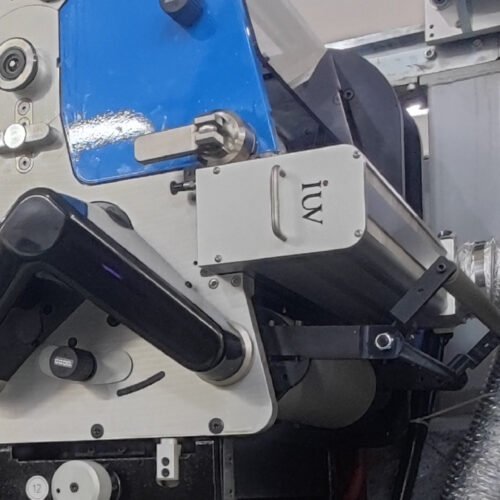
In advanced packaging production environments, manufacturers such as IUV have developed 385nm UV LED curing system architectures that integrate adaptive power control and improved thermal management to stabilize curing under varying production conditions. These systems are particularly effective in high-speed narrow web packaging lines where substrate variability is high and production downtime must be minimized.
Ultimately, successful implementation of a 385nm UV LED curing system in packaging printing depends on system-level optimization rather than single-component adjustment. Ink formulation, wavelength alignment, substrate selection, UV dose control, and temperature management must operate as a unified process. When properly engineered, this balance results in improved UV ink adhesion, higher production stability, and reduced material waste across diverse packaging applications.