In packaging printing environments, especially in flexographic printing and offset packaging lines, the adoption of a 385nm UV LED curing system has become a practical choice for balancing curing depth and surface reactivity. However, when this wavelength is introduced into real production, the limiting factor is rarely the LED source itself. The real engineering constraint lies in how material compatibility interacts with UV ink chemistry and how both must adapt to the spectral characteristics of 385nm emission.
From a process engineering perspective, a 385nm UV LED curing system in packaging printing sits in a critical spectral window where photoinitiator efficiency, substrate absorption behavior, and thermal response overlap. Unlike traditional mercury UV lamps, which emit a broad spectrum, LED systems are narrow-band and therefore require precise alignment between UV ink formulation and wavelength response. If this alignment is not achieved, curing instability appears even when irradiance levels are technically sufficient.
In practical narrow web label production, the first sign of mismatch is inconsistent UV ink adhesion. The ink may appear dry immediately after curing, yet fail under rub testing or lamination stress. This is not a surface defect alone but a symptom of incomplete polymer network formation. The 385nm UV LED curing system in packaging printing relies on photoinitiators that absorb efficiently at this wavelength; if the ink chemistry is optimized for 365nm or 395nm systems, the energy transfer efficiency drops, resulting in partial polymerization.
Ink chemistry adaptation becomes essential at this stage. UV curable inks are complex formulations consisting of oligomers, monomers, photoinitiators, and additives that control flow, leveling, and surface behavior. When adapting ink systems for a 385nm UV LED curing system in packaging printing, the photoinitiator package must be carefully selected to ensure peak absorption overlaps with LED emission. Even small spectral deviations can shift curing kinetics, especially in high-speed flexographic printing where exposure time is limited.
Material compatibility adds another layer of complexity. Packaging substrates such as polyethylene, polypropylene, PET, and coated paperboard each interact differently with UV energy. Low surface energy films tend to reduce ink wetting, which affects film formation before curing even begins. In such cases, UV ink adhesion is not only a curing issue but also a surface energy mismatch problem. Engineers often observe that improving corona or plasma treatment has as much impact on curing performance as adjusting UV power.
In offset-based packaging printing, ink film thickness is generally more uniform but more sensitive to oxygen inhibition. Oxygen molecules interfere with free radical polymerization at the ink-air interface, slowing down surface cure even when bulk curing is complete. The 385nm UV LED curing system in packaging printing partially mitigates this issue due to higher photoinitiator activation efficiency, but it does not eliminate it. In high-gloss or high-opacity applications, oxygen inhibition remains a critical limiting factor unless controlled through environmental design or ink formulation adjustments.
Thermal behavior is another important engineering parameter. Although UV LED systems are often classified as low-heat curing technologies, a 385nm UV LED curing system still generates localized thermal accumulation at the substrate surface during continuous operation. Heat-sensitive films used in flexible packaging can exhibit dimensional instability if temperature control is not properly managed. This is particularly relevant in multilayer laminates where different material layers have different thermal expansion coefficients.
UV dose control is the central variable linking ink chemistry and curing performance. UV dose is defined as irradiance multiplied by exposure time, and in high-speed packaging lines, exposure time is extremely limited. The 385nm UV LED curing system in packaging printing must therefore compensate with optimized irradiance distribution rather than simply increasing peak power. Uneven dose distribution across the web width leads to curing gradients, which manifest as gloss variation or inconsistent UV ink adhesion across the print surface.
From a troubleshooting perspective, curing failures in 385nm systems typically fall into three categories. The first is spectral mismatch, where ink photoinitiators are not optimized for 385nm absorption. The second is insufficient UV dose due to excessive line speed or optical degradation in the curing system. The third is material-related instability, where substrate surface energy or thickness variation disrupts curing uniformity. In real production environments, these factors often overlap, making systematic diagnosis essential.
Ink formulation adaptation is often underestimated in production optimization. When transitioning to a 385nm UV LED curing system in packaging printing, simply replacing the curing unit without adjusting ink chemistry rarely yields stable results. Oligomer selection, photoinitiator concentration, and additive balance must all be tuned to match the narrower spectral output of LED systems. This is particularly important in high-speed label printing where ink rheology must remain stable under rapid curing conditions.
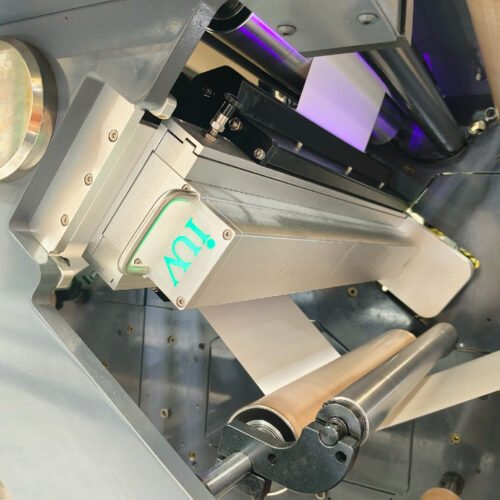
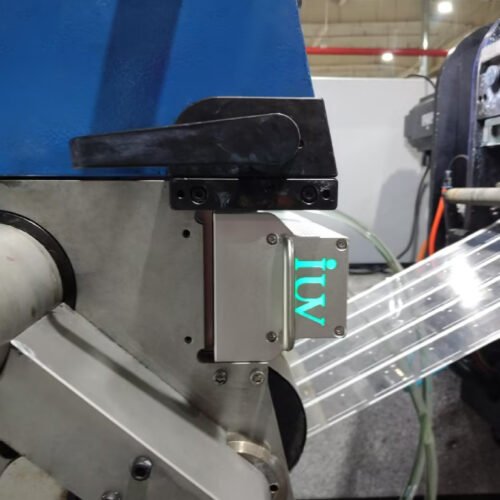
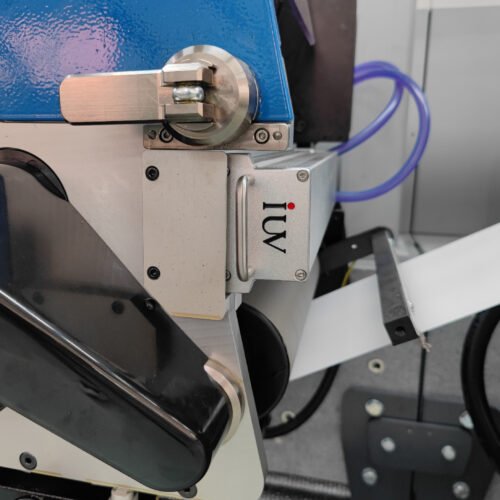
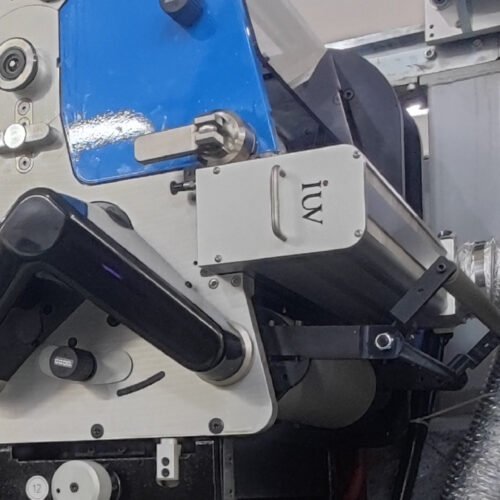
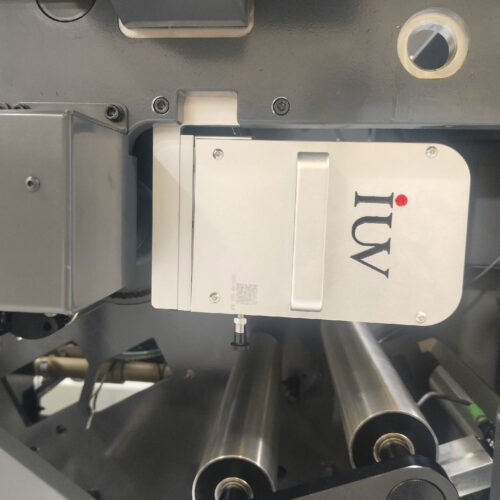
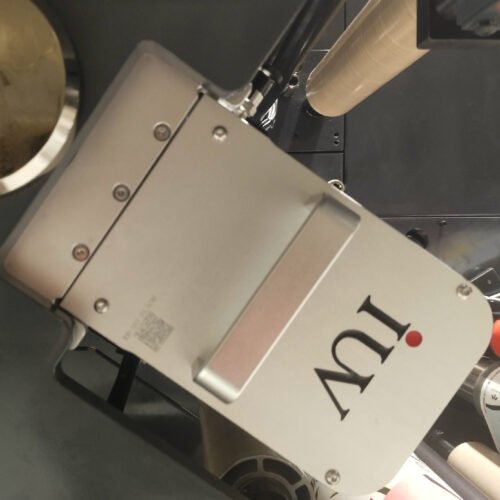
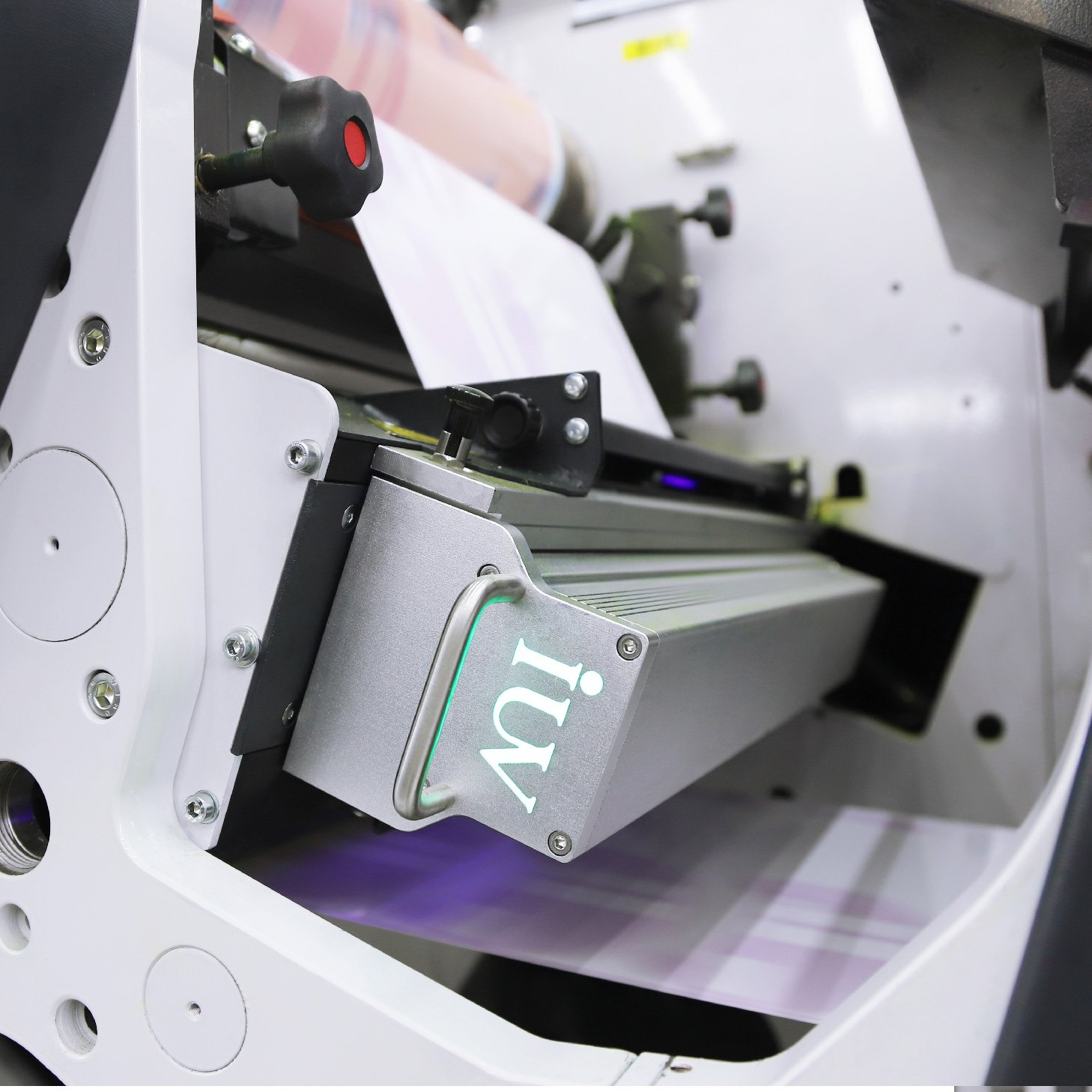
In advanced production systems, manufacturers such as IUV have developed 385nm UV LED curing system architectures that integrate spectral stability control with adaptive power modulation. These systems help maintain consistent curing behavior even when substrate types or ink formulations vary during job changeovers. In flexible packaging production environments, this adaptability significantly reduces downtime associated with recalibration and reduces waste caused by incomplete curing during startup phases.
Oxygen inhibition control remains a key optimization target in high-performance packaging lines. While ink chemistry improvements have reduced sensitivity to oxygen exposure, process-level solutions such as controlled airflow design and optimized lamp positioning are still necessary. In narrow web systems, even small airflow disturbances can alter surface curing behavior, particularly at high press speeds.
Ultimately, successful implementation of a 385nm UV LED curing system in packaging printing depends on the integration of three engineering domains: material compatibility, ink chemistry adaptation, and process-level UV dose control. When these elements are properly aligned, the result is stable UV ink adhesion, reduced production variability, and improved overall efficiency across both flexographic and offset packaging applications.