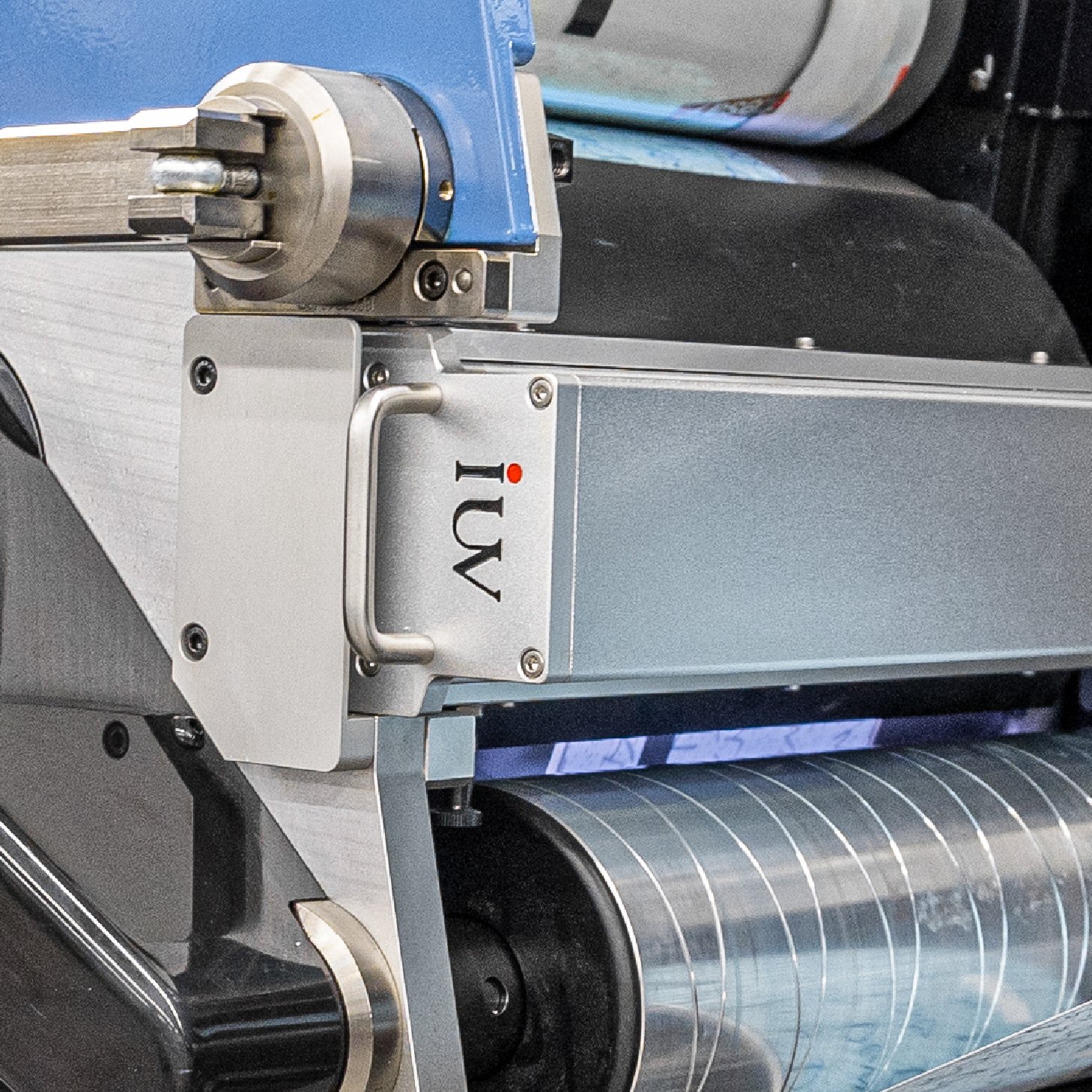
How to Optimize UV LED Curing Systems for Flexographic Printing Using Irradiance and Energy Density Control

How to Optimize UV LED Curing Systems for Flexographic Printing Using Irradiance and Energy Density Control

Flexographic printing has become the dominant process for producing pressure-sensitive labels, flexible packaging, shrink sleeves, and a wide variety of narrow web products. As printing speeds continue to increase and substrates become thinner, curing performance has a greater influence on print quality than ever before. A UV LED curing system is no longer simply a drying device. It has become an integral part of process control, directly affecting color consistency, ink adhesion, gloss, chemical resistance, and production efficiency.

Among all curing parameters, irradiance and energy density are the two values that determine whether UV inks polymerize completely. Understanding how these parameters interact with press speed, ink film thickness, anilox specifications, and substrate characteristics allows printers to achieve stable curing while minimizing energy consumption. Optimizing these variables helps eliminate common production defects and improves the overall efficiency of flexographic printing.

Understanding Irradiance and Energy Density

Although irradiance and energy density are closely related, they describe different aspects of the curing process.

Irradiance, measured in mW/cm², represents the instantaneous intensity of ultraviolet light reaching the ink surface. High irradiance generates a large number of reactive radicals within a very short period, allowing rapid initiation of polymerization. Energy density, measured in mJ/cm², represents the total UV energy delivered to the ink during its exposure time.

A curing system must provide sufficient irradiance to initiate polymerization while simultaneously delivering adequate energy density to complete crosslinking throughout the entire ink layer. Increasing one parameter cannot always compensate for deficiencies in the other. Excessive irradiance with insufficient exposure time may produce a hard surface while leaving uncured material underneath. Conversely, adequate energy density combined with low irradiance may fail to establish a stable curing reaction at high press speeds.

For this reason, both parameters should always be optimized together rather than adjusted independently.

Selecting the Appropriate UV LED Wavelength

Modern flexographic printing typically uses UV LED systems operating at 365 nm, 385 nm, or 395 nm. Each wavelength interacts differently with photoinitiator chemistry.

365 nm provides deeper penetration and performs well when curing thick coatings or highly pigmented white inks. However, its electrical efficiency is generally lower than longer wavelengths.

385 nm offers a balanced combination of curing depth and electrical efficiency. Many narrow web label converters choose this wavelength for mixed production environments.

395 nm has become the most common industrial standard because of its high electrical efficiency and compatibility with many commercially available LED UV ink formulations. When matched with appropriate photoinitiators, it provides stable curing at high production speeds while minimizing power consumption.

Selecting the correct wavelength begins with the ink manufacturer’s recommendations. A mismatch between LED wavelength and photoinitiator absorption significantly reduces curing efficiency regardless of irradiance level.

Matching Irradiance to Press Speed

Press speed directly determines the exposure time available for polymerization.

As web speed increases, substrates remain under the curing head for a shorter period. To maintain curing quality, the curing system must compensate by increasing irradiance, extending exposure length, or using multiple curing stations.

For example, a press operating at 40 m/min requires considerably less peak irradiance than the same press operating at 180 m/min. High-speed label production therefore demands LED curing systems capable of maintaining stable irradiance across the entire web width.

Simply increasing power output is not always the most effective solution. Excessive irradiance can create rapid surface polymerization that restricts light penetration into deeper ink layers. The result may be reduced adhesion, poor flexibility, or incomplete internal curing.

The objective is to establish sufficient photon density while maintaining an appropriate curing window for the specific production speed.

Optimizing Energy Density for Complete Polymerization

Energy density depends on irradiance and exposure time working together.

Thin process colors generally require lower energy density than opaque white inks, high-density black inks, or thick protective coatings. Heavy ink deposits absorb and scatter ultraviolet light, making it more difficult for photons to reach deeper regions of the ink film.

When energy density is insufficient, common production problems include residual tackiness, poor chemical resistance, reduced abrasion resistance, blocking during rewinding, and inadequate label durability.

Increasing energy density may involve reducing press speed, increasing LED output, improving optical efficiency, or adding an additional curing station after selected print units. Each solution should be evaluated according to production requirements rather than applying maximum power to every job.

Proper energy density ensures complete polymerization throughout the ink layer while avoiding unnecessary energy consumption.

The Influence of Anilox Roll Selection

Anilox geometry has a direct impact on curing requirements because it determines ink film thickness.

Lower line count anilox rolls with larger cell volumes transfer heavier ink films. These thicker deposits require higher UV dose to achieve complete curing.

Higher line count rolls with smaller cell volumes create thinner and more uniform ink layers that generally require less energy for complete polymerization.

During process optimization, curing parameters should always be evaluated together with anilox specifications. Adjusting LED power without considering ink volume often leads to inconsistent results between different jobs.

Fine screen printing, expanded gamut production, and high-resolution graphics benefit from carefully balancing anilox cell geometry with curing intensity to maintain dot definition while ensuring complete polymerization.

Ink Formulation and Pigment Loading

Ink chemistry significantly influences curing behavior.

Opaque white inks contain titanium dioxide, which reflects and scatters ultraviolet light. Black inks absorb large portions of incoming radiation. Metallic inks and specialty coatings also present unique curing challenges because pigments interfere with light transmission.

These formulations usually require greater energy density than standard CMYK process colors.

Modern LED UV inks incorporate specialized photoinitiator systems designed to maximize absorption within narrow wavelength ranges. Proper ink selection allows lower power consumption while maintaining excellent curing performance.

Using mercury-formulated inks on LED systems often results in incomplete curing because their photoinitiators are optimized for broadband UV emission rather than narrow-band LED wavelengths.

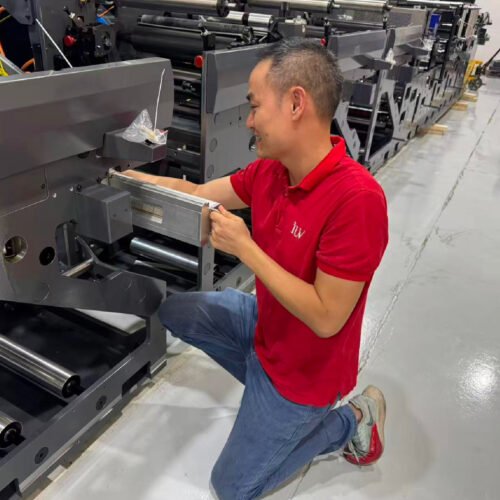
Process Monitoring and Irradiance Measurement

Maintaining stable curing performance requires regular monitoring of UV LED output. Unlike traditional UV lamps, LED systems maintain relatively stable output over long operating periods, but optical contamination, cooling problems, and mechanical changes can still affect performance.

The optical window between the LED module and the printed web must remain clean. Ink mist, dust, adhesive particles, and coating residue can reduce light transmission and lower the actual irradiance reaching the ink surface. Even a small reduction in optical efficiency can affect curing stability in high-speed flexographic production.

Professional printers often use UV radiometers to measure irradiance and energy density at scheduled intervals. These measurements provide valuable information about system performance and help operators identify changes before print defects occur.

When measuring irradiance, the test should be performed under actual production conditions whenever possible. Factors such as LED distance, web position, curing head alignment, and cooling temperature can influence the measured output.

For narrow web label production, maintaining consistent irradiance across the entire printing width is especially important. Uneven output distribution may cause edge-to-edge curing variation, resulting in differences in ink adhesion, gloss, or surface hardness.

Controlling LED Temperature for Stable Output

Temperature management is one of the most important factors affecting UV LED performance.

Although LED systems generate less heat than mercury UV lamps, the LED chips themselves are sensitive to excessive temperature. As junction temperature increases, LED efficiency decreases, which can reduce irradiance output.

A properly designed cooling system maintains stable LED temperature and ensures consistent optical performance during long production runs.

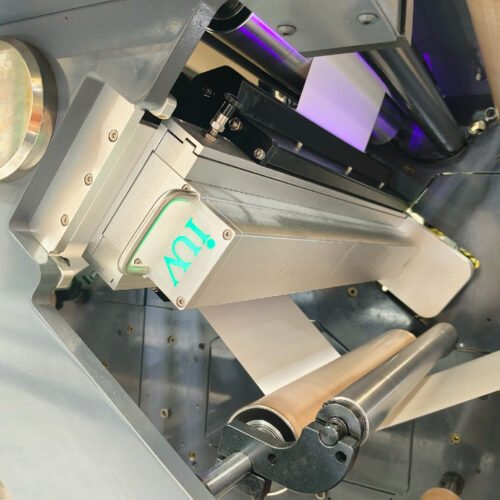
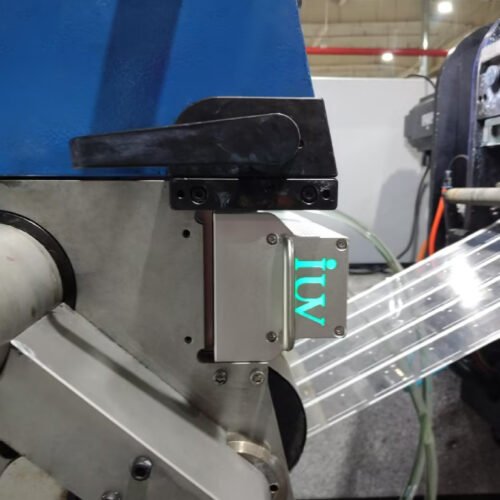
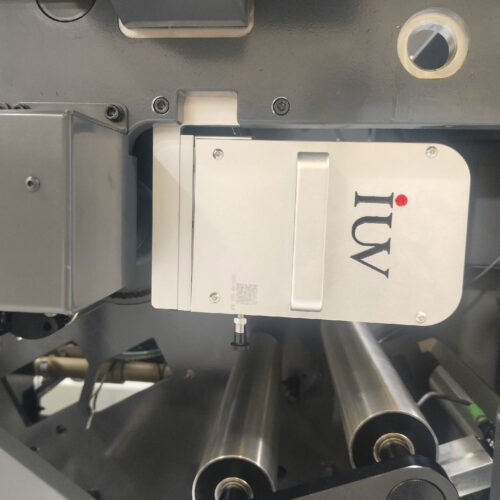
In flexographic printing, curing units are often installed between multiple print stations. The limited space around these stations makes thermal management even more important. Poor airflow or inadequate cooling can gradually reduce curing intensity and create inconsistent print results.

Operators should monitor cooling performance, check airflow paths, and maintain clean heat exchange surfaces. Stable thermal conditions allow the UV LED system to operate close to its designed output level.

Adjusting Curing Parameters for Different Label Materials

Flexographic label production uses a wide range of substrates, including paper, PET, BOPP, PE films, and unsupported films. Each material influences UV curing performance differently.

Porous paper substrates may absorb part of the ink, reducing the thickness of the surface layer that requires curing. Plastic films usually create a non-absorptive surface, leaving the complete ink layer exposed to UV radiation.

Transparent films may allow deeper UV penetration, while opaque materials can reflect or absorb radiation depending on their formulation.

For this reason, curing parameters should be adjusted according to substrate type rather than using a single standard setting for all jobs.

Heat-sensitive films benefit from the low thermal impact of UV LED curing. Reduced substrate temperature helps prevent shrinkage, distortion, and registration problems during high-speed production.

Optimizing Multi-Station UV LED Configurations

Many modern flexographic presses use multiple UV LED curing stations throughout the press line. These stations may be positioned after individual colors, coatings, adhesives, or final finishing layers.

The purpose of multi-station curing is not simply to increase total power. Each station has a specific process function.

Intermediate curing between print units can stabilize ink layers and prevent unwanted color mixing. Final curing provides complete polymerization and improves surface performance.

The balance between stations is important. Excessive curing between colors may reduce ink adhesion during overprinting because the previous layer becomes too highly crosslinked. Insufficient intermediate curing can lead to trapping issues and poor print definition.

Optimizing each curing position requires evaluation of ink sequence, color density, printing speed, and final product requirements.

Troubleshooting Common UV LED Curing Problems

Several common defects in flexographic printing are directly related to incorrect curing settings.

Poor ink adhesion may indicate insufficient energy density, incorrect wavelength selection, contaminated optical windows, or unsuitable ink chemistry.

Surface tackiness often occurs when the curing reaction does not fully complete. Increasing exposure time or adjusting LED output may solve the problem, but operators should first verify that the ink formulation matches the LED wavelength.

Brittle ink films can result from excessive curing intensity. Over-polymerization may reduce flexibility, which is especially problematic for flexible packaging and unsupported film labels.

Uneven gloss across the web may indicate inconsistent irradiance distribution or contamination on the LED window.

A structured troubleshooting approach should always begin with measurement rather than increasing power blindly.

Integration with Modern Flexographic Press Platforms

UV LED curing optimization is closely connected with press design and automation. Modern narrow web presses increasingly use advanced control systems that coordinate curing output with production speed and job parameters.

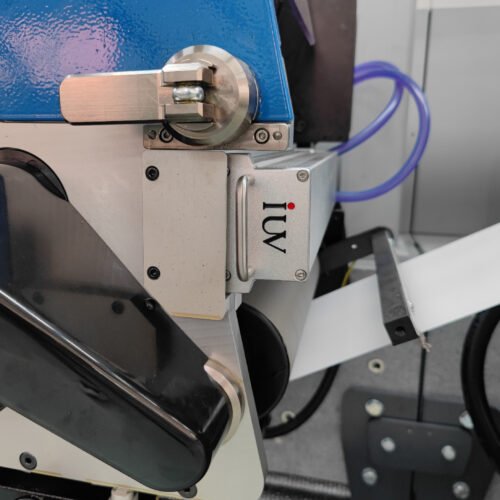
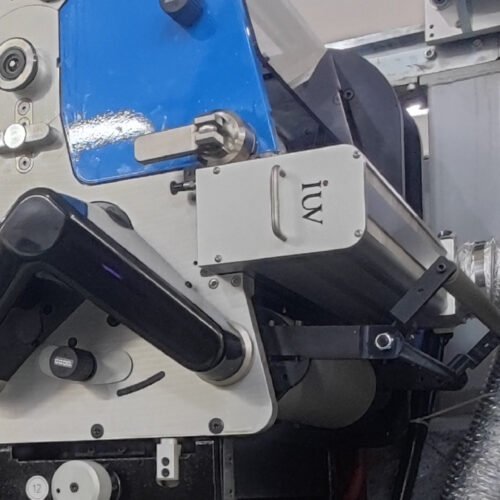
Printing equipment manufacturers and technology partners continue to develop solutions that improve integration between curing systems and press controls. For example, UV LED systems installed on platforms from manufacturers such as Nilpeter can be configured to support efficient curing management across demanding label applications.

The ability to monitor and adjust curing parameters provides operators with greater control over print consistency and production efficiency.

Improving Energy Efficiency Through Proper Calibration

One of the main advantages of UV LED curing is reduced energy consumption. However, energy savings depend on correct calibration.

Operating a system at maximum output for every job wastes energy and may create unnecessary stress on inks and substrates. A properly optimized system delivers only the UV energy required for the specific application.

By controlling irradiance and energy density according to ink coverage, substrate type, and production speed, printers can reduce power consumption while maintaining curing reliability.

This approach supports both cost reduction and sustainable production practices.

Conclusion

Optimizing UV LED curing systems for flexographic printing requires a complete understanding of irradiance, energy density, ink chemistry, substrate behavior, and press operating conditions.

Irradiance determines the intensity of UV exposure, while energy density ensures sufficient total energy reaches the ink layer for complete polymerization. Both factors must be balanced with press speed, anilox volume, coating thickness, and material characteristics.

For label printers, narrow web converters, and flexographic operators, accurate curing control improves adhesion, color stability, surface performance, and production efficiency. Regular irradiance measurement, proper thermal management, and correct wavelength selection help maintain consistent results over long production runs.

As flexographic printing continues toward higher speeds and more complex applications, UV LED curing optimization will remain an essential process control strategy. By managing UV output scientifically rather than relying on excessive power, printers can achieve higher quality while reducing operating costs and improving sustainability.

Contact IUV Curing Experts

滚动至顶部