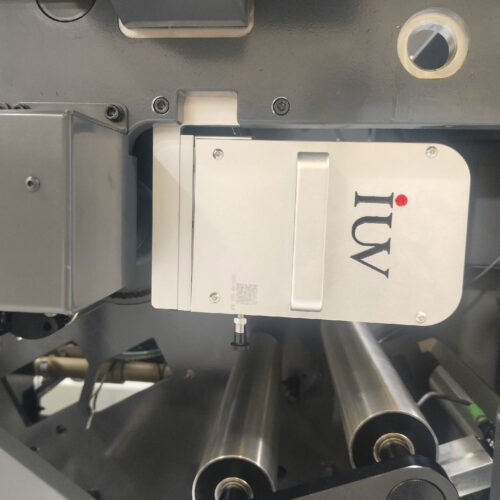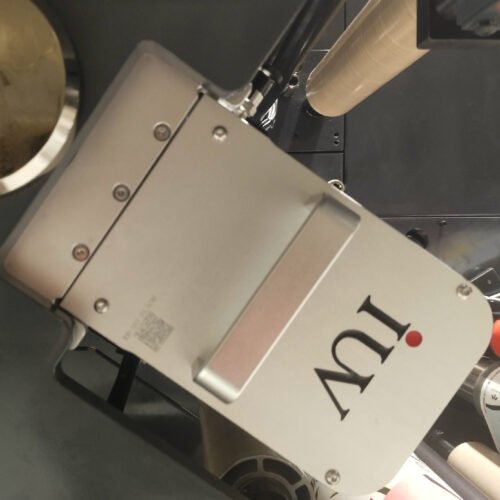
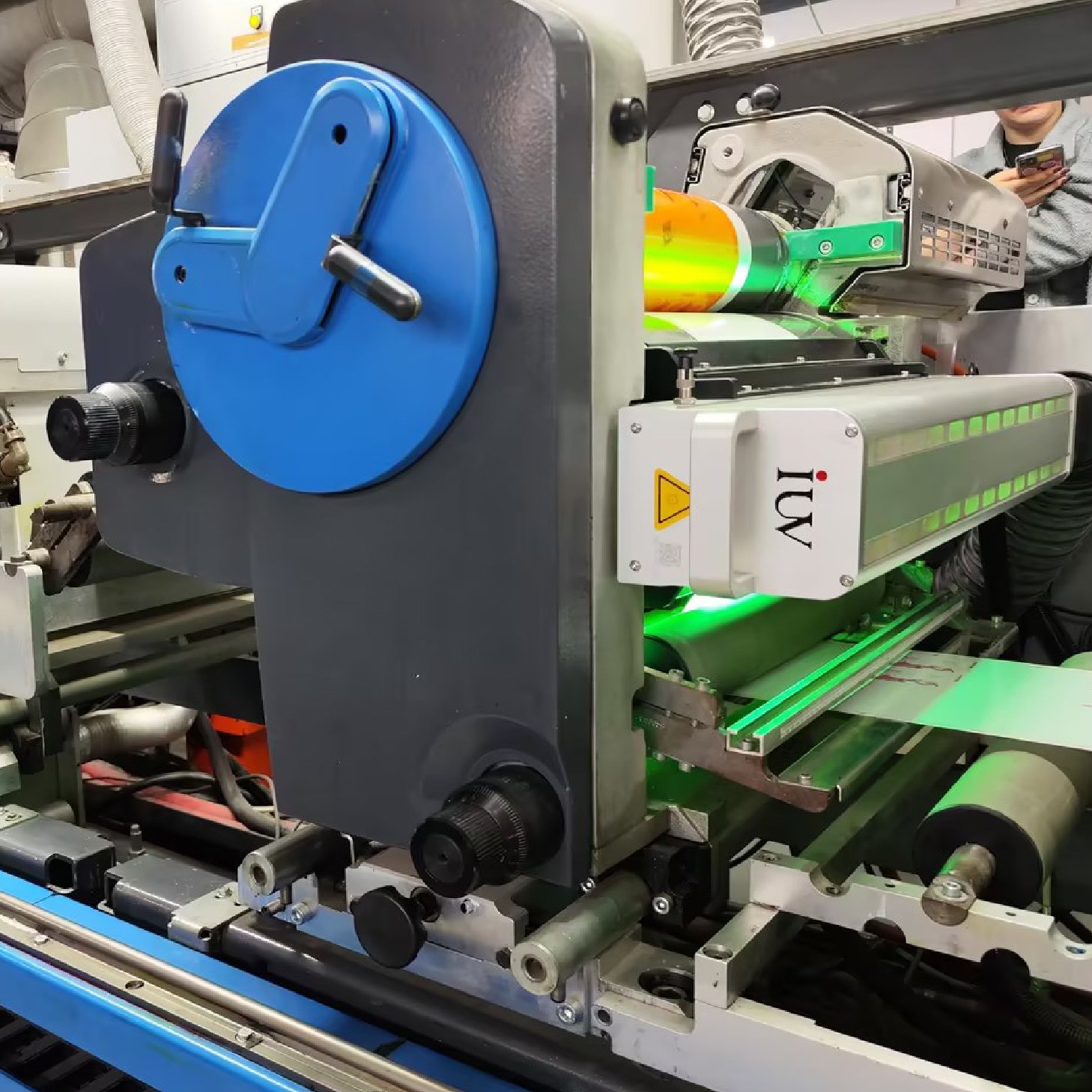
Digital printing has transformed label production, commercial graphics, flexible packaging, and industrial decoration by enabling shorter production runs, variable data printing, and faster job changes. As printheads become capable of higher resolutions and greater production speeds, the curing process has become one of the most critical factors influencing print quality and production stability. A printed image is only as reliable as its polymerization process. Even when droplet placement, color management, and substrate handling are optimized, improper UV curing can lead to poor adhesion, surface tack, reduced abrasion resistance, color variation, and premature product failure. Unlike conventional mercury UV lamps that emit a broad spectrum of ultraviolet energy, UV LED curing systems operate within a narrow wavelength range. This characteristic makes the relationship between LED wavelength and photoinitiator chemistry significantly more important. Selecting the correct wavelength is not simply a hardware decision. It requires understanding how ultraviolet energy interacts with ink chemistry, pigments, substrates, curing speed, and production conditions. For digital printing applications used in label printing, flexographic hybrid production, narrow web converting, and UV offset workflows, proper wavelength matching improves curing efficiency while reducing energy consumption and maintaining consistent print quality throughout long production runs.
Understanding the Relationship Between UV LED Wavelength and Photoinitiators
The curing reaction begins when ultraviolet photons are absorbed by photoinitiators dispersed throughout the ink formulation. These molecules convert light energy into reactive species that trigger polymerization of the resin system. The efficiency of this reaction depends largely on how closely the emission spectrum of the UV LED matches the absorption spectrum of the selected photoinitiators. If the wavelength falls outside the effective absorption range, only a small portion of the emitted energy contributes to curing, regardless of how powerful the LED system may be. As a result, increasing irradiance cannot fully compensate for poor spectral compatibility. Modern UV LED curing systems typically operate at 365 nm, 385 nm, 395 nm, or 405 nm. Each wavelength provides different curing characteristics because different photoinitiators absorb ultraviolet energy differently. Ink manufacturers therefore formulate digital UV inks around specific wavelength ranges rather than treating all UV sources as interchangeable. Successful curing depends on considering wavelength selection, irradiance, exposure time, ink thickness, pigment loading, and production speed as one integrated process rather than independent variables.
Choosing the Appropriate UV LED Wavelength for Digital Printing
Each industrial wavelength offers advantages for particular applications. A 365 nm system produces relatively high photon energy and works well with many traditional photoinitiators. It is often selected for thick coatings, high-opacity white inks, and specialty applications requiring deeper penetration. However, shorter wavelengths generally produce lower electrical efficiency and require more demanding thermal management.
The 385 nm wavelength provides an excellent balance between curing depth and electrical efficiency. Many commercial digital UV ink formulations are designed specifically for this spectrum because it delivers reliable polymerization while maintaining good production speed. As digital label printing has expanded, 395 nm has become the most widely adopted wavelength. Many modern free-radical photoinitiators exhibit excellent absorption near this range, allowing converters to achieve high curing performance while reducing power consumption compared with conventional mercury systems. Some industrial applications also employ 405 nm LEDs, particularly where specialized coatings or transparent formulations benefit from longer wavelength penetration. Selecting among these options should always begin with the ink supplier’s recommended curing window rather than the highest available power output. A properly matched wavelength consistently outperforms a higher-powered system operating outside the photoinitiator’s optimal absorption range.
Ink Formulation, Pigments, and Polymerization Efficiency
Digital UV inks are carefully engineered systems composed of oligomers, monomers, pigments, additives, and one or more photoinitiators. Every component influences curing performance. Pigments present one of the greatest challenges because they affect the transmission of ultraviolet energy through the ink layer. Titanium dioxide in opaque white inks reflects and scatters incoming UV radiation, making it difficult for light to reach deeper portions of the coating. Carbon black absorbs significant amounts of ultraviolet energy before it can penetrate the full ink thickness. Metallic pigments and specialty effect pigments create additional optical barriers that influence polymerization efficiency.
For these reasons, photoinitiator packages are frequently optimized according to pigment concentration. Modern formulations often combine several photoinitiators with complementary absorption characteristics. One component may respond strongly to 385 nm while another performs more efficiently at 395 nm, creating a broader curing response that improves both surface cure and through-cure. This multi-photoinitiator approach has become increasingly common in digital label printing because image coverage changes continuously from one job to the next. A formulation capable of curing dense graphics, fine text, gradients, and solid flood coats under identical production conditions provides significantly greater process stability.
Balancing Irradiance and Energy Density with Wavelength Selection
Selecting the correct wavelength represents only one part of curing optimization. Polymerization efficiency also depends on irradiance and energy density. Irradiance measures the intensity of ultraviolet energy reaching the ink surface at any instant, while energy density represents the total UV dose delivered throughout the exposure period. Digital presses operating at high production speeds reduce exposure time, requiring higher irradiance or longer curing zones to maintain adequate energy density. Excessive irradiance combined with insufficient exposure time may rapidly cure the surface while leaving deeper layers partially polymerized. Conversely, adequate energy density delivered at very low irradiance may fail to initiate rapid polymerization, especially in heavily pigmented inks.
The objective is therefore to balance wavelength, irradiance, and exposure time according to ink chemistry and production speed. Modern UV LED systems allow precise output adjustment, enabling converters to optimize curing for individual jobs rather than operating continuously at maximum power. This approach improves curing consistency while reducing unnecessary energy consumption and minimizing thermal load on sensitive substrates.
Substrate Compatibility and Its Influence on UV LED Curing
Substrate selection has a direct impact on curing performance because every material reflects, absorbs, or transmits ultraviolet energy differently. Paper stocks generally provide stable curing conditions due to their matte surface and relatively low heat sensitivity, while coated papers may reflect more UV energy and require slight adjustments to exposure settings. Film materials such as PET, BOPP, PP, PE, PVC, and unsupported shrink films introduce additional variables because they possess lower thermal stability and different optical characteristics. If excessive heat reaches these materials during curing, dimensional changes can occur, leading to registration errors, web instability, and inconsistent converting performance.
One of the major advantages of UV LED curing systems is the extremely low infrared output compared with conventional mercury UV lamps. Since most of the electrical energy is converted directly into usable ultraviolet radiation rather than heat, substrate temperature remains significantly lower throughout production. This characteristic is particularly valuable in digital label printing, where unsupported films and pressure-sensitive materials frequently run at high speeds. Lower substrate temperatures help maintain web tension, preserve dimensional stability, and reduce the risk of film shrinkage or distortion without sacrificing curing performance. When wavelength selection is properly matched with the ink formulation, converters can achieve complete polymerization while protecting temperature-sensitive substrates from unnecessary thermal stress.
Digital Printing, Hybrid Production, and Narrow Web Applications
Digital printing rarely operates as an isolated process in modern converting facilities. Many production lines now integrate digital inkjet modules with flexographic stations, screen printing, cold foil units, laminating sections, and finishing equipment on a single narrow web press. These hybrid production environments require curing systems capable of maintaining consistent performance despite continuous changes in ink coverage, substrate type, and printing speed.
Unlike analog printing, where ink laydown remains relatively predictable throughout a production run, digital printing generates highly variable image densities. One label may contain only black text, while the next includes full-color graphics with heavy white ink and protective varnish. The curing system must therefore respond consistently across changing ink volumes without introducing quality variations. Modern UV LED systems are particularly well suited to these conditions because they provide stable spectral output immediately after power-up and maintain consistent irradiance throughout long production cycles. There is no warm-up period, no gradual lamp degradation during production, and no requirement for frequent output recalibration. These characteristics simplify process control and improve repeatability across both digital and hybrid press configurations used in label, commercial, and industrial printing.
Common Curing Problems Caused by Improper Wavelength Matching
Many curing defects originate not from insufficient lamp power but from poor compatibility between the UV LED wavelength and the ink’s photoinitiator package. When photoinitiators cannot efficiently absorb the emitted wavelength, polymerization slows dramatically, leaving partially cured resin within the ink film. Operators may initially notice slight surface tack, but more serious problems often appear later during converting, shipping, or end use.
Incomplete curing frequently results in reduced adhesion, poor scratch resistance, blocking during roll storage, inadequate solvent resistance, and lower chemical durability. Laminating adhesives may bond inconsistently, while die-cut labels can exhibit edge lifting because the ink layer has not fully crosslinked. Increasing LED power alone rarely resolves these issues if the spectral mismatch remains unchanged. Successful troubleshooting should begin with verification of the ink manufacturer’s recommended curing wavelength, followed by measurement of actual irradiance, energy density, and optical uniformity across the web. Once these parameters are confirmed, converters can determine whether adjustments to curing conditions or ink formulation are necessary.
Best Practices for Selecting UV LED Systems and Photoinitiators
Choosing a UV LED curing system should involve a comprehensive evaluation of the complete printing process rather than focusing exclusively on peak irradiance specifications. The first step is confirming which wavelength range the ink supplier recommends for the intended application. From there, converters should evaluate print speed, substrate portfolio, ink film thickness, pigment loading, cooling capacity, curing distance, and required production flexibility.
Photoinitiator selection should also consider long-term production consistency instead of maximum curing speed alone. Formulations that combine multiple photoinitiators often provide broader wavelength responsiveness and greater tolerance for production variations. This approach reduces sensitivity to minor fluctuations in irradiance while improving curing reliability across different substrates and image densities. Routine measurement of UV output using calibrated radiometers should become part of preventive maintenance, ensuring that curing conditions remain stable as equipment ages. Regular adhesion testing, solvent resistance evaluation, and surface hardness measurements provide additional confirmation that the selected wavelength continues to deliver complete polymerization under real production conditions.
Conclusion
Selecting the correct UV LED wavelength is one of the most important engineering decisions in digital UV printing because it directly influences polymerization efficiency, print quality, production speed, and long-term product durability. The most effective curing process is achieved when the emission spectrum of the UV LED system closely matches the absorption characteristics of the photoinitiators contained within the ink formulation. This relationship cannot be replaced simply by increasing lamp power or slowing production speed.
Modern digital printing, label production, flexographic printing, offset printing, and hybrid narrow web applications all benefit from carefully matched UV LED curing systems that combine the appropriate wavelength with optimized irradiance and energy density. When supported by well-designed photoinitiator packages, these systems produce consistent adhesion, excellent surface hardness, improved abrasion resistance, and stable curing across a wide range of substrates and production conditions. As UV LED technology and ink chemistry continue to evolve together, wavelength optimization will remain a key factor in improving production efficiency, reducing operating costs, and delivering reliable print quality for increasingly demanding digital printing applications.