In narrow web label printing applications, the interaction between UV curable ink and the UV LED curing system is one of the most critical determinants of total energy consumption, process stability, and final print quality. From an engineering standpoint, energy efficiency is not defined only by the electrical input of the curing unit, but by how effectively UV curable ink converts optical energy into complete polymerization under real production conditions in flexographic printing, packaging printing, and offset-based label production lines.
The core mechanism behind UV curing technology is the photochemical reaction initiated by specific wavelengths emitted from the UV LED curing system. Most industrial UV curable ink formulations are designed around absorption peaks in the 365 nm, 385 nm, or 395 nm range. When the emitted wavelength matches the photoinitiator system inside the ink, radical formation occurs efficiently, leading to crosslinking of oligomers and monomers into a solid polymer network. If this alignment is not optimized, the system compensates with higher UV dose, which directly increases energy consumption without necessarily improving adhesion or curing depth.
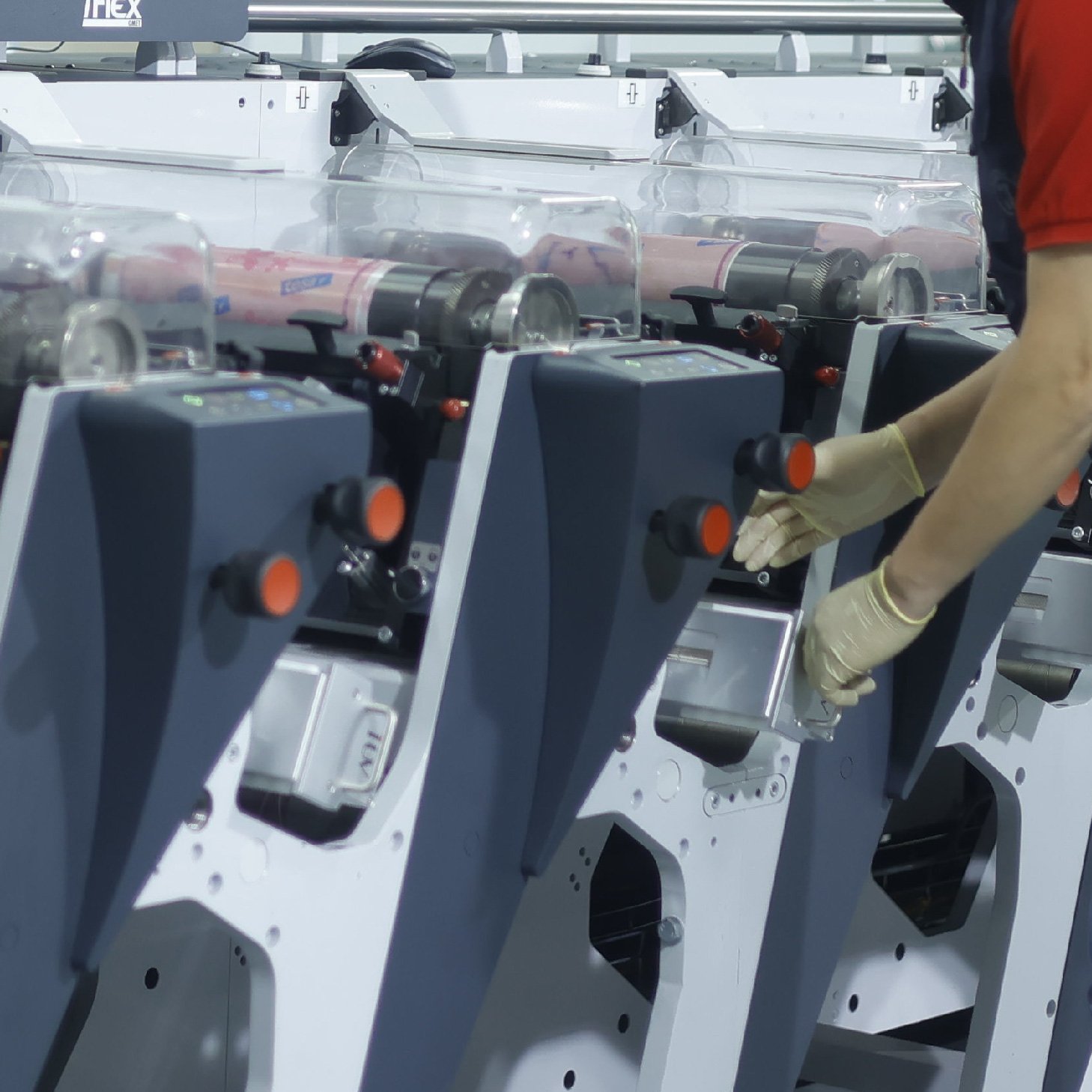
In narrow web printing, press speeds often exceed 120–200 m/min, which significantly reduces the exposure time of UV curable ink under the UV LED curing system. This is where energy efficiency becomes a system-level issue. The required UV dose is a function of irradiance and exposure time, and any imbalance forces operators to increase LED power density. However, increasing power does not always translate into better curing, especially when oxygen inhibition at the surface or poor ink reactivity limits polymerization efficiency.
One of the key advantages of UV curable ink in UV LED curing system energy efficiency comparison in narrow web label printing applications is its higher photoreactivity compared to conventional solvent-based or water-based systems. UV curable formulations do not require thermal evaporation, meaning energy is not wasted on solvent removal. Instead, energy is directly used for chemical transformation. However, this theoretical advantage only becomes real when UV dose is precisely controlled and matched to ink chemistry.
In practical production environments, energy efficiency is heavily influenced by substrate selection. Films such as BOPP, PET, and PE exhibit different surface energy levels, which affect UV ink adhesion and curing behavior. Low surface energy substrates require higher activation energy for proper wetting and anchoring of UV curable ink layers. If the UV LED curing system is not optimized for these conditions, operators tend to compensate by increasing UV dose, which reduces overall energy efficiency.
Another important engineering factor is temperature control. Although UV LED curing systems generate significantly less infrared heat compared to traditional mercury UV systems, thermal conditions still influence ink viscosity, flow behavior, and reaction kinetics. In high-speed label printing, even small temperature variations can change the diffusion rate of photoinitiators, affecting the efficiency of polymerization. Poor thermal stability often leads to over-curing in some zones and under-curing in others, forcing operators to increase overall energy input to maintain consistency.
The comparison of energy efficiency also depends on spectral purity. UV LED curing systems emit narrow-band wavelengths, typically centered at 385 nm or 395 nm in industrial label printing systems. This spectral precision ensures that energy is not wasted outside the absorption window of the UV curable ink. In contrast, broader-spectrum systems generate significant non-productive radiation, which increases total energy consumption without contributing to curing efficiency.
From a troubleshooting perspective, inefficiencies in UV curable ink in UV LED curing system energy efficiency comparison in narrow web label printing applications often appear as subtle production symptoms rather than obvious curing failures. These include inconsistent gloss levels, slight rub resistance variation, or post-lamination adhesion instability. These issues typically indicate suboptimal UV dose distribution rather than insufficient nominal power.
In real production optimization scenarios, engineering teams often discover that reducing UV power while improving exposure uniformity yields better results than simply increasing system intensity. This is because UV curable ink response is nonlinear; once a threshold UV dose is reached, additional energy contributes minimally to polymer crosslink density but significantly increases energy consumption.
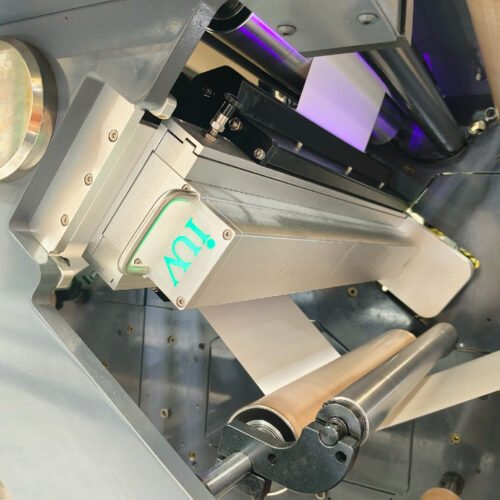
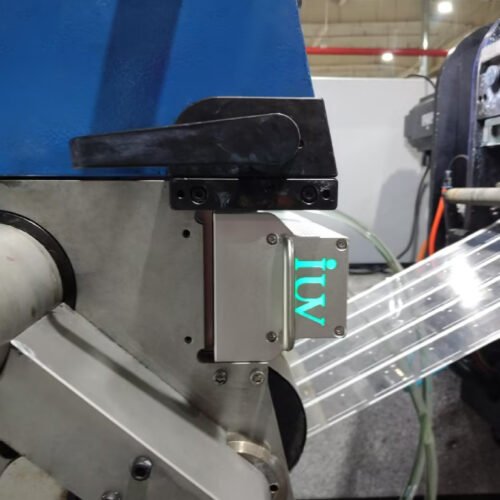
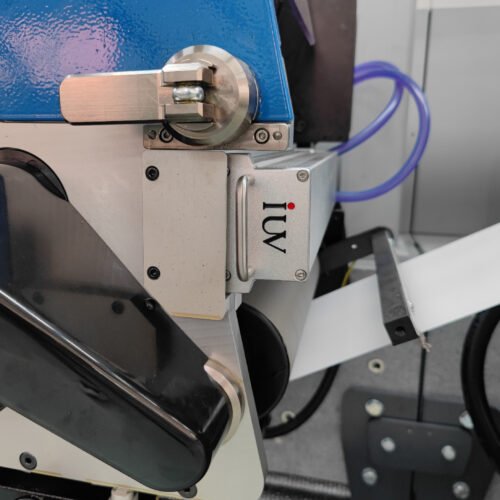
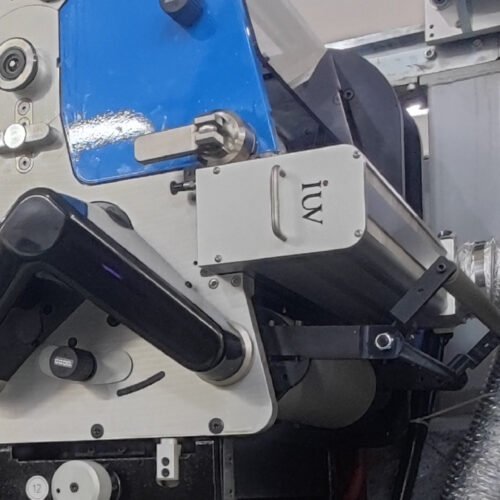
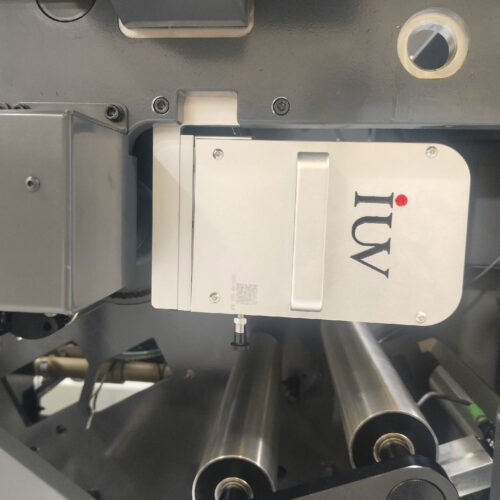
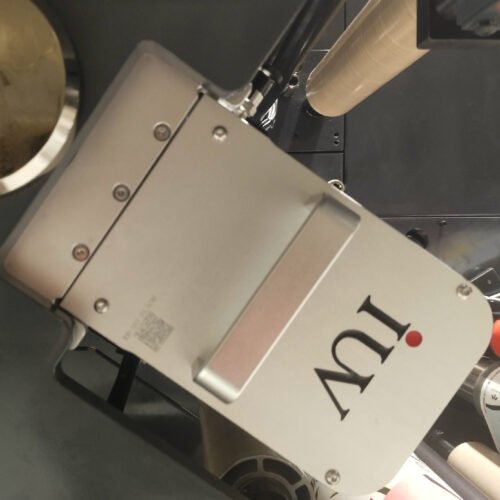
Modern system design approaches, including those implemented in industrial UV platforms such as IUV LED UV curing systems, focus on balancing wavelength stability, LED array uniformity, and closed-loop power control. By maintaining a consistent UV dose across the full web width, these systems ensure that UV curable ink is fully activated without unnecessary energy oversupply. This is particularly important in multi-lamp narrow web configurations where overlap zones can either under-cure or over-cure depending on system alignment.
Another important aspect in UV curable ink in UV LED curing system energy efficiency comparison in narrow web label printing applications is the role of ink formulation evolution. Modern LED-optimized UV inks are engineered with higher photoinitiator efficiency, allowing full curing at lower UV dose levels. This directly reduces energy consumption per linear meter of printed substrate. However, legacy UV inks designed for mercury lamps often require higher energy input, which reduces the apparent efficiency of LED systems unless ink and curing parameters are jointly optimized.
In offset-based label printing systems, energy efficiency improvements are even more pronounced due to thinner ink films and more controlled deposition. However, this also means that curing margins are smaller, and any deviation in wavelength or UV dose immediately impacts adhesion performance. Therefore, precise calibration of the UV LED curing system is essential to maintain both efficiency and print stability.
Ultimately, UV curable ink in UV LED curing system energy efficiency comparison in narrow web label printing applications is not a simple comparison between technologies but a multi-variable engineering balance between UV dose, wavelength accuracy, ink chemistry, substrate behavior, and thermal stability. Systems that optimize all five parameters simultaneously consistently achieve lower energy consumption while maintaining or improving print quality.
As UV curing technology continues to evolve, the industry is moving toward tighter integration between ink development and curing system engineering. Manufacturers like IUV are focusing on this system-level optimization approach, where UV curable ink and UV LED curing system design are treated as a single coordinated platform rather than independent components. This is where the most significant energy efficiency gains in modern narrow web label printing are being achieved.