Food packaging and pharmaceutical labels operate under stricter regulatory and quality requirements than conventional commercial printing. In these applications, curing performance is not only measured by surface dryness or production speed. The curing process directly influences chemical migration, ink adhesion, odor generation, package safety, and long-term product stability. As a result, evaluating 385nm UV LED for low migration ink curing in food and pharmaceutical label printing has become an important topic among narrow web flexographic printers seeking higher process control and regulatory compliance.
Traditional UV curing systems often provide broad-spectrum ultraviolet radiation, including UV-A, UV-B, UV-C, and infrared energy. While this spectrum can cure a wide range of ink formulations, it also introduces excess heat and inconsistent energy distribution. Modern UV LED curing systems operate within a narrow wavelength range, most commonly 385nm or 395nm, allowing more precise interaction between photoinitiators and UV ink chemistry.
When evaluating 385nm UV LED for low migration ink curing in food and pharmaceutical label printing, printers must understand how wavelength selection influences polymerization depth, cure consistency, migration risk, and production efficiency.
Understanding Low Migration UV Ink Chemistry
Low migration UV inks are specifically formulated to minimize the transfer of residual substances from printed packaging into food, pharmaceuticals, cosmetics, or other sensitive products. The fundamental objective is to achieve a highly complete polymer network during UV curing, reducing the presence of unreacted monomers, oligomers, and photoinitiator fragments.
The effectiveness of the curing process depends on matching the emission wavelength of the UV LED curing system with the absorption characteristics of the photoinitiators contained within the ink formulation. Many modern low migration photoinitiators exhibit strong absorption behavior near 385nm, making this wavelength particularly effective for controlled curing.
In practical flexographic printing environments, insufficient curing often results in elevated migration levels even when the printed surface appears dry. A label may successfully pass immediate rub resistance testing yet still contain uncured components capable of migrating over time. This is why evaluating 385nm UV LED for low migration ink curing in food and pharmaceutical label printing requires more than visual inspection.
Engineers typically analyze UV dose, irradiance, cure depth, adhesion performance, migration testing results, and production speed together rather than focusing on a single parameter.
Why 385nm UV LED Is Effective for Low Migration Applications
One of the primary reasons printers are evaluating 385nm UV LED for low migration ink curing in food and pharmaceutical label printing is its ability to generate efficient polymerization while reducing thermal stress.
Many low migration white inks and opaque ink systems contain high pigment concentrations. Titanium dioxide used in white inks can scatter UV energy and limit penetration into deeper ink layers. Under these conditions, wavelength selection becomes critical.
A 385nm UV LED curing system often provides improved penetration characteristics compared with shorter wavelengths while maintaining strong photoinitiator activation. This allows the curing reaction to proceed deeper into thick ink films, reducing the risk of under-cured regions beneath the surface.
At the same time, UV LED technology produces significantly less infrared energy than conventional UV curing systems. Reduced substrate heating helps maintain dimensional stability in pressure-sensitive labels, pharmaceutical packaging materials, shrink films, and synthetic substrates commonly used in regulated packaging applications.
This combination of deeper curing potential and lower heat generation makes 385nm UV LED particularly attractive for low migration production environments.
The Relationship Between UV Dose, Line Speed, and Migration Performance
In food and pharmaceutical label printing, cure quality cannot be separated from production speed. Many narrow web presses operate at speeds exceeding 100 m/min, while some high-performance lines exceed 200 m/min.
As line speed increases, substrate exposure time under the curing unit decreases. To compensate, the UV LED curing system must deliver sufficient irradiance and total UV dose.
The relationship between irradiance and exposure time determines whether adequate energy reaches the ink film. High peak intensity alone does not guarantee complete curing. Likewise, increasing exposure time without sufficient irradiance may fail to activate photoinitiators effectively.
When evaluating 385nm UV LED for low migration ink curing in food and pharmaceutical label printing, engineers often monitor energy density measured in mJ/cm² alongside irradiance measured in W/cm². These values help determine whether the curing process is producing a complete polymer network.
Incomplete polymerization can result in migration failures, poor adhesion, lower scratch resistance, blocking during rewinding, and inconsistent converting performance during downstream finishing operations.
Oxygen Inhibition and Surface Cure Challenges
Oxygen inhibition remains a significant challenge in UV curing technology, especially when printing fine text, barcodes, pharmaceutical information, and high-resolution graphics.
Atmospheric oxygen interferes with free-radical polymerization reactions occurring near the ink surface. This phenomenon can create a partially cured outer layer even when deeper sections of the ink film have polymerized successfully.
The issue becomes more critical in low migration applications because residual surface components may contribute to migration concerns.
Modern 385nm UV LED curing systems address this challenge through optimized optical design, controlled irradiance profiles, and improved photoinitiator selection. In certain demanding applications, nitrogen inerting may be employed to reduce oxygen concentration around the curing zone and further improve polymerization efficiency.
A properly engineered curing process minimizes oxygen inhibition while maintaining production speed and regulatory compliance.
Material Compatibility in Food and Pharmaceutical Packaging
Another factor influencing the evaluation of 385nm UV LED for low migration ink curing in food and pharmaceutical label printing is substrate compatibility.
Food and pharmaceutical labels are frequently printed on polypropylene films, polyethylene films, PET materials, synthetic papers, and specialized packaging substrates. Many of these materials exhibit limited thermal resistance.
Traditional UV systems can introduce unwanted heat accumulation, causing substrate distortion, shrinkage, registration variation, or adhesive instability.
Because UV LED curing technology generates significantly lower thermal load, converters can process heat-sensitive materials more consistently. Lower substrate temperature also contributes to better dimensional control during die-cutting, laminating, and finishing operations.
In addition, improved temperature control helps maintain stable ink adhesion across a wider range of packaging materials.
Engineering Considerations for Successful Implementation
Successful implementation requires balancing wavelength, UV dose, ink chemistry, substrate characteristics, and press speed.
Many converters assume that replacing an existing UV source automatically improves curing performance. In reality, curing optimization often requires adjustment of ink formulations, anilox selection, coating thickness, and press parameters.
During retrofit projects, engineers commonly perform curing validation through migration testing, adhesion testing, solvent resistance evaluation, and scratch resistance analysis. These measurements provide objective confirmation that the curing process meets regulatory and production requirements.
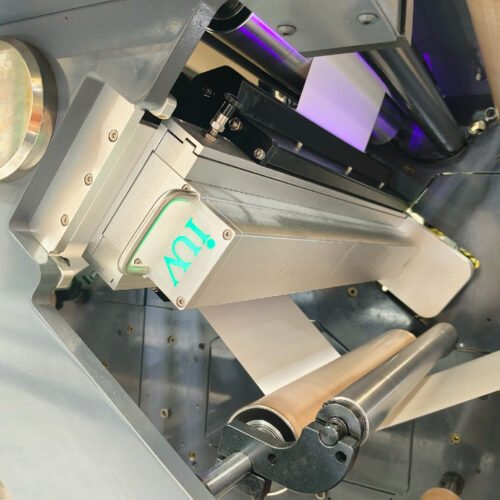
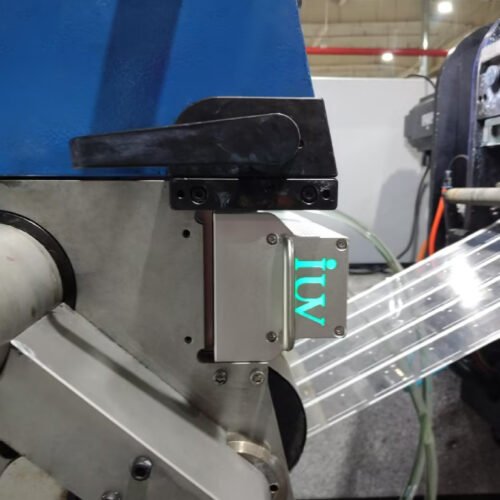
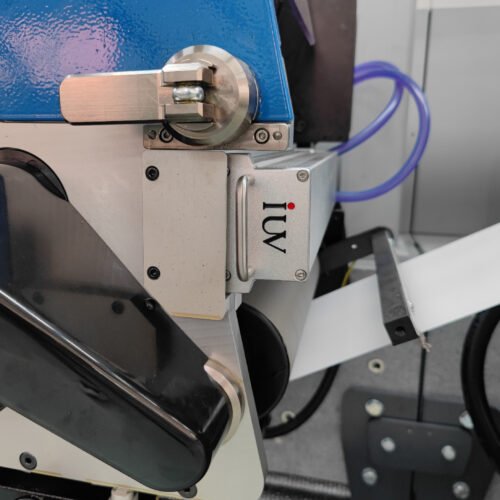
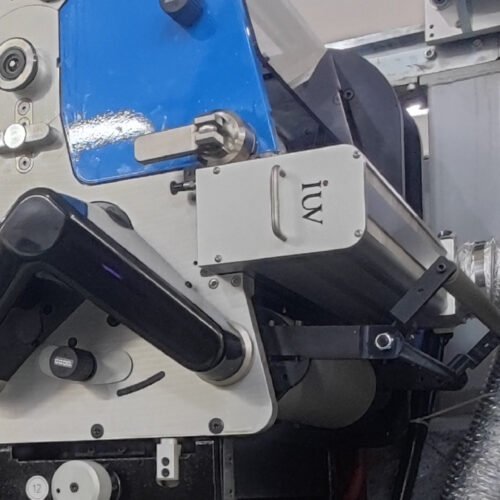
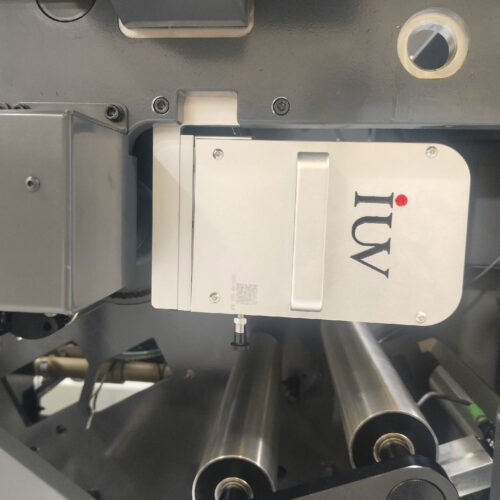
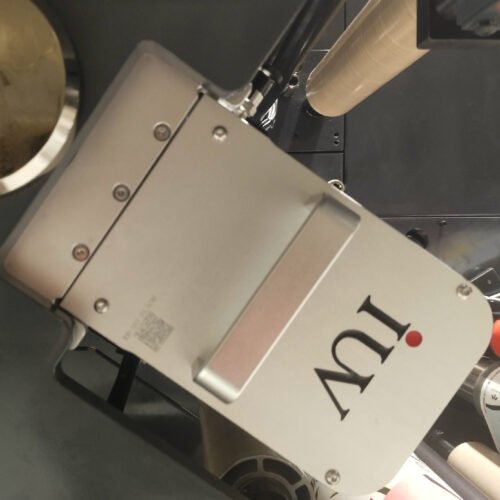
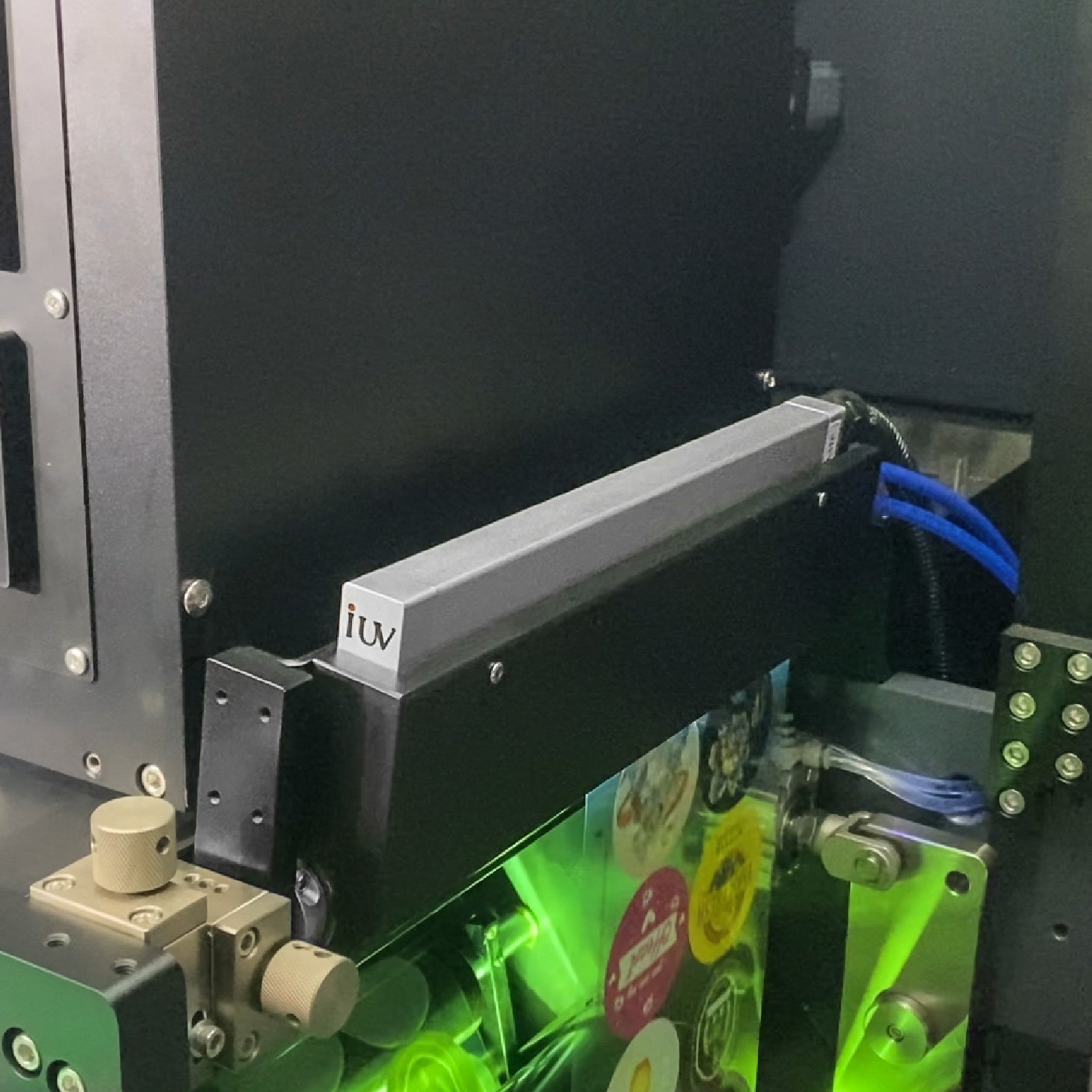
Modern industrial UV LED curing systems, including advanced solutions available from IUV, incorporate intelligent power control, automatic width sensing, thermal management systems, and real-time monitoring functions. These capabilities help maintain stable UV output across varying production conditions, which is particularly important in regulated food and pharmaceutical packaging environments.
Conclusion
Evaluating 385nm UV LED for low migration ink curing in food and pharmaceutical label printing involves much more than selecting a curing lamp. The decision affects polymerization efficiency, migration risk, substrate compatibility, energy consumption, temperature control, and overall print quality.
From an engineering perspective, 385nm UV LED technology provides a highly effective balance between photoinitiator activation, cure depth, thermal management, and production efficiency. When properly matched with low migration UV ink chemistry and optimized process parameters, it can deliver reliable curing performance for demanding food and pharmaceutical label applications while supporting consistent quality at modern narrow web production speeds.