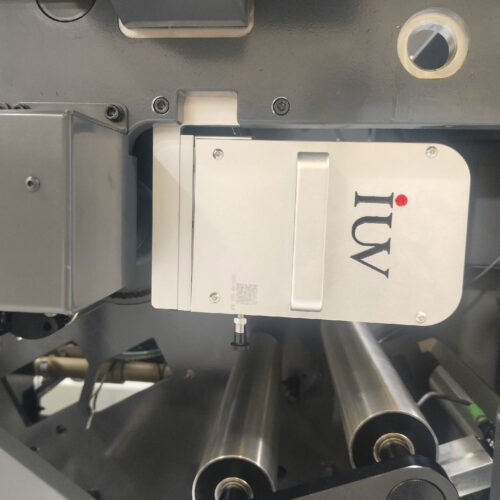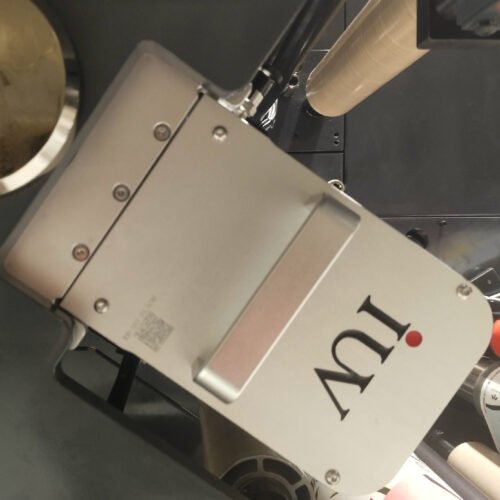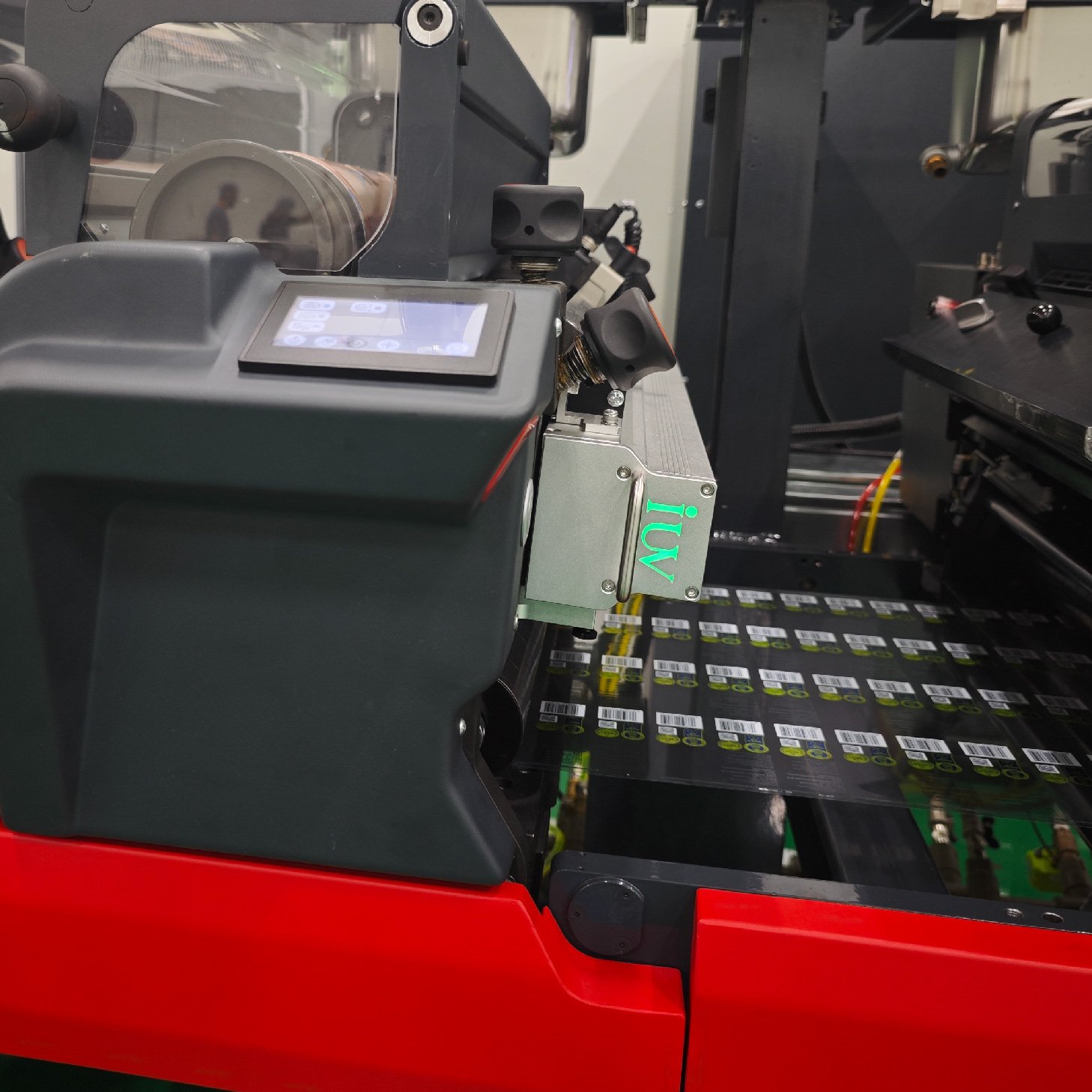
Production managers usually notice curing problems long before complete process failure occurs. Coating gloss begins to vary between jobs, scratch resistance becomes inconsistent, and adhesion tests occasionally fail even though ink formulations and press settings remain unchanged. These symptoms are often linked to aging UV curing equipment rather than coating chemistry itself. As production speeds increase and quality requirements become stricter, maintaining stable spectral output and uniform UV energy across the entire web becomes essential.
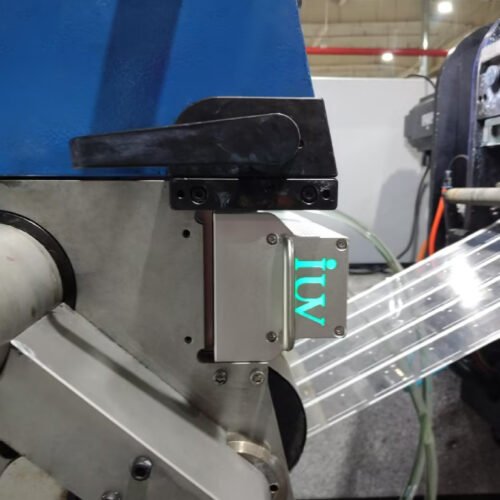
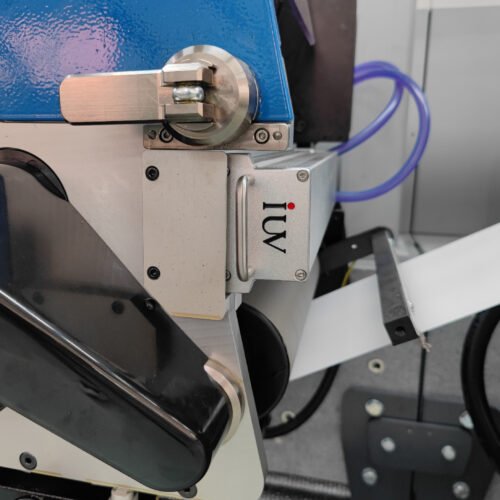
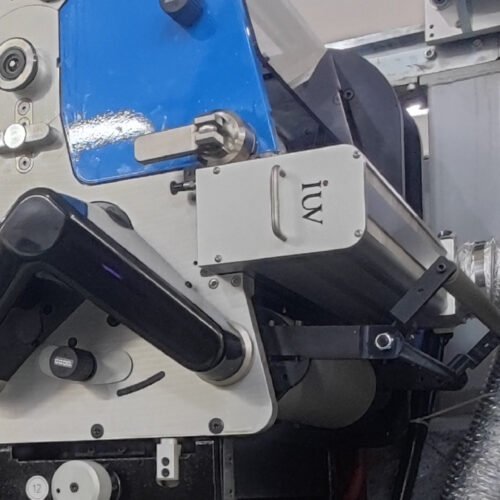
For converters producing pressure-sensitive labels, flexible packaging, folding cartons, and other narrow web products, upgrading an existing UV curing system is often a more economical solution than replacing an entire press. A properly engineered UV LED retrofit can improve curing consistency, reduce operating costs, and provide stable production over long operating periods.
Recognizing the Early Signs of Curing Instability
Curing instability rarely appears as a single defect. Instead, it develops gradually over months of production. Operators may first notice slight differences in gloss between the center and edges of the web. Later, abrasion resistance becomes inconsistent, and some labels begin to fail adhesion or tape tests after converting.
In many cases, increasing lamp power or reducing press speed temporarily improves quality, but these adjustments do not address the underlying issue. Aging UV lamps, contaminated reflectors, declining optical efficiency, and unstable cooling systems all reduce the amount of usable ultraviolet energy reaching the coating surface.
Because these changes occur slowly, production teams often attribute defects to coating formulations or printing conditions rather than curing performance.
Why Stable Spectral Output Produces More Reliable Coatings
Every UV-curable coating relies on photoinitiators that absorb energy within specific wavelength ranges. If the emitted spectrum changes during production, the curing reaction also changes. Even small variations can influence surface hardness, gloss retention, chemical resistance, and coating durability.
Unlike conventional mercury lamps, UV LED curing systems produce a narrow and highly stable wavelength output throughout their service life. The optical characteristics remain consistent from startup to shutdown, allowing photoinitiators to receive predictable energy during every production run.
This stability becomes increasingly valuable for high-speed flexographic printing, label production, and narrow web converting, where production tolerances continue to become tighter.
Uniform Energy Distribution Is More Important Than Maximum Power
Many converters assume that higher lamp power automatically produces better curing results. In practice, curing quality depends on how evenly ultraviolet energy is distributed across the web.
If irradiance is significantly higher in the center than near the edges, coating performance will vary across the printed width. Localized under-curing may not be visible immediately after printing, but problems often appear during die cutting, lamination, or long-term storage.
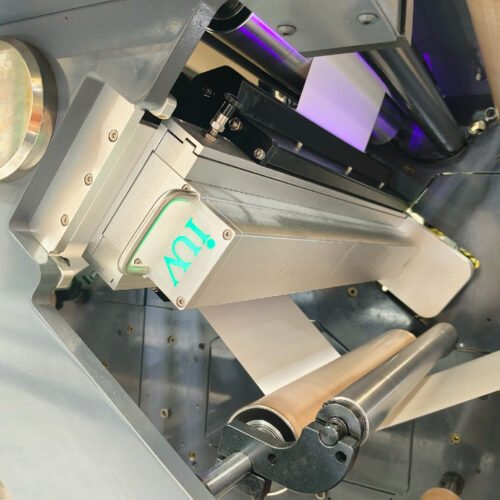
Modern UV LED curing heads are designed to maintain consistent irradiance across the full curing width. Carefully engineered optical layouts reduce energy variation while ensuring that every section of the substrate receives nearly identical curing conditions.
This balanced distribution is especially important when printing pressure-sensitive labels and unsupported films that require consistent coating performance from edge to edge.
Thermal Management Supports Stable Production
Temperature control plays a major role in curing consistency. Although UV LED technology produces far less infrared radiation than traditional UV lamps, the LEDs themselves must operate within a controlled temperature range to maintain stable optical performance.
Industrial curing systems typically use closed-loop water cooling or high-capacity air cooling to remove heat efficiently. Stable cooling prevents fluctuations in irradiance, protects LED lifetime, and maintains consistent curing conditions during extended production runs.
Lower substrate temperatures also help reduce film shrinkage, web distortion, and register variation, making UV LED technology particularly suitable for PET, BOPP, PE, PVC, and other heat-sensitive materials commonly used in label and flexible packaging production.
Matching the Curing System to Production Requirements
Selecting a new curing system should begin with a thorough evaluation of the production process rather than simply choosing the highest available irradiance.
Several factors influence the required curing performance, including production speed, coating thickness, substrate type, printing width, ink formulation, and the number of curing stations installed on the press.
Converters producing heavy white inks or thick protective varnishes require different curing characteristics than facilities running standard CMYK label work. Evaluating these conditions before equipment selection helps ensure that the upgraded system delivers sufficient curing energy without unnecessary power consumption.
Maintaining Long-Term Optical Performance
Even the most advanced curing system requires routine maintenance to preserve performance.
Regular cleaning of protective quartz windows prevents contamination from reducing ultraviolet transmission. Cooling circuits should be inspected periodically to maintain proper operating temperatures, while irradiance measurements should be performed using calibrated UV radiometers to verify that optical output remains within specification.
Because UV LED systems contain no fragile quartz lamps or mechanical shutters, routine maintenance is significantly simpler than with conventional mercury UV equipment. This reduction in maintenance not only lowers operating costs but also minimizes unplanned production interruptions.
Supporting Future Production Growth
An upgraded curing system should meet both current and future production requirements. Many converters increase press speeds, introduce new coating formulations, or expand into more demanding applications after installing modern UV LED technology.
Selecting equipment with sufficient performance margin allows future production improvements without requiring another major retrofit. Adjustable power output, intelligent process controls, and scalable system architecture provide additional flexibility as production requirements evolve.
For facilities serving the label, flexographic, offset, and narrow web markets, this long-term approach delivers greater equipment utilization while reducing total ownership costs.
Conclusion
Upgrading an industrial UV curing system is no longer simply a method of replacing aging equipment. It is an opportunity to improve curing consistency, stabilize production quality, and support higher operating speeds without sacrificing coating performance. By focusing on spectral stability, uniform energy distribution, efficient cooling, and proper system integration, converters can achieve more reliable polymerization across a wide range of coating applications.
For label printing, flexographic printing, sheet-fed offset, and narrow web production, modern UV LED curing systems provide a stable foundation for higher productivity, lower maintenance, and consistent coating quality throughout every stage of the manufacturing process.