Upgrading from conventional UV lamps to LED UV curing systems is no longer treated as a simple lamp replacement in modern printing engineering. In real production environments such as flexographic printing, label printing, narrow web printing, packaging printing, and offset printing, the transition is a system-level modification that affects UV dose management, ink chemistry response, thermal balance, and press control logic.
From an engineering perspective, the topic of LED UV Manufacturer Integration Methods for Upgrading Conventional UV Lamps to LED UV Curing Systems in Printing Presses is fundamentally about matching three domains: optical output, process stability, and ink reactivity. If any one of these domains is misaligned, the upgrade will not deliver stable UV curing performance, even if the LED modules are physically installed correctly.
UV curing transition is not a lamp swap but a process re-engineering task
Conventional UV curing technology relies on broadband mercury lamps that emit a wide spectrum including UV-A, UV-B, infrared heat, and visible light. This wide spectrum creates a high total energy output but also introduces significant thermal load into the printing zone. UV ink chemistry in these systems is formulated to respond to a broader activation range, which makes them more tolerant to variations in wavelength and dose distribution.
In contrast, a UV LED curing system operates within a narrow wavelength band, typically centered around 365nm, 385nm, or 395nm. This spectral precision changes how photoinitiators in UV inks absorb energy. When evaluating LED UV Manufacturer Integration Methods for Upgrading Conventional UV Lamps to LED UV Curing Systems in Printing Presses, engineers must first understand that ink reactivity becomes wavelength-dependent rather than broadband-sensitive.
This shift directly affects UV dose efficiency, curing depth, and oxygen inhibition behavior at the ink surface.
Electrical and mechanical integration inside existing printing presses
One of the most critical aspects of LED UV Manufacturer Integration Methods for Upgrading Conventional UV Lamps to LED UV Curing Systems in Printing Presses is electrical architecture compatibility. Conventional UV systems often operate with high-voltage ballasts and analog power modulation. UV LED systems require constant current drivers with digital control interfaces.
In retrofit scenarios, the press control system must be evaluated for signal compatibility, particularly in narrow web label printing machines where curing units are integrated tightly with tension control and registration systems. Any mismatch in response time between press speed changes and UV LED intensity modulation can lead to inconsistent UV dose delivery.
Mechanical integration is equally important. LED UV modules typically require different mounting geometry because they generate directional light output rather than diffuse radiation. This affects distance-to-substrate design, reflector elimination, and cooling channel integration.
Thermal management and temperature control in LED UV retrofits
One of the most underestimated engineering challenges in LED UV Manufacturer Integration Methods for Upgrading Conventional UV Lamps to LED UV Curing Systems in Printing Presses is thermal redistribution inside the press.
Conventional UV systems introduce high infrared energy into the substrate, which often masks underlying thermal instability in ink film formation. When switching to LED UV curing, infrared heat is significantly reduced, exposing previously hidden issues such as poor ink leveling, incomplete polymerization, or weak UV ink adhesion on low-energy substrates.
At the same time, LED UV systems still generate heat at the diode level, requiring active thermal management. If temperature control is not properly designed, wavelength drift can occur, which directly affects UV dose efficiency and curing stability.
In flexographic printing environments running at high speed, even a small deviation in temperature can shift curing balance between surface cure and bulk cure, especially in white ink and high-pigment formulations.
UV ink chemistry adaptation during system conversion
A key engineering constraint in LED UV Manufacturer Integration Methods for Upgrading Conventional UV Lamps to LED UV Curing Systems in Printing Presses is ink requalification. UV ink chemistry designed for mercury lamps often contains photoinitiator blends optimized for broad-spectrum activation.
When transitioning to LED UV systems, photoinitiator absorption must match the emission peak of the LED source. For example, 385nm systems are often selected when deeper penetration is required in opaque inks, while 395nm systems may be preferred for surface curing stability in label printing applications.
If ink chemistry is not adapted, the system may show partial curing even when UV dose readings appear sufficient. This is especially visible in packaging printing substrates such as PE, PP, and PET films where surface energy and absorption characteristics vary significantly.
Oxygen inhibition also becomes more visible in LED UV curing systems due to reduced thermal assistance, requiring tighter control of irradiance distribution.
UV dose optimization and high-speed production stability
In high-speed narrow web printing, UV dose consistency is more important than peak intensity. One of the core engineering principles in LED UV Manufacturer Integration Methods for Upgrading Conventional UV Lamps to LED UV Curing Systems in Printing Presses is that total energy delivered per unit area determines final polymerization quality.
LED UV systems allow precise modulation of energy output based on press speed. However, this requires integration with encoder feedback systems so that UV intensity dynamically adjusts in real time. Without this synchronization, fast acceleration or deceleration phases in offset printing or flexographic presses can result in under-cured or over-cured zones.
Ink adhesion is directly linked to UV dose stability. Insufficient energy results in weak bonding to substrates, while excessive localized energy can lead to brittleness and cracking in post-processing stages.
Material compatibility in retrofit applications
Material behavior plays a central role in LED UV Manufacturer Integration Methods for Upgrading Conventional UV Lamps to LED UV Curing Systems in Printing Presses. Many older presses were originally designed for thicker substrates and higher thermal tolerance. Modern label production, however, increasingly uses thin films and heat-sensitive materials.
LED UV curing systems reduce substrate temperature significantly, improving dimensional stability and registration accuracy. However, reduced thermal flow also changes ink flow dynamics, which can affect dot gain and edge definition in flexographic printing.
This is particularly important in pharmaceutical label printing where micro-text clarity and barcode readability are critical.
Role of system-level integration and industrial implementation
Successful implementation of LED UV Manufacturer Integration Methods for Upgrading Conventional UV Lamps to LED UV Curing Systems in Printing Presses requires coordination between mechanical engineers, ink suppliers, and press manufacturers. It is not a standalone upgrade but a multi-variable optimization process.
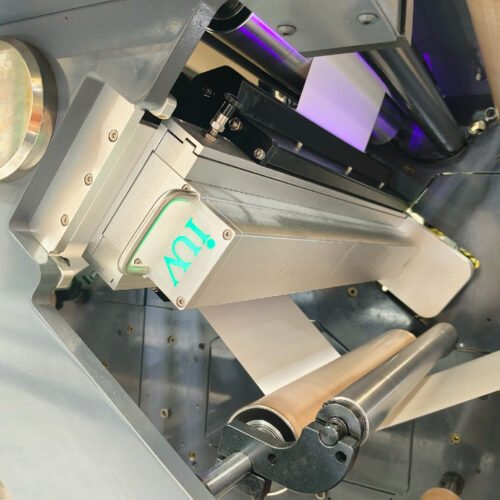
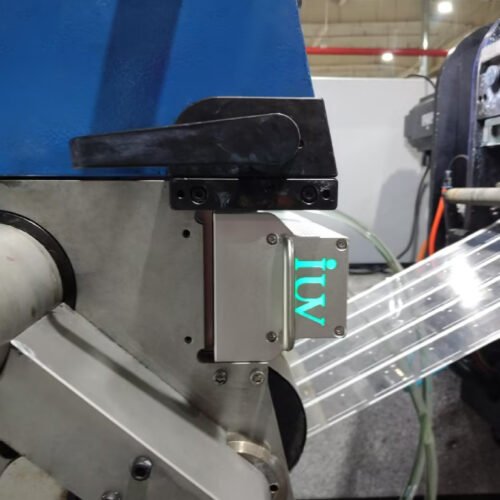
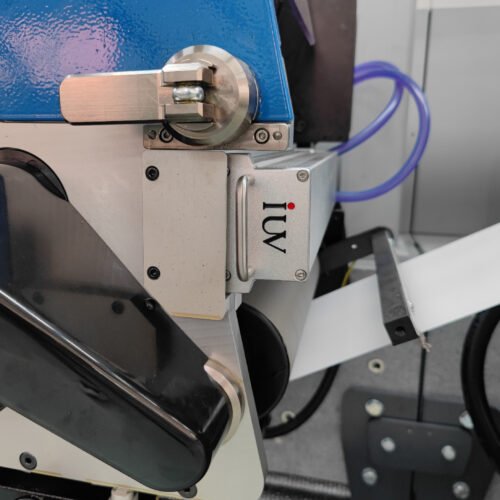
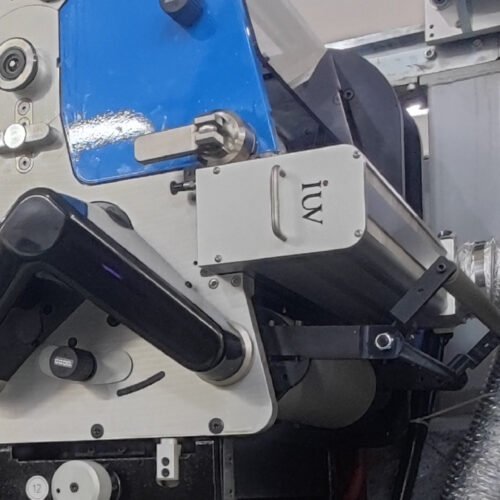
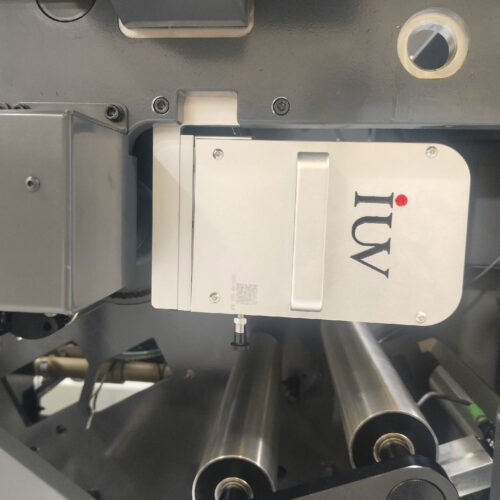
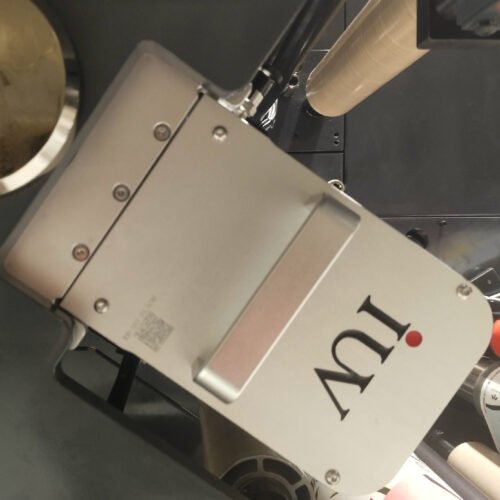
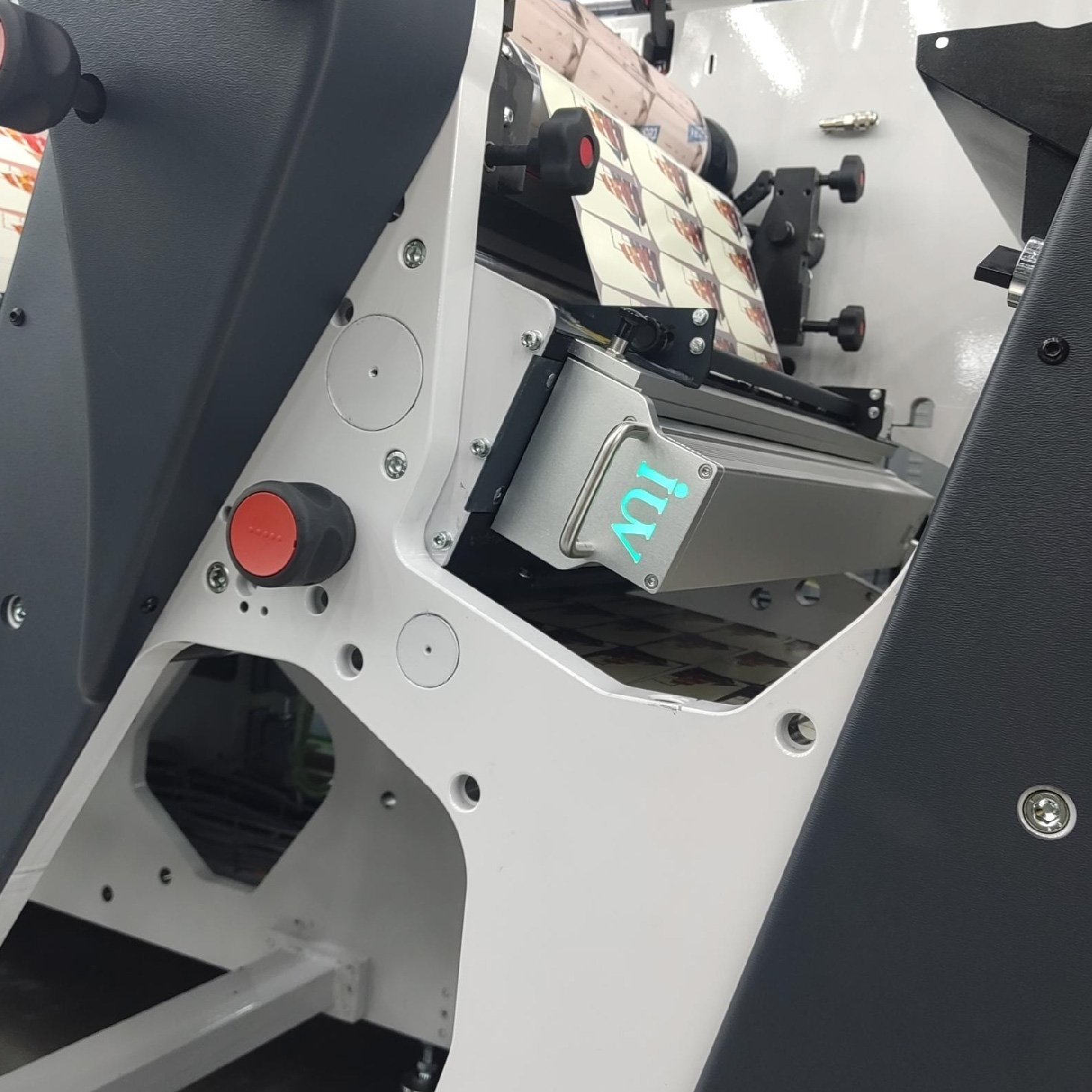
Modern industrial UV LED curing systems from manufacturers such as IUV are designed with modular architecture, allowing retrofit integration into existing flexographic and offset printing lines. These systems typically include adjustable irradiance zones, real-time power control, and wavelength-specific configurations to match different ink systems and production speeds.
In practical production environments, the most stable results are achieved when UV LED modules are integrated alongside recalibrated ink systems and updated press control logic rather than simply replacing lamp housings.
Conclusion
The engineering reality behind LED UV Manufacturer Integration Methods for Upgrading Conventional UV Lamps to LED UV Curing Systems in Printing Presses is that success depends on system synchronization rather than component substitution. UV curing technology is tightly coupled with ink chemistry, wavelength selection, UV dose control, temperature management, and press speed dynamics.
When properly integrated, UV LED curing systems deliver measurable improvements in energy efficiency, process stability, substrate compatibility, and UV ink adhesion performance across flexographic printing, label printing, narrow web printing, and packaging printing applications.
However, without proper engineering alignment, even advanced LED UV technology will fail to achieve its theoretical advantages. This is why retrofit projects must always be treated as full process engineering upgrades rather than equipment replacements.