385nm UV LED technology has become an increasingly important solution for converters processing heat-sensitive packaging materials. By delivering ultraviolet energy within a narrow wavelength spectrum, 385nm UV LED systems reduce unwanted infrared heat generation while providing sufficient UV dose for reliable polymerization. This allows printers to maintain curing quality, ink adhesion, and production efficiency when printing on flexible packaging films, shrink sleeves, pressure-sensitive labels, and other temperature-sensitive substrates.
Why Heat Management Has Become a Critical Challenge in Modern Packaging Printing
As flexible packaging, shrink sleeve labels, in-mold labels, and thin film materials become more common throughout the packaging industry, thermal management has emerged as one of the most important production variables. Many packaging materials used in flexographic printing, narrow web label printing, and offset printing have relatively low thermal resistance. Excessive heat generated during UV curing can cause dimensional instability, film distortion, shrinkage, curling, registration variation, and reduced print quality.
Traditional UV curing systems generate both ultraviolet energy and significant thermal radiation. While ultraviolet energy is required to initiate polymerization, excess heat often becomes an unwanted byproduct that negatively affects sensitive substrates. This challenge has accelerated industry interest in UV LED curing technology, particularly 385nm UV LED systems that provide an effective balance between curing performance and thermal control.
Understanding How 385nm UV LED Technology Reduces Heat Impact While Maintaining Reliable UV Cure Quality in Sensitive Packaging Materials requires examining the interaction between wavelength, UV dose, ink chemistry, substrate behavior, and process temperature.
The Relationship Between Wavelength and Heat Generation
The fundamental advantage of 385nm UV LED technology lies in its spectral efficiency. Unlike conventional UV systems that emit a broad spectrum containing ultraviolet, visible, and infrared radiation, UV LED curing systems emit energy within a very narrow wavelength range.
Most industrial UV LED curing systems operate at wavelengths such as 365nm, 385nm, or 395nm. Among these options, 385nm UV LED technology often provides an effective compromise between curing efficiency and heat management.
Because LED systems generate energy only within the desired spectral range, substantially less radiant heat reaches the substrate surface. This characteristic is particularly important when processing polypropylene films, polyethylene films, PET materials, shrink sleeve structures, and multilayer flexible packaging substrates.
In practical production environments, converters implementing How 385nm UV LED Technology Reduces Heat Impact While Maintaining Reliable UV Cure Quality in Sensitive Packaging Materials often observe improved dimensional stability compared with broader-spectrum UV curing methods.
UV Ink Chemistry and Polymerization Performance at 385nm
Successful UV curing depends on photoinitiators contained within the UV ink formulation. These photoinitiators absorb ultraviolet energy and initiate a polymerization reaction that transforms liquid ink into a solid crosslinked structure.
The effectiveness of this process depends heavily on wavelength compatibility. Modern UV LED ink formulations are specifically engineered to respond efficiently to wavelengths such as 385nm. When the photoinitiator absorption spectrum aligns with the emitted UV wavelength, curing efficiency improves significantly.
This allows converters to achieve complete polymerization while minimizing unnecessary energy consumption and substrate heating.
In high-speed flexographic printing and narrow web label printing applications, reliable curing quality depends not only on irradiance but also on total UV dose delivered to the ink film. Even with reduced thermal impact, 385nm UV LED systems can provide sufficient energy density to achieve excellent cure performance when properly configured.
This is one reason why How 385nm UV LED Technology Reduces Heat Impact While Maintaining Reliable UV Cure Quality in Sensitive Packaging Materials has become an important engineering consideration for modern packaging production facilities.
Temperature Control and Sensitive Packaging Materials
Temperature control is often overlooked until production problems appear.
Thin flexible films frequently exhibit dimensional changes when exposed to excessive heat. Registration shifts, web instability, tension variation, and substrate deformation can occur even before operators recognize a thermal issue.
In shrink sleeve production, excessive curing heat may trigger premature material contraction. In flexible packaging applications, heat buildup can affect laminate structures and influence downstream converting operations.
Because 385nm UV LED curing systems generate substantially less radiant heat than conventional UV technologies, substrate temperatures remain more stable throughout production. This improved thermal profile helps maintain web stability and reduces process variation during long production runs.
Many converters transitioning to UV LED systems report that temperature-related defects decline significantly after implementing 385nm LED curing technology, particularly when processing lightweight film structures.
Oxygen Inhibition and Surface Cure Reliability
Reducing heat alone is not sufficient to ensure successful curing. Surface polymerization must also overcome oxygen inhibition.
Oxygen reacts with free radicals generated during UV exposure and can interfere with surface curing. This phenomenon becomes more visible when printing varnishes, white inks, and highly pigmented colors.
A properly designed 385nm UV LED system must deliver sufficient irradiance and UV dose to overcome oxygen inhibition while maintaining low thermal impact. Modern UV LED curing systems achieve this through optimized optical design, high-output LED arrays, and intelligent power management.
When UV dose, wavelength, and ink chemistry are correctly matched, converters can achieve excellent scratch resistance, chemical resistance, and surface cure performance without exposing substrates to excessive temperatures.
Material Compatibility and Adhesion Performance
Material compatibility remains a critical factor in packaging printing.
Different substrates absorb, reflect, and transmit UV energy differently. PET films, BOPP films, polyethylene films, metallized materials, and synthetic label stocks each present unique curing challenges.
Reliable UV cure quality requires balancing wavelength selection, UV dose, ink formulation, and substrate characteristics. If energy levels are insufficient, incomplete polymerization may occur. If excessive thermal energy is introduced, material distortion becomes a risk.
The advantage of 385nm UV LED technology is its ability to provide targeted curing energy with limited heat generation. This improves adhesion consistency while reducing the likelihood of thermal damage.
For converters evaluating How 385nm UV LED Technology Reduces Heat Impact While Maintaining Reliable UV Cure Quality in Sensitive Packaging Materials, material compatibility testing remains a critical step during process validation.
Engineering Solutions for Packaging Converters
Successful implementation of UV LED curing technology requires more than simply replacing a curing unit. Process optimization should include UV dose verification, wavelength compatibility evaluation, thermal monitoring, and adhesion testing.
Modern industrial UV LED systems equipped with intelligent power regulation, real-time temperature monitoring, and automatic width control provide additional process stability. These capabilities become particularly valuable when production involves frequent job changes, varying substrate widths, and demanding packaging applications.
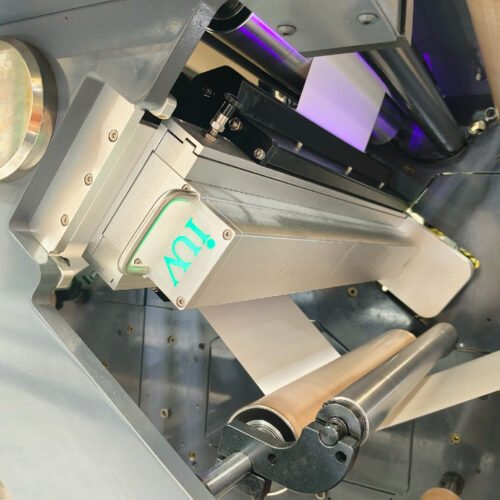
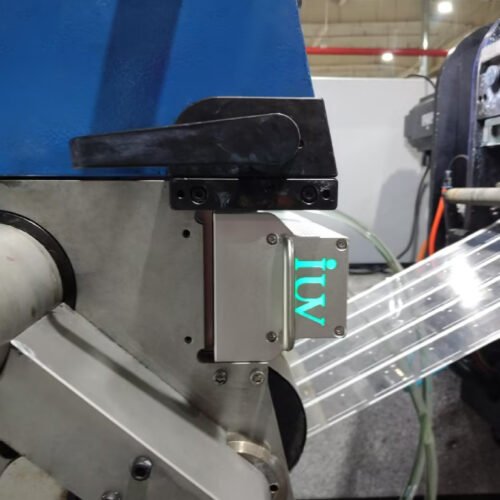
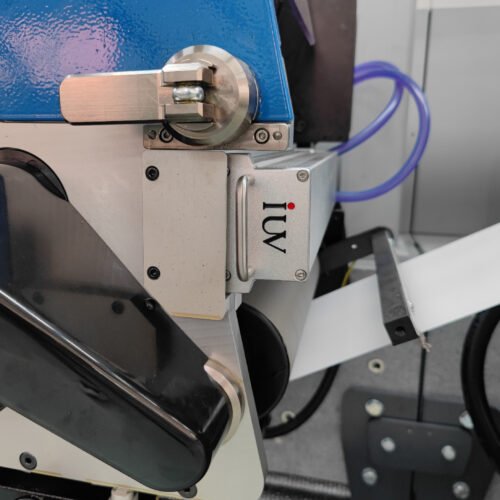
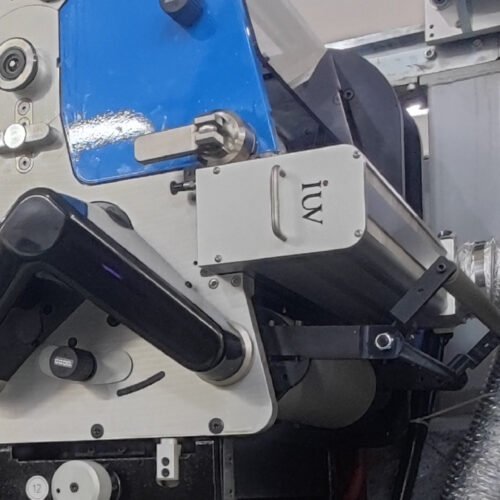
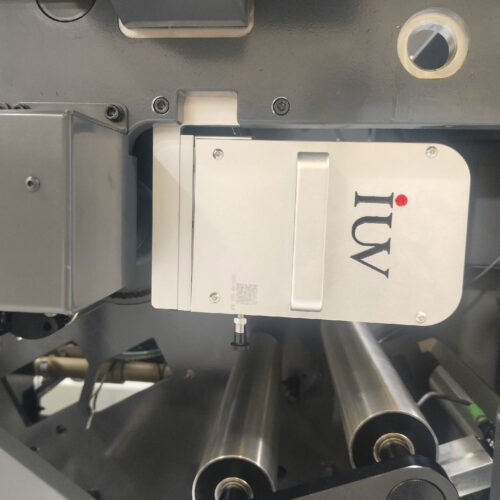
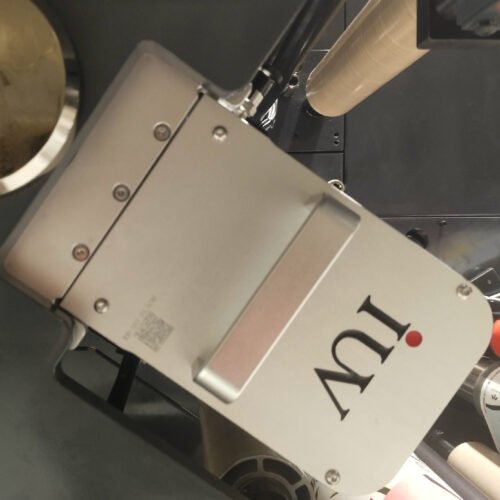
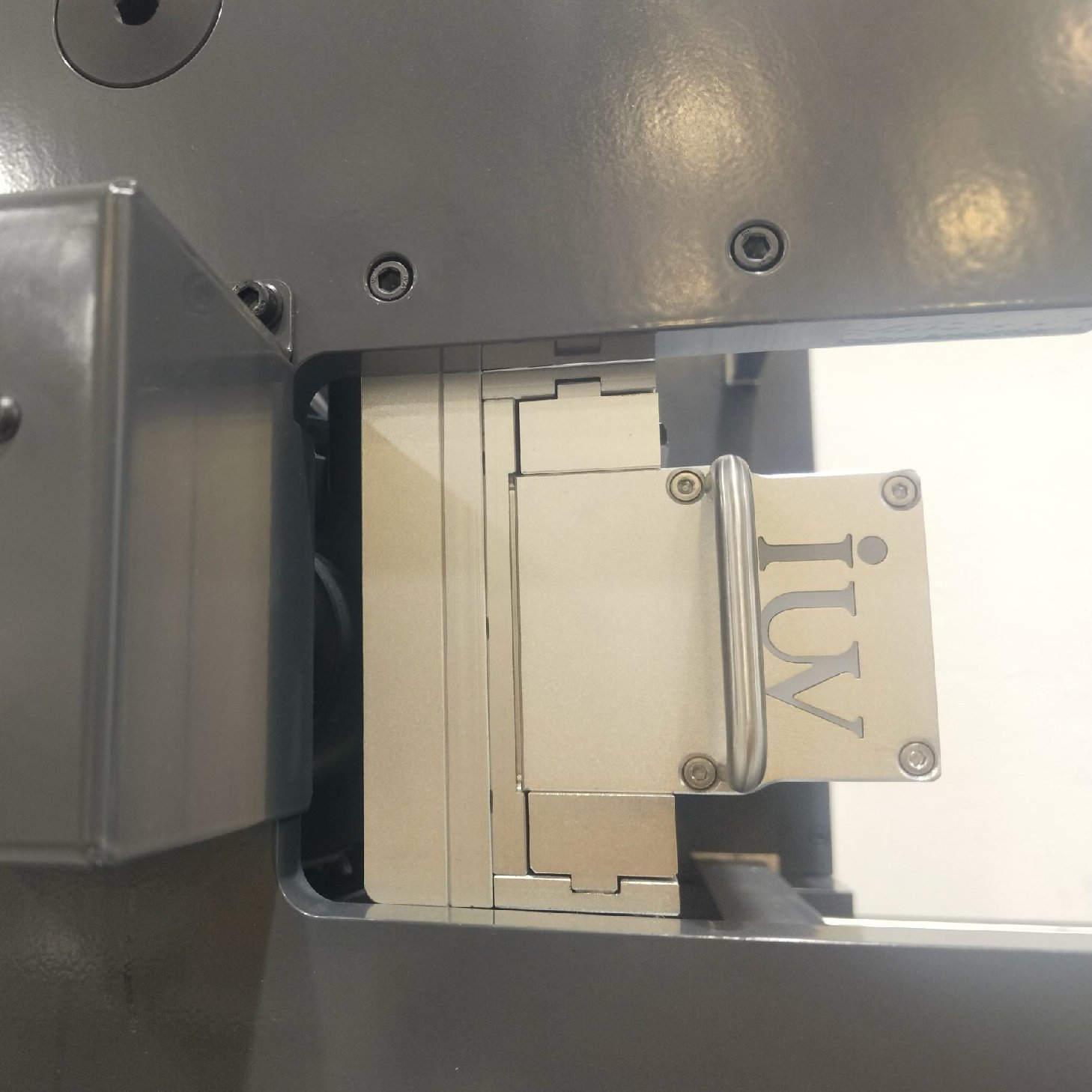
Industrial solutions such as the IUV LED UV curing system are designed to support flexographic printing, label printing, packaging converting, and offset printing operations through stable wavelength output, precise power control, and efficient thermal management. Such features help converters maintain consistent curing performance while reducing energy consumption and minimizing substrate heat exposure.
Conclusion
Understanding How 385nm UV LED Technology Reduces Heat Impact While Maintaining Reliable UV Cure Quality in Sensitive Packaging Materials requires evaluating the entire curing process rather than focusing solely on lamp power. Wavelength selection, UV dose, photoinitiator compatibility, oxygen inhibition, temperature control, and substrate characteristics all influence curing performance.
For modern packaging converters processing heat-sensitive films and flexible materials, 385nm UV LED technology offers an effective solution for balancing curing efficiency with thermal stability. By reducing unwanted heat while maintaining reliable polymerization, these systems support higher print quality, improved material compatibility, and more stable production performance across a wide range of packaging applications.