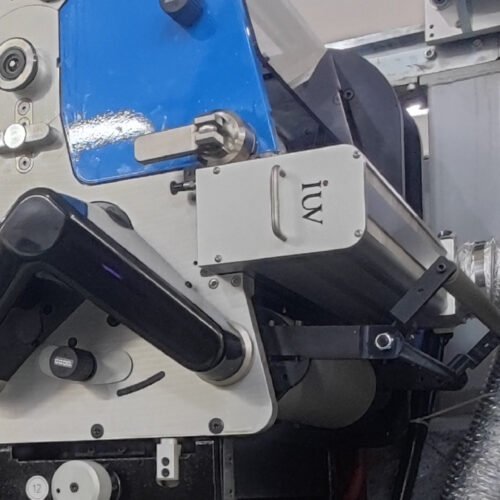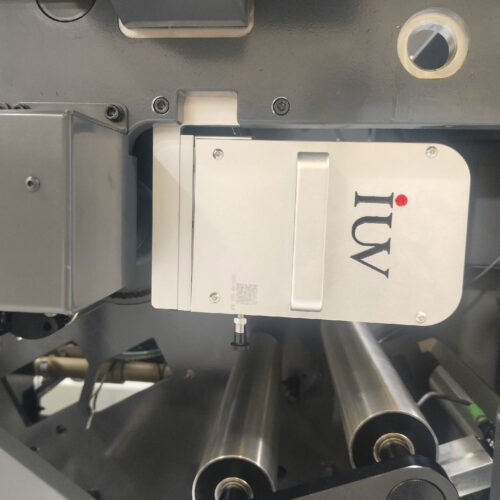
Flexographic printing has become the preferred process for producing pressure-sensitive labels, shrink sleeves, flexible packaging, pharmaceutical labels, and industrial graphics. As converters continue to increase production capacity, higher press speeds place greater demands on UV curing performance. A curing system that performed well at 80 m/min may no longer deliver complete polymerization when production reaches 180 m/min or higher. The result can be poor adhesion, reduced abrasion resistance, inconsistent gloss, and production downtime.
Upgrading a UV curing system is often more practical than replacing an entire press. Modern UV LED curing technology allows existing flexographic presses to achieve higher productivity while lowering maintenance requirements and improving energy efficiency. However, a successful upgrade requires more than installing a new curing lamp. Irradiance, energy density, wavelength, cooling capacity, press configuration, ink chemistry, and substrate compatibility must all be evaluated together.
A carefully planned retrofit enables converters to increase production speed while maintaining consistent print quality across a wide range of label and narrow web applications.
Why Existing UV Curing Systems Reach Their Performance Limits
Many flexographic presses currently in operation were originally designed for production speeds that were considerably lower than today’s requirements. As converters introduce faster presses, thicker coatings, higher opacity white inks, and specialty varnishes, the original curing equipment often becomes the limiting factor.
Several warning signs indicate that an upgrade should be considered:
- Surface tack after curing
- Reduced ink adhesion
- Poor scratch resistance
- Increased solvent sensitivity
- Curling or distortion on film substrates
- Inconsistent gloss between production runs
- Frequent lamp replacement
- Higher maintenance costs
- Reduced production speed to maintain curing quality
These problems often originate from insufficient curing energy rather than printing defects.
Understanding the Relationship Between Irradiance and Press Speed
The effectiveness of every UV curing process depends on the balance between irradiance and exposure time.
Irradiance describes the ultraviolet intensity delivered to the ink surface and is normally expressed in W/cm². Energy density describes the total ultraviolet energy received during exposure and is measured in J/cm².
As press speed increases, exposure time decreases. If irradiance remains unchanged, the total curing dose drops accordingly. Incomplete polymerization becomes increasingly likely, especially with dense white inks, heavy coatings, or multiple print stations.
For example, doubling press speed without increasing available curing energy effectively cuts exposure time in half. Unless irradiance or curing distance is adjusted, the ink may receive insufficient energy to complete crosslinking.
When upgrading a UV curing system, engineers should calculate the required energy density according to actual production speed rather than selecting equipment solely on maximum irradiance specifications.
Evaluate Current Production Requirements Before Upgrading
Every retrofit project should begin with a comprehensive production assessment. Purchasing the most powerful curing system available does not necessarily provide the best long-term solution.
Important production factors include:
- Maximum web speed
- Average production speed
- Printing width
- Ink coverage
- White ink percentage
- Coating thickness
- Varnish applications
- Number of printing stations
- Substrate types
- Production schedule
Converters running predominantly paper labels require different curing characteristics than facilities producing unsupported PET films or shrink sleeves.
Collecting production data before selecting equipment helps determine the required irradiance, cooling capacity, optical configuration, and control system.
Selecting Higher Irradiance Without Creating New Problems
Increasing irradiance improves curing performance only when the curing profile remains balanced.
Excessively high peak intensity may cure the ink surface almost instantly while limiting ultraviolet penetration into deeper layers. This phenomenon can reduce overall polymerization despite increased lamp output.
Modern UV LED curing systems solve this issue by combining stable irradiance with accurate electronic power control. Operators can adjust output according to ink coverage, substrate thickness, and production speed instead of operating continuously at maximum power.
Variable power operation also reduces electrical consumption while extending component lifetime.
The objective is consistent curing rather than maximum irradiance.
UV LED Technology Improves High-Speed Production
Compared with conventional mercury UV systems, UV LED curing technology provides several engineering advantages during retrofit projects.
LED modules reach full output immediately after startup, eliminating warm-up delays. Stable spectral output remains consistent throughout the production cycle, reducing curing variation between the first and last rolls.
Because UV LEDs generate significantly less infrared radiation, substrate temperatures remain considerably lower. This characteristic improves dimensional stability when printing heat-sensitive materials including BOPP, PET, PE, PVC, unsupported films, and pressure-sensitive label stock.
Reduced heat also minimizes web stretching, register variation, and distortion during high-speed production.
These characteristics allow converters to increase press speed without introducing thermal defects that commonly occur with conventional UV lamps.
Match Wavelength with Ink Chemistry
Selecting the correct wavelength is equally important during a curing system upgrade.
Industrial UV LED systems commonly operate at:
- 365 nm
- 385 nm
- 395 nm
- 405 nm
Each wavelength interacts differently with specific photoinitiators contained within UV inks and coatings.
Many modern flexographic inks are formulated specifically for 395 nm curing systems because this wavelength provides excellent curing efficiency and electrical performance. Other specialty coatings may require different spectral characteristics depending on formulation.
Before purchasing new equipment, converters should verify wavelength compatibility with their ink suppliers to ensure complete polymerization under expected production conditions.
Changing curing technology without confirming ink compatibility can reduce curing performance despite higher irradiance.
Cooling System Design Is Critical
Higher irradiance requires efficient thermal management.
Although UV LED systems generate less heat than mercury lamps, the LED chips themselves must remain within specified operating temperatures to maintain stable optical output.
Industrial curing systems typically use closed-loop water cooling or high-capacity air cooling depending on installation requirements.
Stable cooling delivers several important benefits:
- Consistent irradiance
- Longer LED lifetime
- Reduced optical degradation
- Stable wavelength output
- Improved production reliability
Cooling system maintenance should therefore receive equal attention during retrofit planning.
Mechanical Integration with Existing Presses
Successful upgrades require careful mechanical integration with the existing flexographic press.
Important considerations include:
- Available installation space
- Working distance
- Mounting brackets
- Cooling hose routing
- Electrical supply
- Control system communication
- Safety interlocks
- Operator accessibility
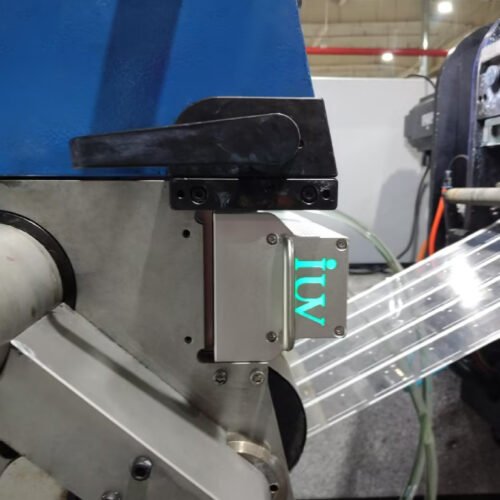
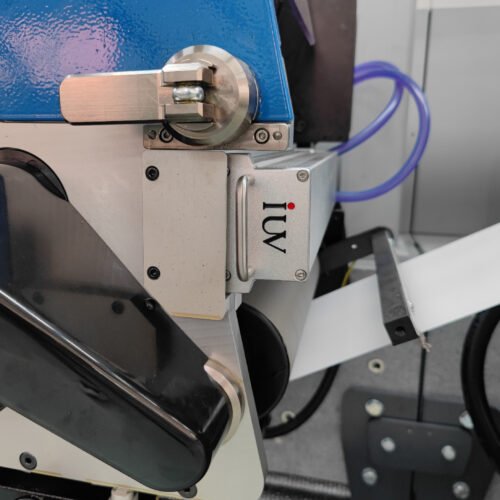
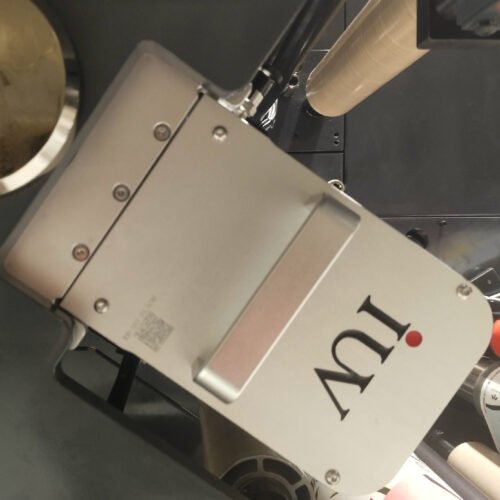
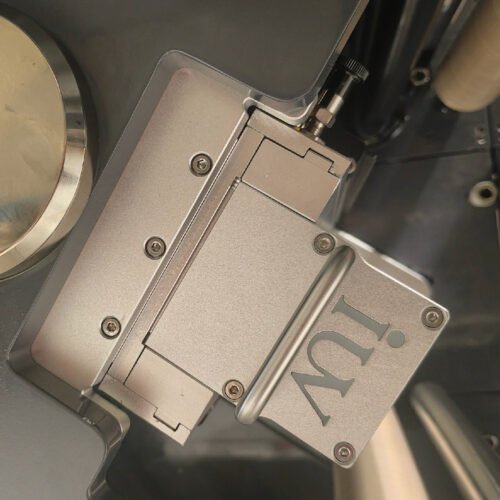
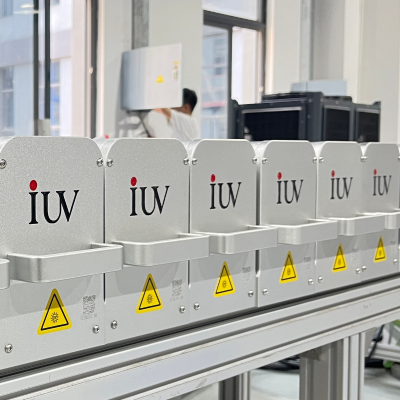
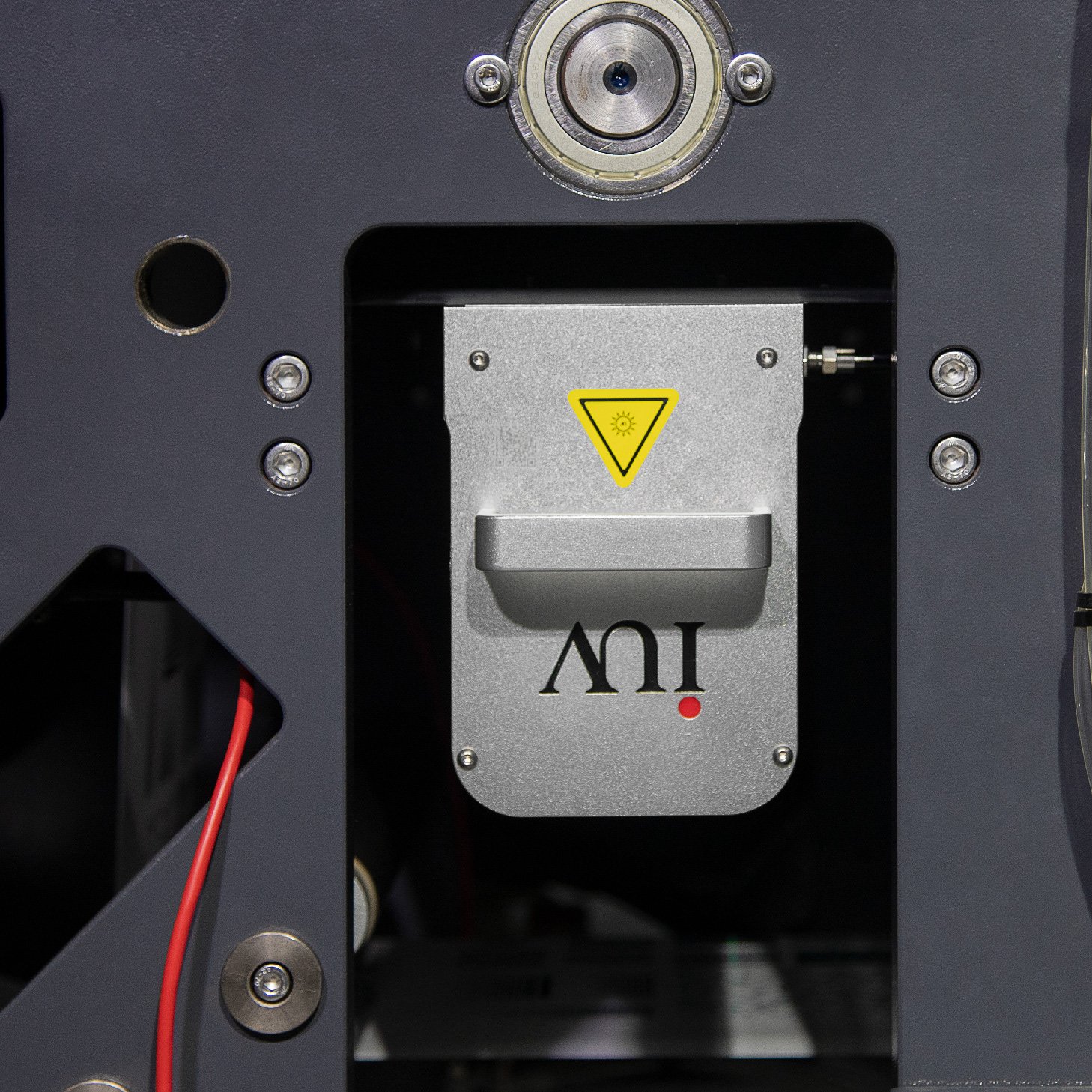
Compact UV LED curing systems often simplify retrofit projects because their smaller dimensions fit existing press layouts without significant structural modification.
Proper positioning also ensures uniform irradiance across the entire web width, preventing edge curing differences that may affect print quality.
Control Systems Enhance Production Stability
Modern UV LED curing systems provide intelligent control functions that improve production consistency.
Typical features include:
- Automatic standby operation
- Recipe management
- Output adjustment by job
- Remote diagnostics
- Cooling temperature monitoring
- Production data logging
- Alarm management
- Preventive maintenance reminders
These functions reduce operator intervention while improving repeatability between production jobs.
Automatic standby mode also reduces unnecessary operating hours during press stoppages, extending equipment lifetime.
Maintenance After Upgrading
One of the primary economic advantages of upgrading to UV LED technology is significantly lower maintenance.
Traditional mercury systems require regular bulb replacement, reflector cleaning, shutter inspection, ozone extraction maintenance, and periodic optical alignment.
By comparison, routine maintenance for industrial UV LED systems generally focuses on:
- Cleaning protective quartz windows
- Inspecting cooling circuits
- Checking water quality
- Replacing air filters where applicable
- Measuring irradiance with calibrated radiometers
- Inspecting electrical connections
Because LED modules contain no fragile quartz lamps, routine maintenance becomes simpler while reducing production interruptions.
Regular irradiance measurement remains important because contamination on optical windows can gradually reduce ultraviolet output even when electrical performance remains normal.
Economic Benefits Beyond Faster Production
Higher production speed alone rarely justifies an equipment upgrade. The greatest return typically comes from improvements throughout the entire manufacturing process.
Modern UV LED retrofits commonly deliver:
- Lower electricity consumption
- Reduced maintenance labor
- Elimination of replacement lamps
- Shorter startup time
- Less production waste
- Improved print consistency
- Reduced downtime
- Better substrate compatibility
- Higher equipment availability
- Lower total operating cost
Converters producing numerous short production runs each day benefit particularly from instant on/off operation because energy is consumed only during active printing.
Over several years of operation, maintenance savings frequently exceed the initial reduction in electrical consumption.
Conclusion
Upgrading UV curing systems for higher irradiance and faster press speeds requires a comprehensive engineering approach rather than simply installing more powerful curing units. Successful retrofit projects begin with a detailed assessment of production requirements, followed by careful selection of irradiance, wavelength, cooling capacity, control functions, and mechanical integration.
For flexographic printing, label production, narrow web printing, and offset applications, modern UV LED curing systems provide stable curing performance while reducing maintenance, lowering substrate temperatures, and improving production efficiency. When irradiance is properly matched to press speed and ink chemistry, converters can achieve complete polymerization, reliable adhesion, excellent surface durability, and consistent print quality across demanding production environments. A well-planned upgrade extends the useful life of existing presses while supporting future production growth with lower operating costs and greater manufacturing flexibility.