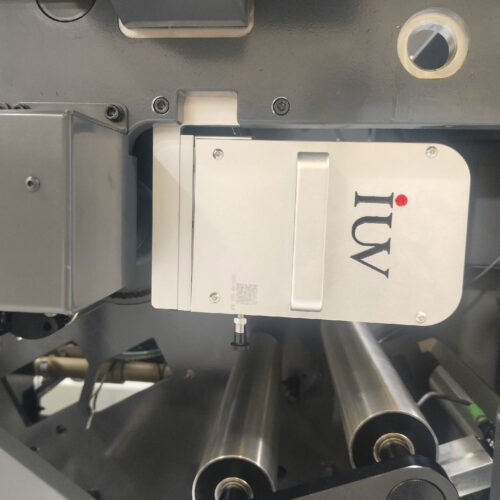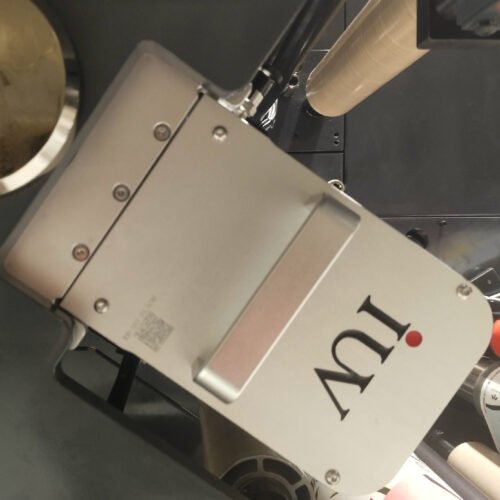
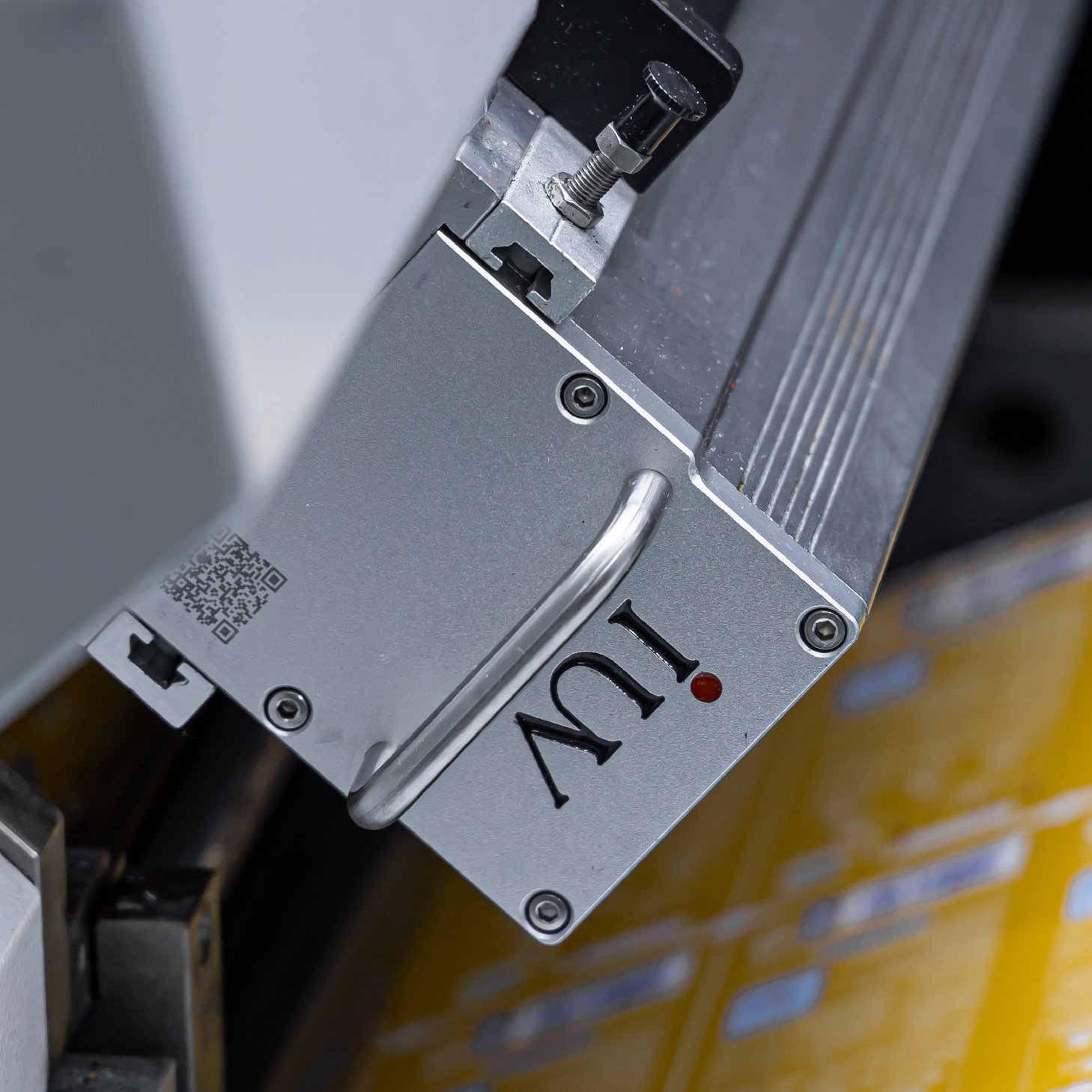
UV dose is one of the most critical process parameters in UV LED curing equipment for the label industry because it directly determines polymerization efficiency, ink adhesion, and scratch resistance. Proper UV dose combines irradiance, exposure time, wavelength, and press speed to produce a fully crosslinked ink film without overheating temperature-sensitive substrates. Modern UV LED curing systems operating at 385nm or 395nm provide stable energy output, enabling consistent curing quality in high-speed flexographic and offset label printing.
Understanding Why UV Dose Determines Final Print Performance
When engineers evaluate UV LED curing equipment for the label industry: how UV dose influences ink adhesion and scratch resistance, the discussion should begin with the curing mechanism rather than the hardware itself. In narrow web label production, successful UV curing is not achieved simply by increasing lamp power. Instead, it depends on delivering the correct amount of ultraviolet energy to activate the photoinitiators inside the UV curable ink while maintaining process stability across different substrates and production speeds.
During UV curing, photoinitiators absorb ultraviolet light within a specific wavelength range, most commonly around 385nm or 395nm for modern UV LED curing systems. Once activated, these molecules generate reactive radicals that initiate polymerization of acrylate oligomers and monomers, forming a dense three-dimensional polymer network. The degree of crosslinking directly affects ink adhesion, surface hardness, chemical resistance, abrasion resistance, and scratch resistance. If the delivered UV dose is insufficient, polymerization remains incomplete and the cured film may still contain unreacted components that reduce adhesion and mechanical durability.
In industrial label printing, engineers frequently observe situations where printed graphics appear visually dry immediately after the curing station but fail adhesion tests or scratch tests several hours later. This phenomenon is typically associated with incomplete crosslinking rather than insufficient surface curing. A properly designed UV LED curing system therefore focuses not only on peak irradiance but also on maintaining the required UV dose throughout the entire exposure period.
UV Dose Is More Than Lamp Power
One of the most common misunderstandings in printing plants is assuming that higher lamp intensity automatically results in better curing. In practice, UV LED curing equipment for the label industry: how UV dose influences ink adhesion and scratch resistance depends on the interaction between irradiance, exposure time, press speed, optical efficiency, and wavelength selection.
UV dose represents the accumulated energy received by the ink layer and is generally expressed in mJ/cm². Even when two curing systems operate at identical peak irradiance, different conveyor speeds or exposure distances can produce significantly different curing results. At high press speeds exceeding 120–180 m/min, exposure time decreases dramatically. Unless irradiance is increased or optical efficiency is improved, the total UV dose may become insufficient for complete polymerization.
This relationship becomes especially important in flexographic label printing where multiple colors, opaque white inks, varnishes, and primers are cured sequentially. Thick ink films require greater penetration depth than thin process colors, making total UV dose more important than maximum peak intensity alone. Engineering optimization therefore focuses on matching UV energy delivery with coating thickness and ink chemistry instead of applying identical curing conditions across every station.
Ink Chemistry and Its Relationship with UV LED Curing
The performance of UV LED curing equipment for the label industry: how UV dose influences ink adhesion and scratch resistance cannot be separated from UV ink chemistry. Different ink formulations contain different photoinitiator packages, oligomer structures, pigments, and reactive diluents. These variables determine how efficiently ultraviolet energy penetrates the coating and initiates polymerization.
Highly pigmented white inks present one of the greatest challenges because titanium dioxide reflects and scatters ultraviolet light, reducing penetration into deeper layers of the coating. Metallic inks, opaque colors, and high-build varnishes create similar conditions. In these applications, increasing irradiance alone often produces only a harder surface while leaving deeper regions partially uncured.
Engineers therefore evaluate wavelength compatibility together with UV dose. A properly selected 385nm UV LED system frequently provides deeper penetration for certain photoinitiator combinations than shorter wavelengths, while 395nm systems may offer excellent curing stability with modern LED-compatible inks. Material testing remains essential because every ink supplier optimizes formulations differently.
Another important consideration is oxygen inhibition. Oxygen naturally reacts with free radicals generated during polymerization, slowing or interrupting curing near the ink surface. Although oxygen inhibition primarily affects thin coatings and varnishes, insufficient UV dose amplifies its influence by reducing radical concentration. Maintaining stable irradiance together with adequate UV dose helps overcome this limitation without introducing unnecessary thermal stress.
Material Compatibility Requires Stable Thermal Control
Modern label production increasingly involves heat-sensitive materials including polypropylene films, polyethylene films, PET liners, shrink sleeves, and unsupported flexible packaging structures. These substrates require reliable curing while minimizing thermal deformation.
Unlike conventional mercury UV lamps that generate significant infrared radiation, UV LED curing systems emit a narrow spectral output with substantially lower radiant heat. However, reduced heat generation should not be interpreted as eliminating thermal management altogether. High-power LED arrays still require precise water cooling or liquid cooling to maintain junction temperature, because excessive chip temperature gradually reduces optical output and curing consistency.
For this reason, advanced UV LED curing equipment integrates closed-loop temperature control that continuously stabilizes LED operating conditions. Stable junction temperature maintains consistent irradiance, ensuring that the delivered UV dose remains constant throughout long production runs. This stability directly improves ink adhesion consistency and minimizes batch-to-batch quality variation.
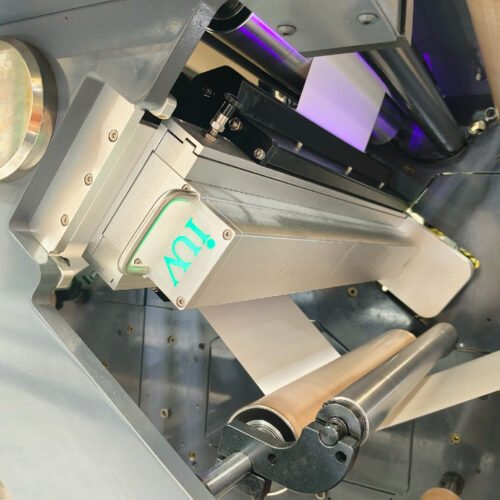
From an engineering perspective, manufacturers such as IUV place considerable emphasis on thermal management architecture, optical uniformity, and intelligent power regulation because these factors determine whether the theoretical UV dose calculated during system design is actually delivered on the production line.
How UV Dose Directly Influences Scratch Resistance
Scratch resistance is often evaluated only after labels leave the press, but the root cause is established during the curing process. In practical production, insufficient UV dose reduces the degree of polymer crosslinking, leaving the cured ink film softer than intended. Although the surface may appear fully cured, microscopic regions within the coating can remain partially polymerized. These areas become weak points when labels are subjected to friction during rewinding, die-cutting, transportation, or end-use handling.
A properly optimized UV LED curing equipment for the label industry: how UV dose influences ink adhesion and scratch resistance process creates a dense polymer structure with higher surface hardness and improved resistance to abrasion. Conversely, applying excessive UV dose is not always beneficial. Over-curing may increase film brittleness, particularly on flexible substrates that require repeated bending or stretching. Engineers therefore seek an optimal curing window rather than the maximum available energy output. The correct balance depends on ink chemistry, coating thickness, substrate characteristics, and production speed.
The interaction between UV dose and scratch resistance becomes even more critical in premium wine labels, cosmetic packaging, pharmaceutical labels, and industrial identification labels, where printed surfaces must withstand mechanical contact throughout converting and distribution. Stable curing conditions help maintain consistent quality without introducing unnecessary thermal stress.
Troubleshooting Ink Adhesion Problems in UV Label Printing
Poor adhesion rarely originates from a single factor. Instead, it is usually the result of several process variables acting together. When investigating adhesion failures, engineers first verify whether the delivered UV dose matches the curing requirements of the selected ink formulation. Measuring irradiance alone provides only part of the picture because total exposure energy is equally important.
Another common issue is improper wavelength compatibility between the UV LED curing system and the photoinitiator package. Some UV inks respond more efficiently to 385nm radiation, while others achieve higher conversion efficiency under 395nm LED systems. Selecting the appropriate wavelength improves curing depth without increasing unnecessary power consumption.
Surface contamination also influences adhesion. Films treated with silicone, residual processing lubricants, dust, or inconsistent corona treatment reduce surface energy and interfere with bonding between the cured ink and substrate. Even with sufficient UV dose, poor surface preparation may lead to tape-test failures or edge lifting after die cutting.
Temperature stability should also be monitored throughout production. Although UV LED curing generates significantly less radiant heat than conventional mercury lamps, fluctuating LED junction temperatures reduce optical efficiency. A stable cooling system maintains consistent irradiance, ensuring that UV dose remains within the required process window from the first roll to the last.
Production speed is another variable frequently overlooked during troubleshooting. Increasing press speed without recalculating exposure time effectively lowers UV dose. Many curing problems reported after production capacity upgrades are not caused by defective equipment but by process parameters that were never adjusted to match higher operating speeds.
Engineering Optimization for Reliable UV Curing Performance
Successful curing optimization combines process engineering with equipment capability. Rather than operating the curing system continuously at maximum power, experienced engineers establish process windows based on actual production requirements. Ink film thickness, substrate type, print coverage, ambient temperature, and curing sequence are evaluated together before determining the appropriate irradiance level.
Modern UV LED curing equipment equipped with intelligent power control allows irradiance adjustments according to production conditions instead of fixed output. This approach reduces unnecessary energy consumption while maintaining sufficient UV dose for complete polymerization. Dynamic control is particularly valuable in narrow web label printing where different colors, varnishes, primers, and opaque whites require different curing conditions within the same production run.
Optical uniformity across the curing width is equally important. Non-uniform energy distribution creates localized under-curing that may not be immediately visible but later appears as inconsistent adhesion or varying scratch resistance across the web. Precision optical design minimizes energy deviation and improves overall curing consistency.
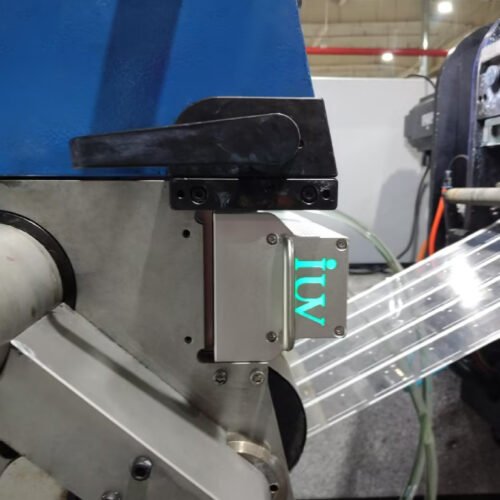
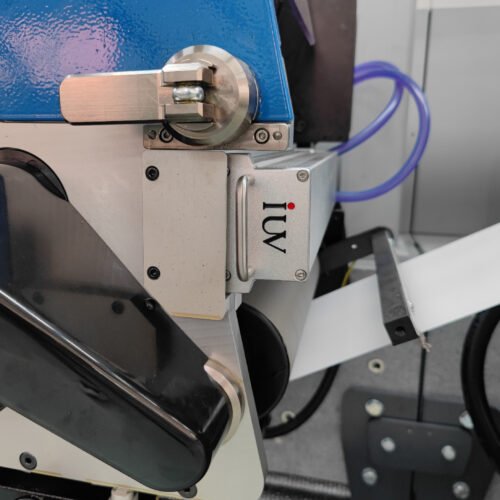
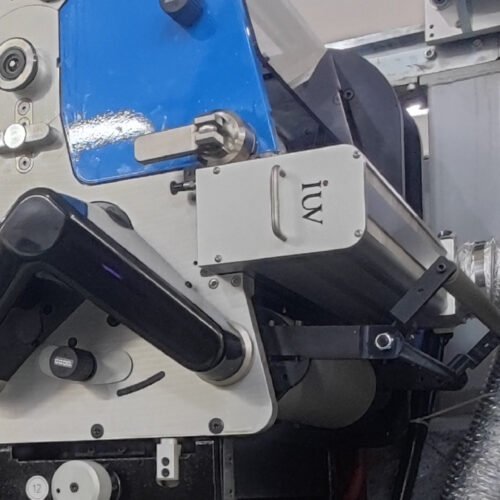
Equipment architecture also contributes to long-term production stability. Manufacturers such as IUV focus on water-cooled thermal management, intelligent power regulation, modular LED design, and uniform optical output to ensure that calculated UV dose closely matches the energy actually delivered to the substrate. From an engineering standpoint, maintaining repeatable curing conditions is more valuable than simply achieving higher peak irradiance.
UV LED Curing Continues to Improve Label Printing Productivity
As label converters continue increasing production speeds while processing thinner films and more demanding UV ink formulations, the relationship between UV dose and final print quality becomes increasingly important. Stable curing allows presses to operate at higher speeds without sacrificing adhesion, scratch resistance, or downstream converting performance.
Modern UV LED curing technology also contributes to cleaner production environments by eliminating ozone generation associated with conventional mercury UV lamps and significantly reducing heat exposure to sensitive materials. These characteristics improve substrate compatibility while reducing maintenance requirements and increasing overall process stability.
Future developments in UV LED curing equipment are expected to focus on real-time UV dose monitoring, intelligent process feedback, adaptive power regulation, and integration with Industry 4.0 manufacturing systems. These technologies will enable continuous optimization of curing conditions according to changing production parameters, helping converters achieve higher productivity while maintaining consistent print quality.
Conclusion
Understanding UV LED Curing Equipment for the Label Industry: How UV Dose Influences Ink Adhesion and Scratch Resistance requires more than selecting a high-power curing system. Reliable UV curing depends on the interaction between wavelength, UV dose, irradiance, exposure time, ink chemistry, substrate compatibility, oxygen inhibition, and thermal management. When these variables are properly balanced, converters achieve stronger ink adhesion, improved scratch resistance, greater production consistency, and more reliable long-term performance across flexographic, offset, and narrow web label printing applications.