As production speeds continue to increase in narrow web label printing, maintaining consistent print quality has become one of the most challenging tasks for flexographic printers. Many converters focus primarily on press mechanics, plate technology, anilox selection, and ink formulation, yet curing performance often determines whether high-speed production can achieve stable color reproduction, sharp image definition, strong adhesion, and long-term durability. This is why understanding how to improve print quality with UV LED in high-speed flexographic label printing applications has become increasingly important for production engineers and printing managers.
In modern flexographic printing, print quality is directly influenced by the efficiency of the UV curing process. When UV energy is insufficient, inks may appear visually acceptable immediately after printing but later develop issues such as poor adhesion, surface tackiness, color variation, reduced scratch resistance, and inconsistent gloss. Conversely, excessive thermal exposure can deform sensitive substrates, alter registration accuracy, and negatively affect image sharpness. The goal is not simply to cure the ink but to establish a stable and repeatable curing process that supports consistent production quality at high speeds.
Why UV LED Technology Improves Print Stability at High Production Speeds
When discussing how to improve print quality with UV LED in high-speed flexographic label printing applications, it is important to first understand the differences between conventional UV curing systems and modern UV LED curing technology.
Traditional UV systems generate a broad spectrum of ultraviolet energy together with significant infrared heat. While these systems can provide sufficient curing energy, the excess thermal load often creates process instability, particularly when printing pressure-sensitive labels, shrink sleeves, thin films, and other heat-sensitive materials.
A UV LED curing system operates within a narrow wavelength range, typically 365nm, 385nm, or 395nm. The concentrated wavelength output allows photoinitiators within UV inks to absorb energy more efficiently. Because UV LED systems generate substantially less infrared radiation, substrate temperature remains more stable throughout production.
This thermal stability contributes directly to print quality. Reduced heat minimizes substrate expansion, web distortion, and registration drift. In high-speed flexographic label printing applications, where even small dimensional changes can affect color-to-color registration, temperature control becomes a critical factor in maintaining print consistency.
The Importance of UV Dose and Energy Distribution
One of the most overlooked factors in print quality improvement is UV dose management. Many operators focus solely on lamp power or irradiance levels, assuming higher intensity automatically produces better curing. In reality, print quality depends on the balance between irradiance, exposure time, and total energy density.
At production speeds exceeding 100 m/min or even 200 m/min, substrate exposure time beneath the curing unit becomes extremely short. To compensate, the UV LED curing system must deliver sufficient irradiance while maintaining uniform energy distribution across the entire web width.
When engineers analyze how to improve print quality with UV LED in high-speed flexographic label printing applications, they often discover that inconsistent energy distribution causes localized curing variations. Areas receiving insufficient UV dose may exhibit lower adhesion and reduced resistance to abrasion, while overexposed regions can become brittle.
Uniform curing across the web ensures consistent polymerization of UV inks, resulting in predictable color density, improved gloss consistency, and better mechanical performance of the printed label.
UV Ink Chemistry and Its Influence on Print Quality
The curing process is fundamentally a chemical reaction. UV inks contain photoinitiators that absorb ultraviolet energy and trigger polymerization. The effectiveness of this reaction depends on the compatibility between the UV LED wavelength and the absorption characteristics of the photoinitiator package.
Understanding this interaction is essential when evaluating how to improve print quality with UV LED in high-speed flexographic label printing applications. If the wavelength is poorly matched to the ink chemistry, polymerization efficiency decreases, resulting in incomplete curing despite apparently adequate lamp power.
High-opacity white inks present a particularly demanding challenge. The titanium dioxide pigments commonly used in white ink scatter UV energy, limiting penetration into deeper ink layers. In such situations, wavelength selection, UV dose optimization, and curing system design become critical factors affecting print quality.
Properly cured white ink improves opacity, enhances color reproduction of subsequent layers, and provides a stable foundation for high-quality label production.
Managing Oxygen Inhibition for Better Surface Cure
Oxygen inhibition remains one of the most common causes of surface curing defects in UV printing. Oxygen molecules interfere with the free-radical polymerization process occurring at the ink surface, reducing cure efficiency even when deeper portions of the ink layer have fully polymerized.
This phenomenon often appears as reduced gloss, poor scratch resistance, or surface tackiness. Operators may mistakenly attribute these issues to ink formulation when the actual cause is inadequate surface curing.
When implementing UV LED curing technology, careful optimization of irradiance levels and curing conditions helps minimize oxygen inhibition. The result is a smoother cured surface, improved rub resistance, and enhanced visual appearance.
In high-speed label printing applications, eliminating surface curing inconsistencies can significantly improve overall print quality and reduce waste caused by finishing defects.
Material Compatibility and Dimensional Stability
Many modern label applications utilize increasingly thin and sensitive substrates, including PET films, polypropylene films, polyethylene materials, and specialized packaging stocks. These substrates often react negatively to excessive heat exposure.
A major advantage of UV LED technology is its ability to maintain lower substrate temperatures during curing. This characteristic plays a significant role in how to improve print quality with UV LED in high-speed flexographic label printing applications.
Lower thermal impact helps maintain web stability throughout the printing process. Stable substrates improve registration accuracy, reduce tension-related defects, and support consistent print dimensions during converting operations such as laminating, die-cutting, and slitting.
Improved dimensional stability also contributes to sharper graphics, cleaner text reproduction, and more accurate barcode printing.
Troubleshooting Common Print Quality Issues
When evaluating print defects in UV label production, curing performance should always be considered alongside mechanical press settings. Problems such as poor adhesion, inconsistent color density, reduced scratch resistance, and variable gloss frequently originate from insufficient UV dose rather than printing mechanics.
Engineers typically begin by measuring irradiance, energy density, curing distance, and substrate temperature. Ink layer thickness must also be evaluated because thicker ink deposits require higher curing energy to achieve complete polymerization.
Many production facilities upgrading from traditional UV technology to UV LED systems discover that optimizing curing parameters allows them to improve print quality while simultaneously reducing energy consumption and maintenance requirements.
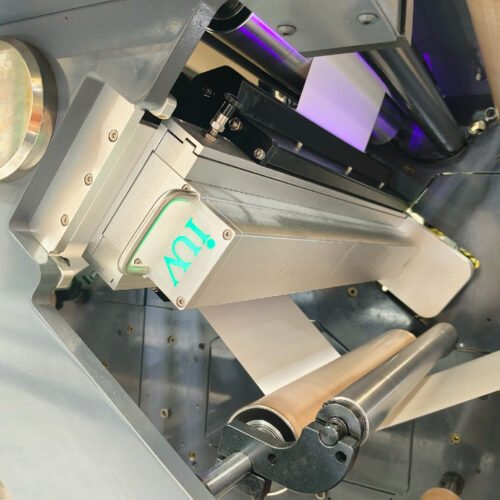
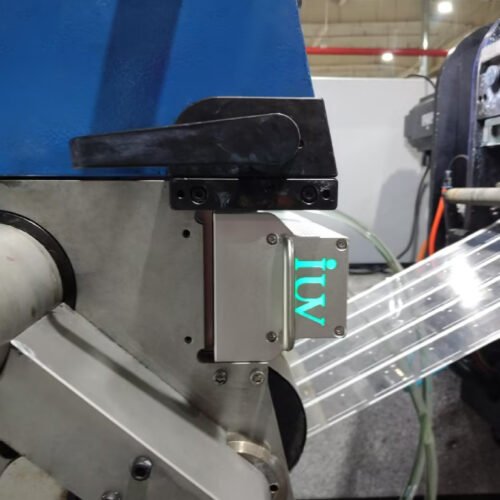
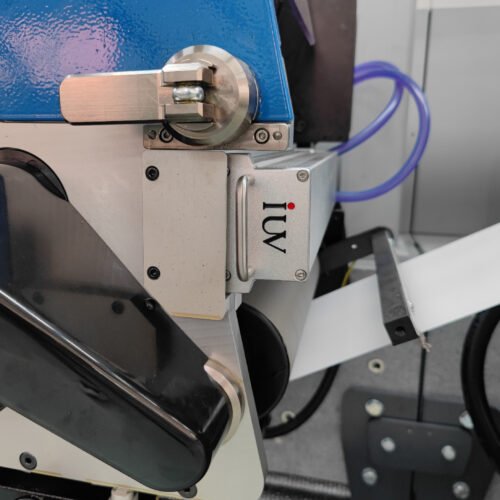
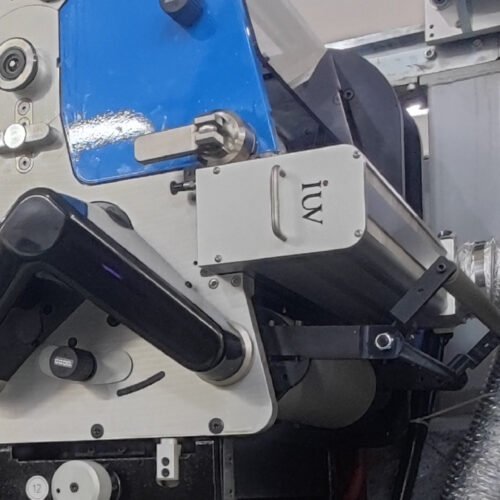
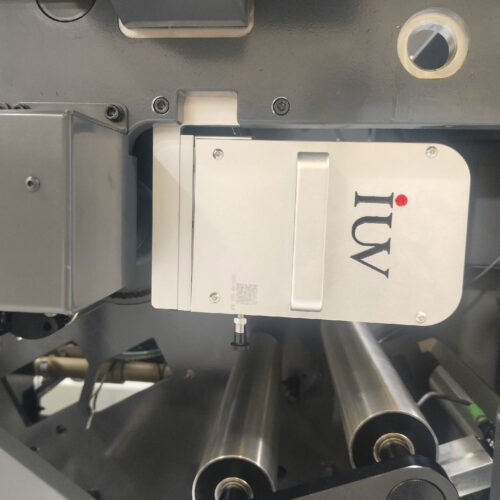
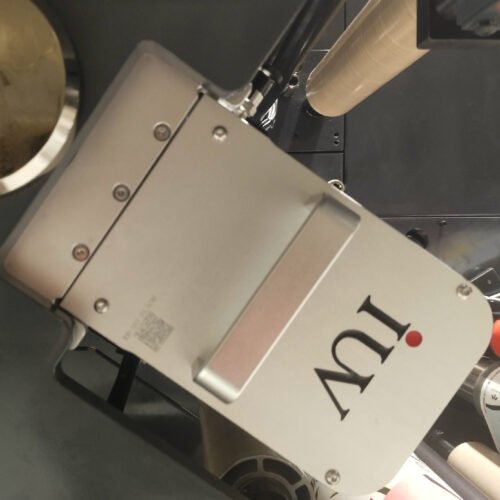
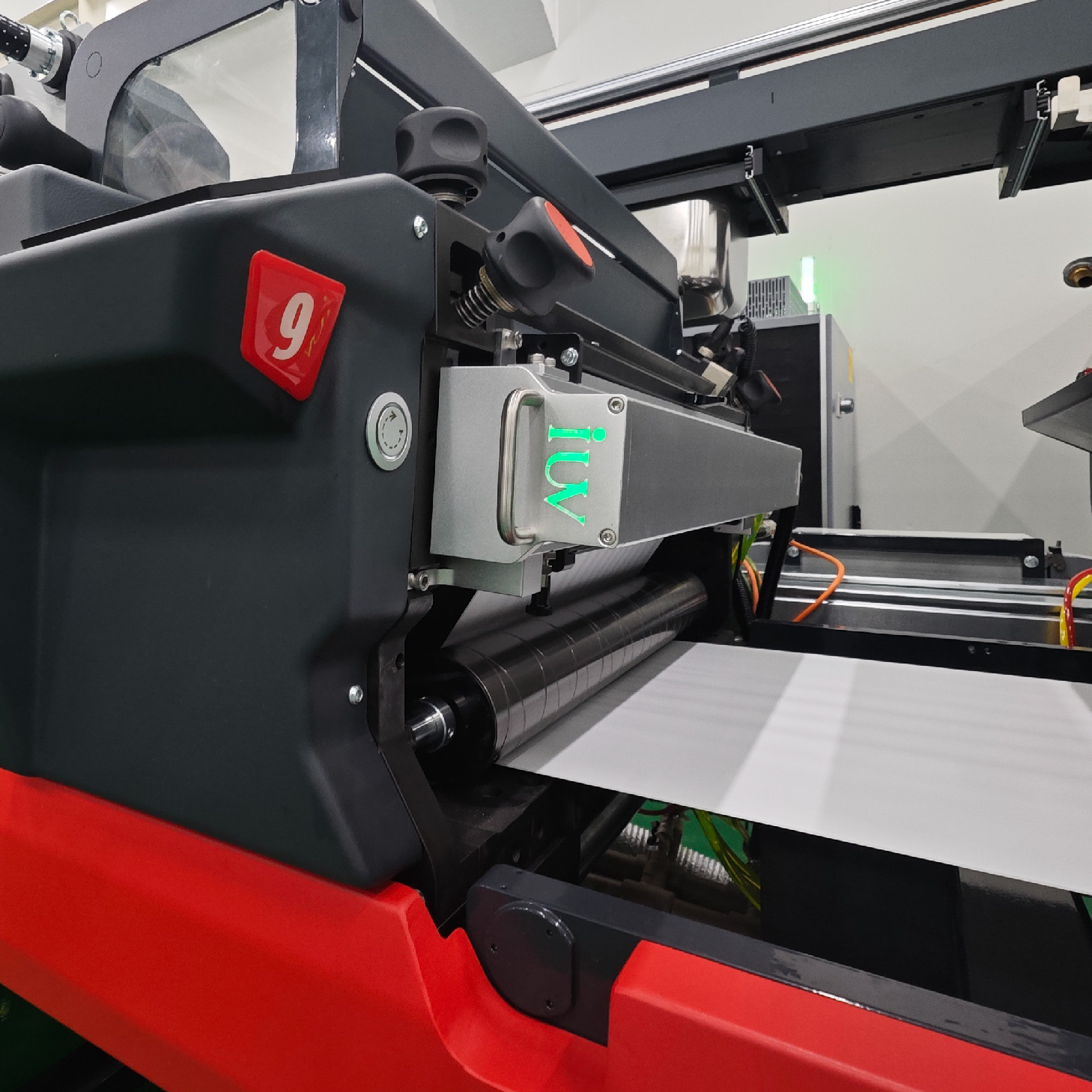
Modern industrial UV LED curing systems, including advanced solutions developed by IUV, incorporate intelligent power regulation, thermal management technology, automatic width sensing, and real-time monitoring functions. These features help maintain stable curing conditions during long production runs, supporting consistent print quality even under demanding operating conditions.
Conclusion
Understanding how to improve print quality with UV LED in high-speed flexographic label printing applications requires more than simply installing a new curing system. Print quality depends on the interaction between UV wavelength, irradiance, UV dose, ink chemistry, substrate characteristics, temperature control, and production speed.
When these factors are properly optimized, UV LED curing technology delivers highly consistent polymerization, improved ink adhesion, enhanced scratch resistance, stable color reproduction, and superior dimensional control. For modern narrow web label printers operating at increasingly high speeds, UV LED technology provides a practical engineering solution for achieving higher print quality while maintaining reliable production efficiency and process stability.