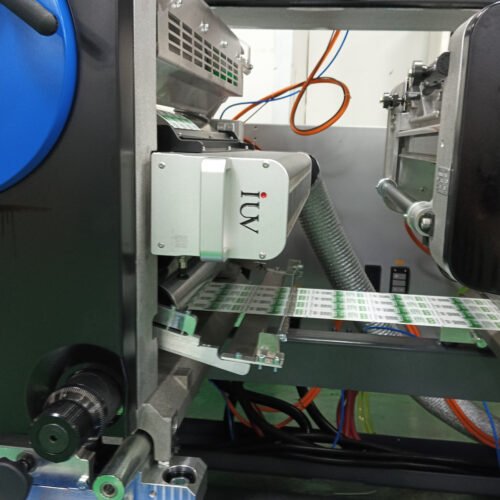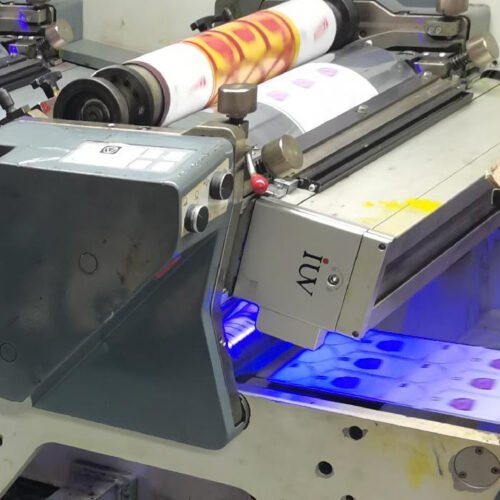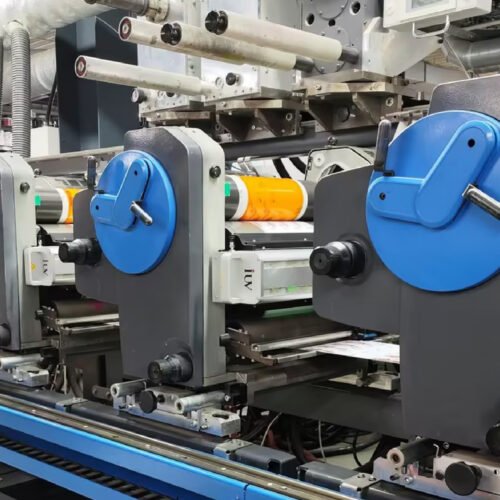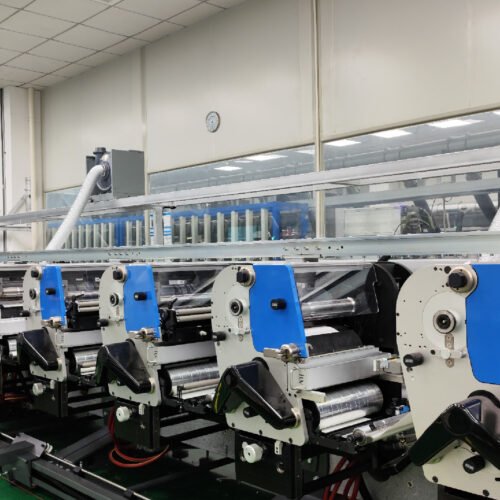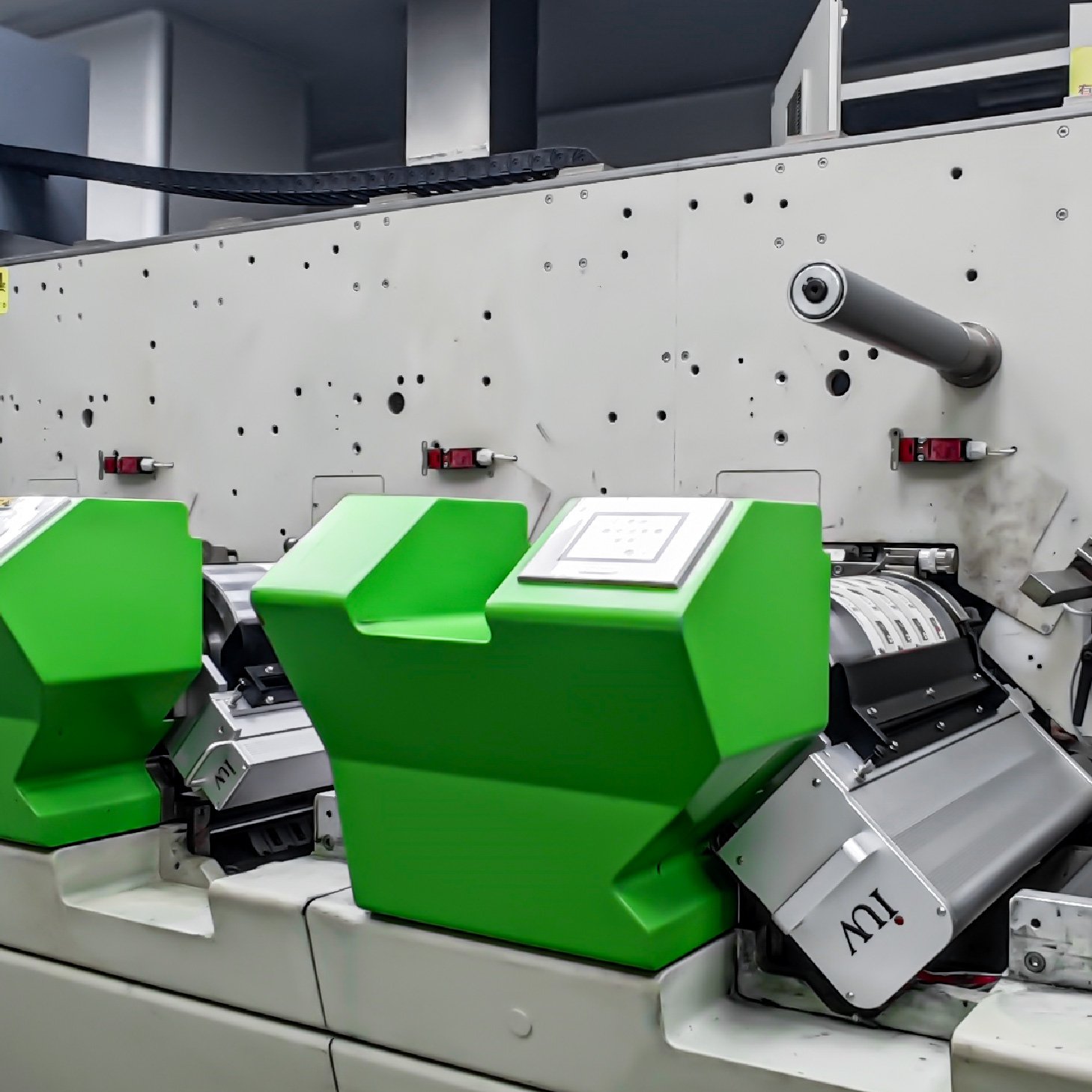
n modern UV label production lines, scratch resistance is no longer treated as a simple surface property but as a direct indicator of curing completeness, polymer network density, and UV dose efficiency. In high-speed narrow web flexographic printing, labels are exposed to mechanical friction immediately after printing during rewinding, die cutting, and packaging. Within this environment, Scratch Resistance Enhancement Using Retrofit UV LED System in UV Label Production becomes a process engineering topic that connects UV curing physics, ink chemistry, and substrate interaction.
In traditional mercury-based UV systems, scratch resistance was often achieved by applying excess UV energy and relying on thermal contribution from infrared radiation. While this approach could improve surface hardness, it also introduced variability due to substrate heating and inconsistent spectral efficiency. Retrofit UV LED systems fundamentally change this behavior by removing thermal compensation and relying purely on controlled wavelength-driven photopolymerization.
UV curing mechanism and surface hardness formation
UV curing technology in label printing is based on free radical polymerization, where photoinitiators absorb UV photons and generate reactive radicals that form a crosslinked polymer network. Scratch resistance is directly related to the density and uniformity of this crosslinked structure.
In Scratch Resistance Enhancement Using Retrofit UV LED System in UV Label Production, the key parameter is not simply UV power but effective UV dose delivered within the absorption range of the photoinitiator system. LED UV curing systems typically operate at narrow wavelengths such as 385 nm or 395 nm, which improves energy concentration but requires precise matching with UV ink chemistry.
If the photoinitiator package is not optimized for LED wavelength, polymerization may occur only at the surface. This creates a hardened top layer with insufficient internal crosslinking, which paradoxically reduces scratch resistance under real mechanical stress conditions such as label rubbing or transport abrasion.
UV dose distribution and mechanical durability
In narrow web label printing, UV dose is constrained by high line speeds and short exposure times. In flexographic printing environments running above 150 m/min, curing must occur within milliseconds. Under these conditions, scratch resistance depends heavily on how efficiently UV photons are converted into chemical bonding energy.
In Scratch Resistance Enhancement Using Retrofit UV LED System in UV Label Production, LED systems improve dose consistency because they deliver stable irradiance without warm-up fluctuation. However, improving scratch resistance is not achieved by increasing irradiance alone. Excessive surface curing can create a brittle polymer layer that fractures under mechanical stress, especially in flexible packaging labels.
True improvement in scratch resistance requires balanced bulk curing. This means UV light must penetrate sufficiently into the ink layer to ensure uniform crosslink density throughout the film thickness, not just at the surface interface.
Oxygen inhibition and surface cure instability
One of the most important hidden factors affecting scratch resistance is oxygen inhibition. Oxygen molecules interfere with radical polymerization at the ink surface, reducing crosslink formation and weakening mechanical hardness.
In mercury UV systems, higher infrared energy sometimes masks oxygen inhibition effects by accelerating surface reaction kinetics. In LED UV systems used in Scratch Resistance Enhancement Using Retrofit UV LED System in UV Label Production, this masking effect disappears, making oxygen inhibition more visible as micro-tackiness or reduced abrasion resistance.
This is frequently misinterpreted in production environments as insufficient UV power, when in reality the issue is incomplete surface polymerization caused by oxygen diffusion into the reactive layer. Adjustments in UV ink chemistry, such as optimized photoinitiator concentration or amine synergist balance, often provide better results than increasing LED intensity.
Ink formulation and UV polymer network structure
Scratch resistance is fundamentally determined by the structure of the UV-cured polymer network. In label production, ink systems typically include oligomers, monomers, photoinitiators, and additives that control flexibility and hardness.
In Scratch Resistance Enhancement Using Retrofit UV LED System in UV Label Production, LED UV curing exposes weaknesses in ink formulation because it removes thermal softening effects that previously masked insufficient crosslinking. Mercury systems often created partial thermal curing, which could improve perceived adhesion but did not guarantee chemical resistance.
LED systems, by contrast, produce a more defined polymerization profile. This improves repeatability but requires ink systems designed specifically for LED wavelength absorption. Without proper formulation, scratch resistance may actually decrease despite higher energy efficiency.
Thermal control and substrate behavior
In flexographic label printing, substrate selection includes coated paper, PET, BOPP, and specialty films. Each material responds differently to UV exposure and temperature.
Mercury UV systems introduce significant thermal load, which can temporarily soften ink layers and substrates, giving a false impression of improved scratch resistance immediately after curing. However, this effect is unstable and varies with press speed and environmental conditions.
LED UV systems used in Scratch Resistance Enhancement Using Retrofit UV LED System in UV Label Production eliminate most infrared radiation, leading to lower substrate temperature and more stable mechanical properties. This improves long-term scratch resistance consistency but removes thermal assistance that some older formulations relied on.
As a result, scratch resistance becomes a purely chemical property rather than a thermally assisted one.
UV LED wavelength stability and curing consistency
Wavelength stability is a critical factor in maintaining consistent scratch resistance. LED UV systems depend on semiconductor junction temperature, which directly influences emission wavelength. Even small shifts in wavelength can reduce photoinitiator activation efficiency, leading to undercured regions within the ink film.
In Scratch Resistance Enhancement Using Retrofit UV LED System in UV Label Production, improper thermal management can therefore lead to inconsistent hardness across production runs. This is often observed as variability in abrasion resistance between early and late production batches.
Maintaining stable cooling systems and controlled airflow is essential to ensure consistent UV dose efficiency and reliable polymer network formation.
Material compatibility and real-world abrasion performance
Scratch resistance in UV labels is ultimately tested during real-world handling, including packaging, transport, and application. Inconsistent curing often leads to surface scuffing, gloss variation, or ink transfer under friction.
LED UV systems improve reproducibility by stabilizing curing conditions, but they also require tighter control of UV ink chemistry and substrate surface energy. In Scratch Resistance Enhancement Using Retrofit UV LED System in UV Label Production, adhesion failure is often not caused by insufficient energy but by mismatched curing depth and polymer flexibility.
A well-optimized LED UV process ensures that scratch resistance is achieved through uniform crosslink density rather than surface hardening alone.