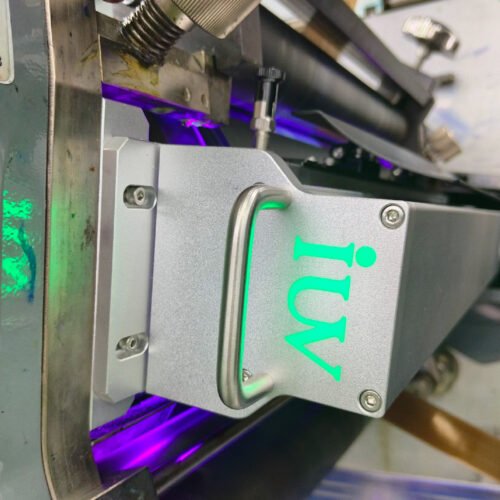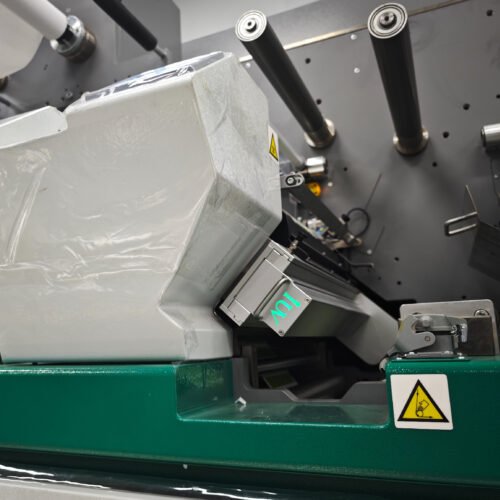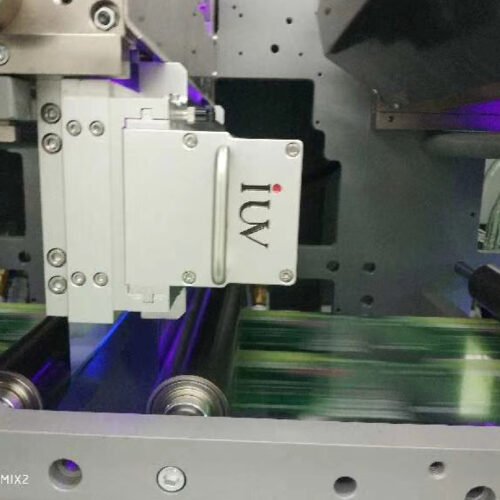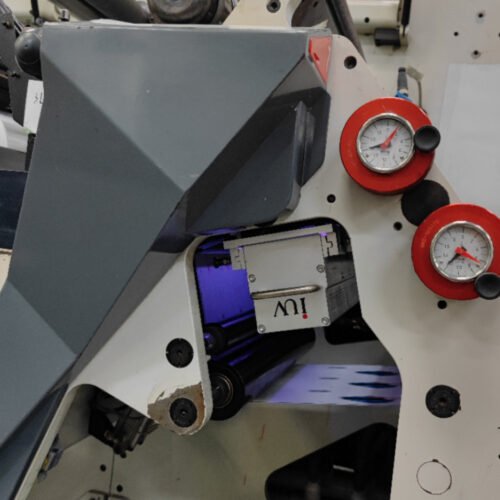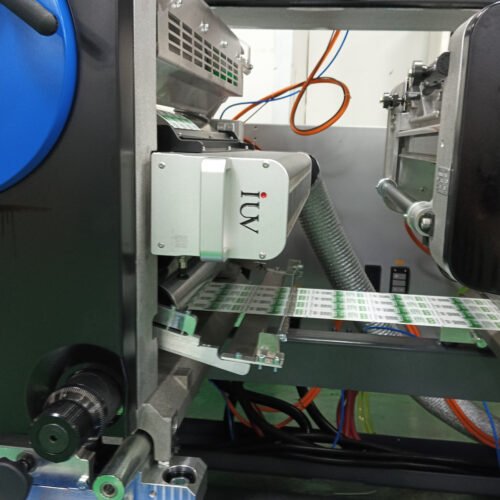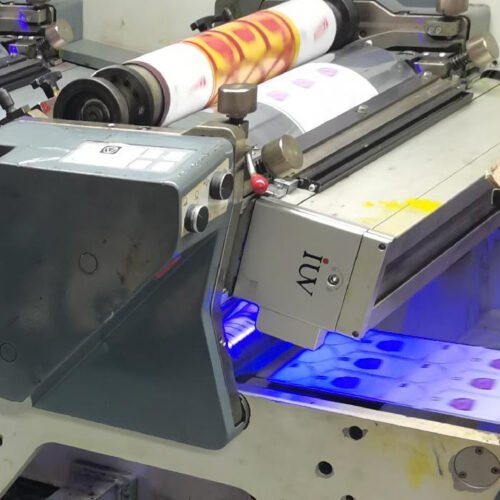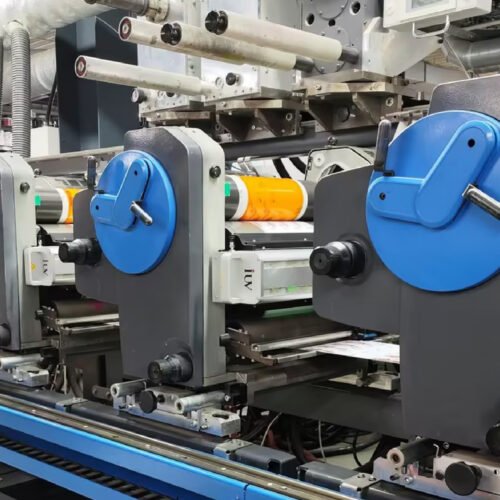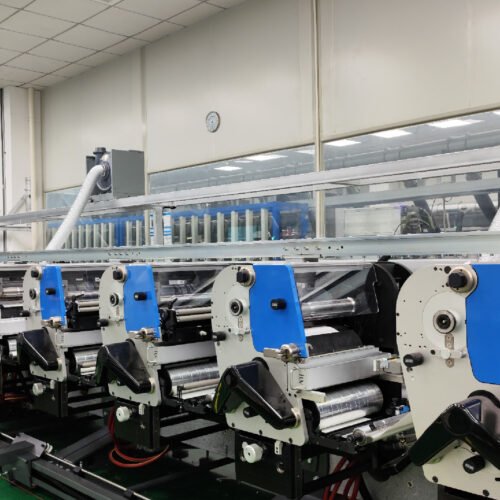
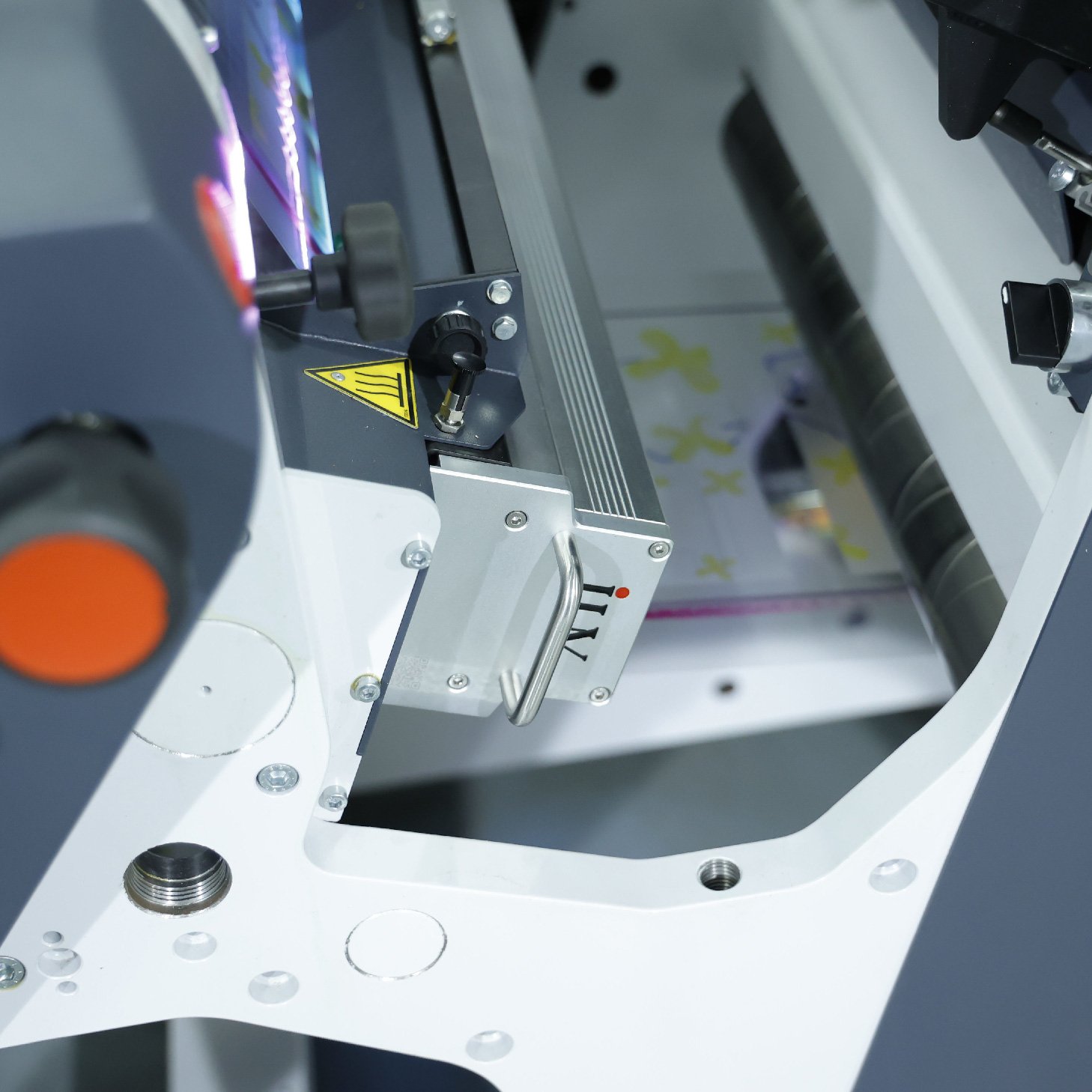
In industrial printing environments, retrofit UV LED integration is often approached as a straightforward replacement of traditional mercury curing units. In reality, the process is considerably more complex, especially when offset printing workflows intersect with flexographic press technology in hybrid production lines. The topic of Offset Printing Integration Challenges with Retrofit UV LED System for Flexographic Press Technology is fundamentally an engineering problem involving curing physics, thermal behavior, control synchronization, and material compatibility across multiple print technologies.
In modern packaging and label production, hybrid presses combining offset printing and flexographic printing are increasingly common. Offset units are frequently used for high-resolution graphics, while flexographic stations handle coatings, whites, varnishes, and specialty applications. Retrofitting these systems with LED UV curing technology introduces integration challenges that extend far beyond simple lamp replacement.
Spectral compatibility and UV ink chemistry limitations
The first major challenge in Offset Printing Integration Challenges with Retrofit UV LED System for Flexographic Press Technology is spectral compatibility between the retrofit LED system and the existing UV ink chemistry used across offset and flexographic stations.
Traditional mercury UV systems emit broadband radiation that covers multiple wavelength peaks. This broad emission profile allows older UV ink formulations to polymerize even when photoinitiator absorption efficiency is relatively poor. Retrofit LED UV systems operate differently. Their energy output is concentrated within a narrow wavelength range, typically 385 nm or 395 nm, requiring precise photoinitiator matching.
In offset printing sections, ink layers are generally thinner but highly pigmented. In flexographic stations, thicker coatings and opaque whites are common. These two printing technologies therefore react differently to narrow-spectrum UV energy.
When retrofit UV LED systems are installed without reformulating UV ink chemistry, operators frequently observe inconsistent cure behavior between offset and flexographic units. Surface curing may appear acceptable while internal polymerization remains incomplete, leading to poor UV ink adhesion, blocking issues, or reduced scratch resistance during downstream converting.
UV dose balancing between offset and flexographic units
UV dose management becomes significantly more complicated in hybrid press environments. Offset printing requires precise surface curing to preserve dot structure and print sharpness, while flexographic printing often requires deeper penetration for coatings and high-opacity inks.
In Offset Printing Integration Challenges with Retrofit UV LED System for Flexographic Press Technology, one of the most common engineering problems is balancing UV dose distribution across stations with fundamentally different curing demands.
Mercury systems partially compensated for these differences through excessive broadband energy and thermal output. LED UV systems are less forgiving because curing efficiency depends more directly on wavelength optimization and photoinitiator response.
At high press speeds, exposure time decreases rapidly. This makes wavelength efficiency more important than raw irradiance. Operators sometimes increase LED power to compensate for incomplete curing, but excessive irradiance can create over-surface curing while still leaving insufficient bulk polymerization underneath.
This problem is especially visible in matte coatings, dense black areas, and opaque white inks commonly used in packaging and label printing.
Thermal behavior and mechanical integration constraints
One of the major motivations for retrofit UV LED conversion is thermal reduction. Mercury lamps generate large amounts of infrared radiation, increasing substrate temperature and creating dimensional instability in synthetic materials such as PET, PE, and shrink films.
However, thermal reduction also changes press dynamics. In Offset Printing Integration Challenges with Retrofit UV LED System for Flexographic Press Technology, older flexographic and offset press architectures were often designed around the thermal characteristics of mercury lamps.
When thermal load decreases significantly after LED retrofit, web tension behavior can change unexpectedly. Materials that previously expanded slightly under heat may now remain dimensionally tighter, affecting register consistency and tension calibration.
Mechanical space limitations also become a critical issue. Retrofit UV LED modules often require different cooling architectures and mounting geometry compared to mercury systems. In older narrow web printing lines, insufficient cooling airflow or poor heat dissipation can destabilize LED junction temperature.
This directly affects wavelength stability. Even small wavelength drift can reduce photoinitiator activation efficiency and destabilize curing consistency across long production runs.
Control system synchronization and production automation
Modern LED UV curing systems rely heavily on synchronized electronic control. Unlike mercury lamps, which operate continuously at stable output, LED systems are dynamically modulated according to press speed and job parameters.
In Offset Printing Integration Challenges with Retrofit UV LED System for Flexographic Press Technology, integrating retrofit LED systems into older press control architecture often creates communication and synchronization problems.
Older flexographic presses may lack high-speed signal communication required for real-time UV modulation. As a result, UV dose may fluctuate during acceleration, deceleration, or intermittent production conditions.
This becomes particularly problematic in hybrid offset-flexographic workflows where print units respond differently to changing curing conditions. Offset sections are highly sensitive to ink-water balance and surface polymerization behavior, while flexographic units are more affected by coating thickness and substrate absorption characteristics.
Without proper synchronization, cure consistency between print stations becomes unstable, increasing waste and reducing production predictability.
Oxygen inhibition and surface cure instability
Oxygen inhibition remains one of the most important process challenges after retrofit conversion. Oxygen molecules interfere with free radical polymerization at the ink surface, especially in thin ink films typical of offset printing.
Mercury systems often masked this effect through higher thermal energy and broad-spectrum emission. After conversion to LED UV technology, oxygen inhibition becomes more visible because polymerization efficiency depends more directly on precise wavelength delivery.
In Offset Printing Integration Challenges with Retrofit UV LED System for Flexographic Press Technology, operators frequently encounter situations where printed surfaces appear visually cured but still exhibit low chemical resistance or poor adhesion during lamination.
This is particularly common in offset printing sections using older UV ink formulations not optimized for LED wavelength response. The issue is not insufficient power alone, but incomplete photochemical activation caused by spectral mismatch.
Material compatibility and adhesion performance
Hybrid printing environments process a wide variety of substrates, including coated paper, synthetic films, metallized materials, and flexible packaging laminates. Each material interacts differently with UV energy and thermal conditions.
In retrofit LED environments, material compatibility becomes more sensitive because thermal compensation from mercury systems is removed. Adhesion behavior is now controlled more by polymerization quality than by substrate heating effects.
In Offset Printing Integration Challenges with Retrofit UV LED System for Flexographic Press Technology, poor adhesion is frequently linked to insufficient crosslink density rather than inadequate irradiance. This distinction is critical because increasing power output alone may not solve the problem.
Correct optimization requires balancing UV wavelength, photoinitiator chemistry, ink thickness, and substrate surface energy simultaneously.
Long-term production efficiency and operational stability
Although retrofit LED systems significantly reduce energy consumption and maintenance requirements, their long-term efficiency depends heavily on integration quality. Poor thermal management, incompatible UV ink chemistry, and unstable control synchronization can reduce the expected operational benefits.
Successful implementation of Offset Printing Integration Challenges with Retrofit UV LED System for Flexographic Press Technology requires treating LED conversion as a complete process redesign rather than a component replacement project.
In industrial printing environments, curing stability directly affects print quality consistency, waste generation, production uptime, and downstream converting performance. The engineering challenge is therefore not simply achieving curing, but achieving predictable and repeatable polymerization behavior across mixed printing technologies.