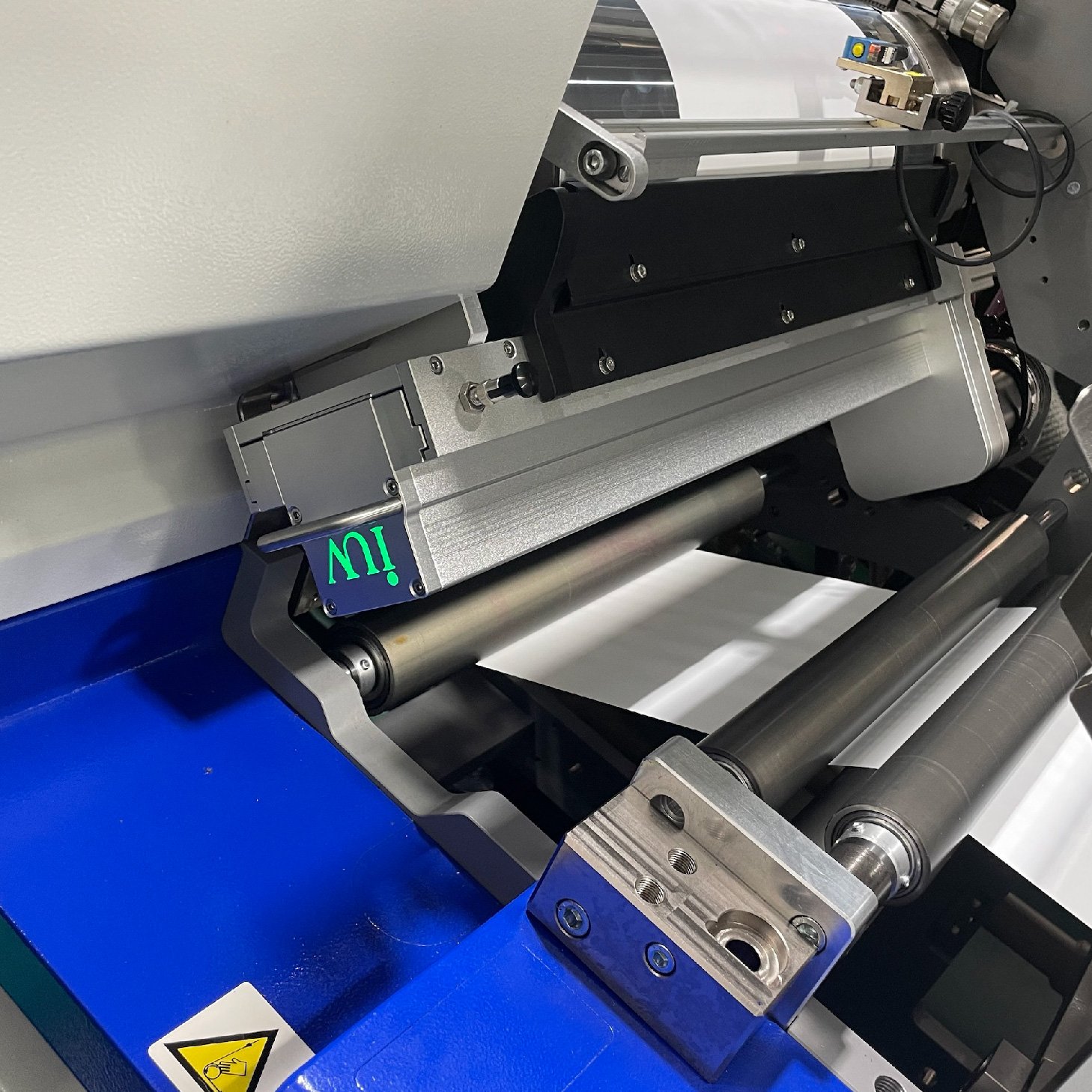
Ink adhesion failure remains one of the most frequent and technically misunderstood issues in UV flexographic printing and offset printing lines, especially in narrow web label production and high-speed packaging environments. From an engineering perspective, the root cause is rarely a single factor. In most real production cases, adhesion problems are the result of a mismatch between UV curing technology parameters and UV ink chemistry behavior under dynamic press conditions.
In UV LED curing systems, polymerization is driven by photoinitiators activated at specific wavelengths such as 365 nm, 385 nm, or 395 nm. When the UV LED curing system output, UV dose, and ink formulation are not properly aligned, the crosslinking reaction remains incomplete, even if the surface appears dry. This is where many operators misdiagnose the issue as an “ink problem,” when in fact it is often a system-level curing imbalance.
In practical UV flexo and offset printing applications, UV LED curing system OEM manufacturer troubleshooting ink adhesion problems in UV flexo and offset printing applications begins with understanding how UV dose is formed. UV dose is not simply power; it is the integration of irradiance and exposure time, which is directly affected by press speed, lamp distance, reflector geometry, and substrate reflectivity. When press speeds increase in narrow web printing, the exposure window becomes extremely short, and any instability in UV output immediately impacts adhesion performance.
One of the most critical but often underestimated variables is oxygen inhibition. In UV ink chemistry, free radical polymerization can be significantly slowed at the surface due to oxygen interference. This leads to a partially cured top layer even when bulk curing seems acceptable. In label printing, this typically manifests as poor scratch resistance or delamination during finishing processes such as die cutting or lamination.
Another major factor is substrate compatibility. Films such as BOPP, PET, and PE have low surface energy, which directly reduces UV ink adhesion if the surface is not sufficiently activated or if UV dose distribution is uneven. In offset printing systems, where ink film thickness is more uniform but often thinner than flexo, insufficient UV energy density can lead to under-cured ink layers that fail adhesion testing after 24–48 hours.
In field diagnostics, UV LED curing system OEM manufacturer troubleshooting ink adhesion problems in UV flexo and offset printing applications should always begin with spectral verification. If the LED emission peak does not match the photoinitiator absorption curve, curing efficiency drops sharply even at high nominal power. This mismatch is especially common when older ink formulations are used with modern 385 nm or 395 nm LED systems.
Temperature control also plays a more subtle role than many operators expect. Unlike mercury UV systems, LED UV systems generate lower infrared heat, which improves substrate stability but can also reduce reactive mobility in some high-viscosity UV inks. In certain packaging printing applications, this results in incomplete flow leveling before gelation, which indirectly affects adhesion strength.
From an engineering troubleshooting standpoint, the most reliable diagnostic sequence is to evaluate UV dose stability first, followed by wavelength alignment, then ink rheology, and finally substrate surface energy. In many real production cases, adhesion failure is resolved not by increasing power, but by optimizing exposure geometry and stabilizing UV LED curing system output consistency across the full web width.
In modern narrow web printing environments, high-speed operation introduces another constraint: dynamic UV dose variation. Even small fluctuations in web tension or distance from the UV LED curing system can create localized under-cured zones. These weak points are often invisible during production but become critical during rewinding, slitting, or end-use stress testing.
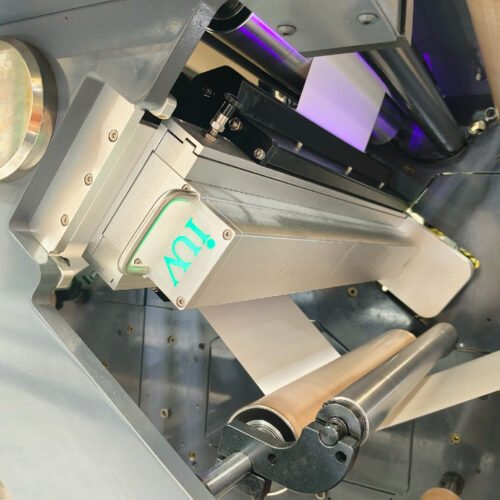
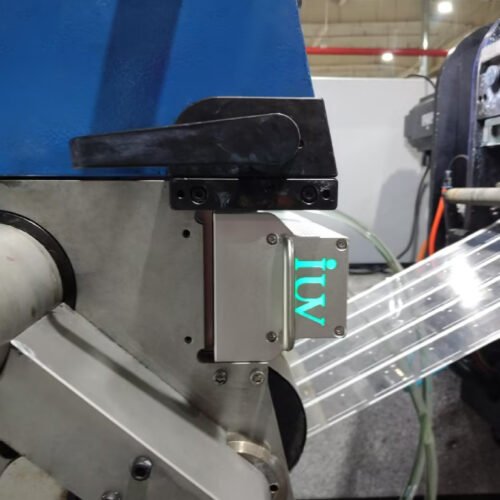
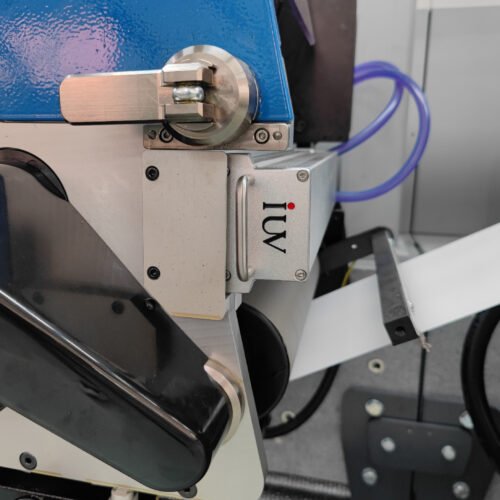
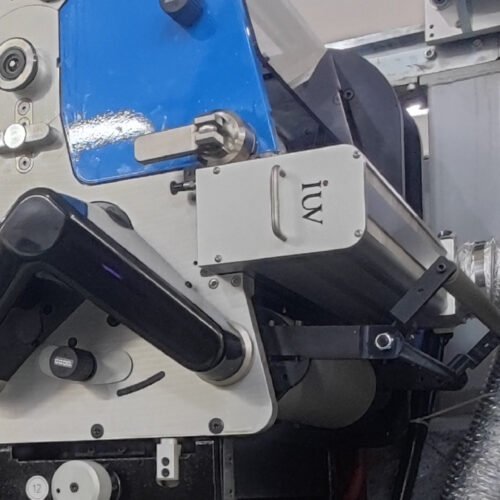
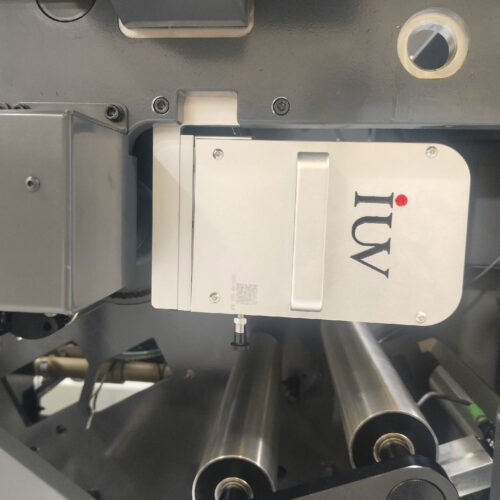
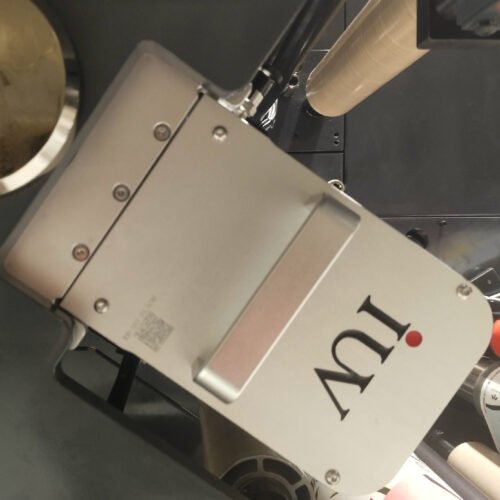
A practical solution frequently implemented in industrial setups, including systems engineered by IUV, involves closed-loop UV intensity monitoring combined with thermal stabilization of the LED array. By maintaining consistent wavelength output and controlling junction temperature, the UV dose remains stable even under variable press speeds. This directly improves UV ink adhesion reliability across different substrates and ink systems.
It is also important to consider ink formulation evolution. Modern UV ink systems are increasingly optimized for LED curing, but older formulations designed for broad-spectrum mercury lamps may not fully respond to narrow-band LED emission. In such cases, UV LED curing system OEM manufacturer troubleshooting ink adhesion problems in UV flexo and offset printing applications often requires collaborative adjustment between ink supplier and curing system parameters rather than mechanical press changes alone.
In offset printing, adhesion failures often appear after post-processing steps such as varnishing or foil stamping. This indicates marginal curing rather than complete failure. The UV dose may be sufficient for surface dry-to-touch conditions, but insufficient for deep crosslink density required for chemical resistance. Increasing energy alone is not always effective; improving exposure uniformity and wavelength matching typically produces more stable results.
Ultimately, ink adhesion in UV systems is not a single-variable problem but a system interaction between UV curing technology, ink chemistry, energy distribution, oxygen exposure, and substrate physics. A structured engineering approach that evaluates each parameter under real press conditions is the only reliable method to eliminate recurring failures.
UV LED systems have fundamentally changed the stability profile of UV curing in flexo and offset printing. When properly integrated and tuned, they provide not only lower energy consumption but also significantly improved process repeatability. However, without correct system-level troubleshooting methodology, even advanced UV LED curing system OEM manufacturer troubleshooting ink adhesion problems in UV flexo and offset printing applications can still occur.