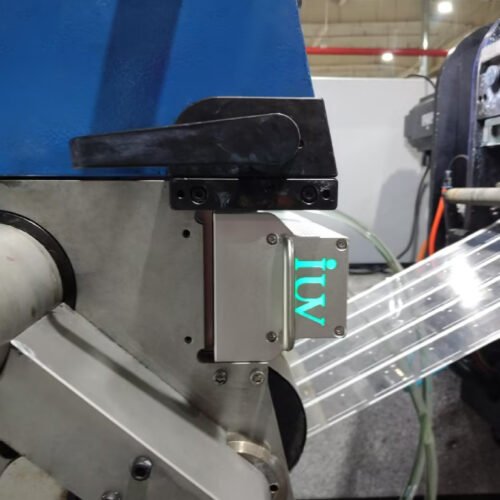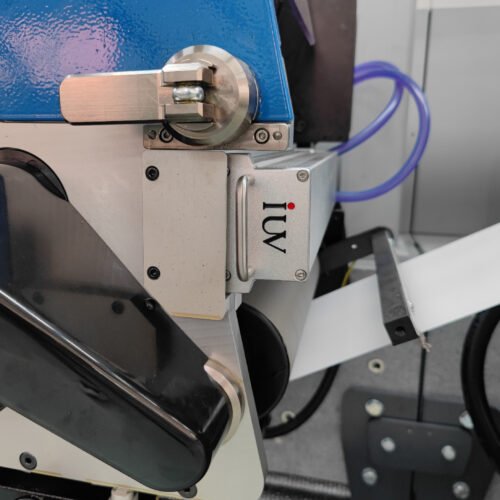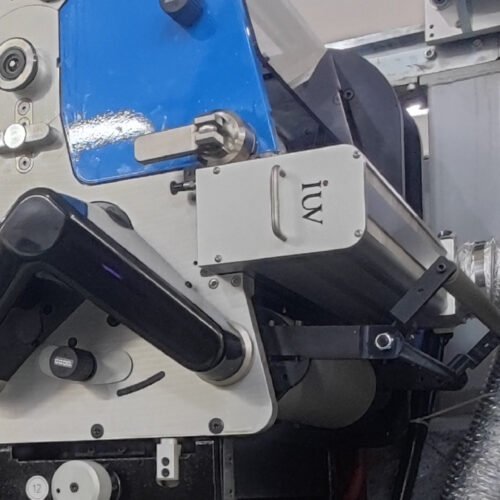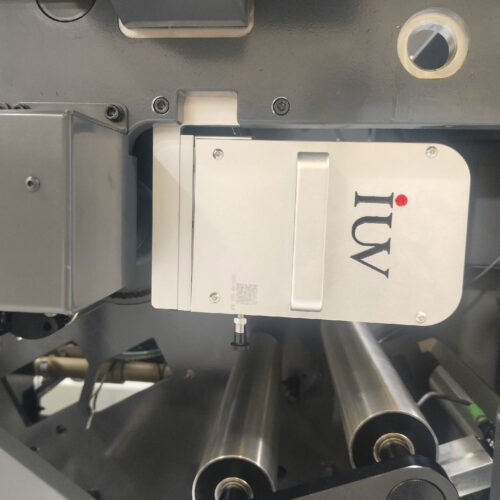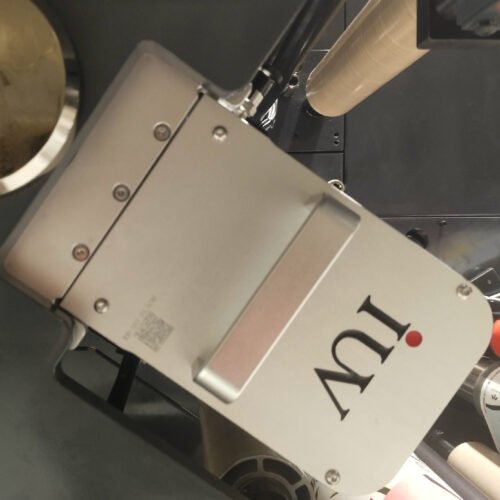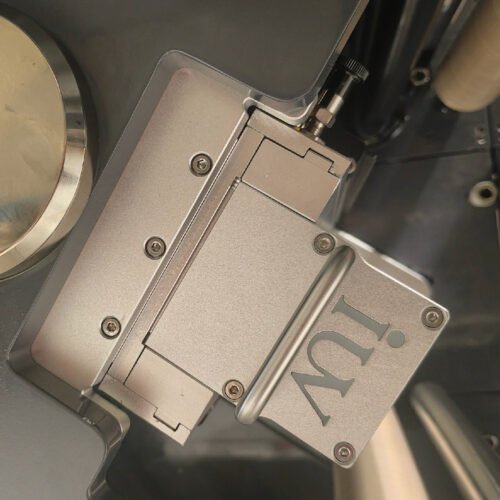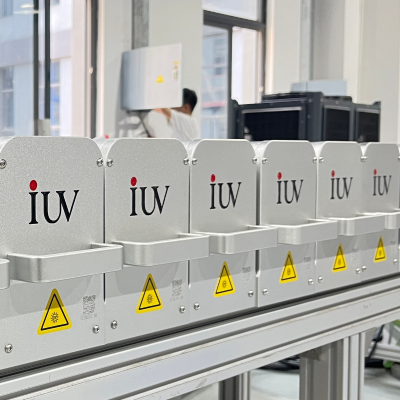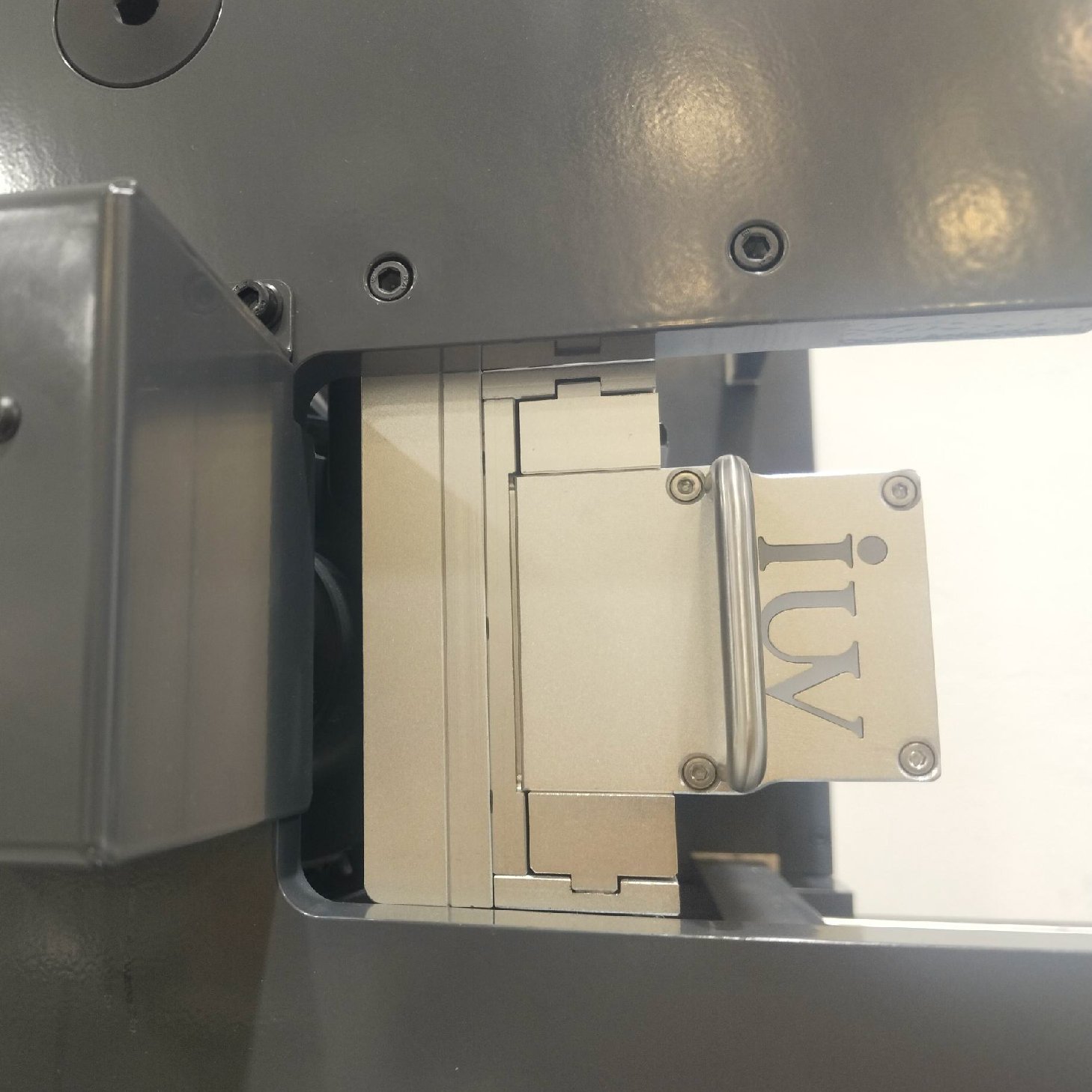
In modern label printing and packaging printing environments, production speed continues to increase as converters seek higher throughput and shorter delivery times. Flexographic printing, offset printing, and narrow web printing lines that once operated at moderate speeds are now expected to maintain stable print quality while running significantly faster. While press manufacturers continue improving mechanical performance, many curing-related problems still originate from a mismatch between UV output and press velocity.
In production, operators often notice that a job cures properly at 50 m/min but begins exhibiting adhesion failures, ink transfer, or surface tackiness when speed increases to 120 m/min or higher. The immediate assumption is frequently that the UV system lacks power. However, curing performance is influenced by a more complex interaction between irradiance, wavelength selection, exposure time, curing penetration, substrate characteristics, and ink chemistry. Understanding how these variables interact is essential for maintaining stable curing performance under high-speed printing conditions.
When Increasing Press Speed Reduces Effective Curing Energy
One of the most commonly observed issues in industrial printing environments occurs when production speed increases while UV output remains unchanged. At lower speeds, the printed surface remains under the curing lamp long enough to receive sufficient energy for complete polymerization. As velocity increases, the available exposure time decreases significantly.
In practice, many printing facilities focus primarily on irradiance values while overlooking the importance of total energy density delivered to the ink layer. A high irradiance reading does not automatically guarantee complete curing if exposure duration becomes too short. This situation is particularly common in narrow web label printing applications where presses frequently operate at accelerated production rates.
A UV curing process depends on both intensity and exposure time. As web velocity increases, the curing window becomes smaller. The photoinitiators within UV inks have less time to absorb energy and initiate complete crosslinking reactions. Initially, the print surface may appear dry, leading operators to assume curing is acceptable. However, incomplete polymerization often remains beneath the surface.
Typically observed symptoms include reduced scratch resistance, poor adhesion during tape testing, ink transfer during rewinding, and failures during lamination or die-cutting operations. These issues may not become visible until hours after printing, making diagnosis more challenging.
Understanding the Relationship Between Wavelength and High-Speed Curing Performance
Once curing limitations appear at higher speeds, attention often shifts toward lamp power. While increasing power can help, wavelength selection plays an equally important role in determining curing efficiency.
LED UV curing systems commonly operate at 365nm, 385nm, or 395nm wavelengths. Each wavelength influences how energy interacts with photoinitiators and how deeply curing energy penetrates the ink structure.
In production, 365nm systems are frequently selected when deeper curing penetration is required. Thick white inks, opaque coatings, and certain packaging printing applications benefit from this wavelength because energy can penetrate more effectively through complex ink structures.
As press speeds increase, 385nm systems often provide a balanced combination of curing depth and electrical efficiency. Many flexographic printing operations utilize this wavelength because it supports both process color work and specialty applications without excessive energy consumption.
395nm systems are widely used in high-speed label printing environments. Their electrical efficiency and stable output characteristics make them suitable for continuous production. However, wavelength selection must always match ink formulation requirements. A curing system operating at the wrong wavelength may struggle to achieve complete polymerization regardless of power settings.
In practice, successful high-speed curing depends on matching wavelength characteristics to both photoinitiator response and production speed requirements. Simply increasing irradiance without considering wavelength compatibility often results in diminishing performance improvements.
Why Ink Thickness and Color Density Change Power Requirements
As production speed rises, the influence of ink film thickness becomes increasingly significant. Many curing problems that appear to be power-related actually originate from changes in the physical structure of the printed layer.
A thin process color layer requires substantially less energy than a dense white ink or protective coating. During flexographic printing and offset printing operations, multiple colors are frequently stacked together. Each additional layer affects how UV energy penetrates through the structure.
In production, operators often observe acceptable curing performance on cyan, magenta, yellow, and black inks while encountering curing instability on white layers. The reason is not necessarily insufficient irradiance. Instead, the deeper portions of the ink film may receive inadequate energy during high-speed operation.
As web velocity increases, curing penetration becomes increasingly important. Surface cure may remain acceptable while underlying layers remain partially uncured. This hidden condition often creates adhesion failures during converting processes.
Film materials such as PET and BOPP make these issues easier to identify because their low absorption characteristics reveal curing weaknesses quickly. Paper substrates sometimes mask incomplete curing initially, although converting operations eventually expose the problem.
Throughout the curing process, engineers must evaluate not only lamp power but also the relationship between ink thickness, substrate characteristics, and curing penetration. This broader perspective often identifies the true source of production instability.
The Importance of Line Speed Synchronization and Dynamic UV Output Control
As manufacturers pursue greater productivity, fixed-output UV systems become increasingly difficult to manage. A curing system optimized for one production speed may become inefficient when operating conditions change.
Modern LED UV curing systems increasingly utilize line speed synchronization to maintain stable curing performance. Rather than operating at constant output, the curing system automatically adjusts irradiance according to press velocity.
In practice, this approach provides several engineering advantages. When the press accelerates, UV output increases proportionally to compensate for reduced exposure time. When production slows, power consumption decreases accordingly. The result is more consistent curing behavior across varying operating conditions.
Without synchronization, curing stability often fluctuates throughout the production run. Acceleration phases, job changes, and substrate transitions can all create temporary curing inconsistencies. These inconsistencies become more pronounced during long production runs where process variation accumulates over time.
Under industrial production environments, synchronized UV control also improves energy efficiency. Instead of operating continuously at maximum output, energy is delivered according to actual process requirements. This reduces unnecessary power consumption while maintaining curing quality.
The relationship between press velocity and UV output should therefore be viewed as a dynamic engineering parameter rather than a fixed machine setting. Successful high-speed printing operations increasingly depend on this adaptive approach.
Thermal Management and Its Impact on Continuous High-Speed Production
As engineers attempt to solve high-speed curing challenges, thermal management becomes another critical factor. Although LED UV curing systems are known for low heat impact on substrates, significant heat is still generated within the LED modules themselves.
Under continuous operation, elevated junction temperatures can reduce optical efficiency. As module temperature increases, irradiance output may gradually decline even when electrical input remains unchanged. This creates a situation where curing performance deteriorates slowly during production.
Typically observed symptoms include increasing adhesion variability, inconsistent gloss levels, and gradual curing instability during extended press runs. Operators often attribute these issues to ink formulation changes or substrate variation when the underlying cause is thermal performance.
Effective cooling systems help maintain stable wavelength output and consistent irradiance throughout the production cycle. This is particularly important in narrow web printing environments where production schedules frequently involve extended operating periods.
The low heat impact characteristic of LED technology remains a significant advantage for heat-sensitive substrates such as shrink films, thin PET materials, and lightweight packaging structures. However, maintaining this advantage requires proper thermal management within the curing equipment itself.
As production speeds continue increasing, cooling system performance becomes directly linked to curing stability and overall production reliability.
Building a Process-Based Strategy for Reliable High-Speed UV Curing
When curing failures occur at elevated press speeds, the solution is rarely limited to installing a higher-power lamp. In practice, successful optimization requires evaluating the entire curing process as an integrated production system.
Engineers must consider wavelength selection, irradiance levels, energy density, curing penetration, ink film thickness, substrate compatibility, line speed synchronization, and thermal management simultaneously. Each variable influences how effectively UV energy is converted into complete polymerization.
Production facilities that consistently achieve stable curing performance at high speeds typically focus on process optimization rather than maximum power output. They establish curing parameters based on actual ink structures, substrate properties, and production objectives. This approach allows curing energy to be delivered more efficiently while reducing the risk of incomplete curing, poor adhesion, and converting failures.
As flexographic printing, offset printing, and label printing technologies continue evolving, the relationship between UV power and press velocity will become increasingly important. High-speed production does not simply require more UV energy. It requires the correct amount of energy delivered at the correct wavelength, over the correct exposure period, and under stable thermal conditions.
Conclusion
Most high-speed UV curing failures originate from a mismatch between press velocity and available curing energy rather than a simple lack of lamp power. As exposure time decreases, wavelength selection, irradiance control, curing penetration, thermal stability, and substrate behavior become increasingly important. By treating the UV curing system as part of the overall printing process rather than an isolated component, converters can achieve stable curing performance, improve production efficiency, and maintain consistent print quality throughout demanding industrial printing operations.