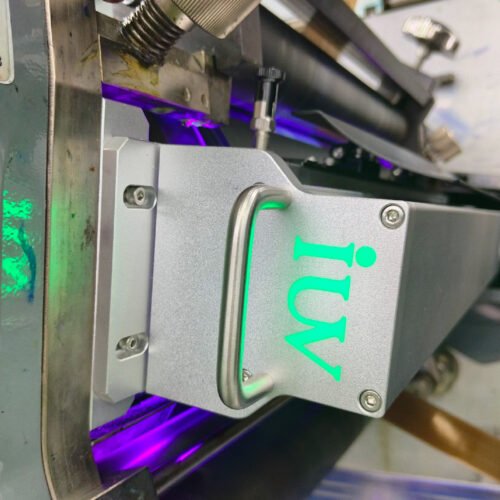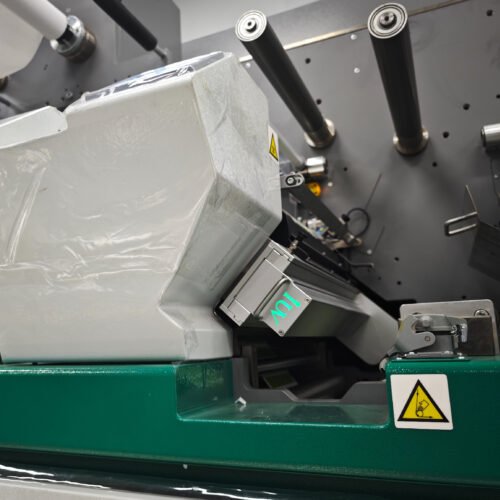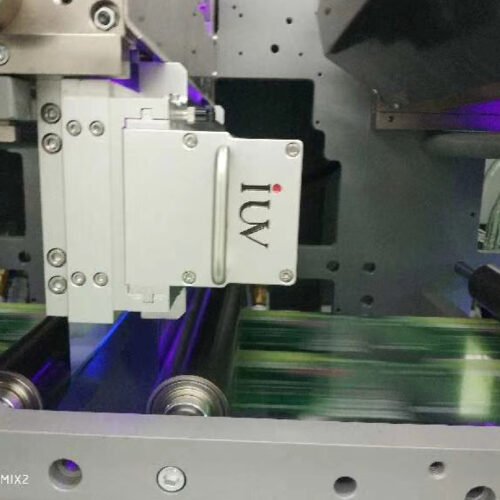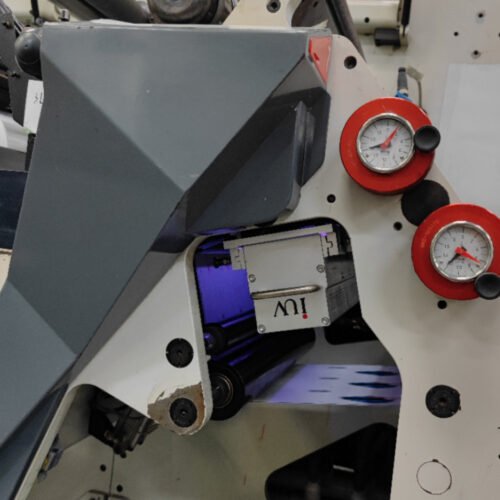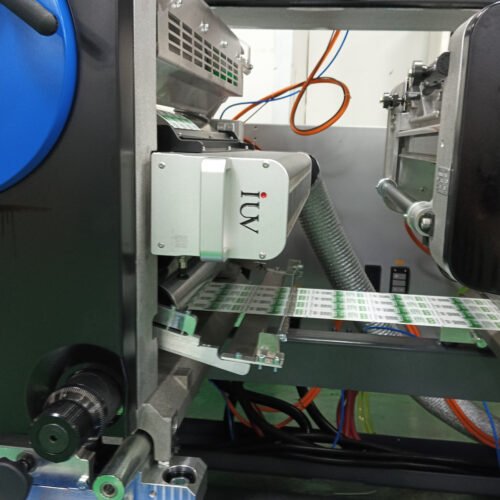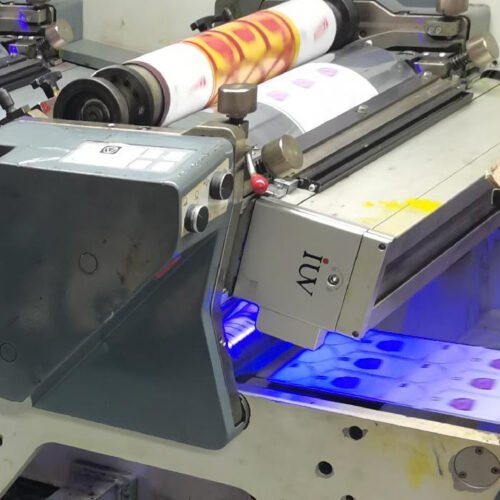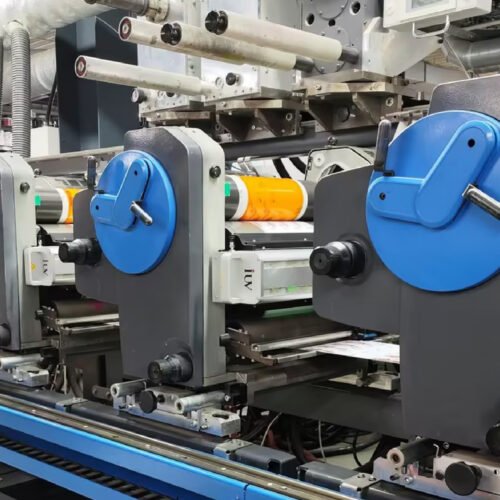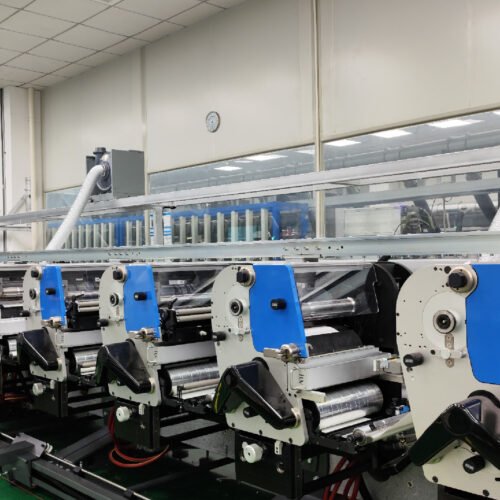
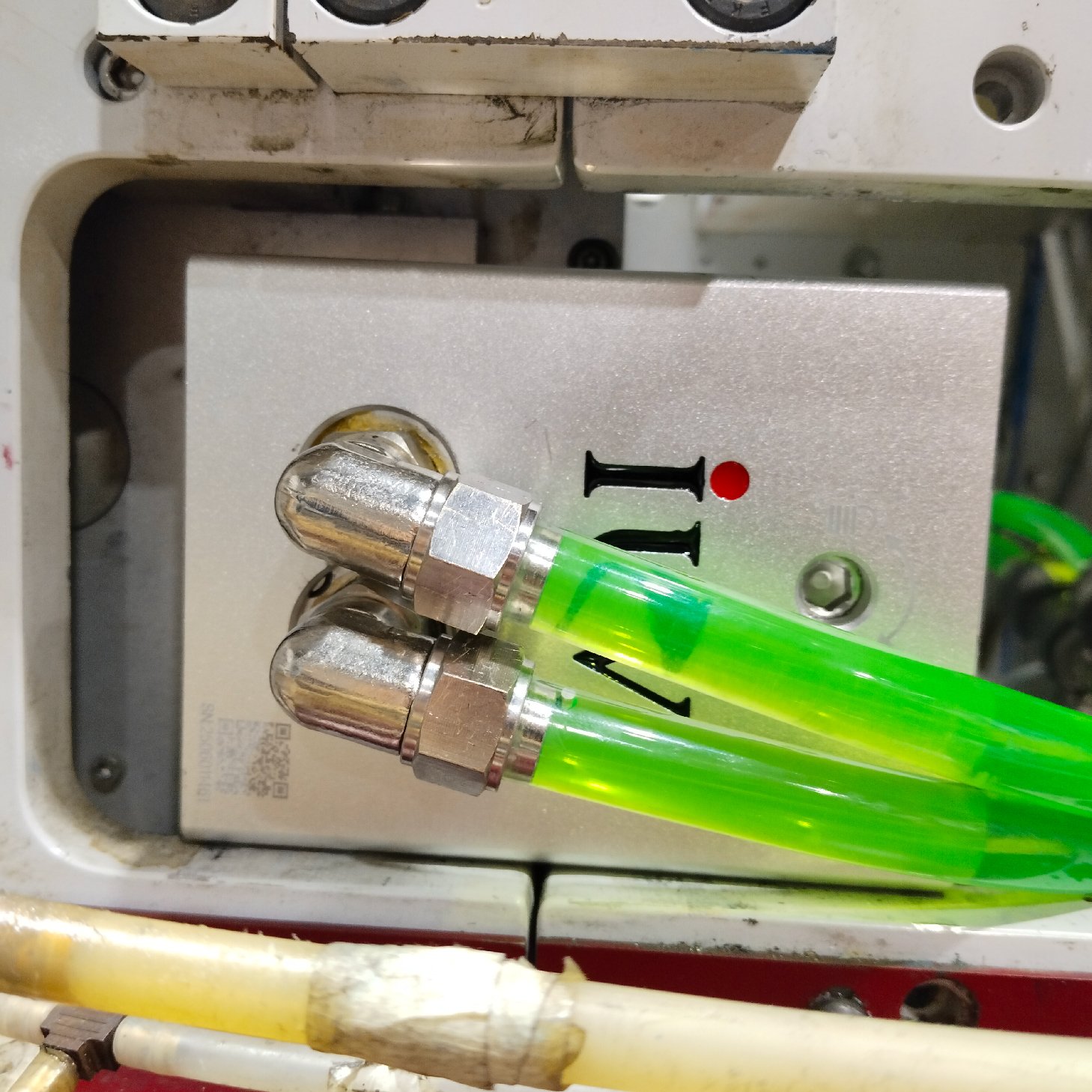
Narrow web printing production has become increasingly dependent on stable UV curing performance as production speed, substrate diversity, and print quality requirements continue to increase. In modern label printing and packaging environments, LED UV curing systems are no longer treated as isolated curing devices. They function as integrated engineering components directly connected to print stability, adhesion performance, substrate handling, and downstream converting reliability.
For an industrial UV lamp manufacturer, system integration strategy is now more important than standalone irradiance output. In production, curing stability depends on coordinated interaction between wavelength configuration, optical energy distribution, mechanical transport conditions, substrate behavior, and ink chemistry response. This is especially important in narrow web flexographic printing and hybrid offset printing systems where multiple substrates and coating structures are processed within the same production cycle.
LED UV curing systems provide low heat impact, fast response capability, and stable spectral control. However, these advantages also require tighter engineering tolerance. In practice, incomplete curing, poor adhesion, gloss inconsistency, and unstable curing penetration are typically caused by process imbalance rather than insufficient UV power alone.
Wavelength selection strategy and photoinitiator compatibility in narrow web production
One of the primary engineering considerations in narrow web UV system integration is wavelength selection. LED UV curing systems commonly operate at 365 nm, 385 nm, or 395 nm, and each wavelength produces different curing behavior depending on ink formulation and substrate characteristics.
In production environments, 395 nm systems are widely adopted because they provide higher electrical efficiency and stable thermal operation. However, this wavelength range can create curing limitations when photoinitiators are optimized for shorter spectral bands. In practice, incomplete curing is often observed in deeper ink layers while the surface appears fully cured.
365 nm systems provide stronger photon energy and improved curing penetration. They are frequently used in applications involving high-opacity white inks, dense varnishes, or thicker coating structures. However, narrow web systems using unsupported film materials may experience uneven surface polymerization if energy concentration becomes excessive at lower exposure distances.
385 nm systems are often selected as a balanced configuration in label printing environments because they provide stable curing response across mixed production conditions involving PET, BOPP, coated paper, and film substrates.
Typically observed production symptoms related to wavelength mismatch include:
- Delayed adhesion failure after lamination
- Surface dryness with incomplete internal curing
- Variable curing consistency between substrate types
For industrial UV lamp manufacturers, integration strategy therefore requires spectral alignment between LED output and the photoinitiator response curve used in the customer’s ink system.
Irradiance distribution engineering and energy density stability across the web
After wavelength configuration is established, irradiance distribution becomes the dominant factor affecting curing consistency in narrow web production. LED UV curing systems are capable of generating high irradiance values, but stable curing depends on how evenly that energy is delivered across the substrate width and over the available exposure time.
In high-speed flexographic printing systems, mechanical vibration, substrate flutter, and roller tension variation can alter lamp-to-substrate distance dynamically during operation. Even small positional changes reduce effective energy delivery at the ink surface.
In production, edge-to-center curing variation is typically observed when optical energy distribution becomes uneven across the curing width. Localized under-curing may occur even when nominal irradiance readings appear sufficient.
Offset printing systems generally produce more uniform coating layers, but irradiance inconsistency still affects gloss stability and coating leveling performance, especially in narrow web hybrid production lines.
Engineering optimization strategies commonly include:
- Uniform optical reflector design
- Stable cooling structure to reduce thermal drift
- Precise lamp positioning control
- Real-time irradiance monitoring during speed changes
In practice, increasing irradiance alone does not resolve curing instability if energy density distribution remains inconsistent during actual press operation.
Low heat impact integration and substrate stability control
One of the major engineering advantages of LED UV curing systems is low heat impact. Traditional mercury UV systems generate substantial infrared radiation, which increases substrate temperature and creates instability in narrow web production environments.
In label printing applications using PET and BOPP films, excessive thermal exposure can produce shrinkage, tension fluctuation, and registration instability. LED UV systems reduce this thermal load significantly, improving substrate dimensional stability during high-speed operation.
In production environments, low heat impact is especially important in:
- Unsupported film structures
- Thin gauge packaging materials
- Multi-layer label constructions
However, reduced thermal energy also changes curing dynamics. Conventional UV systems partially relied on heat to assist coating flow and surface leveling. LED UV systems depend primarily on photochemical efficiency.
As a result, curing penetration becomes more sensitive to ink layer thickness, pigment density, and exposure timing. White inks and high-opacity varnishes often show stable surface appearance while deeper layers remain partially polymerized.
Typically observed production behavior includes:
- Stable web transport with reduced film deformation
- Increased sensitivity to photoinitiator mismatch
- Reduced tolerance for excessive ink thickness
For UV lamp manufacturers, thermal management strategy must therefore balance substrate protection with sufficient curing penetration under high-speed conditions.
Ink film thickness behavior and curing penetration limitations in flexographic printing
Flexographic printing systems naturally produce variable ink transfer due to anilox configuration, plate pressure, and substrate surface energy differences. In narrow web production, these variables become more difficult to control as line speed increases.
LED UV curing systems emit concentrated spectral energy, but penetration depth decreases when UV transmission through the ink layer becomes restricted. High-opacity coatings, metallic pigments, and dense white inks reduce energy propagation into lower layers.
In production environments, incomplete curing is commonly observed in:
- Thick solid color areas
- Multi-layer varnish structures
- High-density white ink applications
PET and BOPP films often show surface curing with delayed adhesion failure because deeper polymerization remains incomplete. Paper substrates create different behavior by absorbing part of the UV energy before it reaches lower coating layers.
Engineering integration strategies usually involve balancing:
- Irradiance intensity
- Exposure duration
- Ink film thickness
- Wavelength compatibility
In some narrow web systems, dual curing station configurations are implemented to improve penetration consistency without excessively increasing peak irradiance.
In practice, curing penetration stability is achieved through coordinated optical and mechanical process control rather than maximum power operation.
Line speed synchronization and system-level UV integration in hybrid printing environments
Modern narrow web production lines increasingly combine flexographic printing, offset printing, coating stations, and converting modules within a single workflow. This creates significant complexity for LED UV system integration because curing conditions continuously change during production.
In production, instability often appears during substrate transitions or speed adjustments. A curing profile optimized for coated paper may become unstable when switching to unsupported BOPP film at higher transport speed. Similarly, curing parameters designed for flexographic inks may not fully support offset coating structures.
LED UV curing systems provide fast response capability and stable spectral output, but synchronization between UV energy delivery and mechanical transport remains critical.
Typically observed production risks include:
- Adhesion instability during acceleration phases
- Localized under-curing during speed transitions
- Gloss inconsistency between hybrid print stations
To improve integration stability, industrial UV lamp manufacturers increasingly implement:
- Speed-linked irradiance control
- Real-time UV output feedback systems
- Substrate-specific curing profiles
- Integrated thermal and optical monitoring systems
In practice, stable narrow web UV integration depends on maintaining synchronization between line speed, exposure duration, curing penetration, and substrate thermal behavior.
LED UV curing optimization is therefore not limited to lamp design. It is a system-level engineering process involving optical configuration, thermal management, substrate analysis, ink chemistry compatibility, and production dynamics across the entire printing environment.