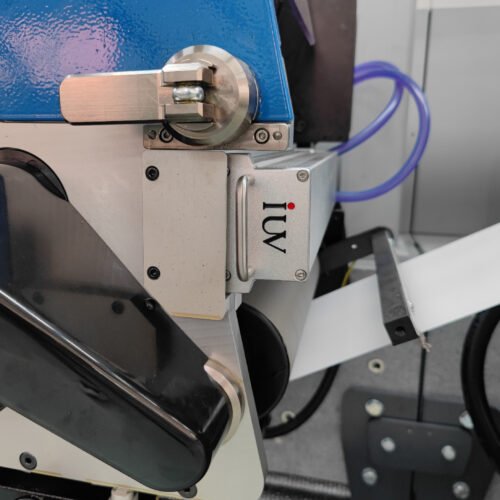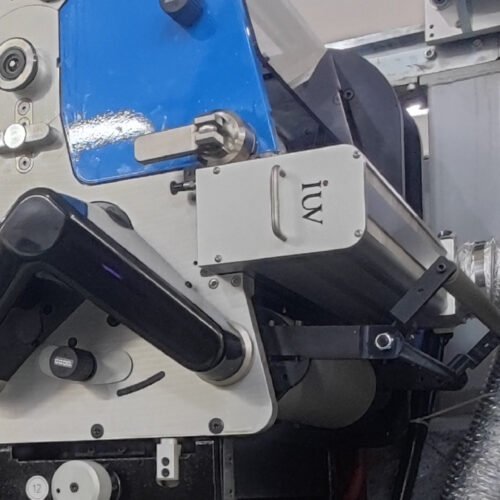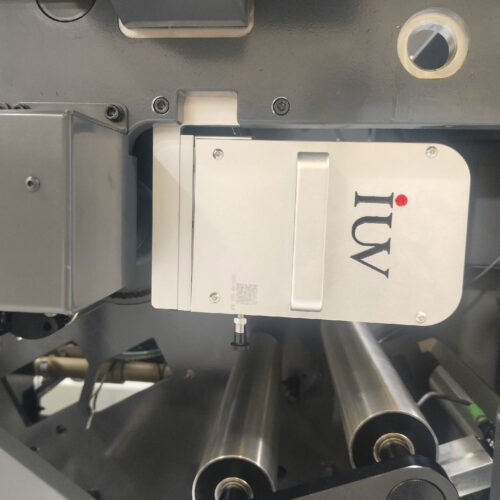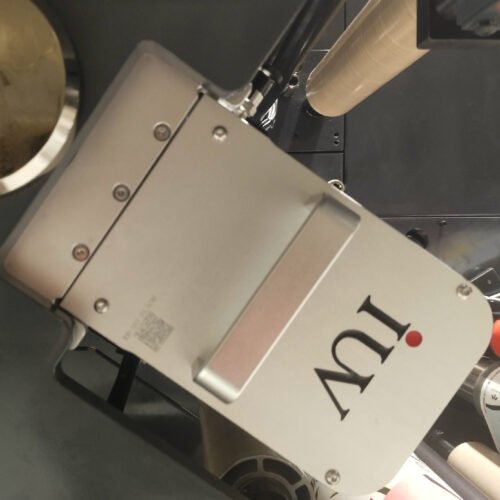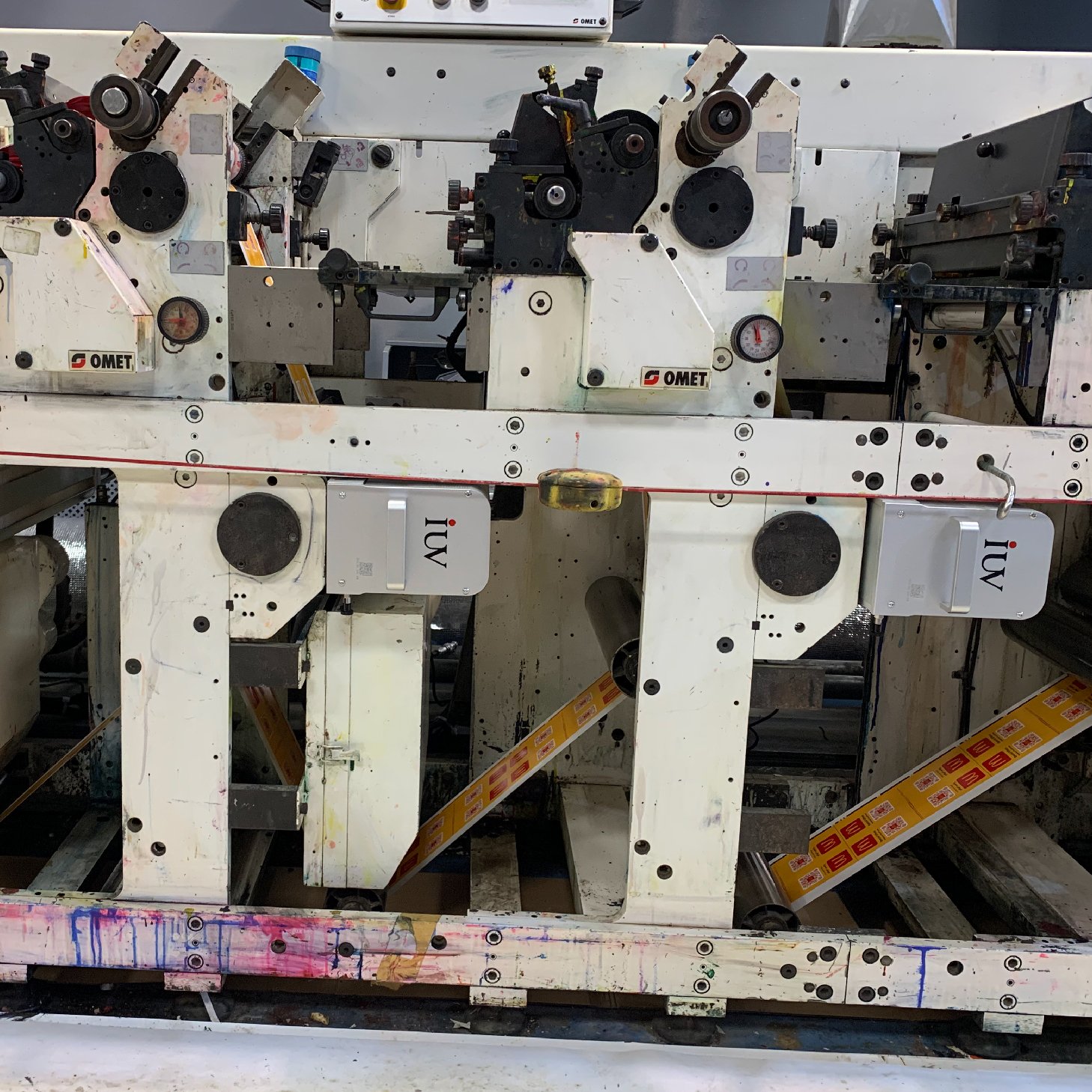
UV curing in offset printing has evolved from a supplementary drying process into a critical control point for coating uniformity, surface consistency, and production stability. In modern packaging and label production environments, especially within narrow web printing systems, LED UV curing technology directly influences how coatings level, polymerize, and adhere to different substrates.
Unlike conventional mercury UV systems, LED UV curing systems operate with narrow spectral bands such as 365 nm, 385 nm, and 395 nm. This spectral precision improves energy efficiency and process control, but it also reduces tolerance for variation in ink and coating formulation. In production, coating uniformity issues often emerge not from printing mechanics alone, but from the interaction between UV wavelength response, irradiance distribution, curing penetration depth, and line speed synchronization.
Offset printing systems typically rely on controlled coating layers, but when LED UV curing is introduced, the absence of thermal assistance changes how coatings flow and stabilize during polymerization. This makes curing parameters a direct determinant of surface quality rather than a secondary drying stage.
Wavelength-dependent curing behavior and coating response in offset systems
In LED UV curing systems, wavelength selection defines the photochemical activation behavior of coatings and inks. In offset printing environments, 395 nm systems are widely used due to energy efficiency and longer LED lifespan. However, this wavelength can reduce activation efficiency for certain photoinitiator systems originally designed for broad-spectrum UV exposure.
In production, this mismatch often appears as partial curing in deeper coating layers, while the surface appears visually stable. This creates a misleading condition where gloss looks acceptable, but mechanical resistance remains insufficient during post-processing.
365 nm systems provide higher photon energy and improved curing penetration, making them suitable for thicker coatings and high-performance packaging applications. However, in narrow web systems, excessive energy concentration may lead to uneven surface polymerization if exposure time is not properly controlled.
385 nm systems are frequently used as a balanced configuration in offset and hybrid printing environments. They provide more stable curing behavior across mixed substrates such as PET, BOPP, and coated paper.
Typically observed in production:
- Uneven curing response between coating batches
- Delayed adhesion failure after stacking or lamination
- Gloss inconsistency across coated surfaces
These behaviors indicate that coating uniformity is not only a mechanical issue but also a wavelength-response imbalance within the curing system.
Irradiance distribution and energy density control in coating formation
Once spectral compatibility is established, coating uniformity becomes strongly dependent on irradiance distribution and total energy density. LED UV systems deliver high peak irradiance, but coating quality depends on how evenly this energy is distributed across the substrate width and how consistently it is maintained over exposure time.
In offset printing, coating layers are generally uniform in thickness. However, even slight irradiance variation can result in uneven polymerization rates, which directly affects surface leveling behavior during curing.
In production environments, typically observed issues include edge-to-center gloss variation and localized over-curing zones. These are often caused by small misalignments in lamp positioning or non-uniform reflector geometry rather than insufficient UV power.
Narrow web systems amplify these effects due to higher sensitivity to web tension variation and substrate movement stability. Flexographic printing systems also show similar sensitivity, but coating variability is generally higher due to ink transfer differences.
In practice, improving coating uniformity requires:
- Stabilization of lamp-to-substrate distance
- Uniform irradiance distribution across the curing width
- Synchronization of UV output with press acceleration and deceleration
Coating uniformity is achieved through controlled energy distribution rather than simply increasing irradiance output.
Curing penetration depth and coating thickness interaction across substrates
Curing penetration is a critical factor in offset printing because coating thickness varies depending on application requirements. LED UV systems interact differently with thin varnish layers compared to high-build coatings used in packaging protection layers.
In production, thicker coatings require deeper UV penetration to ensure complete polymerization. However, LED UV systems have limited scattering depth due to their narrow spectral output. This makes coating thickness a direct limiting factor for curing performance.
Substrate behavior further influences penetration efficiency. Paper substrates absorb UV energy, reducing effective curing depth in lower coating layers. PET and BOPP films reflect part of the UV energy, which can lead to strong surface curing but weaker interlayer bonding if energy penetration is insufficient.
Ink and coating opacity also plays a significant role. High-pigment formulations and white coatings reduce UV transmission, increasing the risk of subsurface under-curing.
Typically observed production problems include:
- Subsurface uncured layers in thick coatings
- Reduced abrasion resistance after curing
- Adhesion failure during converting processes
Engineering adjustments often involve reducing coating thickness, modifying photoinitiator concentration, and adjusting exposure time based on substrate type. In narrow web systems, multi-pass curing strategies are sometimes used to improve penetration consistency without increasing peak irradiance excessively.
Line speed synchronization and coating stability in offset production environments
Line speed directly determines exposure time in LED UV curing systems. As press speed increases, coating layers receive less energy per unit area, which reduces polymerization completeness and affects surface leveling behavior.
LED UV systems respond instantly to speed changes, but coating chemistry does not adapt dynamically. This creates a time mismatch between mechanical transport and photochemical reaction completion.
In production, coating instability is commonly observed during acceleration phases, job transitions, and mixed substrate runs. Offset printing systems typically operate at more stable speeds than flexographic systems, but narrow web offset lines still experience frequent variability due to job changeover requirements.
Typically observed behavior includes:
- Gloss reduction at higher press speeds
- Partial curing during acceleration phases
- Inconsistent coating resistance across batches
Engineering control strategies focus on synchronizing UV exposure with real press conditions. This includes speed-linked irradiance modulation, predefined curing profiles for different coating types, and real-time UV monitoring systems.
Coating stability is achieved through balanced control of irradiance, exposure time, and coating formulation response rate rather than isolated parameter optimization.
System-level interaction between offset, flexo, and narrow web UV processes
In modern production environments, offset printing rarely operates in isolation. It is frequently integrated with flexographic printing and narrow web systems within the same production line. This introduces additional complexity in UV curing system behavior because each process type has different ink film structures and coating requirements.
Flexographic printing typically produces variable ink thickness, while offset printing focuses on controlled coating layers. Narrow web systems combine both behaviors depending on substrate type and production configuration.
LED UV curing systems must therefore support multiple curing profiles across different process conditions. In practice, instability often appears when a single UV configuration is used across multiple printing technologies without adjustment.
Typically observed cross-process issues include:
- Adhesion inconsistency between flexo and offset sections
- Coating mismatch during substrate transitions
- Variable curing response across hybrid production lines
System-level synchronization becomes essential in such environments. Wavelength selection, irradiance calibration, and line speed matching must be adapted to each printing process rather than treated as universal settings.
LED UV curing systems improve process precision and energy efficiency, but coating uniformity ultimately depends on integration between printing technology, substrate behavior, and curing system control logic.