Flexographic printing has evolved rapidly in label, packaging, and narrow web production. As brand owners demand higher durability and visual consistency, curing technology plays a decisive role in long-term print quality. LED UV and electron beam systems represent two advanced curing solutions now widely discussed in UV flexo and offset environments. Comparing their long-term performance requires analysis of polymerization depth, color stability, adhesion, mechanical resistance, and production efficiency over extended press cycles.
In narrow web label printing, curing stability affects not only surface appearance but also downstream converting processes. Die-cutting, lamination, slitting, and high-speed application all depend on fully cured ink films. Over time, any weakness in crosslink density or film flexibility becomes visible in cracking, scuffing, or delamination. Evaluating long-term flexo print quality therefore demands a data-driven perspective across multiple production parameters.
Fundamentals of LED UV and EB Curing in Flexographic Printing
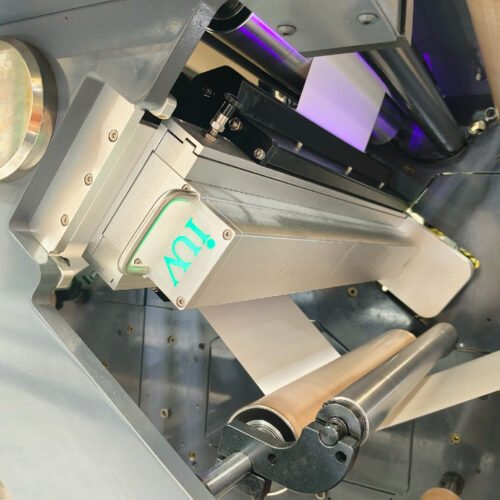
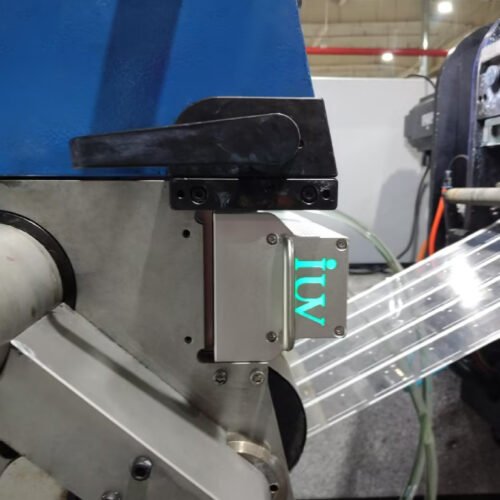
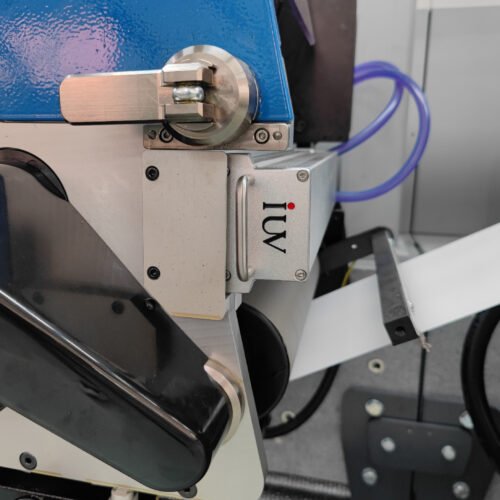
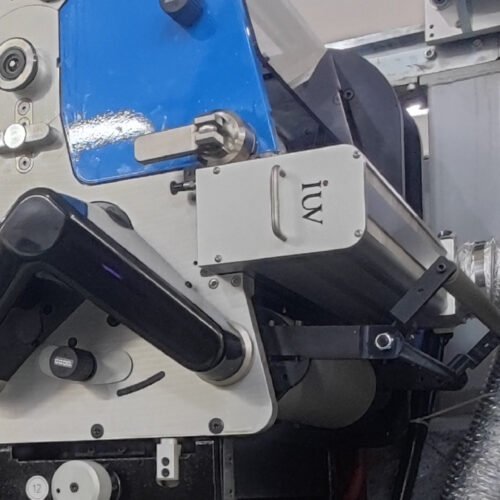
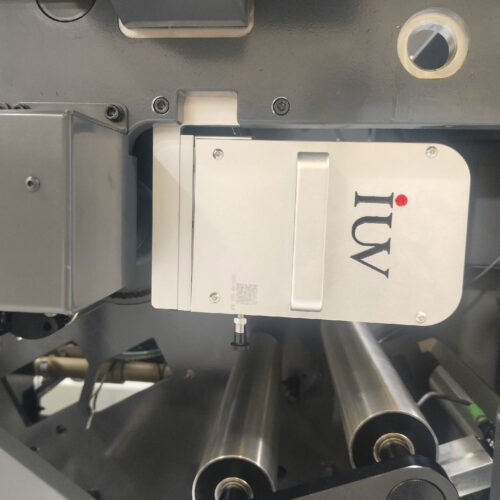
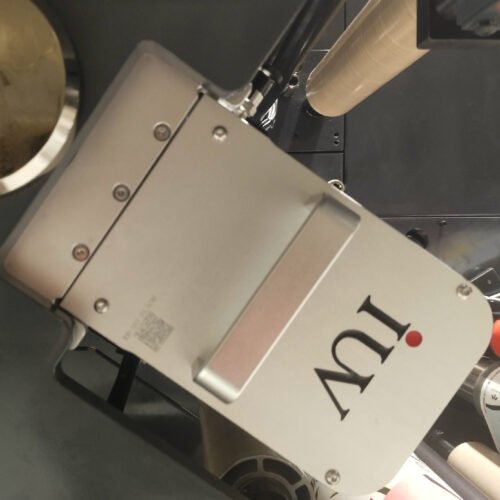
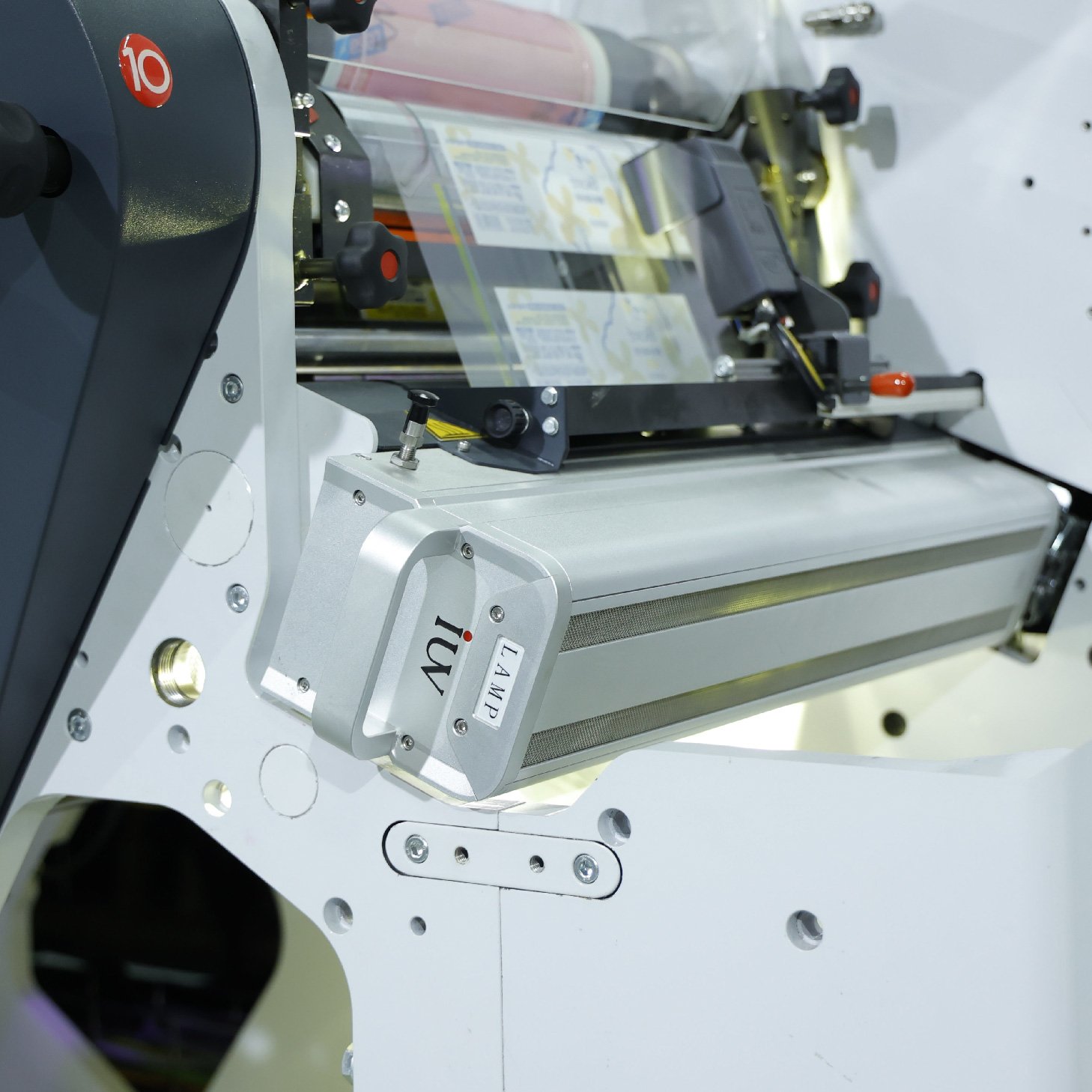
LED UV curing relies on photoinitiators that absorb narrowband ultraviolet energy, typically between 365 and 405 nm. When exposed to sufficient irradiance and energy dose, these photoinitiators initiate free radical polymerization. The process forms crosslinked networks that harden the ink film. In label and narrow web flexography, LED systems are valued for instant on/off capability, low heat emission, and compact integration.
Electron beam curing operates without photoinitiators. Instead, high-energy electrons penetrate the ink layer and directly trigger polymerization reactions. EB curing provides deep crosslinking through the entire ink thickness. Because no photoinitiators are required, migration risk can be lower in food packaging and pharmaceutical label applications. However, EB systems demand shielding, nitrogen inerting, and significant capital investment.
Both technologies support high-resolution flexographic printing and UV offset production. Their long-term print quality outcomes depend on curing depth uniformity, ink formulation compatibility, and process control.
Color Stability and Gloss Retention Over Time
Long-term print quality data often begins with color stability analysis. In UV flexographic label production, brand consistency requires minimal Delta E variation during storage and handling. LED UV systems provide stable spectral output over thousands of operating hours. When properly calibrated, irradiance remains consistent, reducing variability between print runs.
EB curing produces very uniform polymerization through thicker ink films. This deep crosslinking can enhance pigment encapsulation and reduce post-cure color shift. In extended storage tests, EB-cured samples often demonstrate slightly improved resistance to UV light exposure and chemical attack, especially in high-coverage areas such as opaque whites.
Gloss retention data over months of abrasion testing shows comparable performance when LED UV systems deliver sufficient energy dose. However, insufficient LED output or contamination on optical windows can reduce cure depth and accelerate gloss loss. Long-term data therefore emphasizes maintenance and monitoring in LED-based flexo environments.
Adhesion Performance on Films and Paper Substrates
Adhesion is critical in narrow web label printing, particularly on low surface energy films such as PE and PP. LED UV inks rely on optimized oligomer systems and surface preparation, including corona treatment. When curing energy matches ink film thickness, adhesion remains stable over time. Cross-hatch and tape tests performed after aging typically confirm consistent bonding.
EB curing demonstrates strong adhesion on a wide range of substrates due to its deep penetration capability. Even thicker white or barrier layers cure completely through the ink film. Long-term peel strength measurements on laminated constructions often show slightly higher stability in EB-cured structures, especially in demanding chemical environments.
In paper-based label applications, both technologies perform reliably when press parameters are controlled. Substrate absorption characteristics can influence LED UV curing efficiency. Paper absorbs some UV energy, requiring precise irradiance calibration. EB curing is less sensitive to surface absorption, as electron penetration is not wavelength-dependent.
Mechanical Durability and Flexibility
Mechanical resistance testing provides valuable long-term performance data. Flexographic labels frequently undergo bending during application to curved containers. Ink films must maintain flexibility without cracking. LED UV systems, operating at controlled temperatures, often preserve film elasticity better than traditional mercury UV lamps. When energy settings are optimized, cured films balance hardness and flexibility.
EB-cured films typically exhibit high crosslink density, contributing to chemical and abrasion resistance. However, excessive crosslinking can reduce flexibility if ink formulations are not balanced. Modern EB ink systems are engineered to maintain elasticity while achieving high mechanical strength.
Rub resistance, scratch testing, and folding endurance studies over extended cycles show that both technologies achieve excellent durability in label and packaging applications. Differences often arise from ink formulation rather than curing principle alone.
Print Consistency in High-Speed Narrow Web Production
High-speed narrow web presses operate at 100 to 250 meters per minute. Consistent curing across long runs is essential for predictable print quality. LED UV systems provide rapid stabilization and minimal warm-up time. Their output remains consistent throughout the production shift, reducing startup waste.
Long-term data collected from production lines indicates stable dot reproduction and minimal tonal variation when LED modules are properly cooled and maintained. Real-time irradiance monitoring helps detect output decline due to contamination or aging.
EB systems deliver uniform energy across web width, producing consistent polymerization even at high speeds. Because curing is less dependent on photoinitiator activation, EB processes can maintain uniform performance in thick ink areas. However, nitrogen inerting levels must remain stable to prevent oxygen inhibition.
Impact on Multi-Color Wet-on-Wet Flexographic Printing
Multi-color wet-on-wet printing requires careful energy management between stations. LED UV systems allow partial curing between colors to maintain ink trapping and dot integrity. Long-term quality data demonstrates stable intercoat adhesion when energy settings are optimized for each ink layer.
EB curing typically occurs in a single final station after all colors are applied. This approach can produce uniform crosslinking across layers, improving chemical resistance. However, it limits intermediate curing control during complex print sequences.
In UV offset label production, similar trends appear. LED UV enables precise sectional curing, supporting hybrid press configurations. EB curing remains effective for specialized packaging applications requiring high barrier performance.
Operational Stability and Maintenance Considerations
Long-term print quality depends on system stability. LED UV modules require minimal maintenance compared to mercury lamps. No bulb replacement is necessary, and energy consumption remains predictable. Optical window cleaning and cooling system inspection are primary maintenance tasks.
EB systems involve more complex maintenance procedures, including cathode replacement and shielding inspection. Nitrogen supply systems must be monitored continuously. These factors influence total cost of ownership and operational planning.
Production data over multiple years often shows that LED UV systems offer strong return on investment in narrow web label markets. EB systems demonstrate advantages in specialized packaging segments where migration and deep cure performance are critical.
Environmental and Energy Factors Influencing Long-Term Results
Energy efficiency influences long-term operating stability. LED UV curing consumes less electrical power than traditional mercury systems and does not generate ozone. Lower heat output reduces substrate distortion in thin films.
EB curing consumes higher initial power but eliminates photoinitiators, which may support compliance in sensitive applications. Environmental performance comparisons often depend on plant infrastructure and job mix.
Both technologies support sustainable production when integrated into optimized flexographic workflows. Accurate irradiance measurement, ink formulation control, and substrate preparation remain essential for maintaining consistent print quality over time.
Conclusion: Data-Driven Evaluation in Modern Flexo Operations
Long-term flexo print quality comparisons between LED UV and EB curing systems reveal that both technologies deliver high-performance results when correctly implemented. LED UV systems excel in energy efficiency, operational simplicity, and flexibility for narrow web label production. EB curing provides deep polymerization and strong resistance characteristics, particularly in demanding packaging applications.
Ultimately, sustained print quality depends on matching curing technology to ink chemistry, anilox configuration, substrate type, and production speed. Continuous monitoring and preventive maintenance ensure that curing performance remains stable across extended production cycles. In competitive label and packaging markets, data-driven evaluation of curing systems supports consistent, durable, and high-definition flexographic printing.