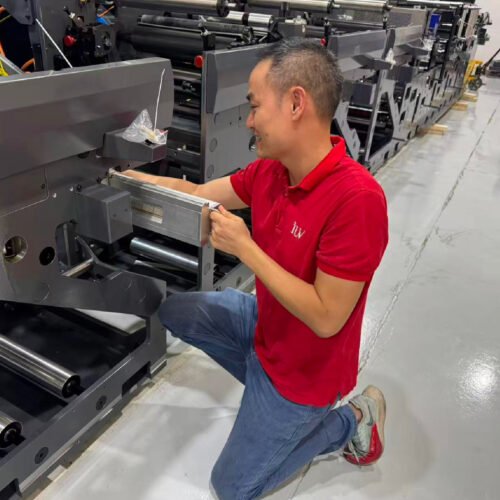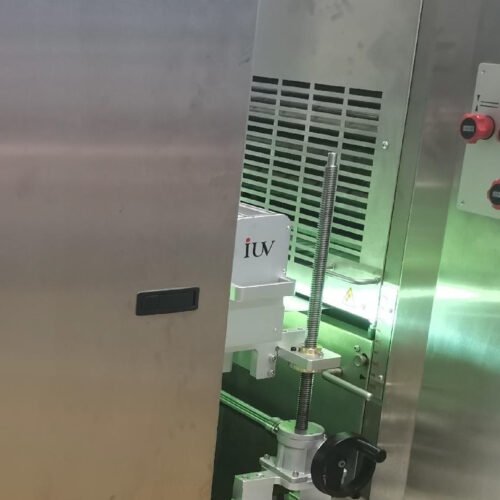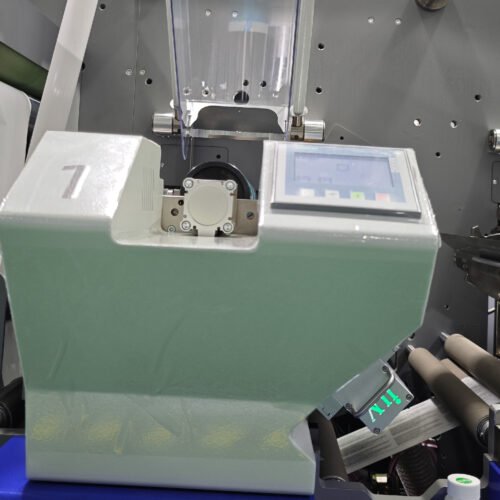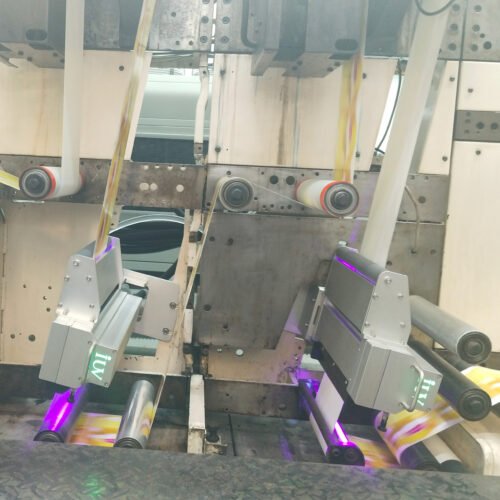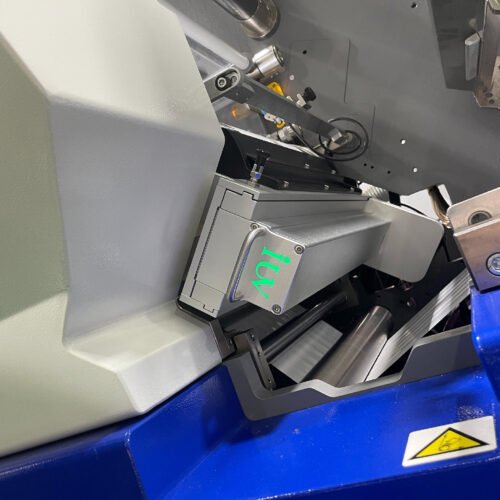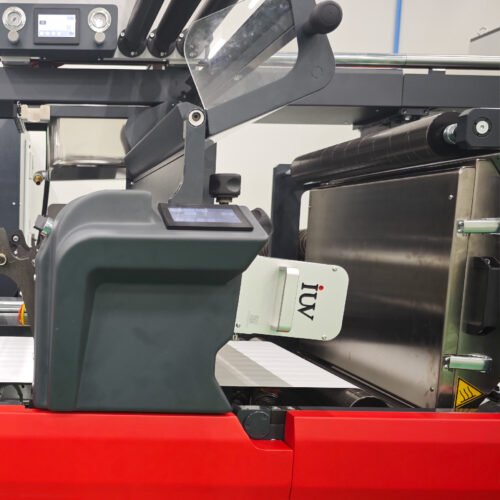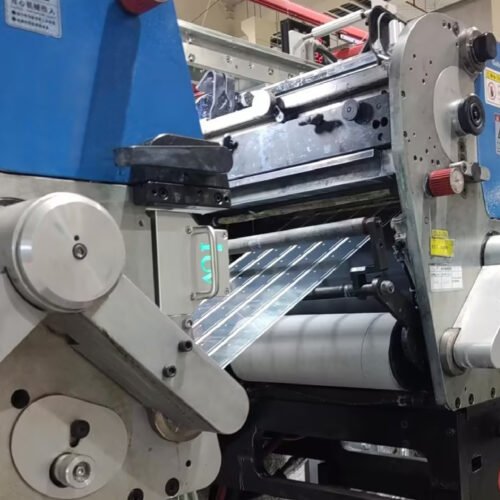
In modern narrow web label printing, servo-driven presses and LED UV curing systems operate as a single integrated production platform. Precise synchronization between LED UV triggering and servo drive motion is essential for stable curing, consistent print quality, and long-term equipment reliability. When triggering is misaligned, printers may experience uneven curing, premature lamp activation, web overheating, or incomplete polymerization at high speeds.
As label converters move toward higher automation, shorter job runs, and frequent speed changes, traditional always-on UV curing strategies become inefficient. LED UV technology enables instant on and off operation, but only delivers its full benefits when triggering logic is accurately synchronized with the press drive system. This requirement is especially critical in flexographic, letterpress, and narrow web UV printing environments where motion control precision directly affects curing outcomes.
How Servo Drive Systems Control Motion in Narrow Web Presses
Servo drive systems are the backbone of modern narrow web printing presses. Each major press component, including the unwind, print units, die station, and rewind, is controlled by servo motors linked through a centralized motion controller. These systems continuously calculate position, speed, and acceleration to maintain precise web handling.
In flexographic label printing, servo drives allow rapid acceleration, deceleration, and register correction. However, these dynamic motion changes also affect curing conditions. LED UV exposure must match the actual web speed at the curing point, not just the nominal press speed displayed on the operator interface.
If LED UV triggering does not follow real-time servo data, curing energy delivery becomes inconsistent. This can result in over-curing during slowdowns or under-curing during rapid acceleration, particularly in narrow web applications with frequent speed variation.
Fundamentals of LED UV Triggering in Printing Applications
LED UV curing systems are designed to respond instantly to control signals. Unlike arc lamps, LEDs reach full output within milliseconds and can be switched on and off without warm-up or cool-down cycles. This capability enables precise energy control, but also demands accurate triggering logic.
Triggering typically occurs through digital signals from the press control system. These signals may be based on web speed thresholds, encoder pulses, or predefined motion events. In narrow web presses, the most reliable triggering strategy is linked directly to servo encoder feedback rather than to fixed speed setpoints.
When LED UV triggering is synchronized correctly, the lamp output is active only when printed material is present under the curing window. This approach minimizes energy waste, reduces thermal load on low-tension films, and improves overall curing stability.
Why Synchronization Matters in Label and Flexo Printing
Label printing places unique demands on curing synchronization. Jobs often include short repeats, variable print lengths, and frequent stops for inspection or splicing. Servo systems handle these changes smoothly, but LED UV curing must respond with equal precision.
If the LED UV lamp activates too early, unprinted substrate may be exposed, increasing heat load without curing benefit. If activation is delayed, printed ink may pass under the lamp without sufficient exposure, leading to surface defects or poor adhesion.
In flexographic and letterpress printing, where ink film thickness varies across the image, timing accuracy is critical. Proper synchronization ensures that each printed section receives the correct energy dose regardless of speed changes or motion transitions.
Establishing a Reliable Trigger Source from the Servo System
The first step in synchronization is identifying the correct trigger source within the servo drive architecture. Most modern narrow web presses use high-resolution encoders integrated into the main drive motor or individual print units. These encoders provide real-time feedback on web movement.
The LED UV system should receive triggering signals derived from this encoder data rather than from general run or stop commands. Encoder-based triggering ensures that lamp activation aligns precisely with actual web motion.
In some press designs, a virtual cam or electronic line shaft is used to synchronize all servo axes. Tapping into this master reference signal provides a stable and accurate basis for LED UV triggering across all operating conditions.
Matching LED UV Response Time to Servo Dynamics
LED UV lamps respond rapidly, but the control system must account for response time, signal latency, and communication delays. Even small delays can create measurable curing inconsistencies at high press speeds.
In narrow web presses running at several hundred meters per minute, a delay of a few milliseconds translates into several millimeters of web travel. If not compensated, this offset can shift the curing window relative to the printed image.
Proper system setup includes measuring or specifying the LED UV system’s response characteristics and configuring the trigger signal with appropriate offsets. This alignment ensures that full irradiance is delivered exactly when the printed area reaches the curing zone.
Coordinating Triggering During Acceleration and Deceleration
Acceleration and deceleration are critical phases for curing synchronization. Servo-driven presses may ramp speed rapidly during startup or slow down abruptly during stops. LED UV triggering must follow these changes smoothly to avoid curing defects.
A common strategy is to define minimum speed thresholds for lamp activation. Below a certain speed, curing may be unnecessary or undesirable, especially on low-tension films. Above this threshold, triggering follows real-time speed data rather than fixed timing.
Advanced control systems adjust LED output dynamically based on speed feedback. This approach maintains a consistent energy dose per unit length, even during speed ramps, and supports stable curing in variable-speed label production.
Integrating LED UV Control with Press Safety Logic
Synchronization must also account for press safety systems. Emergency stops, web breaks, and guarding interlocks can interrupt motion instantly. LED UV lamps must respond immediately to prevent exposure to stationary substrate or machine components.
Integration with the servo drive safety logic ensures that LED UV output is disabled whenever motion is lost. This coordination protects operators, prevents overheating, and extends lamp lifetime.
In narrow web environments, where operators work close to the press, proper safety integration is a critical part of any LED UV triggering strategy.
Managing Multiple LED UV Lamps in Complex Press Configurations
Many narrow web presses use multiple LED UV lamps across several print stations. Each lamp may require independent triggering based on its position and function. Synchronization becomes more complex when different stations operate with different ink types or curing requirements.
In such configurations, each LED UV unit should receive its own trigger signal linked to the corresponding servo axis or virtual reference. This approach allows precise control and avoids unnecessary exposure when certain stations are inactive.
Consistent synchronization across all lamps ensures uniform curing quality throughout the press and supports flexible job configurations in label and packaging production.
Troubleshooting Common Synchronization Issues
Synchronization problems often present as inconsistent curing, excessive heat on the substrate, or uneven ink performance across the web. Diagnosing these issues requires examining both the servo system and the LED UV control logic.
Common causes include incorrect trigger source selection, insufficient compensation for response delays, and mismatched speed thresholds. In some cases, signal noise or communication delays between control components can also affect timing accuracy.
Systematic testing at different speeds and during acceleration phases helps identify misalignment. Fine-tuning trigger offsets and verifying encoder signal integrity usually resolves these issues.
Achieving Stable Curing Through Integrated Motion and UV Control
Successful synchronization of LED UV triggering with servo drive systems transforms curing from a fixed process into a dynamic, responsive function of press motion. This integration is especially valuable in narrow web flexographic and label printing, where speed changes and short runs are common.
By aligning LED UV activation with real-time servo feedback, printers achieve consistent curing, reduced energy consumption, and improved substrate protection. The result is a stable production process that supports high-quality output across a wide range of materials and job types.
In modern UV printing, curing performance is no longer determined solely by lamp power. It is defined by how effectively motion control and UV energy delivery work together within the press system.