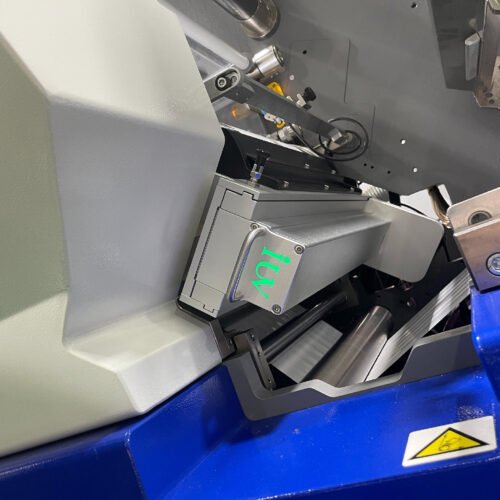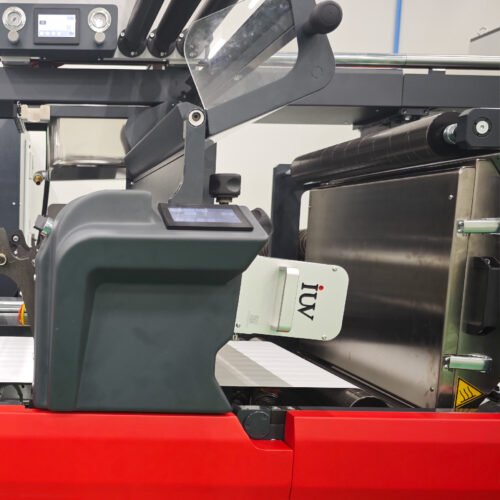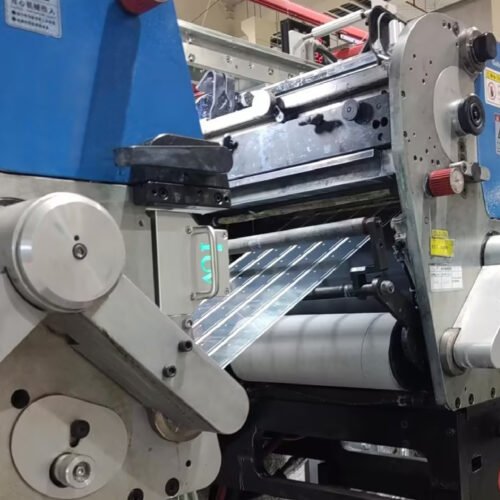
Stable LED UV offset label production depends on precise thermal control across the inking and curing sections. In narrow web label presses, temperature variation directly affects ink rheology, dot gain, trapping efficiency, and curing consistency. Unlike conventional UV systems that introduce significant radiant heat, LED UV arrays operate with lower infrared output but higher spectral precision. This shifts the thermal load toward mechanical friction, ambient conditions, and substrate interaction. The ink-duct temperature and chill roll settings must therefore function as a coordinated system rather than independent parameters.
In offset label printing, especially on narrow web platforms, ink viscosity determines film thickness and transfer stability. If the ink duct runs too warm, viscosity drops and emulsification increases. If it runs too cold, flow becomes restricted and ink starvation may occur. LED UV curing adds another variable. While LED modules reduce heat compared to mercury lamps, localized heating still develops in dark solids and high-coverage areas. Without proper chill roll calibration, substrate distortion, dot deformation, and inconsistent cure depth can occur.
Ink-Duct Temperature Control and Rheology Stability
The ink duct serves as the starting point of thermal regulation. In LED UV offset label production, maintaining a consistent ink temperature between 20°C and 25°C is generally optimal, though exact values depend on ink formulation and press speed. Modern UV offset inks designed for LED curing often contain reactive oligomers with higher viscosity compared to conventional sheetfed systems. Temperature fluctuations as small as 2°C can significantly alter tack and flow behavior.
Stable rheology ensures predictable ink splitting between rollers and plate. In label and narrow web offset printing, plate cylinders typically operate at higher rotational speeds than sheetfed systems. This increases shear stress within the ink train. If the ink duct temperature drifts upward, tack decreases and misting may develop. Conversely, lower temperatures can increase tack, leading to picking on sensitive label substrates such as wine paper or metallized stocks.
Calibration begins by stabilizing the duct roller temperature before press startup. Allow the recirculation unit to reach equilibrium for at least 30 minutes. Measure ink temperature directly within the duct, not only at the control panel. Verify uniformity across the duct width to prevent lateral density variation. Consistent ink temperature improves color stability, reduces startup waste, and enhances interstation curing reliability.
Chill Roll Function in Narrow Web LED UV Systems
Chill rolls play a critical role in label printing, flexo-offset hybrid lines, and narrow web UV platforms. Their primary function is to extract heat from the substrate before and after curing. In LED UV systems, although infrared radiation is minimal, polymerization is exothermic. Dark inks such as opaque black absorb significant energy at 395 nm, creating localized heat buildup.
Without adequate chill roll performance, thermal expansion can cause register shift, particularly in multi-color label jobs. Shrink films and thin BOPP substrates are especially sensitive. Temperature fluctuations can also influence adhesive performance in pressure-sensitive label constructions.
Calibrating chill roll synergy with ink-duct temperature requires understanding heat transfer dynamics. If the ink is maintained at a stable temperature but the chill roll is set too low, condensation may form in high-humidity environments. This introduces surface contamination and compromises UV curing. If the chill roll temperature is too high, substrate cooling becomes insufficient, leading to curl or dimensional instability.
For most LED UV offset label applications, chill roll surface temperatures between 15°C and 20°C provide balanced performance. However, high-speed narrow web presses may require incremental adjustments. The goal is not maximum cooling but thermal equilibrium across the web path.
Coordinating Ink and Substrate Thermal Profiles
True stability emerges when ink rheology and substrate temperature operate in synchronization. In hybrid presses combining flexography and offset with LED UV curing, each station contributes thermal energy. Flexo units may introduce anilox friction heat, while offset units contribute roller shear heat. The chill roll must compensate for cumulative effects rather than isolated sources.
When calibrating the system, begin by establishing a baseline press speed representative of production conditions. Adjust the ink-duct temperature to achieve stable density and minimal emulsification. Once ink flow is optimized, monitor substrate surface temperature immediately before LED exposure. Infrared thermometers or inline thermal sensors provide accurate data without interrupting production.
After LED curing, measure web temperature again before rewind. The difference between pre-cure and post-cure temperatures indicates polymerization heat impact. If this delta exceeds acceptable thresholds, fine-tune chill roll temperature gradually. Avoid abrupt changes, as rapid cooling can affect adhesion and gloss uniformity.
In label printing, gloss consistency and scratch resistance depend heavily on proper cure depth. Excessive substrate heat can lead to surface cure dominance with insufficient through-cure. By balancing ink temperature and chill roll extraction, the curing window becomes more predictable.
Impact on Print Quality and Registration
Precise calibration improves more than curing stability. Dot integrity in offset label printing depends on consistent plate-to-blanket transfer. Thermal expansion within the roller train can subtly alter pressure settings. If ink viscosity shifts during long runs, dot gain variation may appear across the web width.
Narrow web offset presses operate under tighter mechanical tolerances compared to wide web systems. Even small thermal deviations influence register accuracy. In multi-layer label constructions, dimensional changes can accumulate, especially when printing on unsupported films.
When ink-duct temperature is optimized, ink film thickness remains stable. When chill roll settings are balanced, substrate dimensional integrity is preserved. Together, they reduce register drift and color fluctuation. This stability is critical for high-end cosmetic labels, pharmaceutical labels, and food packaging applications where consistency is mandatory.
Integration with LED UV Curing Parameters
LED UV curing parameters such as irradiance and dose must align with thermal calibration. High irradiance with insufficient cooling may accelerate surface polymerization but increase thermal stress. Lower irradiance with stable substrate cooling often yields better overall cure balance.
Offset inks formulated for 395 nm LED curing rely on specific photoinitiator absorption peaks. If substrate temperature rises excessively, oxygen inhibition dynamics may shift. Although LED systems emit minimal ozone, oxygen at the surface still affects polymerization kinetics.
Maintaining controlled ink temperature supports predictable reactivity. Controlling chill roll temperature ensures consistent substrate behavior during exposure. When both are calibrated correctly, LED UV systems deliver uniform crosslink density and improved chemical resistance.
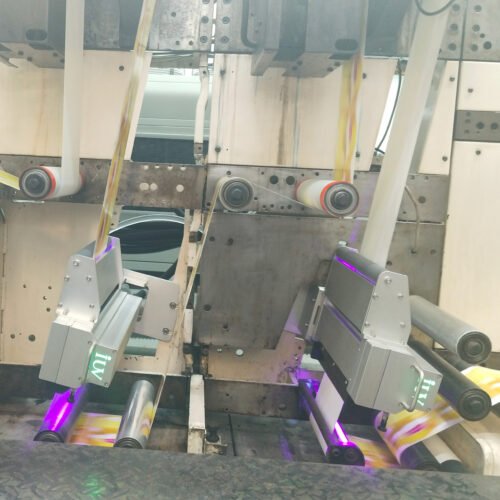
In hybrid flexo and offset label presses, interstation LED modules must be evaluated individually. Temperature mapping across stations prevents cumulative heat buildup. Operators should document optimal ink-duct and chill roll combinations for each substrate type and ink series. This creates repeatable production standards and reduces troubleshooting time.
Practical Workflow for Stable Production
Begin each production day by stabilizing ink recirculation and chill roll systems before loading substrate. Confirm ambient room temperature, as environmental variation influences both ink and web behavior. Establish target ink-duct temperature and verify with direct measurement. Run the press at moderate speed and evaluate ink transfer, density, and trapping.
Gradually increase speed to production levels while monitoring substrate temperature before and after curing. Adjust chill roll temperature in small increments to maintain thermal balance. Avoid compensating for curing defects solely by increasing LED power. Instead, review the interaction between ink viscosity and substrate cooling.
Routine maintenance is essential. Inspect chill roll surfaces for contamination or scaling, which reduces heat transfer efficiency. Verify coolant flow rates and filter cleanliness. Ensure ink temperature control units maintain consistent circulation without hotspots.
Over time, this calibration approach reduces startup waste, improves press uptime, and extends component life. Stable LED UV offset label production depends not on isolated settings but on coordinated thermal management across the entire press platform.
By aligning ink-duct temperature and chill roll synergy, printers achieve consistent color density, reliable curing, precise registration, and improved substrate handling. In competitive label markets, this level of process control supports higher productivity and predictable quality across diverse materials and job types.