Abstract
Integrating LED UV curing equipment into narrow web presses requires good coordination between printing speed, UV output and press controls. In label printing and narrow web flexographic printing, these factors directly affect ink curing, print quality and production efficiency. If the press runs faster without a suitable adjustment to UV output, the ink may not cure properly. If the settings are poorly matched, the system may consume unnecessary energy or cause inconsistent results.
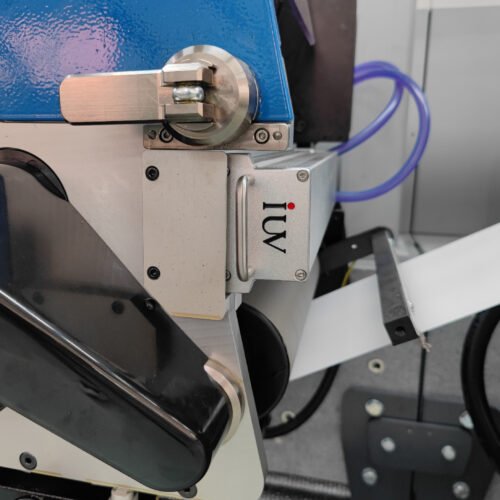
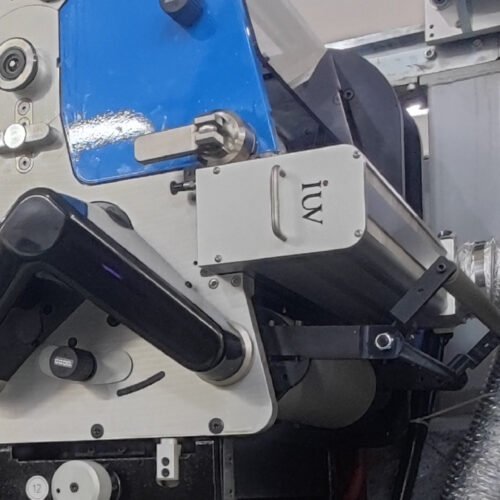
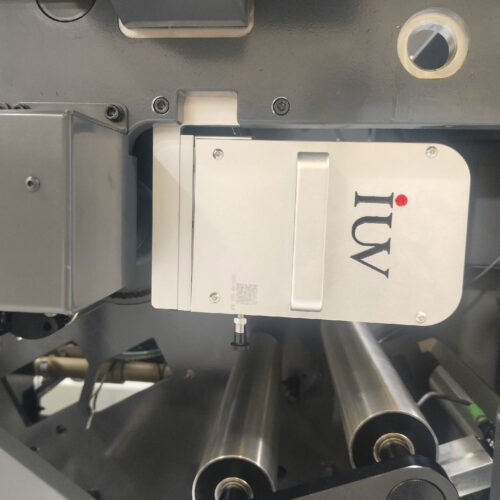
A successful installation involves more than mounting an LED UV curing unit onto a press. Engineers must check the available installation space, electrical connections, cooling capacity and communication between the curing system and press controls. Ink compatibility and substrate properties also need to be considered. This article explains the main integration requirements, common production challenges and practical methods for maintaining stable curing performance.
Introduction
Narrow web presses are widely used to produce pressure-sensitive labels, flexible packaging materials and other printed products. Many presses combine several printing stations with varnishing, die-cutting and inspection equipment. Each stage requires stable print quality and reliable ink curing.
LED UV curing equipment can help printers manage production changes because LEDs can switch on and off quickly. It can also reduce the heat transferred to the substrate compared with many conventional UV curing arrangements. This is useful when printing on thin films and other heat-sensitive materials.
However, installing an LED UV system does not automatically guarantee good curing results. The system must work with the press speed, ink formulation and production requirements. When these factors are not properly coordinated, printers may experience tacky ink, poor adhesion, colour variation or other quality problems.
For OEMs, engineers and end users, the main objective is to make the LED UV system work reliably with the existing press while keeping the production process stable.
1. Understanding the Relationship Between Web Speed and UV Output
Web speed is one of the most important factors affecting UV curing. As the substrate moves through the curing area, the ink receives UV energy for a limited time. When the press runs faster, the exposure time becomes shorter.
If the UV output remains unchanged, a faster web may receive less energy during its passage through the curing area. This can lead to incomplete curing, depending on the ink and printing conditions.
For example, a press running at a moderate speed may produce fully cured labels, while the same job may develop adhesion or rub resistance problems after the operator increases the speed. The reason may be insufficient UV exposure at the higher production speed.
The curing system should therefore receive a reliable speed signal from the press. Its output can then be adjusted according to a tested relationship between line speed and curing requirements.
However, increasing UV output is not always the correct solution. The ink formulation, colour, printed film thickness and substrate also affect the result. Engineers should test the actual production conditions before deciding how the system should respond to speed changes.
2. Choosing the Right LED UV Wavelength
LED UV curing systems commonly use wavelengths such as 365 nm, 385 nm and 395 nm. The correct wavelength depends on the ink or coating being used.
UV-curable inks contain ingredients that absorb UV energy and start the curing reaction. These ingredients must be compatible with the wavelength produced by the LED system. If the wavelength is unsuitable, increasing the output may not solve the curing problem.
This is particularly important for label printing jobs that use different colours, white inks or protective coatings. White and heavily pigmented inks can be more difficult to cure because pigments may prevent UV energy from reaching deeper parts of the ink film.
Before selecting an LED UV curing system, printers should confirm the recommended wavelength with the ink supplier. They should also check whether the ink has been developed for LED UV curing rather than assuming that every conventional UV ink will work equally well.
The equipment supplier should provide clear information about the available wavelengths and output performance. Testing should then confirm that the selected system can cure the intended inks at the required production speed.
3. Synchronizing LED UV Output with Press Controls
A narrow web press does not run at one constant speed throughout the entire production process. Operators may need to slow down for setup, increase speed during production or stop the press to correct a problem.
The LED UV curing system must respond appropriately to these changes. A speed signal from the press allows the curing controller to adjust its output according to the current operating conditions.
Depending on the press design, this signal may come from the drive system, an encoder or an industrial communication interface. The connection must be reliable and compatible with both systems.
A practical setup uses a tested output range for different production speeds. At lower speeds, the controller may reduce output where the ink and equipment allow it. At higher speeds, it may increase output within the permitted operating range.
The relationship should be established through production trials rather than based only on a general rule. Some inks may require a different response from others, even when the press speed remains the same.
The control system should also distinguish between a normal speed change and an unexpected stop. If the web stops moving, the curing system must follow a predefined safe sequence rather than continuing to operate without considering the stationary material.
4. Managing Press Stops, Startups and Safety Interlocks
Press stops and startups are important parts of LED UV integration. During normal production, the web continuously passes beneath the curing head. When the press stops unexpectedly, part of the substrate may remain in the curing area.
Leaving stationary material under the curing head can create an unwanted heat or exposure problem, depending on the system design and operating conditions. The control sequence must therefore account for the press stopping and restarting.
Before production begins, the system should check that the required cooling and electrical functions are ready. The press should only operate when the curing system is in an approved state.
If a cooling fault, driver alarm or communication failure occurs, the system should respond according to the agreed safety logic. The response may involve stopping the curing output, stopping the press or activating another protective function.
Emergency-stop behaviour should be checked during commissioning. Engineers should also test what happens when the speed signal is lost or the curing controller cannot communicate with the press.
These checks help prevent unexpected operation and reduce the risk of damaged material. They also make it easier for operators to understand how the equipment behaves during abnormal conditions.
5. Coordinating LED UV Curing with Flexographic Printing
In narrow web flexographic printing, the amount of ink transferred to the substrate affects the curing result. The anilox roll plays an important role because it controls the amount of ink supplied to the printing plate.
If too much ink is transferred, the resulting ink film may require more UV energy to cure properly. This can be particularly noticeable with dense colours, white inks and high-coverage printed areas.
When curing problems occur, increasing LED output should not be the only action considered. Engineers should also check the anilox roll, ink condition, printing pressure and actual ink coverage.
For example, if a printed solid area remains tacky while other parts of the label cure correctly, the problem may be related to the ink film thickness or colour formulation. If several colours show the same problem, the team should also check the curing settings and overall system performance.
The order of curing between printing stations is another consideration. Some jobs require partial curing between colours, while others need different conditions before applying a final varnish. The correct approach depends on the ink system and the required print result.
The printing and curing processes should therefore be evaluated together. A stable UV setting cannot compensate for every problem caused by excessive ink transfer or incorrect press settings.
6. Protecting Heat-Sensitive Label Materials
Many narrow web presses print on thin plastic films, pressure-sensitive label stock and other materials that can be affected by heat. Excessive heating may cause the substrate to shrink, stretch or change shape.
These changes can affect print registration, die-cutting accuracy and the final appearance of the label. They may also create problems during downstream converting.
LED UV curing equipment can help reduce some of the heat associated with the curing process. However, the system still produces heat, and the actual result depends on the output level, cooling design, web speed and substrate type.
Engineers should test the intended materials under realistic production conditions. Testing only at low speed may not represent the temperatures and operating conditions experienced during a long production run.
If registration changes as the press accelerates, the team should check both the web handling system and the curing process. Web tension, roller alignment and substrate properties may contribute to the problem.
It is also useful to compare the temperature of the material before and after curing. This can help identify whether heat is contributing to dimensional changes or other print quality issues.
7. Addressing Ink Curing and Surface Quality Problems
A label can appear dry while still having insufficiently cured ink beneath the surface. In other cases, the ink may be sufficiently cured internally but remain tacky at the surface.
One possible cause is oxygen inhibition, which can interfere with the curing reaction at the exposed surface of some UV-curable inks and coatings. The severity depends on the ink formulation and the curing conditions.
If the surface remains tacky, engineers should first confirm that the LED wavelength matches the ink and that the system delivers the required output. They should then check the ink supplier’s recommendations before making further adjustments.
Poor adhesion can also result from an unsuitable substrate, surface contamination or insufficient surface treatment. These problems should be distinguished from incomplete curing because increasing UV output may not correct them.
A useful production check includes more than looking at the printed surface. Depending on the application, the team may need to evaluate adhesion, rub resistance, scratch resistance and performance during die-cutting or other converting operations.
The acceptance criteria should be agreed upon before testing. This allows operators to compare results consistently and avoid relying only on visual judgement.
8. Retrofitting LED UV Curing Equipment into Existing Narrow Web Presses
Many printers consider adding LED UV curing equipment to an existing press rather than purchasing a new machine. A retrofit can be practical, but several conditions should be checked before installation.
First, the available space must be suitable for the curing head, mounting brackets, cables and cooling connections. The installation should also allow enough access for cleaning, inspection and future maintenance.
Second, the electrical system must support the additional equipment. Engineers should check the available power supply, protective devices, grounding and control connections. If the existing cabinet has limited capacity, modifications may be required.
Third, the cooling system must meet the curing equipment’s requirements. For water-cooled systems, the team should confirm the available flow rate, inlet temperature and other specified operating conditions.
Finally, the curing system must communicate properly with the press. The existing control system may require additional signals or changes to its operating sequence.
A retrofit assessment should also consider the intended printing applications. The required output and installation arrangement may differ depending on the press speed, web width, ink types and substrate materials.
Checking these points before installation can reduce unexpected costs and help the printer plan a smoother commissioning process.
9. Testing and Commissioning the Integrated System
Commissioning should begin with checks of the mechanical installation, electrical connections, cooling system and safety functions. The team should confirm that the curing head is correctly positioned and that the press can communicate with the curing controller.
The next step is to run a representative printing job. The team should record the ink type, substrate, press speed, UV settings and curing results. Starting at a moderate speed allows the engineers to establish a useful baseline before increasing production speed.
The press can then be tested at several operating speeds. At each stage, the team should check the printed surface, adhesion and other quality requirements relevant to the job.
Acceleration and deceleration should also be tested. The curing system should respond consistently when the press changes speed, and the stop sequence should operate as intended.
Where several ink colours or coatings are used, the team should test the combinations most likely to create curing difficulties. These may include dense colours, white ink, heavy ink coverage or multiple printed layers.
The final settings should be documented. Records should include the approved speed range, UV output settings, ink and substrate combinations, cooling conditions and test results.
This information gives operators a clear starting point when the same job is repeated. It also helps engineers identify changes in performance when materials or production requirements are updated.
10. Troubleshooting Common Production Problems
When curing defects occur, engineers should change one variable at a time wherever practical. This makes it easier to identify the cause and confirm whether the adjustment has improved the result.
Undercured ink at high speed: Check whether the UV output follows the speed signal correctly. Confirm that the wavelength is suitable for the ink and that the curing system delivers sufficient output at the actual substrate position.
Tacky ink surface: Check the ink formulation, wavelength compatibility and curing settings. If the problem remains, discuss oxygen inhibition and other formulation-related issues with the ink supplier.
Poor adhesion: Check the substrate, surface cleanliness and surface treatment. Confirm curing performance before assuming that additional UV output will solve the problem.
Registration changes: Review web tension, roller alignment and substrate stability during acceleration. Check whether the defect coincides with changes in curing output or material temperature.
Uneven curing across the web: Inspect the curing head for contamination or alignment problems. Check whether the UV output is consistent across the usable web width and whether ink coverage varies between areas.
Overheating alarms: Check coolant flow, inlet temperature, leaks and other cooling conditions. Confirm that the equipment is operating within its specified limits before restarting production.
A consistent troubleshooting process reduces unnecessary adjustments and helps protect both print quality and equipment reliability.
11. Maintaining Stable Performance Over Time
After installation, regular maintenance helps keep the LED UV curing system operating consistently. Dust, ink mist and coating residue can accumulate around the curing head and affect optical performance.
The curing head should be inspected and cleaned according to the equipment manufacturer’s instructions. Optical surfaces must be handled carefully to avoid damage.
For water-cooled systems, maintenance should include checks for leaks, coolant condition and restricted flow. Electrical connections and cables should also be inspected for signs of damage or overheating.
Periodic UV output measurements can help identify changes in performance. Measurements should be taken using a suitable instrument and consistent test conditions so that results can be compared with the commissioning baseline.
Production records are equally useful. Keeping track of line speed, UV settings, ink types, substrate batches and curing test results can help identify the source of recurring problems.
If a job begins to show curing defects after months of stable production, these records can help determine whether the cause is related to equipment condition, a change in materials or a different production setup.
Conclusion
Integrating LED UV curing equipment into narrow web presses requires coordination between web speed, UV output, press controls and printing conditions. A reliable installation must respond correctly to speed changes, handle unexpected stops and provide suitable curing performance for the intended inks and substrates.
For flexographic label printing, ink transfer and film thickness are important parts of the process. For heat-sensitive materials, thermal management and stable web handling also deserve attention. Correct wavelength selection, suitable cooling and reliable communication with the press are essential for consistent operation.
OEMs and end users should assess retrofit conditions before installation and validate the complete system through production trials. Documented settings, regular maintenance and a structured troubleshooting process help maintain print quality as jobs and operating conditions change.
The goal is to make LED UV curing equipment a well-integrated part of the narrow web press, supporting reliable curing and consistent production without unnecessary complexity.