A prominent European commercial printer faced a critical production bottleneck. Their high-end sheet-fed offset presses, used for premium packaging and promotional materials, were equipped with conventional mercury UV systems. While functional, these systems created significant limitations. Operating speeds beyond 12,000 sheets per hour led to inconsistent gloss and adhesion failures. The intense infrared heat from the mercury lamps warped sensitive substrates like thin plastics and specialty paperboards, causing registration issues and high waste rates. Frequent lamp replacements and reflector cleanings resulted in unpredictable downtime and escalating maintenance costs. The strategic objective was clear: implement a curing solution that enabled flawless, high-speed single-pass production to unlock greater throughput, enter new market segments, and improve operational margins .
The Core Challenge: Heat Management and Dose Consistency
The primary obstacle was excessive thermal load. Traditional mercury UV lamps convert a substantial portion of electrical energy into infrared radiation, elevating substrate surface temperatures by 40-60°C. This heat caused dimensional instability in materials, directly impacting print quality and yield. Furthermore, maintaining a consistent UV energy dose (measured in J/cm²) at variable press speeds was nearly impossible. As speed increased, exposure time per sheet decreased exponentially. The existing system lacked the dynamic responsiveness to adjust power output instantaneously, leading to under-cured areas in heavy ink coverage and uneven gloss. The printer needed a cooler, more precise, and intelligently controlled curing source to achieve their productivity goals .
The IUV Solution: Engineered for High-Performance Sheet-fed Offset
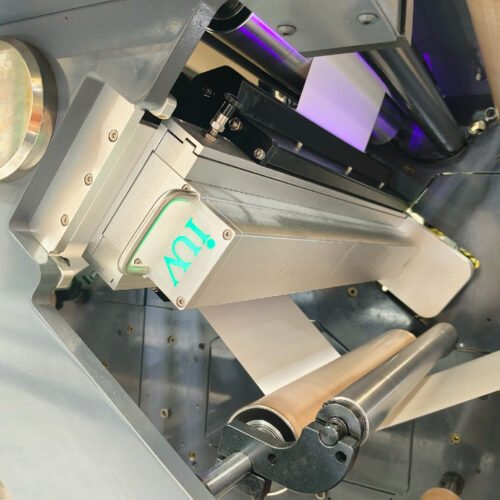
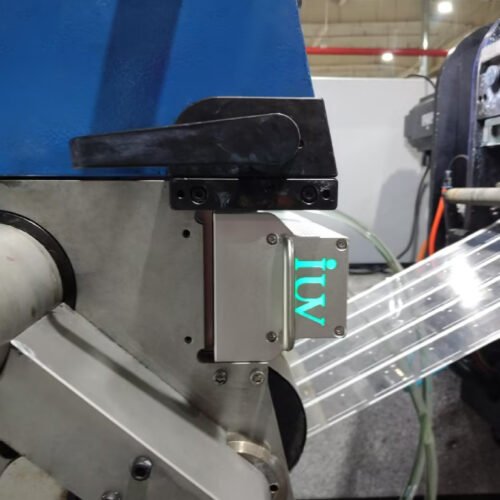
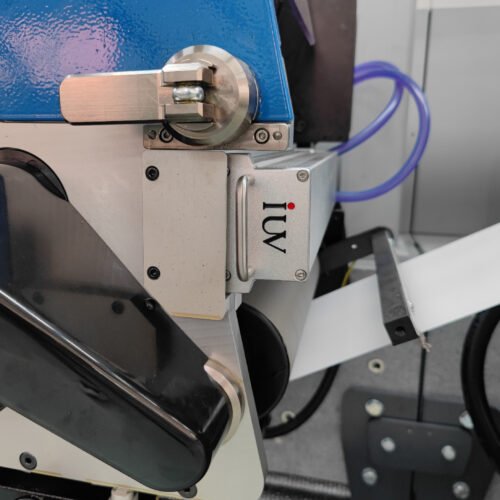
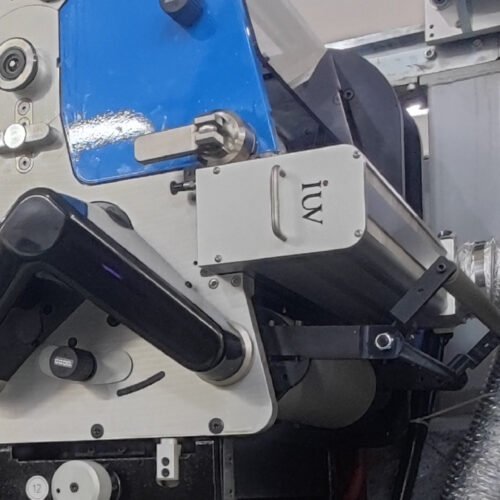
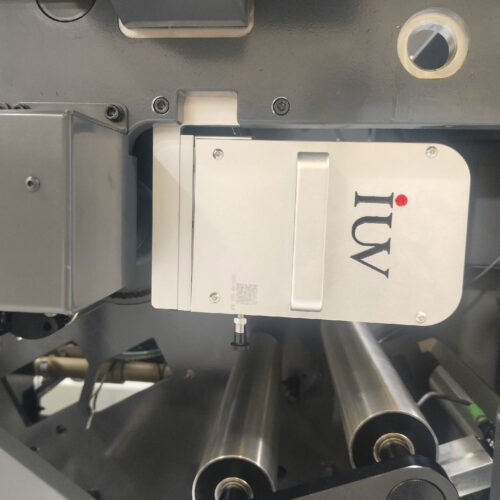
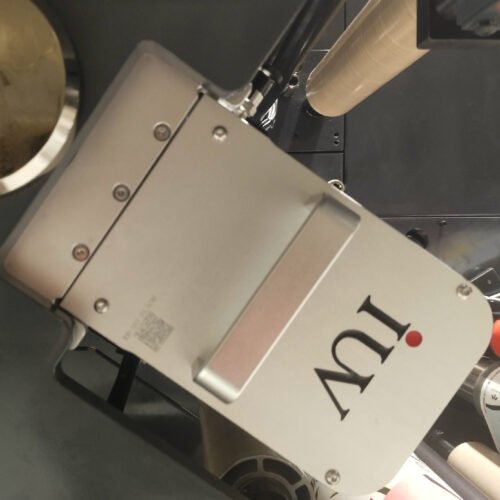
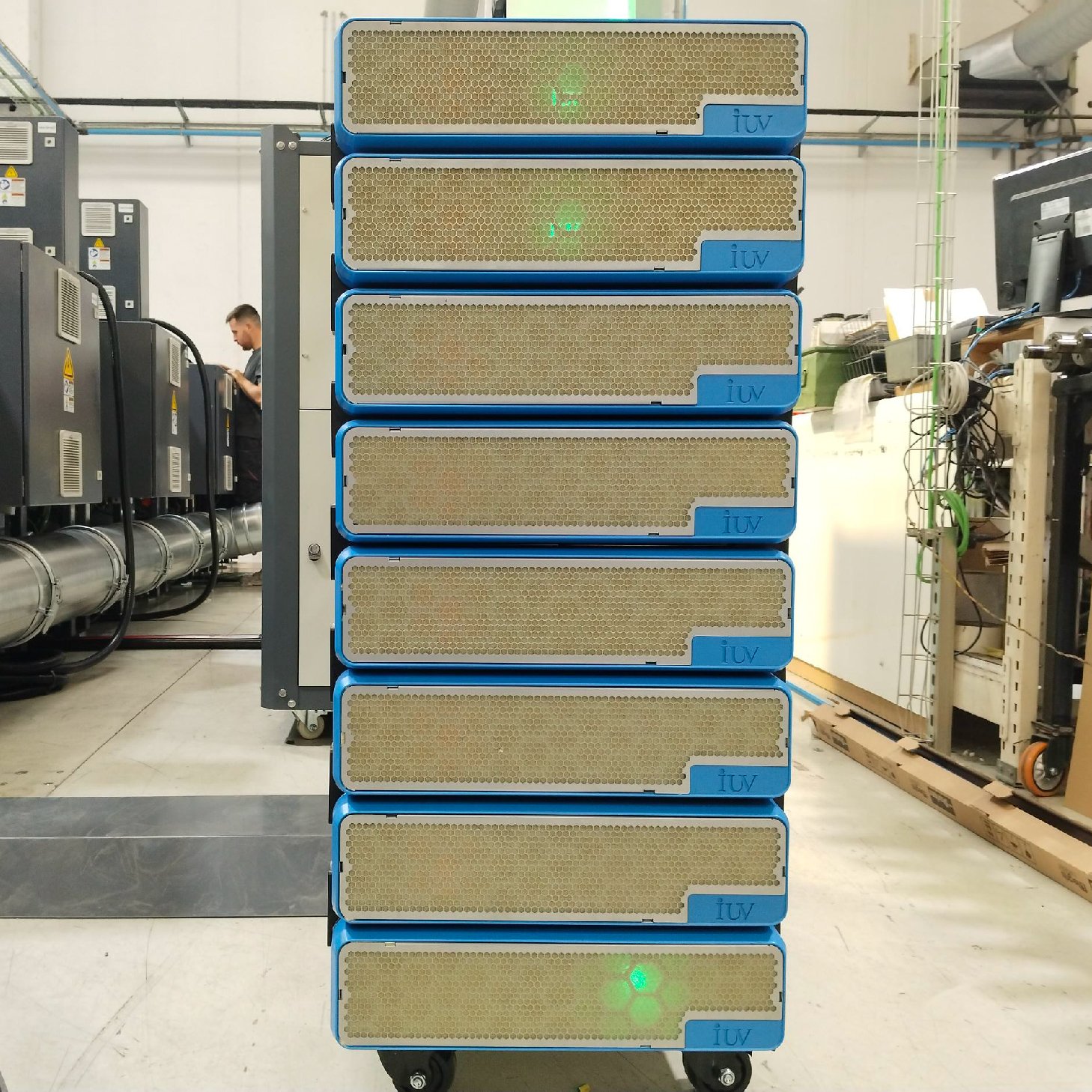
The selected remedy was IUV’s dedicated UV-LED curing system for wide-format sheet-fed offset presses. This solution was architected to directly confront the identified challenges. At its core were high-density LED arrays capable of generating a peak irradiance exceeding 25 W/cm² at the focal plane. This high-intensity “flash” ensured sufficient photon density for complete monomer cross-linking within the drastically reduced dwell time at elevated speeds, enabling true single-pass curing . The system was designed for seamless integration, requiring no major structural modifications to the existing press, thereby protecting the client’s capital investment.
Breakthrough Cooling: Dual-Mode Water-Air Hybrid System
A pivotal engineering achievement was the advanced thermal management system. High-power LED modules generate concentrated heat that must be dissipated reliably. IUV’s solution employed a compact dual-mode water-air hybrid cooling design. A primary closed-loop water circuit with a high-efficiency chiller handled the bulk heat extraction directly from the LED junctions. An integrated auxiliary air-cooling system provided targeted airflow over critical electronics and the external housing . An intelligent control algorithm balanced both systems in real-time based on sensor feedback. This maintained the optimal operating temperature for maximum LED lifespan (guaranteed >30,000 hours) and stable UV output, while completely eliminating the substrate-warping heat issue inherent to mercury lamps .
Precision Optics and Intelligent Process Control
The system leveraged precision optical design to ensure quality. Advanced secondary optical lenses, crafted from quartz, focused UV energy with exceptional accuracy. This design achieved a curing uniformity of ±3% across the entire sheet width, which was crucial for large, solid areas and consistent gloss . Integration went beyond mechanics. The system communicated with the press’s PLC via industrial protocols like CAN bus, receiving real-time data on speed and status. IUV’s smart controller then automatically modulated the LED drive current to maintain a preset, constant energy dose regardless of speed fluctuations—a “set-and-forget” capability that guaranteed perfect curing from the first sheet to the last .
Quantifiable Business Outcomes and ROI
The post-implementation analysis revealed transformative results across all key metrics:
- Productivity Leap: Achievable production speed increased by over 35%. The press could now run consistently at 16,000+ sheets per hour without compromising quality, unlocking significant additional capacity.
- Dramatic Energy Savings: Total electrical power consumption for curing plummeted by approximately 72%. Based on local energy rates and utilization, this translated to annual savings nearing €58,000 .
- Waste Reduction: Substrate spoilage due to heat warp and start-up curing inconsistencies decreased by an estimated 90%, directly improving material yield and profitability.
- Lower Maintenance Costs: The elimination of mercury lamp changes, reflector cleanings, and related parts cut annual maintenance expenditures by over 80% .
- Enhanced Quality Assurance: Gloss measurement variance improved by 50%, and adhesion tests showed perfect scores across all tested substrates, including challenging films like BOPP and PET.
The complete system upgrade achieved a calculated payback period of under 22 months, solidifying the investment’s compelling financial rationale .
Conclusion: Setting a New Benchmark for Offset Printing
This case study conclusively demonstrates that high-speed, single-pass curing is an attainable operational standard, powered by advanced LED UV technology. The success stemmed from a synergistic approach combining high-energy physics, innovative thermal engineering, and deep process integration. For printers competing in markets where speed, premium quality, and sustainability are paramount, upgrading to a purpose-engineered system like IUV’s is a strategic imperative. It converts a historical limitation into a formidable competitive advantage, enabling faster turnaround, superior print fidelity, radically lower operational expenditure, and a stronger, more profitable position in the future of industrial printing .