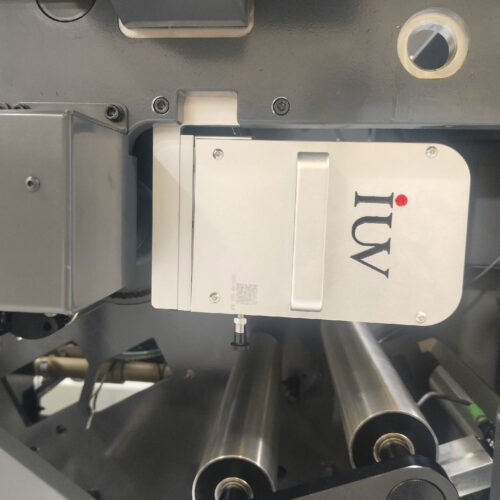
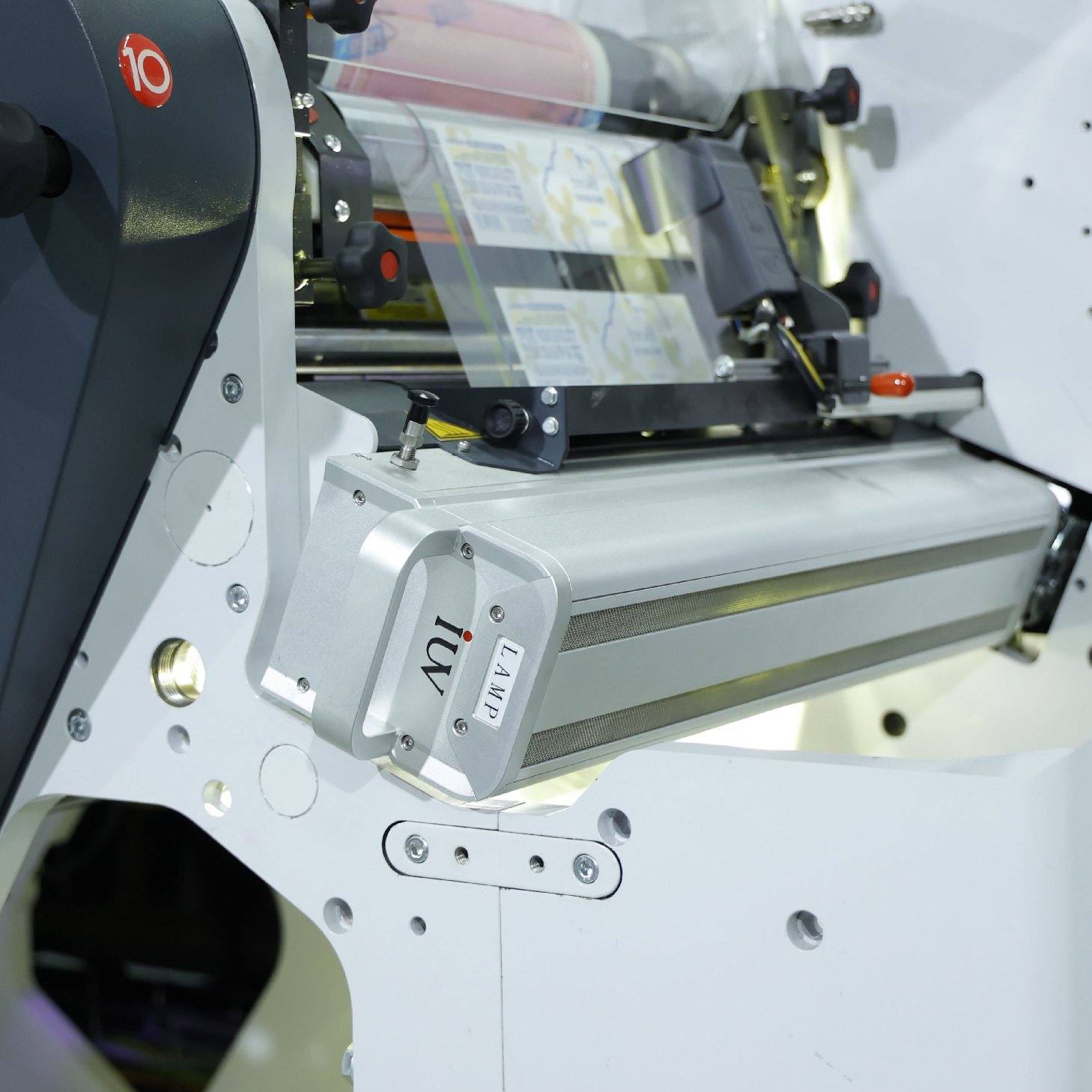
High-speed narrow web flexographic printing demands precise control over curing energy. As press speeds increase beyond 150 meters per minute, polymerization must occur within milliseconds. In this environment, optimizing UV photon flux density becomes essential for achieving complete crosslinking without compromising print quality.
Photon flux density refers to the number of photons striking a defined surface area per unit time. In UV curing systems, it determines how efficiently photoinitiators activate within the ink film. In narrow web label printing and UV offset applications, insufficient photon density leads to incomplete cure, while excessive intensity may create brittle surfaces or trapping imbalance.
Engineering control of photon flux density requires coordination between LED array design, lamp configuration, ink chemistry, anilox selection, and substrate characteristics. Each factor influences polymerization kinetics in high-speed flexographic production.
Polymerization Dynamics at High Press Speeds
UV inks used in flexographic and offset printing rely on free radical polymerization. When exposed to ultraviolet energy, photoinitiators absorb photons and generate reactive species. These radicals initiate crosslinking between oligomers and monomers, forming a solid polymer network.
At high press speeds, exposure time under the curing unit decreases sharply. For example, at 200 meters per minute, dwell time beneath a 10 cm LED array may be less than 30 milliseconds. Within this short interval, sufficient photon flux must reach the full ink thickness to achieve stable polymerization.
If photon density is too low, only the surface layer cures. This leads to poor adhesion, weak chemical resistance, and reduced scratch durability. If density is too high, rapid surface curing may trap uncured material beneath, creating internal stress and reduced flexibility.
Optimizing photon flux density means delivering the right concentration of UV energy at the correct wavelength and exposure duration to ensure uniform crosslink formation throughout the ink film.
LED UV Systems and Spectral Considerations
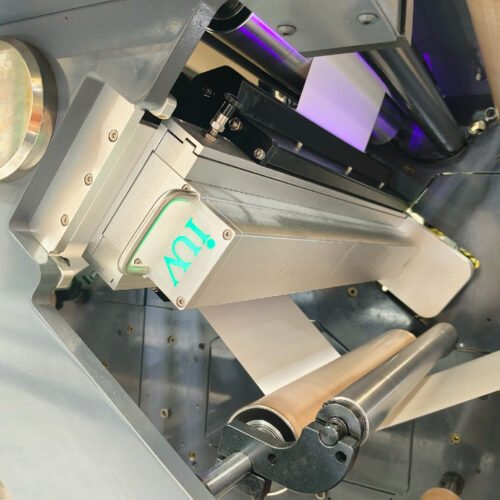
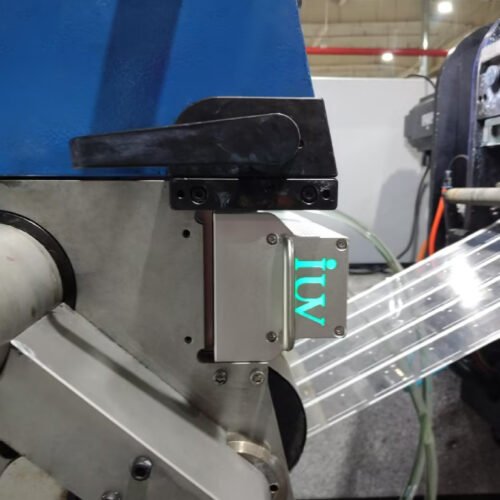
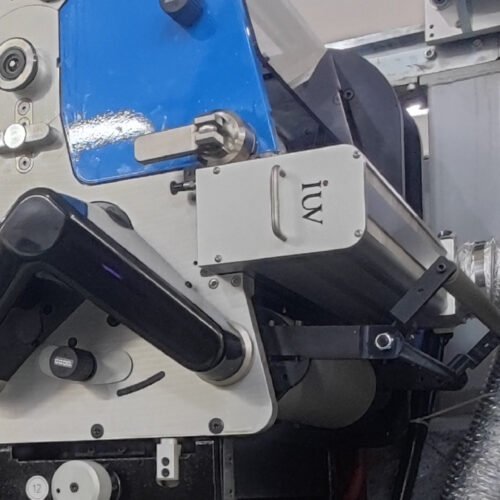
Modern narrow web presses increasingly use LED UV curing systems. Unlike traditional mercury lamps, LED arrays emit narrowband UV-A energy, typically at 365 nm, 385 nm, 395 nm, or 405 nm. Photon flux density in LED systems is highly concentrated within this specific wavelength range.
Ink formulations must be matched to LED spectral output. Photoinitiators optimized for mercury lamps may not respond efficiently to narrowband LED energy. Proper matching ensures that absorbed photons effectively trigger polymerization rather than being wasted.
Peak irradiance, measured in W/cm², reflects instantaneous photon density. Total energy dose, measured in mJ/cm², reflects cumulative exposure. Both values must be engineered carefully. In high-speed flexo label production, peak irradiance often determines surface cure stability, while total energy ensures depth of cure.
LED modules allow independent intensity adjustment. This flexibility supports optimization across multiple print stations in wet-on-wet sequences.
Anilox Volume and Ink Film Thickness
Anilox roll geometry directly influences the curing requirement. Higher cell volumes deposit thicker ink films, increasing the photon density needed for full polymerization. Lower volumes used for fine screen ruling require controlled intensity to prevent over-curing.
For example, a 6.0 BCM anilox used for opaque white ink in label printing demands higher photon flux to penetrate the entire layer. In contrast, a 2.5 BCM anilox used for process cyan requires less intensity to maintain flexibility and dot integrity.
Matching photon density to ink film thickness prevents defects such as surface brittleness, poor intercoat adhesion, or incomplete cure. Radiometric measurement across the web ensures uniform distribution.
In UV offset printing, although ink films are thinner, high-speed sheetfed production still requires stable photon density. Inconsistent output can lead to gloss variation and adhesion problems.
Managing Multi-Color Wet-on-Wet Sequences
Multi-color wet-on-wet printing complicates photon flux optimization. Early stations often require partial curing to stabilize ink without fully locking the surface. Later stations complete polymerization across all layers.
In narrow web flexographic presses, adjustable LED intensity at each unit allows precise control. Lower photon density at the first station can create controlled gelation. Subsequent stations gradually increase intensity, culminating in full cure at the final unit.
Overexposure at intermediate stations may reduce trapping efficiency. Underexposure may allow ink displacement or tonal distortion. Balancing photon flux across the sequence ensures stable color stacking and clean gradients.
In hybrid press lines combining LED and conventional UV systems, spectral compatibility must be considered. Ink chemistry must respond consistently to both energy sources.
Substrate Influence on Photon Efficiency
Substrate type affects photon utilization efficiency. Film materials such as PET and BOPP reflect some UV energy, effectively increasing photon interaction within the ink layer. Paper substrates absorb part of the energy, reducing effective curing depth.
Surface temperature also influences polymerization rate. Although LED UV systems generate less heat than mercury lamps, high photon density still raises localized ink temperature. Elevated temperature accelerates reaction kinetics but may alter viscosity and trapping performance.
Maintaining stable web tension and cooling airflow ensures consistent exposure conditions. Excessive airflow may reduce surface temperature too quickly, affecting polymerization uniformity.
Measurement and Control Tools
Engineering optimization requires accurate measurement. LED-compatible radiometers provide peak irradiance and energy dose readings. Regular calibration confirms that photon density remains within target range.
Inline monitoring systems installed on narrow web presses enable real-time control. These systems detect output fluctuation caused by contamination, aging components, or thermal imbalance.
Process documentation supports repeatability. Recording anilox specification, ink type, LED intensity, press speed, and measured energy ensures consistent setup for repeat jobs. Data-driven adjustments reduce waste and improve efficiency.
Avoiding Common High-Speed Curing Defects
At high production speeds, insufficient photon flux often results in surface tackiness or reduced solvent resistance. Overexposure may cause excessive hardness, leading to cracking during die-cutting or application.
Banding across web width can occur if photon density distribution is uneven. Regular cleaning of protective quartz windows and proper alignment of LED arrays maintain uniform exposure.
In fine screen label applications above 175 lpi, precise control becomes even more critical. High-definition graphics require stable dot geometry. Balanced photon flux preserves highlight detail while ensuring full cure.
Energy Efficiency and Long-Term Stability
Optimizing photon flux density also improves energy efficiency. Delivering excessive intensity wastes power and increases component stress. Insufficient intensity requires slower press speeds, reducing productivity.
LED UV systems offer consistent output over extended operating hours when properly cooled and maintained. Stable photon density ensures predictable polymerization and long-term print durability.
In competitive narrow web label markets, high-speed production must not compromise quality. Engineering control of photon flux density bridges the gap between productivity and performance.
Achieving Reliable High-Speed Polymerization
Optimizing UV photon flux density in narrow web flexographic printing demands a systematic engineering approach. Ink film thickness, spectral compatibility, press speed, and substrate properties must align precisely. Controlled intensity at each station ensures stable wet-on-wet performance and complete final cure.
When photon density is engineered correctly, polymerization proceeds rapidly and uniformly. The resulting ink film demonstrates strong adhesion, chemical resistance, and mechanical durability. Fine screen ruling remains sharp, gradients stay smooth, and color density remains consistent.
High-speed flexo and UV offset production depend on disciplined calibration and monitoring. By mastering photon flux control, printers achieve efficient curing, reduced waste, and dependable print quality across extended runs.