Sustainability has become a central driver in flexible packaging production. Brand owners demand lower carbon footprints, reduced migration risk, and improved recyclability. Narrow web lines, traditionally associated with label printing, are increasingly used for short-run flexible packaging, sachets, and multi-layer laminates. In this context, curing technology directly influences environmental performance and product safety.
Two advanced curing technologies dominate discussions in this segment: LED UV curing and Electron Beam (EB) curing. Both offer alternatives to conventional mercury UV systems and solvent-based drying. However, their operational principles, infrastructure requirements, and sustainability impact differ significantly. Evaluating these differences is essential for converters operating flexographic and offset narrow web presses.
Fundamental Differences in Energy Generation
LED UV curing relies on semiconductor diodes that emit ultraviolet radiation within a narrow wavelength band, typically between 365 nm and 405 nm. Photoinitiators within the ink absorb this radiation and initiate polymerization. The process is controlled, immediate, and compatible with high-speed narrow web presses.
Electron Beam curing operates on a different principle. High-energy electrons are generated and directed onto the coating or ink surface. These electrons penetrate the material and initiate polymerization without the need for photoinitiators. The process is highly efficient and capable of curing thick layers.
The distinction between photochemical activation and electron-induced polymerization shapes many downstream differences in sustainability, formulation, and press integration.
Energy Efficiency and Power Consumption
Energy efficiency is a major factor in sustainable production. LED UV systems are known for high electrical-to-optical conversion efficiency. They generate minimal infrared radiation and do not require warm-up time. Power consumption scales with output, and dynamic control allows further optimization during press speed changes.
Electron Beam systems consume significant electrical power due to high-voltage electron generation and shielding requirements. Although EB curing is efficient in converting energy into polymerization, the infrastructure needed to generate and contain electron beams adds complexity and energy demand.
In narrow web environments where space and energy budgets are limited, LED UV systems often integrate more easily with existing electrical capacity.
Heat Management and Substrate Protection
Flexible packaging substrates, including thin films such as PE, PP, and PET, are sensitive to heat. LED UV curing produces minimal radiant heat compared to traditional arc lamps. This low thermal load supports stable web tension and reduces distortion during flexographic printing.
Electron Beam curing generates little surface heat during polymerization, but equipment shielding and vacuum systems can influence overall thermal conditions. EB units are generally larger and require substantial mechanical integration, which can affect line layout and airflow.
For narrow web lines processing lightweight films, compact LED UV systems often provide greater installation flexibility and reduced mechanical impact.
Ink and Coating Formulation Considerations
LED UV inks require photoinitiators tuned to specific wavelengths. Advances in formulation have improved reactivity and migration performance, making LED UV suitable for many flexible packaging applications. However, photoinitiator residues must be carefully managed in food-contact or low-migration environments.
Electron Beam curing eliminates the need for photoinitiators. This advantage reduces extractables and potential migration risks. EB inks often consist of oligomers and monomers that polymerize directly under electron exposure. For certain high-barrier or sensitive packaging applications, this simplified chemistry supports regulatory compliance.
Formulation differences influence cost, availability, and compatibility with existing narrow web flexo platforms.
Migration and Food Packaging Implications
Sustainable flexible packaging frequently overlaps with food-contact requirements. Migration control is a critical factor in curing selection. LED UV systems designed for low-migration applications use specialized inks and carefully controlled curing conditions. When properly managed, they can meet stringent regulatory standards.
Electron Beam curing is often viewed as inherently low-migration due to the absence of photoinitiators. However, formulation quality and complete polymerization remain essential. Both technologies require validation and testing to ensure compliance.
In narrow web flexible packaging, the choice between LED UV and EB often depends on product category, barrier structure, and regulatory target markets.
Footprint and Integration in Narrow Web Lines
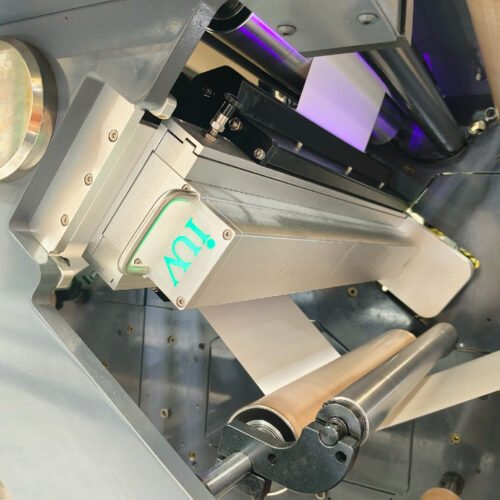
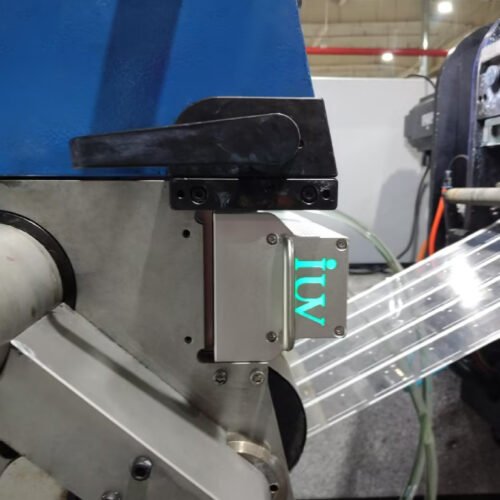
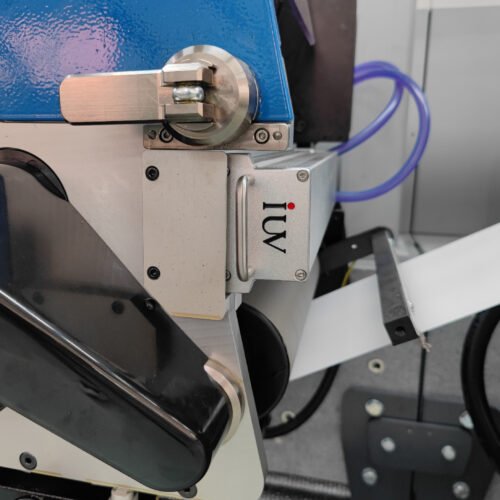
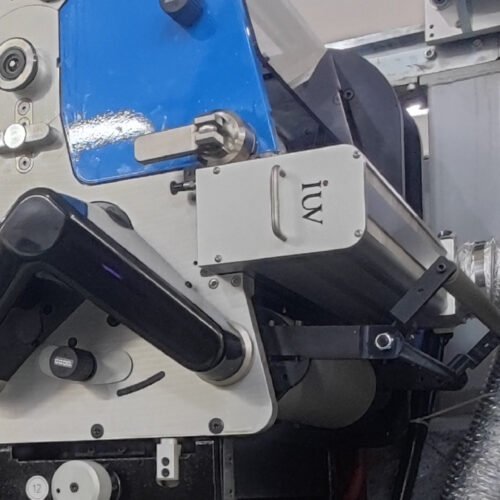
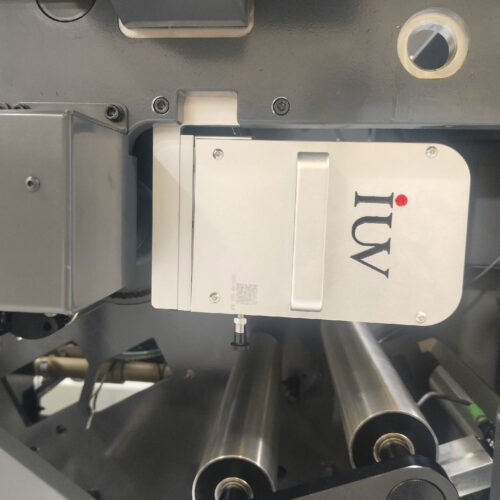
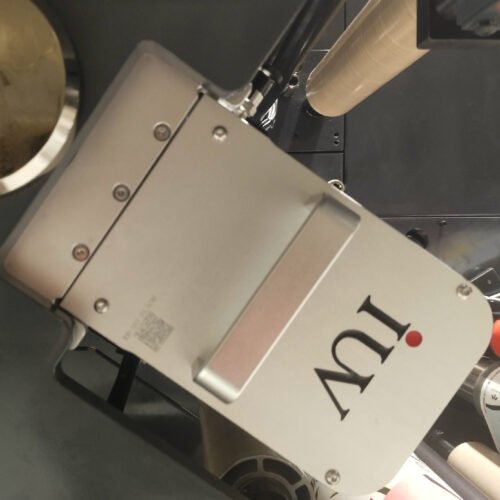
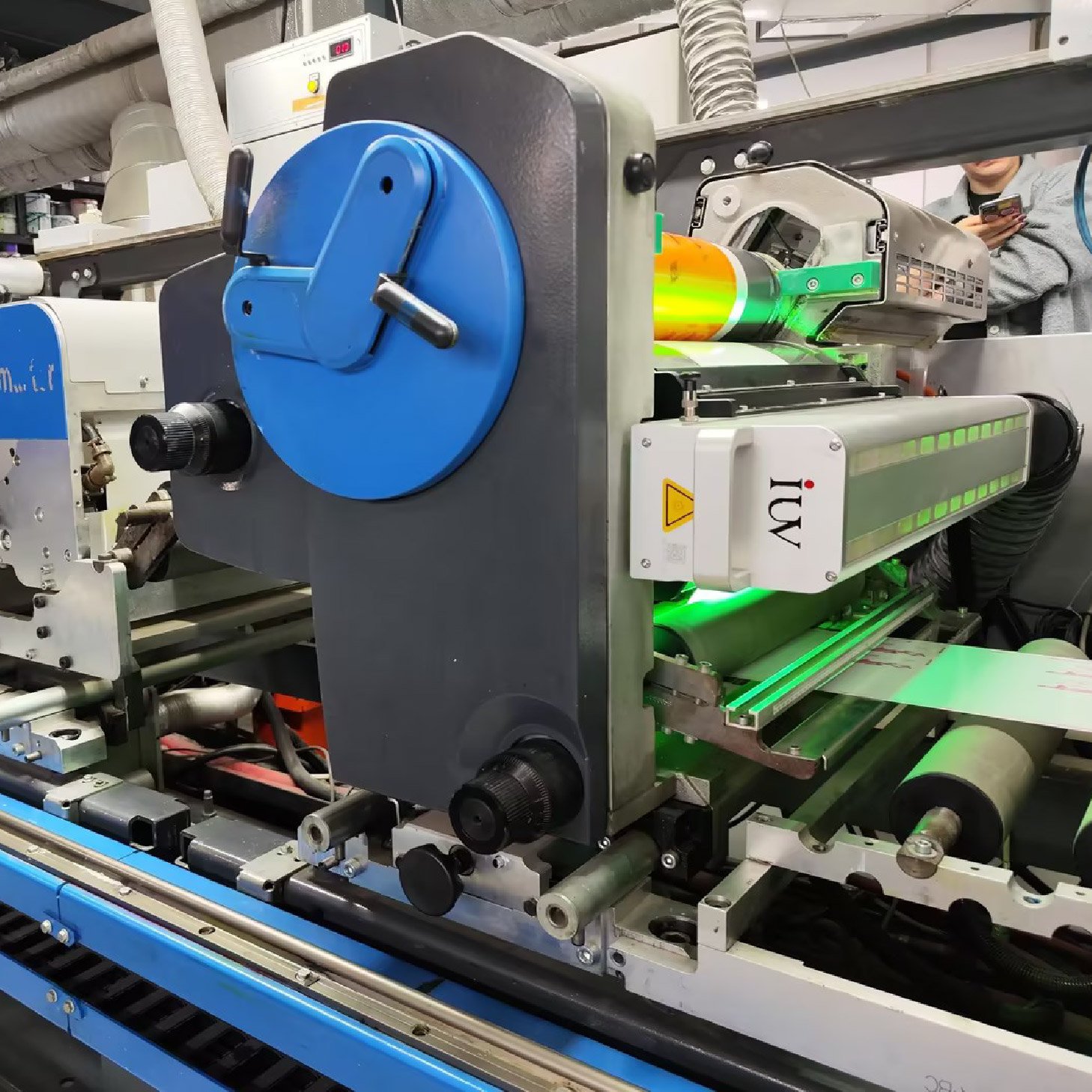
Narrow web presses are designed for compactness and modular expansion. LED UV units are relatively small and can replace conventional UV lamps with minimal structural modification. Their lightweight design and flexible mounting options suit multi-station flexo presses.
Electron Beam systems require radiation shielding, safety interlocks, and larger enclosures. The footprint is significantly greater than LED UV modules. Installation may require reinforcement of the press frame and additional safety infrastructure.
For converters transitioning from label printing to flexible packaging on existing narrow web equipment, LED UV integration typically involves less disruption.
Environmental Impact and Emissions
From an environmental perspective, both LED UV and EB curing eliminate solvent emissions associated with traditional drying. LED UV systems generate no ozone and do not contain mercury. Their long diode lifespan reduces waste associated with lamp replacement.
Electron Beam systems also avoid photochemical emissions and do not rely on mercury. However, their energy-intensive components and complex shielding structures increase manufacturing and installation resource requirements.
Evaluating overall environmental impact requires considering energy consumption, component lifespan, maintenance intervals, and system disposal at end of life.
Production Speed and Throughput
High-speed capability is essential in flexible packaging production. LED UV curing delivers instant on-off control and stable output at varying speeds. Dynamic power scaling supports consistent curing during acceleration and deceleration.
Electron Beam systems also operate effectively at high speeds and can cure thick coatings in a single pass. Their penetration capability can be advantageous in multi-layer constructions. However, speed optimization must account for equipment size and mechanical constraints.
In narrow web lines focused on short runs and frequent changeovers, LED UV’s responsiveness often aligns well with operational demands.
Maintenance and Operational Complexity
Maintenance requirements influence sustainability through downtime, spare parts consumption, and technician intervention. LED UV systems feature solid-state diodes with predictable degradation curves. Cooling systems require monitoring, but overall maintenance is straightforward.
Electron Beam systems involve high-voltage components, vacuum systems, and radiation shielding. Maintenance requires specialized expertise and adherence to strict safety protocols. Operational complexity may be higher, particularly for facilities without prior EB experience.
Converters must evaluate whether in-house technical capabilities align with the chosen curing technology.
Cost Considerations in Sustainable Investment
Capital expenditure for Electron Beam equipment is typically higher than for LED UV systems. Installation costs, safety infrastructure, and training further increase investment levels. However, EB’s elimination of photoinitiators may reduce ink formulation costs in certain applications.
LED UV systems offer lower initial investment and simpler retrofitting into existing narrow web presses. Operational cost savings arise from energy efficiency and long diode life. Total cost analysis should include ink pricing, maintenance, downtime, and regulatory compliance expenses.
Flexibility for Hybrid Label and Packaging Production
Many narrow web converters operate hybrid business models, producing both labels and flexible packaging. LED UV systems provide versatility across substrates and applications. They support spot varnishing, adhesive curing, and multi-color flexographic printing within the same press.
Electron Beam systems are highly effective for specific packaging structures but may be less flexible for label-focused operations. The broader compatibility of LED UV with established label workflows can influence technology selection.
Strategic Considerations for Sustainable Growth
Sustainable flexible packaging requires balancing environmental performance, regulatory compliance, operational efficiency, and capital investment. LED UV and Electron Beam curing both provide solvent-free alternatives suited to modern production.
In narrow web lines transitioning toward flexible packaging, LED UV offers compact integration and flexible operation. Electron Beam delivers deep curing and simplified chemistry, particularly for high-barrier applications. The optimal choice depends on production scale, substrate portfolio, regulatory requirements, and long-term business strategy.
Careful technical evaluation ensures that curing technology supports not only sustainability goals but also consistent quality and efficient narrow web performance.