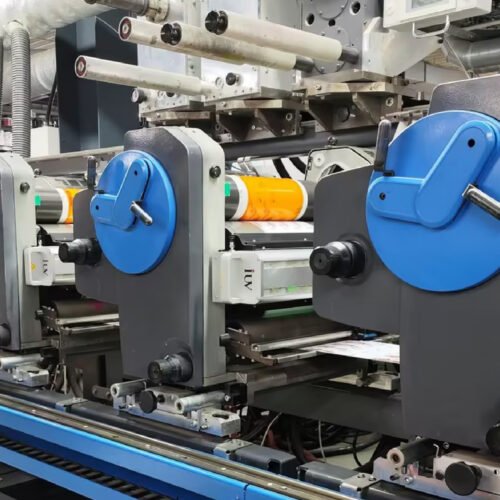
Hybrid production lines are transforming the printing industry. They expertly merge digital printing technology with automated UV curing systems. This innovative approach is particularly impactful for narrow web printing applications, including labels, flexible packaging, and folding cartons. By integrating these technologies, print businesses can achieve unprecedented levels of efficiency, flexibility, and product quality.
The advent of digital printing brought significant advantages. It allows for rapid setup, variable data printing, and short run production. However, traditional digital print outputs often required separate finishing steps. This is where automated UV curing comes into play. UV curing uses ultraviolet light to instantly dry or cure inks, coatings, and adhesives. When paired with digital printing in a hybrid setup, it creates a seamless workflow.
The Power of Hybrid: Digital Printing Meets UV Curing
Digital printing, especially inkjet and electrophotography, excels at handling diverse print jobs. It eliminates the need for printing plates. This drastically reduces setup times and costs, making it ideal for short to medium runs. Variable data printing capabilities enable personalization for marketing campaigns or product identification. However, digital inks traditionally needed time to dry. This could slow down the production line or require space for drying.
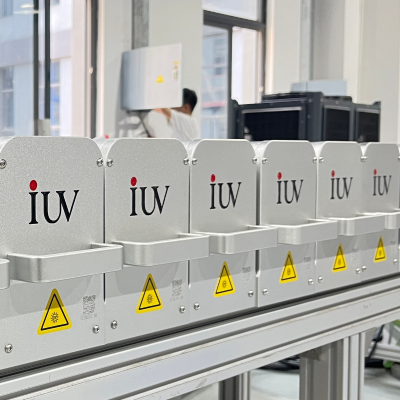
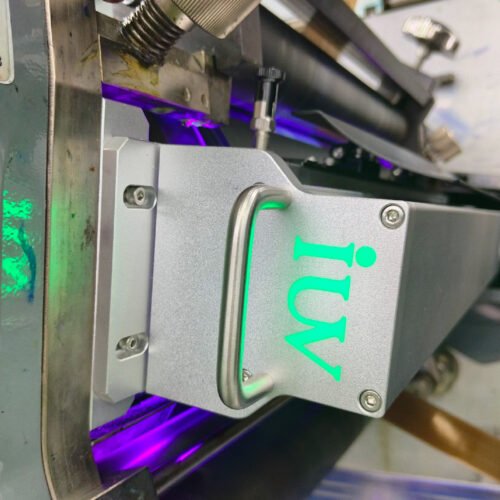
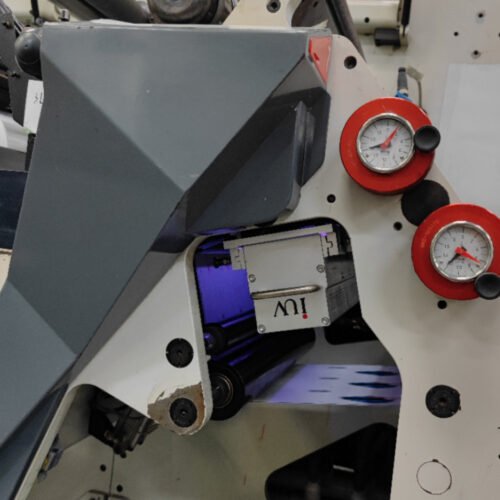
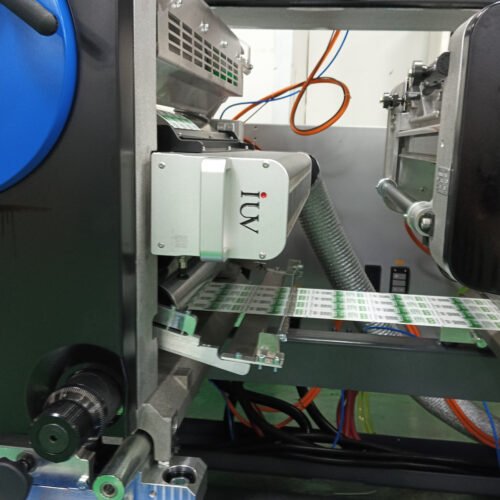
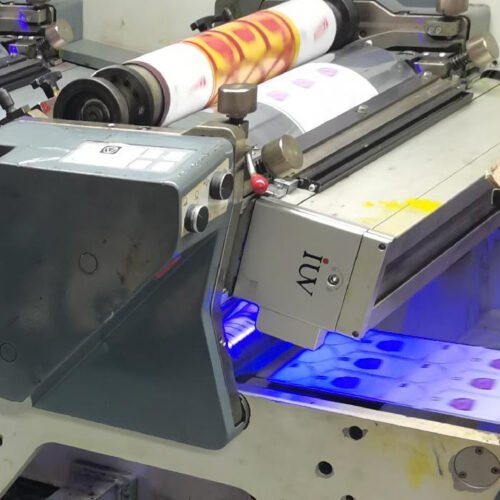
Automated UV curing systems, particularly those utilizing LED UV technology, offer a rapid and efficient solution. LED UV lamps emit a specific spectrum of UV light. This light initiates a photochemical reaction within the UV-curable inks and coatings. The result is an instant hardening, or curing, of the printed material. This process is incredibly fast, often occurring within fractions of a second.
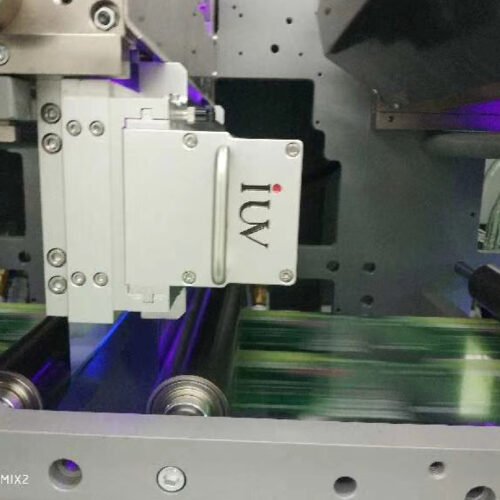
The synergy between digital printing and UV curing in a hybrid line is profound. Digital print heads apply ink precisely. Immediately after, UV lamps cure the ink, locking it onto the substrate. This eliminates ink smudging and allows for immediate handling and further processing. This is a game-changer for label printers, flexographic printers looking to add digital capabilities, and offset printers exploring new production models.
Advantages for Label and Narrow Web Printing
For narrow web printing, especially in the label sector, hybrid production offers substantial benefits. Labels often require high print quality, robust durability, and fast turnaround times. Digital printing handles the variability inherent in label jobs. This includes different SKUs, personalized information, and promotional content. The challenge has always been integrating this flexibility with efficient drying.
Automated UV curing addresses this directly. It ensures that inks are fully cured and resistant to scuffing, chemicals, and environmental factors. This is crucial for labels that must withstand harsh conditions or frequent handling. The instant cure also means that labels can be immediately moved to the next stage of production. This could be die-cutting, slitting, or rewinding, without any delay.
The combination enables printers to offer a wider range of finishes. This includes high-gloss, matte, or textured effects using specialized UV varnishes. These can be applied selectively using digital print heads within the hybrid line. This level of customization was previously difficult and time-consuming to achieve.
Integrating with Flexographic and Offset Printing
The concept of hybrid production extends beyond pure digital printing. Many print houses operate traditional flexographic and offset presses. These presses are highly efficient for long print runs. However, they lack the flexibility of digital printing. The introduction of hybrid lines allows these established businesses to augment their existing capabilities.
A common hybrid setup might involve a flexographic or offset press for the primary print. This is followed by a digital printing unit for variable data or embellishments. Finally, an automated UV curing system is integrated to ensure all inks and coatings are properly cured. This allows printers to produce high-volume, high-quality base prints. They can then add unique, personalized elements or special effects on demand.
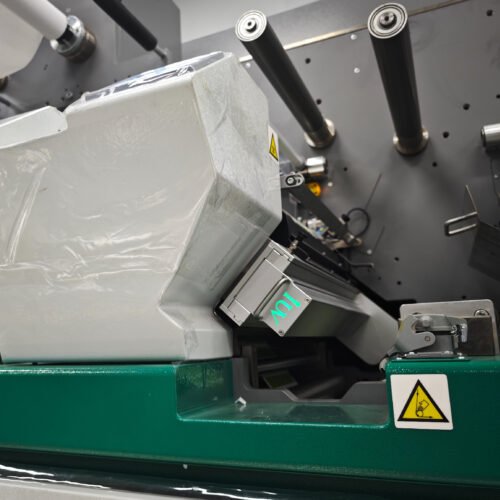
For flexographic printing, which often uses UV-curable inks, integrating UV curing is a natural progression. The presses are already designed to accommodate UV lamps. Adding a digital inkjet unit for short runs or variable data, followed by an advanced UV curing system, creates a versatile production hub. This enables a single press to handle a much broader spectrum of customer demands.
Offset printers can similarly benefit. By incorporating a digital inkjet unit for short runs or personalization, and pairing it with UV curing, they can compete more effectively. They can offer personalized print runs or special finishes without dedicating their large offset presses to these tasks. The UV curing ensures that the digital print integrates seamlessly with any subsequent offset or finishing processes.
LED UV Curing: The Modern Standard
The evolution of UV curing technology has been a key enabler of hybrid production. While traditional mercury-vapor UV lamps were effective, they had drawbacks. They consumed significant energy, generated substantial heat, and had a limited lifespan.
LED UV curing systems offer a superior alternative. They are more energy-efficient, consuming up to 70% less power than mercury lamps. They produce very little heat, which is beneficial for heat-sensitive substrates like thin films or plastics. LED lamps also have a much longer operational life. They turn on and off instantly, requiring no warm-up time, which further contributes to production efficiency.
The precise wavelength output of LED UV lamps ensures efficient curing of specific UV-curable inks and coatings. This reliability and control are critical in a high-speed hybrid production environment. It guarantees consistent quality across all print jobs. The absence of ozone generation from LED lamps also contributes to a safer and more environmentally friendly working environment.
Key Considerations for Implementation
Implementing a hybrid production line requires careful planning. Several factors need to be considered to maximize the benefits.
Substrate Compatibility: The choice of substrate is paramount. Different materials absorb UV light differently. Ensuring the chosen inks and coatings are compatible with the substrate and the UV curing system is essential. This is particularly important for flexible packaging where substrate properties are critical.
Ink and Coating Formulation: UV-curable inks and coatings must be specifically formulated for the intended printing process (e.g., inkjet, flexo) and the UV light source (LED vs. mercury). Printers need to work with ink suppliers to ensure optimal performance.
Workflow Integration: The seamless integration of digital printing units, UV curing units, and finishing equipment is key. Automation and sophisticated control systems are needed to manage the entire workflow efficiently. This minimizes manual intervention and potential errors.
Space and Infrastructure: Hybrid lines can be complex. Adequate space for the equipment and the necessary power and ventilation infrastructure must be available. LED UV systems are generally more compact than older UV technologies, which can be an advantage.
Operator Training: Skilled operators are vital for managing and maintaining hybrid production lines. Training on the digital printing technology, the UV curing system, and the integrated workflow is crucial for optimal operation and troubleshooting.
The Future of Print Production
Hybrid production lines represent a significant advancement in print manufacturing. They offer the best of both worlds: the flexibility and speed of digital printing combined with the robustness and efficiency of conventional printing methods. The integration of automated UV curing, especially LED UV technology, ensures fast, high-quality results.
For businesses in the label, flexographic, and offset printing sectors, adopting hybrid solutions is becoming increasingly strategic. It allows for greater agility in responding to market demands. It enables the production of high-value, customized, and personalized printed products efficiently. As the technology continues to mature, hybrid lines will undoubtedly play an even more central role in the future of the printing industry. They are not just a trend but a fundamental shift in how print is produced.