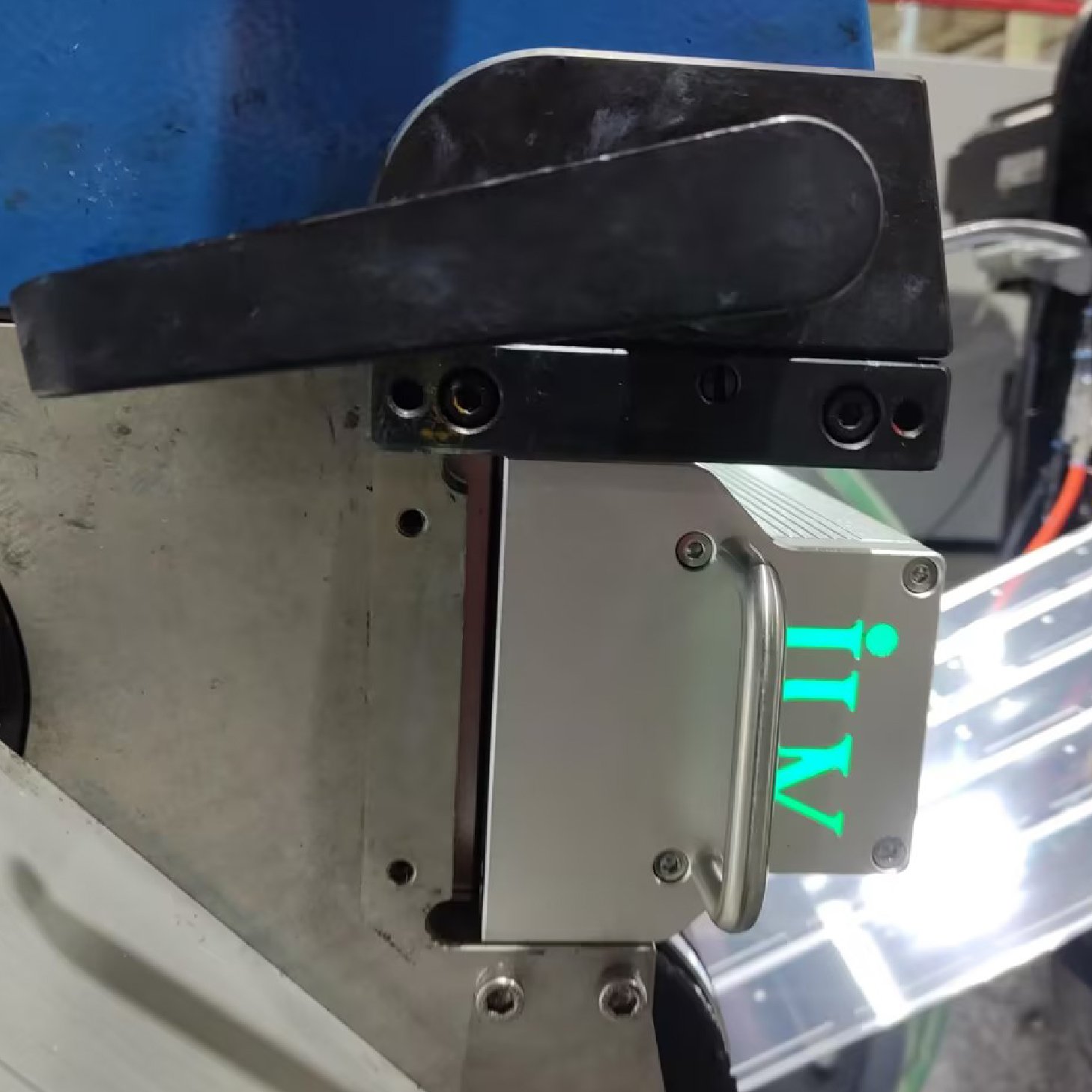
Incomplete ultraviolet (UV) curing occurs when UV ink or coating does not receive the energy required to complete its chemical reaction. In label printing, flexographic printing, offset printing, and narrow-web production, the main causes include insufficient UV dose, unsuitable wavelength, excessive press speed, incorrect lamp positioning, and oxygen inhibition. A properly configured UV LED curing system can help printers improve curing consistency, reduce production defects, and maintain stable print quality across different substrates and production conditions.
For printing companies, the solution starts with identifying the actual curing problem rather than simply increasing lamp power. Printers must evaluate ink chemistry, UV output, production speed, substrate properties, and curing conditions together. The correct approach also depends on whether the existing press uses mercury UV lamps, UV LED technology, or a combination of both.
What Do Incomplete UV Curing and Oxygen Inhibition Mean in Printing?
Ultraviolet (UV) curing is a photochemical process that uses ultraviolet radiation to initiate and complete polymerisation in UV-curable inks, coatings, and varnishes. The process converts reactive liquid materials into a solid film through chemical reactions.
Incomplete curing occurs when the photochemical reaction does not progress sufficiently throughout the ink or coating film. The surface may appear dry while the material underneath remains insufficiently cured. In other situations, both the surface and the deeper film remain unstable.
Oxygen inhibition is a curing problem in which oxygen interferes with free-radical polymerisation near the exposed surface. Oxygen reacts with free radicals and forms less reactive species. This slows the surface curing reaction and can leave the ink film tacky or chemically unstable.
These two problems are related, but they are not identical. Insufficient UV energy affects the overall curing process, while oxygen inhibition mainly affects surface polymerisation in free-radical systems.
In daily printing production, incomplete curing can create several quality problems:
- Ink smearing during subsequent printing or handling.
- Poor adhesion between the ink film and substrate.
- Reduced resistance to scratching and rubbing.
- Ink transfer during rewinding or stacking.
- Surface tackiness after the curing station.
- Unstable performance during lamination or further converting.
- Inconsistent coating and varnish performance.
The actual symptoms depend on the ink formulation, substrate, film thickness, and production conditions. A printer should not assume that every tacky surface indicates insufficient lamp output.
For example, a narrow-web flexographic press may produce acceptable results at moderate speeds but develop adhesion problems when production speed increases. A sheet-fed offset press may show incomplete curing in heavily printed areas. A label printer may experience inconsistent surface resistance across different materials.
Each situation requires a different investigation. Understanding the relationship between UV energy and ink chemistry is the starting point for an effective solution.
Why Does Incomplete UV Curing Occur During Daily Printing Production?
A UV curing system must deliver suitable radiation to the ink film within the available exposure time. The curing result depends on several connected production factors.
1. Insufficient UV dose
UV dose describes the total radiant energy received by a unit area of the ink film during exposure. It is commonly expressed in millijoules per square centimetre (mJ/cm²).
A UV lamp can produce high irradiance without delivering sufficient total dose. This can happen when the printing press runs too quickly or the exposure time becomes too short.
For example, increasing production speed reduces the time that the printed substrate remains under the curing unit. If the available UV output cannot compensate for the shorter exposure, the ink may not complete polymerisation.
2. Unsuitable wavelength
Wavelength describes the spectral position of ultraviolet radiation and is measured in nanometres (nm).
Different UV inks contain photoinitiators designed to respond to particular wavelength ranges. A photoinitiator absorbs suitable UV radiation and generates reactive species that initiate polymerisation.
If the curing system produces radiation outside the effective absorption range of the photoinitiator, curing performance may decline. This is why printers must confirm compatibility between the ink formulation and the UV curing system.
UV LED systems use specific emission wavelengths. Mercury UV systems produce a broader spectral output. Neither configuration should be selected without considering the ink manufacturer’s curing requirements.
3. Excessive ink or coating thickness
A thick ink film requires sufficient UV energy to support polymerisation throughout its depth. The upper surface may absorb or scatter part of the incoming radiation, reducing the energy available deeper in the film.
This issue can occur in solid colour areas, heavy flexographic deposits, and high-build coatings. Increasing lamp output alone may not resolve every problem because ink chemistry and film thickness also influence curing.
4. Incorrect lamp positioning
The distance and alignment between the curing unit and printed substrate affect the radiation reaching the ink surface.
An incorrectly positioned lamp can create uneven exposure across the web. Reflectors, protective glass, contamination, and mechanical installation conditions can also influence effective UV output.
5. Changes in substrate properties
Different substrates interact with UV radiation in different ways. Transparent films, metallic materials, coated papers, and uncoated papers can produce different curing conditions.
Surface treatment and substrate compatibility also affect ink adhesion. A poorly bonded ink film may be mistaken for incomplete curing, even when the photochemical reaction has progressed sufficiently.
6. Ink formulation and environmental conditions
Photoinitiator concentration, monomer selection, pigment loading, and resin chemistry influence curing behaviour.
Highly pigmented inks can absorb or scatter UV radiation. Some formulations also have greater sensitivity to oxygen inhibition. Temperature and material storage conditions may further influence ink performance.
A stable UV curing process therefore requires coordination between ink formulation, substrate selection, press operation, and UV system configuration.
How Can Printers Solve Incomplete UV Curing and Oxygen Inhibition?
Printers should investigate incomplete curing in a consistent order. Changing several production settings simultaneously makes it difficult to identify the actual cause.
The following inspection sequence provides a practical starting point.
Step 1: Confirm the type of curing defect
First, determine whether the problem involves surface tackiness, poor adhesion, insufficient chemical resistance, or ink transfer.
These symptoms do not always have the same cause.
A tacky surface may indicate oxygen inhibition or insufficient surface curing. Poor adhesion may result from substrate compatibility or surface treatment. Ink transfer during rewinding may indicate inadequate curing or unsuitable winding conditions.
Printers should distinguish between these defects before adjusting the UV system.
Step 2: Check ink and substrate compatibility
Confirm that the ink is suitable for the selected substrate and curing technology.
Check the photoinitiator requirements, recommended wavelength range, ink film thickness, and curing recommendations provided by the ink manufacturer.
For flexible packaging and label production, substrate surface treatment can also affect adhesion. Corona treatment and other surface preparation processes may be relevant when printing on plastic films.
Step 3: Inspect actual UV output
Check the condition of the UV curing equipment and its optical components.
For mercury UV systems, inspect lamp condition, reflector surfaces, ventilation, and cooling performance. For UV LED systems, inspect the emitting window, cooling circuit, and system operating status.
A calibrated UV radiometer can help measure irradiance and dose under defined operating conditions. The measurement method must match the relevant wavelength range and equipment configuration.
Printers should compare measurements with the requirements of the ink and the established production process.
Step 4: Evaluate production speed and exposure time
If curing problems appear after increasing press speed, evaluate the relationship between speed and available UV dose.
A faster press reduces exposure time. The curing system must provide suitable radiation within that shorter period.
Printers can conduct controlled production tests at different speeds while keeping other variables consistent. The results help establish the operating range for each ink and substrate combination.
Step 5: Check ink film thickness and printing conditions
Review anilox selection, ink transfer, coating application, and print coverage in flexographic production.
For offset printing, examine ink-water balance, ink film characteristics, and the coverage of solid areas.
Reducing excessive ink deposition may improve curing consistency without requiring a major change to the UV system.
Step 6: Adjust the curing configuration
After identifying the cause, adjust the appropriate operating conditions.
Possible adjustments include UV output, lamp positioning, production speed, cooling conditions, or curing unit configuration.
Printers should follow the equipment manufacturer’s operating recommendations. Any change should be verified through adhesion, rub resistance, and other application-specific tests.
A controlled adjustment is more reliable than increasing UV power without understanding the underlying defect.
How Does a UV LED Curing System Help Control Incomplete Curing?
A UV LED curing system uses light-emitting diodes (LEDs) to generate ultraviolet radiation for curing inks and coatings. Its wavelength output is selected according to the curing requirements of the application.
UV LED technology offers several operating characteristics that can help printing companies maintain consistent curing conditions.
Stable wavelength output
UV LED systems provide defined wavelength output. This allows printers to select curing equipment according to the photoinitiator response of compatible UV inks.
However, wavelength compatibility remains essential. A UV LED system cannot compensate for an unsuitable ink formulation.
Controlled operating output
A properly configured UV LED curing system provides controllable operating output for different printing conditions.
Independent control of curing units can help printers adjust operating conditions across different print stations. This is particularly useful in multi-colour flexographic and narrow-web printing.
Instant on/off operation
UV LED systems support instant on/off operation. This allows the curing output to follow production requirements without the same lamp warm-up and cooling procedures associated with conventional mercury UV operation.
The capability can simplify press operation during production interruptions and job changes.
Water cooling and thermal management
LED UV curing systems commonly use water cooling to manage heat generated during operation.
Effective cooling helps maintain the operating conditions of the LED modules. Cooling performance, water circulation, and system maintenance remain important factors in long-term stability.
Modular equipment configuration
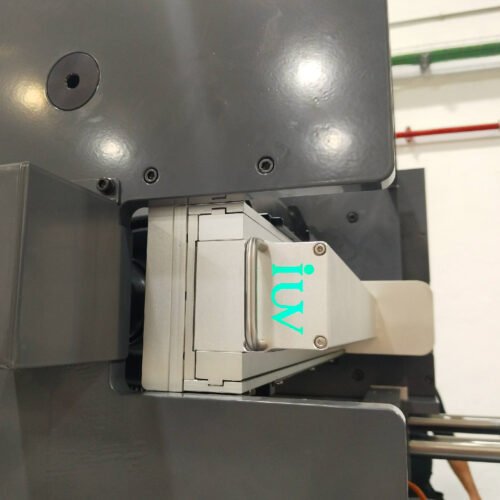
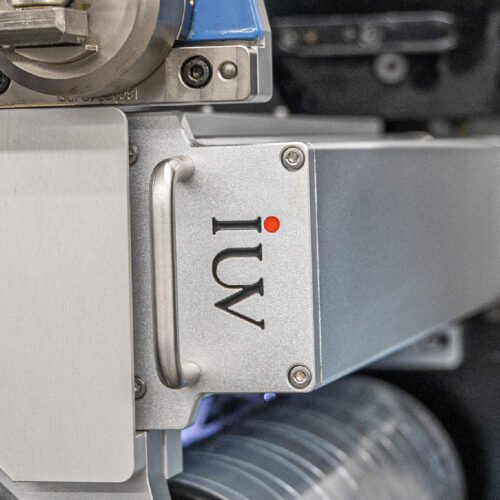
A modular UV LED curing system can be configured according to the installation space and curing requirements of a printing machine.
Independent power supply control, monitoring, diagnostics, and protection functions support equipment operation and maintenance. Modular configurations also provide flexibility when integrating UV curing into new printing machinery or upgrading existing presses.
Nevertheless, UV LED technology does not eliminate every incomplete curing problem. Incorrect wavelength selection, excessive ink thickness, insufficient dose, and oxygen inhibition can still affect print quality.
The practical benefit comes from matching the curing system to the complete printing process.
How Do Mercury UV and UV LED Systems Differ When Handling Curing Problems?
Mercury UV and UV LED are two established categories of industrial UV curing technology. Their radiation characteristics and operating requirements differ, which influences their application in printing production.
Radiation spectrum: Mercury UV lamps produce broad-spectrum ultraviolet radiation. UV LED systems produce radiation within selected wavelength bands.
Photoinitiator compatibility: Mercury UV inks are formulated for suitable mercury lamp emission. UV LED inks require photoinitiators compatible with the LED wavelength.
Thermal management: Mercury UV systems commonly use air cooling. UV LED systems commonly use water cooling to manage heat generated by the LED modules.
Operating characteristics: Mercury UV lamps require appropriate operating and thermal management procedures. UV LED systems support instant on/off operation.
Maintenance considerations: Mercury UV systems require attention to lamp condition, reflectors, and ventilation components. UV LED systems require attention to LED modules, optical surfaces, and cooling circuits.
Integration requirements: Mercury UV systems must accommodate lamp housing, ventilation, and electrical requirements. UV LED systems require suitable installation space, power supply configuration, and water cooling connections.
For printers operating existing machinery, the choice depends on current ink compatibility, curing requirements, installation conditions, and production objectives.
Some printing applications may continue using mercury UV technology. Others may benefit from UV LED upgrades. A hybrid mercury-LED UV system can also provide interchangeable mercury and LED light boxes where the machine configuration supports both technologies.
This arrangement offers production flexibility when different jobs require different curing technologies. However, each configuration requires matched operating settings and compatible consumables.
For printing machine manufacturers, modular UV curing equipment also provides a practical approach to machine integration. The curing unit, power supply, cooling arrangement, and control interface must work together as part of the complete press design.
The selection should therefore consider both curing performance and the machine’s mechanical and electrical architecture.
How Should Printing Companies Prevent Incomplete Curing in Long-Term Production?
Preventing incomplete curing requires a repeatable production process rather than occasional adjustments when defects appear.
Printing companies should establish curing conditions for their main combinations of ink, substrate, print coverage, and production speed.
A practical production control procedure should include the following elements:
- Record the ink type and its recommended UV curing requirements.
- Document the substrate type and relevant surface treatment conditions.
- Establish suitable production speeds for different job configurations.
- Check UV output using an appropriate measurement instrument.
- Inspect lamp or LED module condition at scheduled intervals.
For multi-colour narrow-web flexographic presses, each curing station should be evaluated according to its position and printing requirements. A consistent result at one station does not guarantee identical conditions at every station.
For offset presses, printers should pay particular attention to heavy ink coverage and the interaction between successive printed layers.
For OEMs, these requirements should be considered during the original machine design. The UV curing system must fit the available installation space, power architecture, cooling arrangement, and press control requirements.
Modular power supplies and independent curing unit control can support consistent equipment configuration across different machine models. Monitoring and diagnostic functions also help engineers investigate operating conditions during installation and maintenance.
A well-designed curing arrangement should provide stable performance under the intended production conditions. It should also allow engineers to identify and adjust relevant operating parameters without unnecessary changes to the complete press structure.