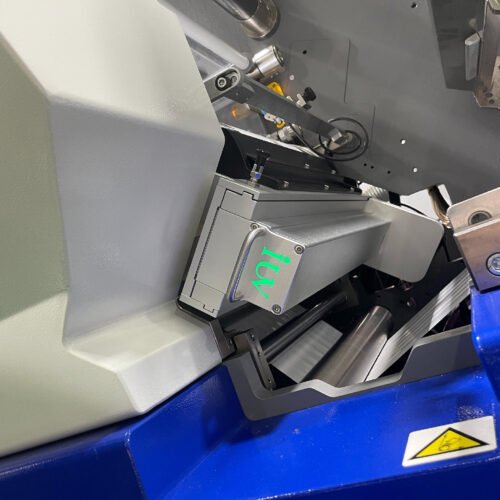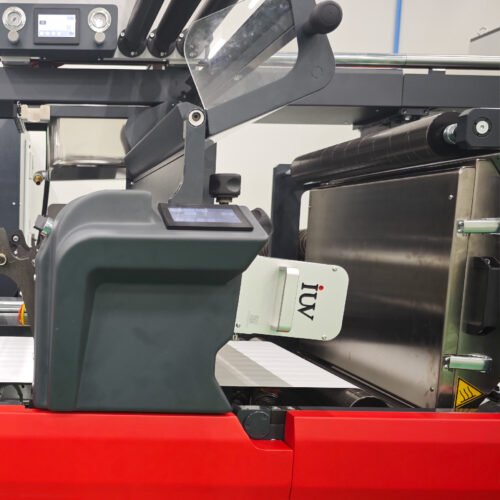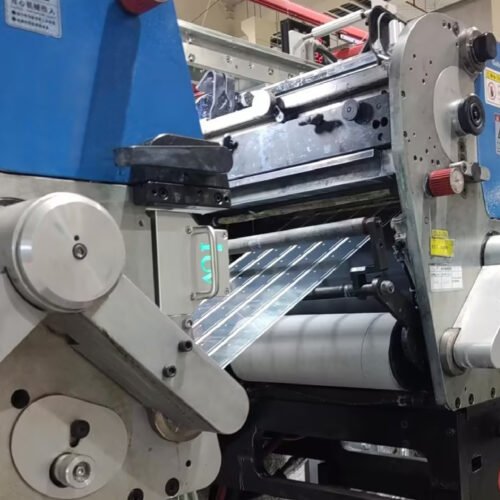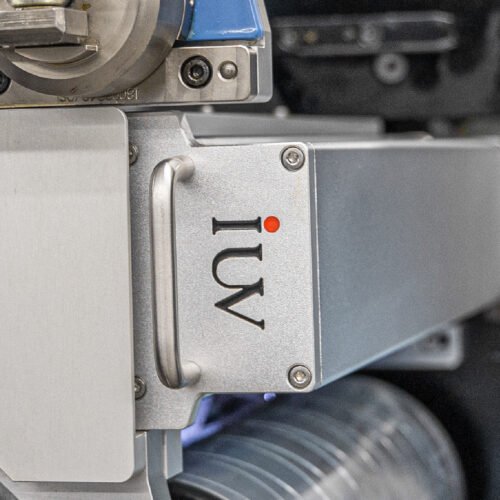
Opaque black flexographic inks create one of the most demanding curing conditions in narrow web label and flexible packaging printing. High pigment loading is required to achieve strong density, barcode readability, and visual contrast. However, the same pigment concentration that delivers opacity also limits UV penetration. When curing with 395nm LED UV systems, achieving reliable deep cure depends heavily on optimizing the photoinitiator spectral response and aligning formulation design with press conditions.
In narrow web flexography and offset label production, incomplete deep cure often appears as surface hardness with a soft underlayer. The print may pass a quick touch test but fail during die cutting, rewinding, or abrasion testing. Blocking, poor adhesion, and post-cure odor are common warning signs. These issues are especially critical in food, pharmaceutical, and cosmetic packaging, where mechanical durability and compliance standards are strict.
The key to solving this challenge lies in understanding how 395nm LED emission interacts with photoinitiators and highly pigmented ink films.
Spectral Matching Between 395nm LED Output and Photoinitiators
Unlike traditional mercury UV lamps that emit broadband radiation, 395nm LED systems produce energy within a narrow spectral band. This concentrated output improves efficiency but requires precise absorption alignment. Photoinitiators must exhibit strong absorption in the 380–410nm range to convert photon energy into free radicals effectively.
Because 395nm photons carry slightly lower energy than shorter wavelengths, initiator selection becomes more critical in thick or opaque ink systems. If absorption is weak at the emission peak, radical generation decreases and polymerization depth suffers. Surface cure may occur, yet deeper layers remain under-reacted.
For black flexo inks, a balanced initiator blend often delivers better results than a single component. Combining surface-active initiators with deeper-penetrating species promotes uniform polymerization throughout the film thickness. The goal is not only fast surface reaction but consistent radical generation across the entire ink layer.
Careful concentration control is essential. Excessive initiator loading may introduce odor, migration concerns, or color shift. Insufficient loading leads to weak mechanical properties and poor solvent resistance. Achieving optimal spectral response requires both chemical compatibility and production practicality.
Managing Pigment Absorption and Light Penetration
Carbon black and other dark pigments strongly absorb UV radiation. This absorption reduces light transmission through the ink film and limits polymerization depth. In narrow web flexographic printing, where high-speed production reduces exposure time, penetration efficiency becomes even more important.
Film thickness significantly influences cure depth. Anilox selection directly determines ink laydown. High cell volume improves density but increases the barrier to light penetration. Reducing film thickness can dramatically improve deep cure, yet density targets must still be met.
Substrate type also affects performance. White paper labels reflect UV radiation back into the ink layer, slightly improving polymerization. Transparent film substrates such as polypropylene and PET provide minimal reflection. In flexible packaging applications, this lack of reflectivity increases reliance on optimized photoinitiator systems.
Balancing pigment loading, anilox volume, and initiator efficiency ensures that sufficient radicals form even in lower layers of the ink film.
Press Configuration and Energy Control in Narrow Web Lines
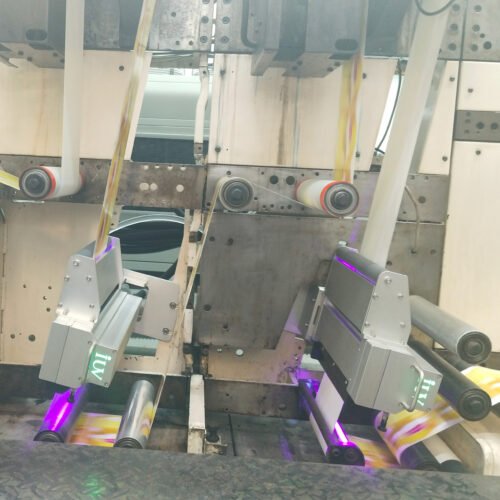
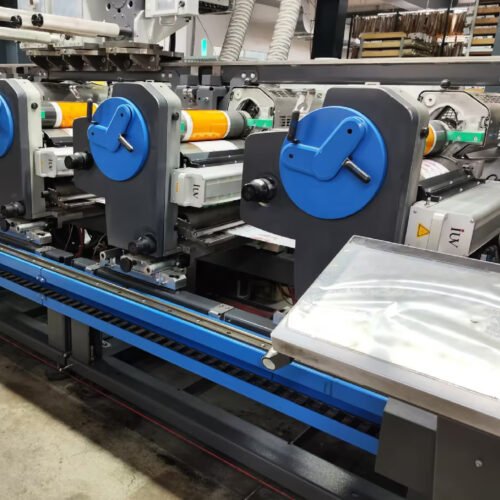
Press setup plays a major role in curing reliability. LED modules must deliver uniform irradiance across the entire web width. Variations in intensity can create uneven cure zones, especially visible in solid black areas.
Working distance between the LED array and substrate affects energy density. A shorter distance increases irradiance but may raise substrate temperature. Stable mounting and mechanical alignment prevent vibration and maintain consistent exposure.
Press speed directly controls dwell time under the LED lamp. When curing opaque black inks, slight speed reductions often improve deep cure without significantly affecting productivity. Modern LED systems allow intensity modulation linked to press speed. This synchronization ensures stable energy density during acceleration or deceleration.
Energy density measurement using LED-specific radiometers confirms actual output. Regular monitoring prevents unnoticed diode degradation that could compromise deep cure performance.
Surface Cure Balance and Oxygen Management
Oxygen inhibition can affect surface polymerization, even in pigmented inks. While black pigments absorb much of the radiation, the top layer may still experience incomplete crosslinking if oxygen concentration remains high. Increasing irradiance alone does not always resolve this issue.
Excessive intensity may create rapid surface polymerization, forming a semi-cured layer that blocks further light penetration. This effect can worsen deep cure rather than improve it. Balanced energy application ensures that polymerization progresses through the ink thickness without creating a barrier.
In demanding packaging applications, nitrogen inerting reduces oxygen levels and improves both surface and depth cure. Although not universal in label printing, inerting provides measurable benefits in high-performance narrow web lines.
Proper coordination between initiator selection and oxygen control supports uniform crosslinking and improved durability.
Thermal Stability and LED Module Performance
LED UV curing efficiency depends on stable junction temperature. If cooling systems fail to maintain consistent diode temperature, irradiance output declines. Reduced intensity directly impacts deep cure in highly pigmented inks.
Water-cooled LED modules provide stable thermal management in high-speed flexographic lines. Air-cooled systems require unobstructed airflow and routine cleaning. Monitoring module temperature and maintaining clean heat exchangers ensure stable energy delivery.
Stable irradiance improves predictability and reduces the need for excessive intensity adjustments. Consistent thermal control extends module lifespan and supports reliable production.
Verifying Deep Cure Through Practical Testing
Evaluating deep cure requires mechanical and chemical testing rather than visual inspection alone. Solvent rub resistance, cross-hatch adhesion testing, and scratch evaluation provide reliable indicators of polymerization quality. In opaque black applications, performing tape tests immediately after curing can reveal weak bottom adhesion.
Blocking during rewinding or die cutting often signals incomplete deep cure. Monitoring web temperature ensures that attempts to increase energy input do not introduce thermal distortion.
Routine validation supports consistent performance across job changes and substrate variations.
Strengthening Performance in Label and Flexible Packaging Production
Optimizing photoinitiator spectral response for 395nm LED UV curing in opaque black flexo inks requires a coordinated engineering approach. Effective absorption alignment, balanced initiator blends, controlled ink film thickness, stable irradiance, and proper thermal management work together to achieve full polymerization depth.
In narrow web flexographic and offset label printing, this balance ensures strong adhesion, high abrasion resistance, and consistent barcode readability. Improved deep cure reduces waste, prevents rework, and supports sustainable energy use by maximizing curing efficiency.
Through disciplined formulation control and precise press management, converters can achieve reliable deep-cure performance even in highly pigmented black ink systems under 395nm LED UV technology.