Hybrid printing configurations combining offset and flexographic technologies are increasingly common in modern label and narrow web production. These systems allow printers to combine the high image quality of offset printing with the versatility and ink transfer efficiency of flexography. As production speeds increase and substrate diversity expands, curing technology becomes a critical factor in maintaining print stability and efficiency. LED UV curing has emerged as a practical solution for hybrid press environments, offering precise energy control, reduced heat generation, and improved operational consistency.
Implementing LED UV curing in hybrid offset and flexographic press configurations requires careful engineering consideration. Ink chemistry, substrate characteristics, press layout, and curing module integration must be aligned to achieve reliable polymerization and long-term print durability. Successful implementation ensures consistent ink adhesion, strong crosslinking, and stable production at high line speeds.
Understanding the Differences Between Offset and Flexographic Curing Requirements
Offset printing and flexographic printing have different ink transfer mechanisms and layer thicknesses, which directly affect curing behavior. Offset inks typically form thin and uniform films, while flexographic inks often produce slightly thicker layers depending on anilox volume and plate design. These differences influence the energy dose required to achieve full polymerization.
LED UV curing modules must therefore be configured to accommodate these variations. Offset units may require lower energy exposure due to thinner ink films, whereas flexographic stations may demand higher irradiance to cure thicker layers effectively. Proper calibration ensures that both printing technologies operate within optimal curing conditions without compromising print quality.
In hybrid presses, sequential curing strategies are often used. Partial curing between print stations stabilizes the ink film, while final curing ensures full polymerization. This method maintains accurate registration and prevents ink transfer or smearing during high-speed production.
Selecting the Appropriate LED Wavelength and Photoinitiator System
LED UV curing systems operate within narrow wavelength ranges, commonly between 365 nm and 405 nm. Ink formulations must contain photoinitiators that respond efficiently to the selected wavelength. Mismatch between LED output and photoinitiator absorption reduces curing efficiency and can lead to incomplete polymerization.
For hybrid presses running both offset and flexographic inks, compatibility across multiple ink sets becomes essential. Ink manufacturers typically provide LED-specific formulations designed to respond to certain wavelength bands. Matching LED modules to these ink chemistries ensures reliable curing performance across the entire press configuration.
Spectral consistency is another advantage of LED technology. Unlike mercury lamps, LED modules deliver stable wavelength output throughout their operational life. This stability contributes to predictable curing behavior and reduces variability in multi-color printing processes.
Managing Irradiance and Energy Dose Across the Press
Achieving consistent polymerization requires accurate control of irradiance and total energy dose. Irradiance refers to the intensity of UV energy reaching the ink surface, while energy dose represents the cumulative exposure over time. Both parameters must be carefully balanced in hybrid press configurations.
High irradiance supports rapid surface curing, which is beneficial in wet-on-wet printing sequences. However, excessive surface curing may limit deeper penetration into thicker ink layers. Adjusting exposure time and module spacing helps ensure complete curing throughout the ink film thickness.
Press speed also influences energy delivery. As web speed increases, exposure time decreases. LED modules with adjustable power output allow operators to compensate for these variations, maintaining consistent curing even during high-speed production runs.
Uniform energy distribution across the web width is equally important. Uneven irradiance can produce curing inconsistencies that lead to adhesion failures or gloss variation. Proper alignment and calibration of LED modules ensure uniform energy coverage across all printed areas.
Substrate Considerations in Hybrid LED UV Printing
Label production often involves a wide range of substrates, including coated papers, polypropylene films, polyethylene materials, and metallized structures. Each substrate interacts differently with UV-curable inks and curing energy.
Paper substrates may absorb a portion of the ink vehicle, influencing curing dynamics and adhesion strength. Synthetic films typically have lower surface energy and require surface treatment such as corona discharge to improve ink wetting. Metallized materials reflect UV energy, which can affect curing efficiency if not properly managed.
LED UV curing offers a significant advantage when working with heat-sensitive materials. Because LED modules generate less infrared radiation than traditional UV lamps, substrate distortion is minimized. This allows hybrid presses to process thin films and delicate label materials without compromising dimensional stability.
Integration of LED Modules Within Hybrid Press Architecture
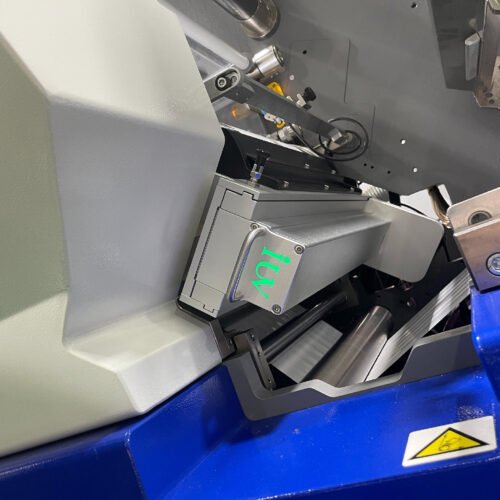
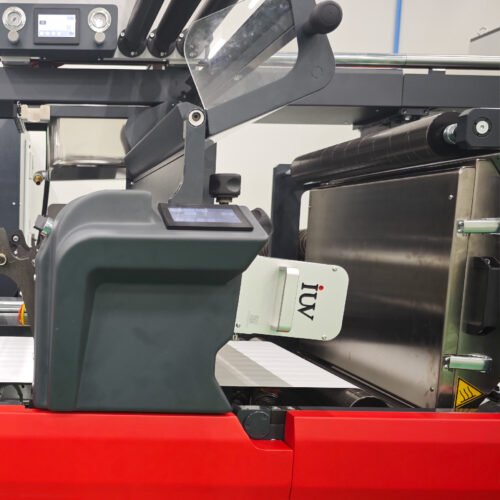
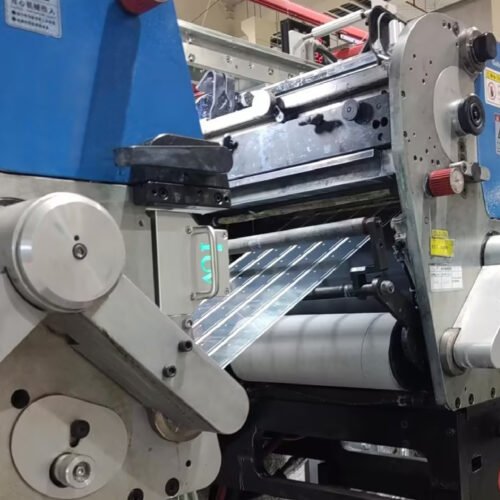
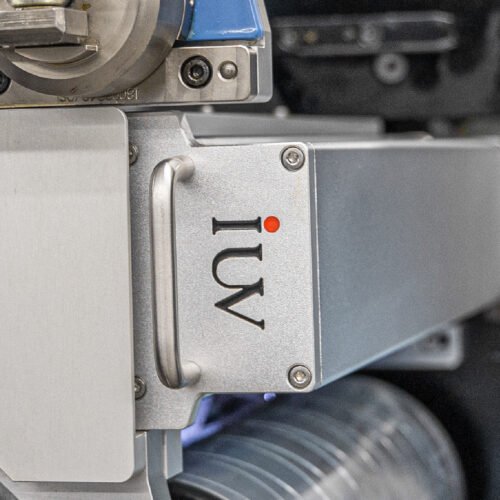
Mechanical integration of LED curing units within hybrid presses must consider press layout, cooling systems, and electrical infrastructure. LED modules require efficient thermal management to maintain stable output and protect diode lifespan. Air or liquid cooling systems are typically used to control operating temperature.
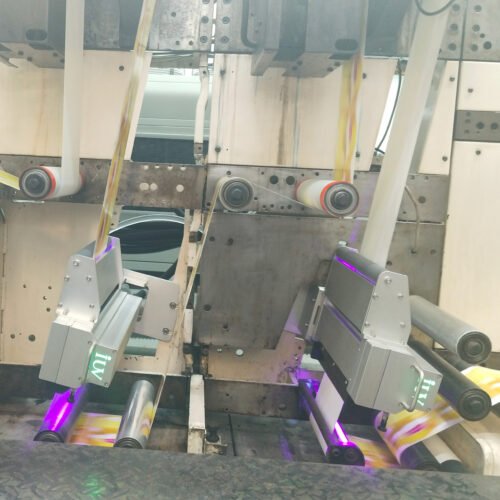
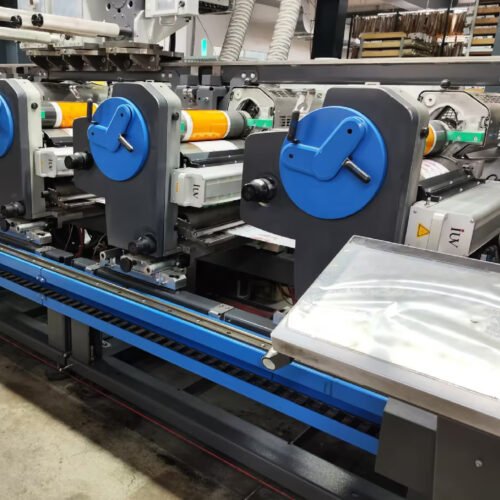
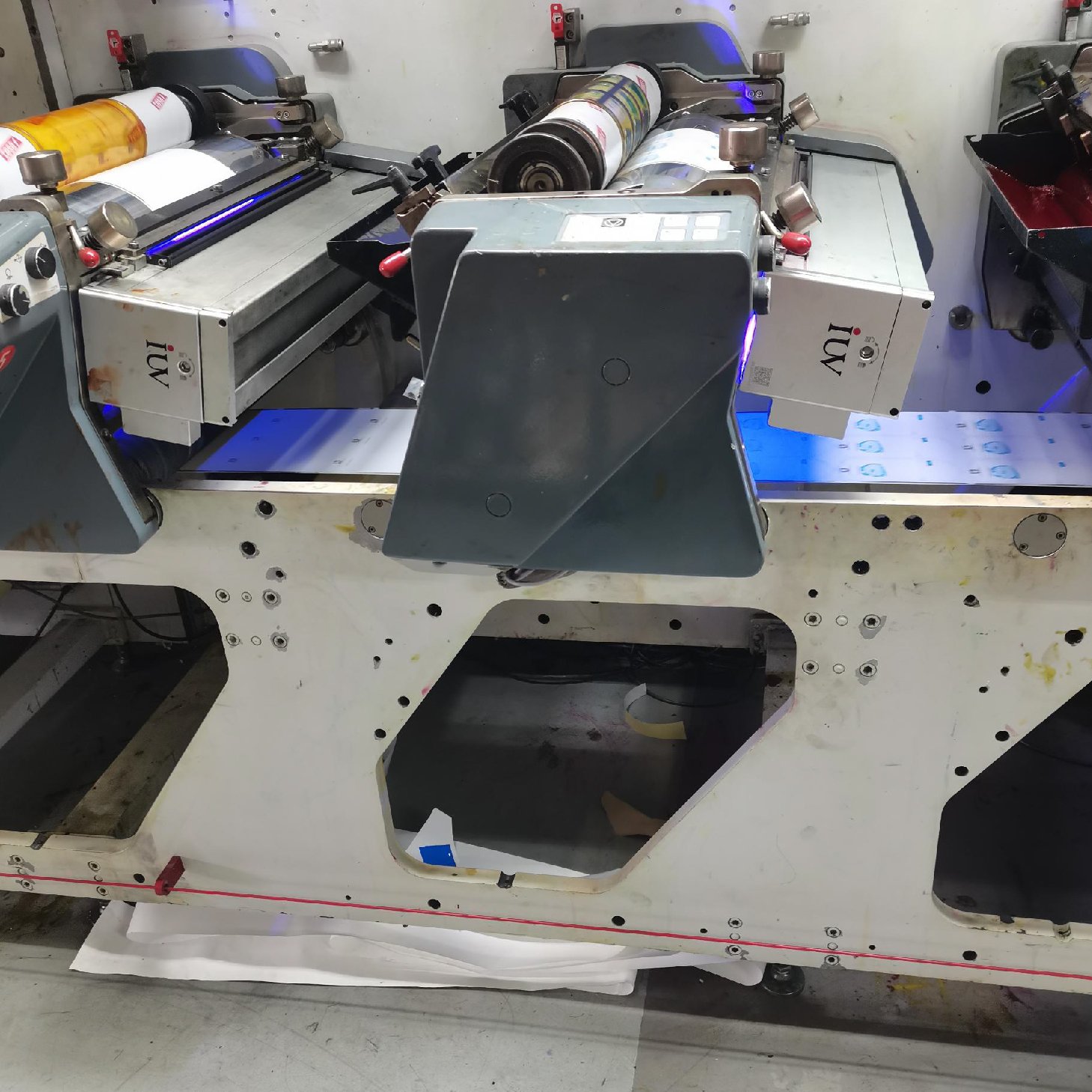
Module positioning relative to print stations affects curing efficiency and web handling. In many hybrid presses, LED units are installed after each print station to stabilize the ink layer before the next color is applied. This approach supports high-resolution multi-color printing and reduces the risk of ink contamination between stations.
Electrical integration must also provide stable power supply and precise control of output intensity. Modern control systems allow synchronization between press speed and LED power levels, ensuring that curing energy remains consistent across varying production conditions.
Maintenance and Operational Reliability
One of the advantages of LED UV technology is its long operational lifespan and reduced maintenance requirements. Unlike mercury lamps, LED modules do not require frequent lamp replacement and reach full intensity instantly. This reduces downtime during press startup and improves overall production efficiency.
However, regular inspection of optical windows and cooling systems remains essential. Dust or ink mist accumulation can reduce energy transmission, leading to curing inconsistencies. Preventive maintenance ensures that LED modules continue delivering stable irradiance throughout extended production cycles.
Monitoring systems that track output intensity and temperature provide valuable data for maintaining consistent curing performance. By identifying gradual output decline, operators can schedule maintenance before curing quality is affected.
Achieving Stable Production in Hybrid Printing Environments
Successful implementation of LED UV curing in hybrid offset and flexographic presses depends on precise coordination between multiple process variables. Ink formulation, substrate properties, curing energy, and press configuration must work together to produce reliable results.
When these parameters are carefully controlled, LED curing systems support high-resolution graphics, strong ink adhesion, and excellent durability. Hybrid presses can operate at high speeds while maintaining consistent print quality across complex label designs and multi-layer structures.
The ability to deliver controlled energy, reduce thermal stress, and maintain spectral stability makes LED UV curing well suited for modern hybrid printing environments. With proper engineering and process management, these systems enhance production reliability and support the growing demands of the label and packaging market.